Practical Strategies for Supporting Digital-Native Youth, Children, and Families
Today’s youth and juvenile social work looks a lot different than it did even just a few years ago. Practitioners are no longer just assessing family systems, school environments, and peer relationships. They are also assessing screen time, app use, AI chatbot habits, and online peer dynamics that follow a young client home, into their bedroom, and onto their phone at 2 a.m.
For social workers, school counselors, clinicians, and case managers, this shift is not optional to understand. Technology is now woven into nearly every referral, every safety plan, and every conversation with a young client. Practicing effective youth and juvenile social work today means understanding how devices, social media, and AI tools shape the young people in front of you.
What you’ll learn:
- Why digital behavior has become a core part of youth and juvenile social work assessments
- What the latest data says about teen social media and AI chatbot use
- How social media’s impact on youth mental health shows up in practice
- Considerations when evaluating a client’s digital life
- What to look for in a secure & supportive case management software
Let’s get started
Watch this video:
or
read the guide below.
Why Does Youth and Juvenile Social Work Need a Digital Lens Now?
A generation ago, a social worker assessing risk for an adolescent client focused mainly on home life, school attendance, and in-person peer groups. Today, that same assessment is incomplete without asking about a teen’s online life.
Social workers practicing with digital natives are seeing referrals tied directly to online experiences: cyberbullying, exposure to harmful content, sextortion, social comparison, and now, increasingly, emotionally dependent relationships with AI chatbots. According to Pew Research Center’s December 2025 survey of U.S. teens, 64% of teens report using AI chatbots, including about three in ten who do so daily
A related Pew analysis found that some teens are using these tools for casual conversation and emotional support, not just homework help.
That is a meaningful shift for practitioners. A biopsychosocial assessment that once stopped at “who do you talk to when you’re upset” now needs to account for the fact that the answer might be a chatbot, not a person.
A biopsychosocial assessment that once stopped at “who do you talk to when you’re upset” now needs to account for the fact that the answer might be a chatbot, not a person.

💡All-in-one Case Management Software.
Everything in one place: clients, notes, forms, appointments, reports, and outcomes.
👉 Try it Free - No credit card needed
How Is Social Media Shaping the Mental Health of the Youth You Serve?
Social media’s impact on youth mental health is one of the most studied, and most debated, issues in adolescent development right now. Practitioners do not need to take a side in the broader research debate to recognize the practical reality: many young clients are spending hours a day on platforms that shape their self-image, sleep, and social comparison habits.
For juvenile justice social work specifically, online activity increasingly intersects with legal risk too: cyberbullying incidents, harmful content sharing, and social media evidence in juvenile proceedings are now common case elements that were rare a decade ago.
A Quick Comparison: Traditional Youth Assessment vs. Digitally Informed Assessment
| Assessment Area | Traditional Approach | Digitally Informed Approach |
| Peer relationships | In-person friend groups, school dynamics | In-person plus online communities, group chats, gaming platforms |
| Risk indicators | Behavioral changes, school reports, family input | Behavioral changes plus screen time patterns, app usage, online conflict |
| Coping resources | Trusted adult, counselor, peer support | Trusted adult plus AI chatbots, online forums, anonymous apps |
| Safety planning | Home and school environment | Home, school, and digital environment (device access, app restrictions, online contacts) |
| Documentation | Paper or basic digital notes | Structured digital case notes with searchable history and pattern tracking |
👉 Try it Free - Free Case Management System
What Should Practitioners Consider When Evaluating a Young Client’s Digital Life?
Not every teen with heavy phone use is at risk, and not every AI chatbot conversation is cause for concern. The goal is not to pathologize technology use. It is to build informed, non-judgmental questions into standard practice so digital behavior gets the same clinical attention as any other risk or protective factor.
A few searcher and practitioner considerations worth building into intake and ongoing assessments:
- Context over quantity. Hours spent online matter less than what is happening during that time. Passive scrolling, active social connection, and AI chatbot use for emotional support each carry different risk profiles.
- Access and supervision. Does the young person have unsupervised device access, and do caregivers understand what platforms are in use?
- Substitution risk. Is technology supplementing human connection, or replacing it? This is especially relevant when a teen describes an AI chatbot as their primary source of emotional support.
- Digital footprint and permanence. Younger clients often do not fully grasp that online content, including in group chats or disappearing-message apps, can resurface later.
- Cultural and developmental fit. Digital behavior norms vary widely by age, community, and family structure. A workable digital safety plan for a 17-year-old looks different than one for a 12-year-old.
Do You Have a Team? Our best all-in-one client and top case management software simplifies everything from client intake and assessments to programs, projects, goals tracking, planning, scheduling, documentation, reporting dashboard, and progress tracking.All-in-One Case Management Software
Sign Up Today, Free
No credit card needed!
How Can Social Workers Build Digital Literacy Into Their Practice?
Building digital literacy does not require becoming a technology expert. It requires a working understanding of the platforms and tools shaping a young client’s world, paired with practical intervention strategies.
Cyberbullying intervention strategies, for instance, work best when practitioners understand the specific platform where the bullying occurred, since reporting tools, evidence gathering, and escalation paths differ across apps. Similarly, social work interventions for tech-related anxiety are more effective when they address the underlying comparison and validation-seeking patterns driving the behavior, not just the screen time itself.
School social work and digital behavior increasingly overlap too, particularly around AI use in academic settings. Teens are already using chatbots for schoolwork help, article summaries, and even emotional check-ins during the school day, which means school-based practitioners are often the first to notice when digital habits shift from helpful to concerning.
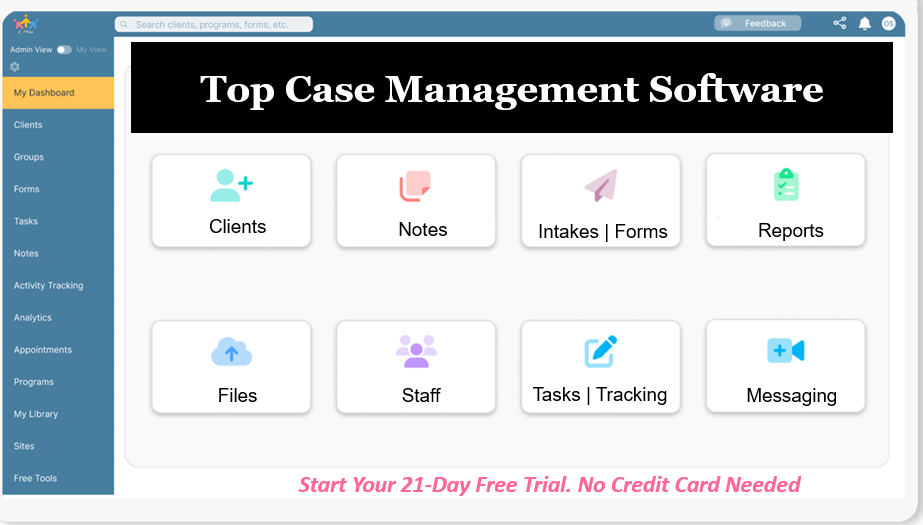


Supporting Digitally Informed Youth Practice with the Right Tools
Keeping up with the digital dimension of youth and juvenile social work is easier when your documentation and case management tools are built for how practice actually works today.
Not every tool that promises efficiency belongs in your social work toolbox. Ethical AI use in social services means recognizing that most consumer AI chatbots and general-purpose AI writing tools are not HIPAA compliant, which makes them a poor fit for anything touching protected health information.
A quick note-taking shortcut with an unsecure AI tool is not worth the risk of a data breach involving a minor client.
Instead, practitioners should evaluate any technology used in youth and juvenile social work against a consistent set of privacy and security standards:
- HIPAA compliance is non-negotiable.
- Data storage should be encrypted and access-controlled.
- Secure messaging to replace less secure personal texting and email.
- Audit trails for accountability.
- Before adopting any new software, ask directly whether it is HIPAA compliant, where data is stored, and how breaches are handled.
Case Management Hub checks all the boxes above and supports youth-focused practitioners.
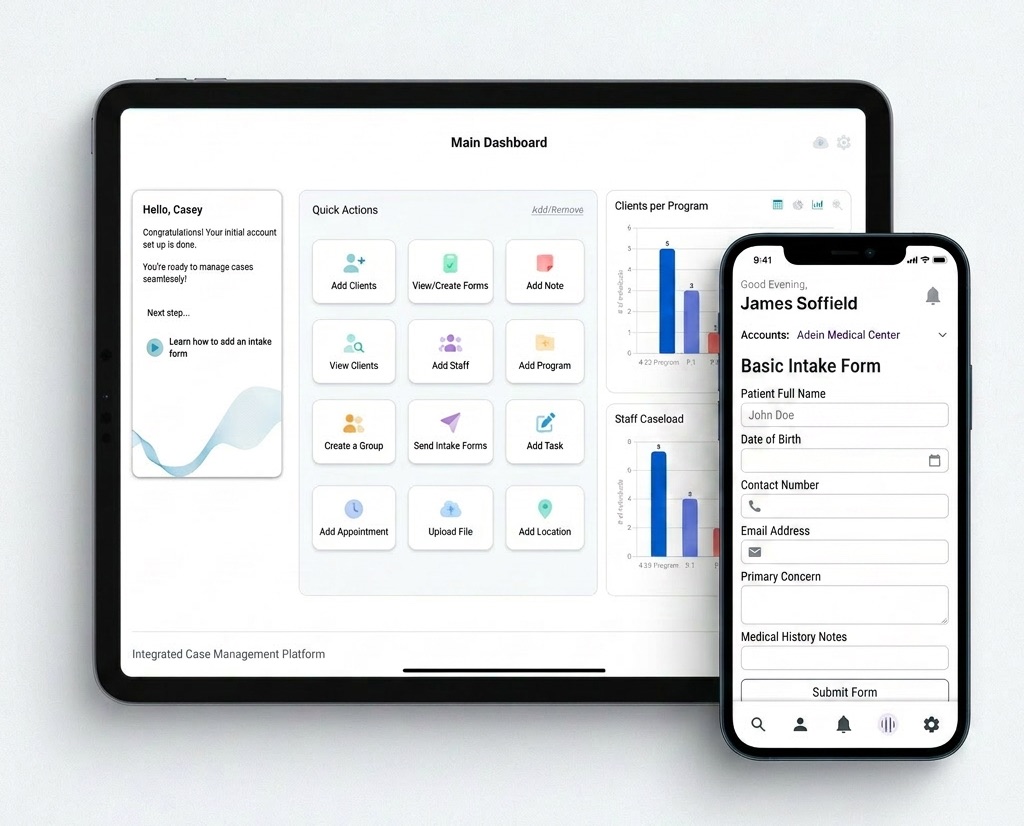
This social work software includes customizable intake forms and assessments, secure messaging, structured case notes, and client goals and progress tracking, all in one centralized HIPAA-compliant platform.
It’s designed to make it easier to track evolving digital risk factors alongside traditional case data, without adding administrative burden to an already full caseload.
🔥Still using spreadsheets for case management?
Switch to an all-in-one case management platform.
👉 Try it Free - No credit card needed
Modern Youth & Juvenile Social work FAQs
What is the biggest change in youth and juvenile social work over the past few years?
The biggest shift is the need to assess digital life alongside traditional risk factors. Social media use, online peer conflict, and now AI chatbot habits are regularly part of intake, safety planning, and ongoing case documentation.
Is social media use always harmful to youth mental health?
No. Research shows mixed effects depending on how platforms are used. Passive scrolling and social comparison tend to carry more risk, while active social connection can be protective. Context matters more than screen time alone.
Should social workers ask young clients directly about AI chatbot use?
Yes. Since a meaningful share of teens now use AI chatbots for emotional support or casual conversation, it is a relevant and increasingly standard assessment question, similar to asking about trusted adults or peer support systems.
How does juvenile justice social work intersect with social media?
Social media activity now frequently factors into juvenile cases, from evidence in incidents to online conflict that escalates into real-world harm. Practitioners benefit from understanding platform-specific reporting and documentation tools.
What is technology-assisted assessment in social work?
It refers to using digital tools, including standardized digital screening forms and AI-supported documentation aids, to support (not replace) clinical assessment of a young client's needs, risks, and strengths.
How can case managers keep up with the pace of change in youth technology use?
Ongoing training, professional development focused on digital literacy, and using case management software that adapts to new documentation needs all help practitioners stay current without becoming overwhelmed.
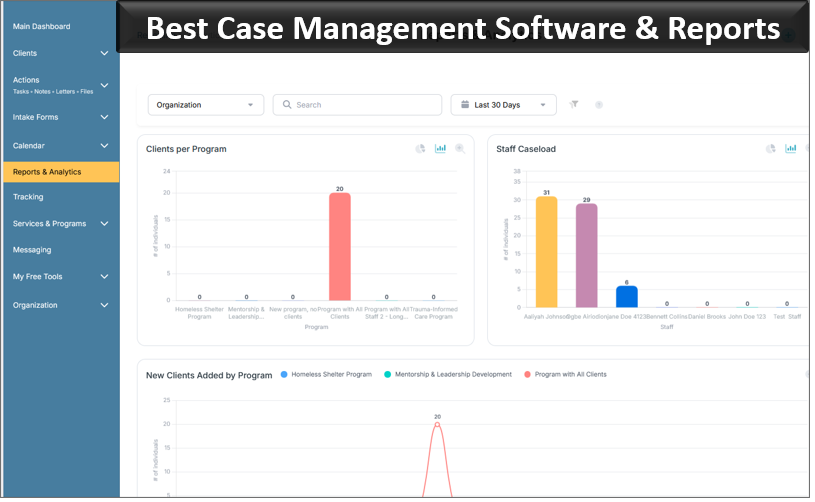
👉 Try it free today - No credit card needed
Note: Content on this website (socialworkportal.com) is copyrighted and protected under applicable copyright laws. Unauthorized reproduction, distribution, or use of any content from the website, without explicit written permission, is strictly prohibited. Read: Terms of Use.
Social Work Portal Disclaimer: Social Work Portal is not a social work agency and we do not refer social workers. This web site is provided for educational and informational purposes only and does not constitute providing medical advice or professional social and healthcare services. The information provided should not be used for diagnosing or treating a health problem or disease, and those seeking personal medical advice should consult with ... Read our full disclaimer here: Social Work Portal Disclaimer.