Learn the Requirements of a HIPAA Form for Patients (Avoid Costly Compliance Mistakes)
If you work in social work, healthcare, or human services, the HIPAA release of information form is one of the most important documents you will handle. Get it right and you protect your clients, your organization, and yourself. Get it wrong and you risk a privacy violation that can carry serious legal and financial consequences.
Are your HIPAA release forms compliant? Below, you’ll learn about the HIPAA authorization form for releasing medical information, including what it is, when it is required, what must be included, and how social workers and case managers can use it correctly in everyday practice.
The cost for accidental violations of HIPAA rules range from $145–$73,011 per violation for Tier 1 offenses.
What you’ll learn about HIPAA forms for patients:
- The difference between a HIPAA consent form and a HIPAA authorization form
- The required elements every valid HIPAA release form must contain
- When a release of medical information form is and is not required
- How to walk a client through the HIPAA authorization process
- Common mistakes that invalidate a release form
- How HIPAA compliant case management software supports this process
Let’s get started
Watch this video:
or
read the guide below.
What Is the HIPAA Form for Releasing Medical Information?
The HIPAA authorization form is a written document that gives a covered entity, such as a hospital, clinic, therapist, or social service agency, legal permission to release a patient’s protected health information to a specified person or organization. It is the formal mechanism through which a client controls who can access their medical or clinical records.
HIPAA, the Health Insurance Portability and Accountability Act, was enacted in 1996 and established the national standard for protecting sensitive patient health information. Under HIPAA, protected health information, or PHI, includes any individually identifiable information related to a person’s physical or mental health, the provision of healthcare, or payment for healthcare services. That covers everything from therapy session notes to billing records to diagnoses.
The release of medical information form gives clients agency over their own information. It is not a blanket permission slip. It specifies exactly what information is being shared, with whom, for what purpose, and for how long. That specificity is what makes it both protective and legally valid.
💡All-in-one Case Management Software.
Everything in one place: clients, notes, forms, appointments, reports, and outcomes.
👉 Try it Free - No credit card needed
What Is the Difference Between a HIPAA Consent Form and a HIPAA Authorization Form?
This is one of the most commonly misunderstood distinctions in HIPAA compliance, and it matters because using the wrong form for the wrong purpose can create a real compliance problem.
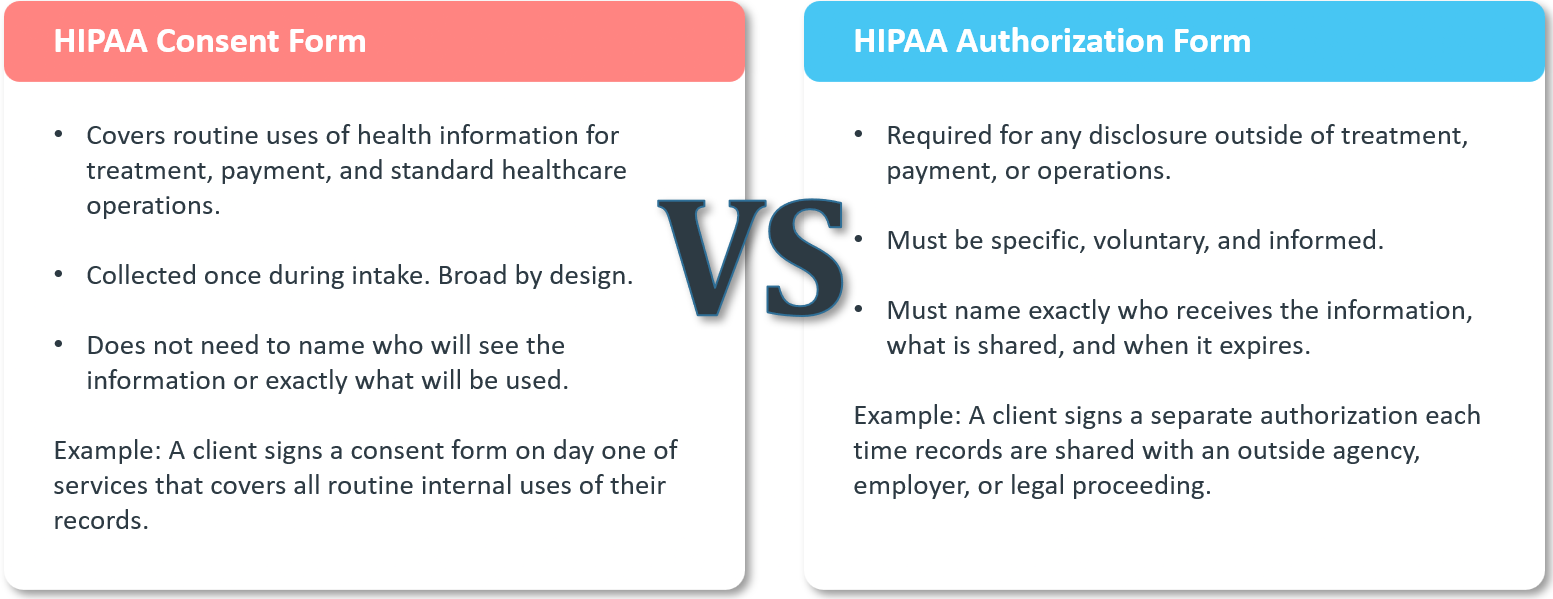
A HIPAA consent form gives a covered entity permission to use a patient’s health information for treatment, payment, and standard healthcare operations. Most practices collect this once during intake, and it covers routine internal uses of client information. It is broad and does not need to specify exactly what information will be used or who will see it.
A HIPAA authorization form is different. It is required any time a covered entity wants to share protected health information for purposes outside of treatment, payment, or operations. That includes sharing records with a third party, disclosing information to a family member, releasing records for legal proceedings, or providing information to an employer. Authorization must be specific, voluntary, and informed. (Jump to the Free HIPAA Release Form template)
| Form Type | Purpose | Specificity Required | When Used |
| HIPAA Consent Form | Treatment, payment, operations | Low | Routine intake |
| HIPAA Authorization Form | Third-party disclosure | High | Any non-routine release |
For social workers and case managers, the authorization form is by far the more frequently encountered document in daily practice, particularly when coordinating care across agencies or sharing information with referral partners.
👉 Try it Free - Free Case Management System
What Are the Required Elements of a Valid HIPAA Release Form?
The HIPAA Privacy Rule sets out specific required elements that a valid authorization form must contain. A form missing any of these elements is not legally valid, and releasing information based on an incomplete form can constitute a HIPAA violation.
According to the U.S. Department of Health and Human Services, a valid HIPAA authorization must include the following core elements:
- A specific description of the information to be used or disclosed
- The name or specific identification of the person or organization authorized to make the disclosure
- The name or specific identification of the person or organization to whom the information will be disclosed
- A description of each purpose of the requested use or disclosure
- An expiration date or expiration event
- The signature of the individual and the date signed
In addition to these core elements, the form must also include statements informing the patient of their right to revoke the authorization, whether the covered entity conditions treatment on signing the form, and whether the information may be re-disclosed by the recipient.
All-in-One Case Management Software
Sign Up Today, Free
No credit card needed!
Do You Have a Team? | ||
Our best all-in-one client and top case management software simplifies everything from client intake and assessments to programs, projects, goals tracking, planning, scheduling, documentation, reporting dashboard, and progress tracking.
How Do You Walk a Client Through a HIPAA Authorization Form?
For many clients, especially those navigating complex service systems for the first time, a HIPAA release form can feel overwhelming or confusing. Walking a client through the form clearly and without rushing is both an ethical responsibility and a practical one, since a form the client does not understand is more likely to be challenged or revoked later.
A few practices make this process go more smoothly. First, use plain language. Most clients are not familiar with terms like “covered entity” or “protected health information,” so translate the form into everyday terms as you walk through it together. Second, make sure the client understands they are in control. They can limit what information is shared, specify the purpose, and set an expiration. They can also revoke the authorization at any time in writing. Third, document that the conversation happened. Your case notes should reflect that the client was informed and that authorization was given voluntarily.

Consider the experience of a case manager named Elena working with a client transitioning out of inpatient psychiatric care. The client needed her records shared with three different outpatient providers and a housing program. Rather than handing over four forms to sign at once, Elena walked through each one separately, explained exactly what information each organization would receive and why, and gave the client time to ask questions. The client ended up revoking one of the authorizations after learning what would be shared, which was exactly the process working as it should.


When Is a HIPAA Release Form Required and When Is It Not?
Not every disclosure of patient information requires a signed authorization form. HIPAA includes a number of permitted disclosures that can be made without patient authorization, and knowing the difference keeps workflows moving without unnecessary delays.
Disclosures that generally do not require a signed authorization include sharing information among treatment team members for direct care purposes, mandatory reporting of child abuse or neglect, disclosures required by law such as court orders, and certain public health reporting requirements.
Disclosures that do require a signed HIPAA authorization form include releasing records to attorneys or employers, sharing information with family members who are not directly involved in care, disclosing psychotherapy notes in most circumstances, using information for marketing purposes, and sharing records with outside agencies unless a formal data-sharing agreement is already in place.
For social workers in particular, the psychotherapy notes rule is worth knowing well. HIPAA gives psychotherapy notes a higher level of protection than general health records. A separate, specific authorization is required to release them, and many disclosures that would be permitted for general health records do not apply to psychotherapy notes.
🔥Still using spreadsheets for case management?
Switch to an all-in-one case management platform.
👉 Try it Free - No credit card needed
What Are the Most Common HIPAA Release Form Mistakes?
Even experienced practitioners make avoidable errors with HIPAA authorization forms. The most common ones include:
Using an outdated or incomplete form that is missing one or more required elements. Forms should be reviewed regularly against current HHS guidance to make sure they remain compliant.
Accepting a form that has already expired. An authorization with a past expiration date is no longer valid, and releasing information based on an expired form is a violation.
Releasing more information than was authorized. If a form specifies the release of intake records from a specific date range, releasing the full case file exceeds the scope of the authorization.
Failing to document the authorization in the client’s file. The signed form should be stored securely in the client record, and the disclosure itself should be documented.
Pressuring a client to sign. HIPAA requires that authorization be voluntary. Conditioning services on signing an authorization is prohibited in most circumstances, and any hint of coercion can invalidate the form entirely.

👉 Try this Case Management Software free today
No credit card needed
How Does HIPAA Compliant Case Management Software Support This Process?
Managing HIPAA authorization forms correctly across a full caseload requires more than good intentions. It requires organized, secure systems that keep signed forms accessible, flag expiration dates, and ensure that disclosures are documented alongside the rest of the client record.
A HIPAA compliant case management platform like Case Management Hub is built with exactly this in mind, giving social workers and case managers a secure place to store client documents, manage intake forms, track authorizations, and maintain the kind of organized, audit-ready records that HIPAA compliance demands. Explore the full platform and start a free trial here.
Download a FREE HIPAA Authorization for Release of Health Information Form Template:
Once you start a free trial….
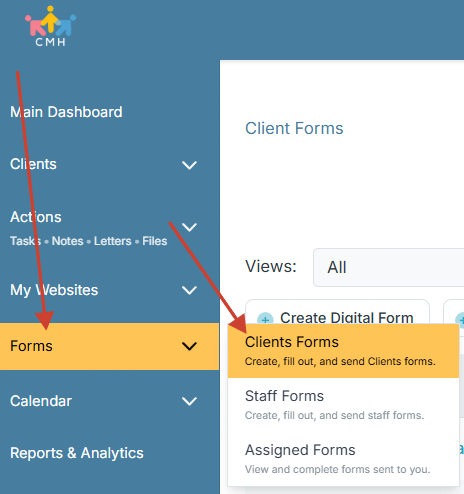
Go to “Forms > Clients Forms”
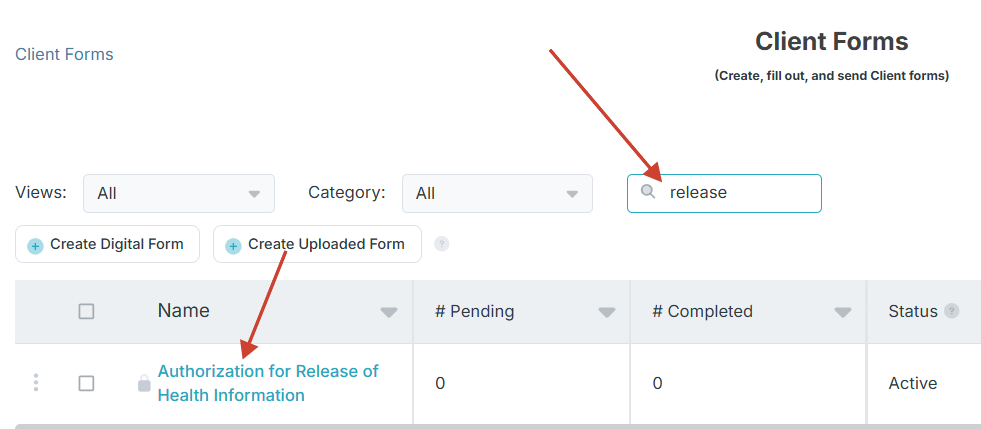
Type “release” in the search and click to access the form template. (Feel free to explore all our other form templates as well!)
💡All-in-one Case Management Software.
Everything in one place: clients, notes, forms, appointments, reports, and outcomes.
👉 Try it Free - No credit card needed
FAQ: HIPAA Forms for Releasing Medical Information
What is the difference between HIPAA consent and HIPAA authorization?
A HIPAA consent form covers routine uses of health information for treatment, payment, and operations. A HIPAA authorization form is required for any disclosure outside of those purposes, such as sharing records with a third party or releasing information for non-treatment purposes.
Can a patient revoke a HIPAA authorization form?
Yes. A patient has the right to revoke a HIPAA authorization at any time by submitting a written request. The revocation takes effect for future disclosures but does not undo any releases that already occurred based on the original authorization.
How long is a HIPAA authorization form valid?
As long as the expiration date or event specified on the form has not passed. The form must include either a specific date or a description of when the authorization expires, such as at the end of a specific treatment episode.
Are psychotherapy notes protected differently under HIPAA?
Yes. Psychotherapy notes have a higher level of protection under HIPAA than general health records. A specific authorization is required to release them, and many of the standard permitted disclosures that apply to general health records do not apply to psychotherapy notes.
What happens if a HIPAA release form is missing a required element?
The form is not legally valid, and any disclosure made based on an incomplete form could constitute a HIPAA violation. Always review forms against the required elements listed in the HHS Privacy Rule before processing a release.
Do social workers need to follow HIPAA?
Social workers who work for or with covered entities, including hospitals, clinics, behavioral health agencies, and many nonprofits, are subject to HIPAA requirements either directly or as business associates. Even those not covered directly by HIPAA often follow its standards as a best practice and professional obligation.
👉 Try it free today - No credit card needed
Note: Content on this website (socialworkportal.com) is copyrighted and protected under applicable copyright laws. Unauthorized reproduction, distribution, or use of any content from the website, without explicit written permission, is strictly prohibited. Read: Terms of Use.
Social Work Portal Disclaimer: Social Work Portal is not a social work agency and we do not refer social workers. This web site is provided for educational and informational purposes only and does not constitute providing medical advice or professional social and healthcare services. The information provided should not be used for diagnosing or treating a health problem or disease, and those seeking personal medical advice should consult with ... Read our full disclaimer here: Social Work Portal Disclaimer.