How to Bridge Science and Soul in Mental Health Using a Biopsychosocial Spiritual Model
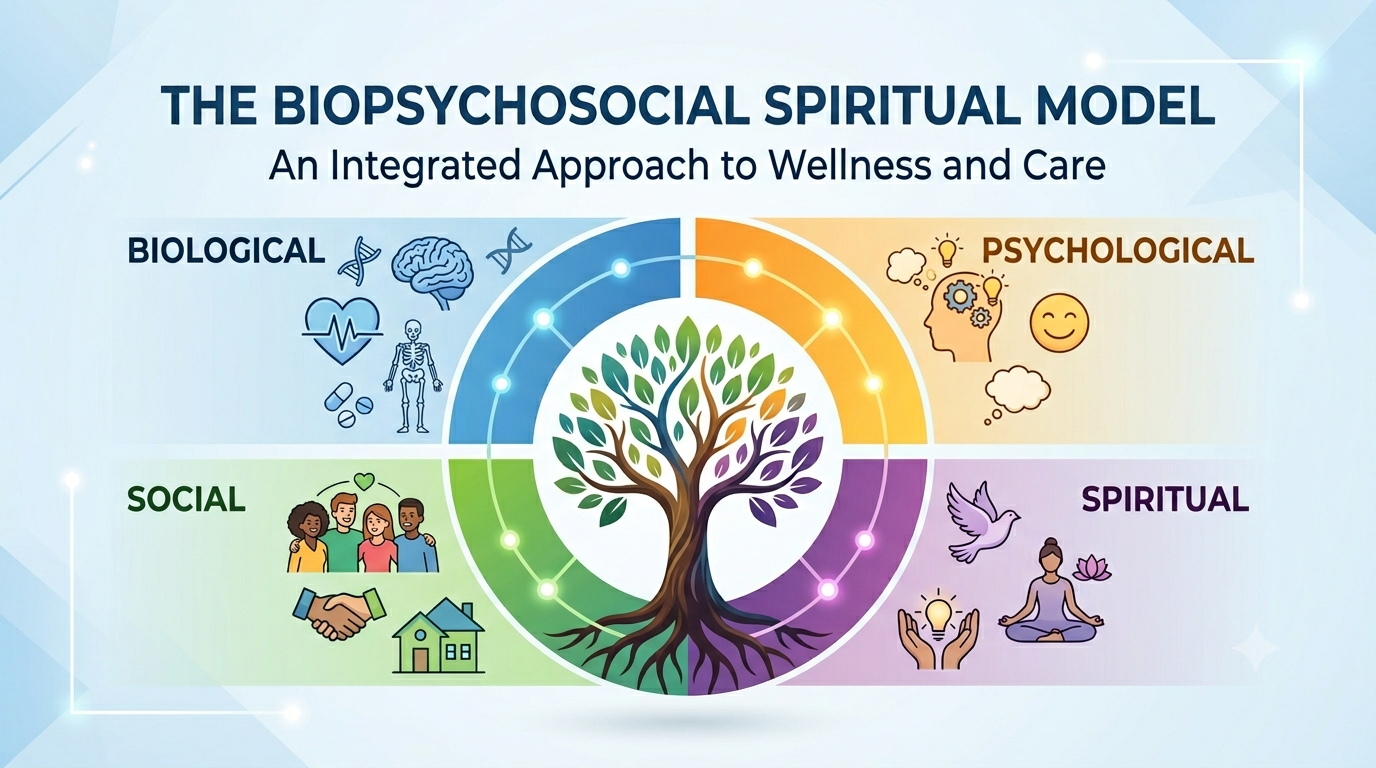
When someone walks through your door or joins a telehealth session for the first time, they bring with them a whole life. Their biology, their relationships, their history, their beliefs, their community… all of it shapes who they are and how they experience health and struggle. The biopsychosocial spiritual model gives clinicians, social workers, and mental health professionals a framework for seeing that whole person and responding to them accordingly.
This guide breaks down what the biopsychosocial spiritual model is, where it came from, how it compares to earlier approaches, and how to apply it in real-world practice.
What you’ll learn in this article:
- What the biopsychosocial spiritual model is and how it differs from the traditional biopsychosocial model
- Why the spiritual dimension matters in mental health and clinical care
- How to use this model in social work assessments and case conceptualization
- The role of culturally responsive practice within this framework
- Key considerations for practitioners choosing an assessment approach
- How practice management tools support holistic, whole-person care
Let’s get started
Watch this video:
or
read the guide below.
What Is the Biopsychosocial Model, and Where Did It Come From?
To understand the biopsychosocial spiritual model, it helps to start with its foundation. In 1977, psychiatrist George Engel proposed the biopsychosocial model as a direct challenge to the biomedical approach that had long dominated healthcare. His argument was straightforward: treating the body without considering the mind and social environment produces incomplete care.
The original biopsychosocial model definition rests on three interconnected dimensions. Biological factors include genetics, physical health, neurological function, and the physiological effects of illness or substance use. Psychological factors cover thoughts, emotions, behavior patterns, and mental health history. Social factors include relationships, socioeconomic status, family dynamics, cultural background, and community context.
This three-part framework was a major shift in how clinicians and social workers approached assessment and treatment. Rather than asking only “What is wrong with this person physically?”, the model encouraged practitioners to ask “What is happening across their entire experience?”
The biopsychosocial model in social work became foundational, particularly as the profession emphasized person-centered care and the importance of environmental context in shaping individual outcomes.
💡All-in-one Case Management Software.
Everything in one place: clients, notes, forms, appointments, reports, and outcomes.
👉 Try it Free - No credit card needed
Why Was the Spiritual Dimension Added to the Model?
As holistic assessment in social work evolved, researchers, clinicians, and practitioners began to recognize that something was still missing. For many clients, spirituality and faith are not peripheral to their health. They are central to it.
The spiritual dimension in mental health encompasses more than religion, though it certainly includes that. Spirituality refers to a person’s sense of meaning and purpose, their connection to something larger than themselves, their values and moral framework, and the practices or communities that sustain them. For some clients, that is expressed through organized religion. For others, it is found in nature, philosophy, recovery communities, or deeply held cultural traditions.
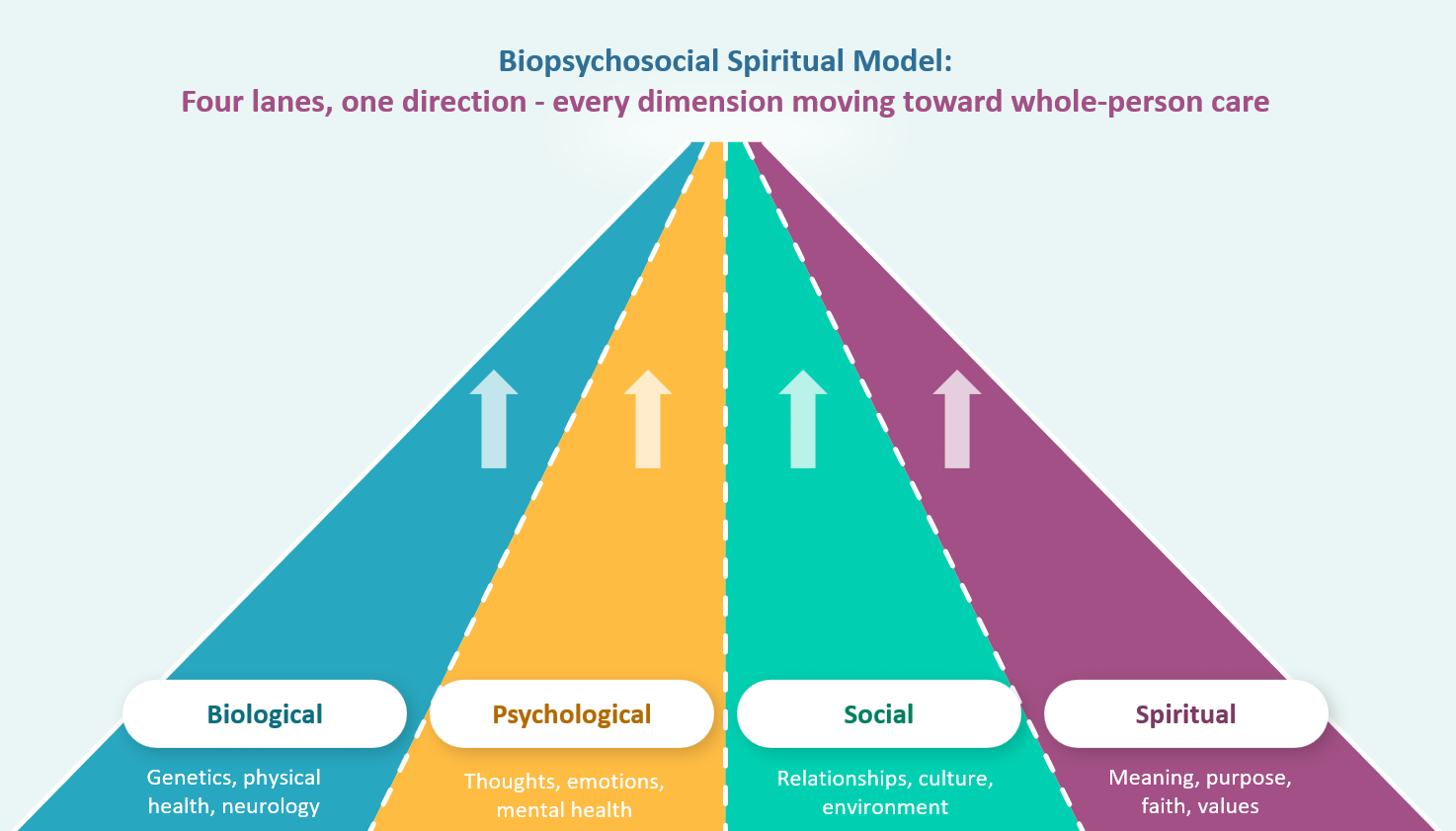
Adding the spiritual component to create the biopsychosocial spiritual model acknowledges that spiritual wellbeing and mental health are connected in meaningful, measurable ways. Research has consistently supported this. According to a study published by the National Library of Medicine, individuals with strong spiritual or religious engagement tend to report better mental health outcomes, higher resilience, and greater capacity to cope with chronic illness, trauma, and grief.
Ignoring spirituality in clinical assessment does not make it irrelevant. It simply means the practitioner is missing a significant piece of the picture.
👉 Try it Free - Free Case Management System
How Does the Biopsychosocial Spiritual Model Compare to Earlier Frameworks?
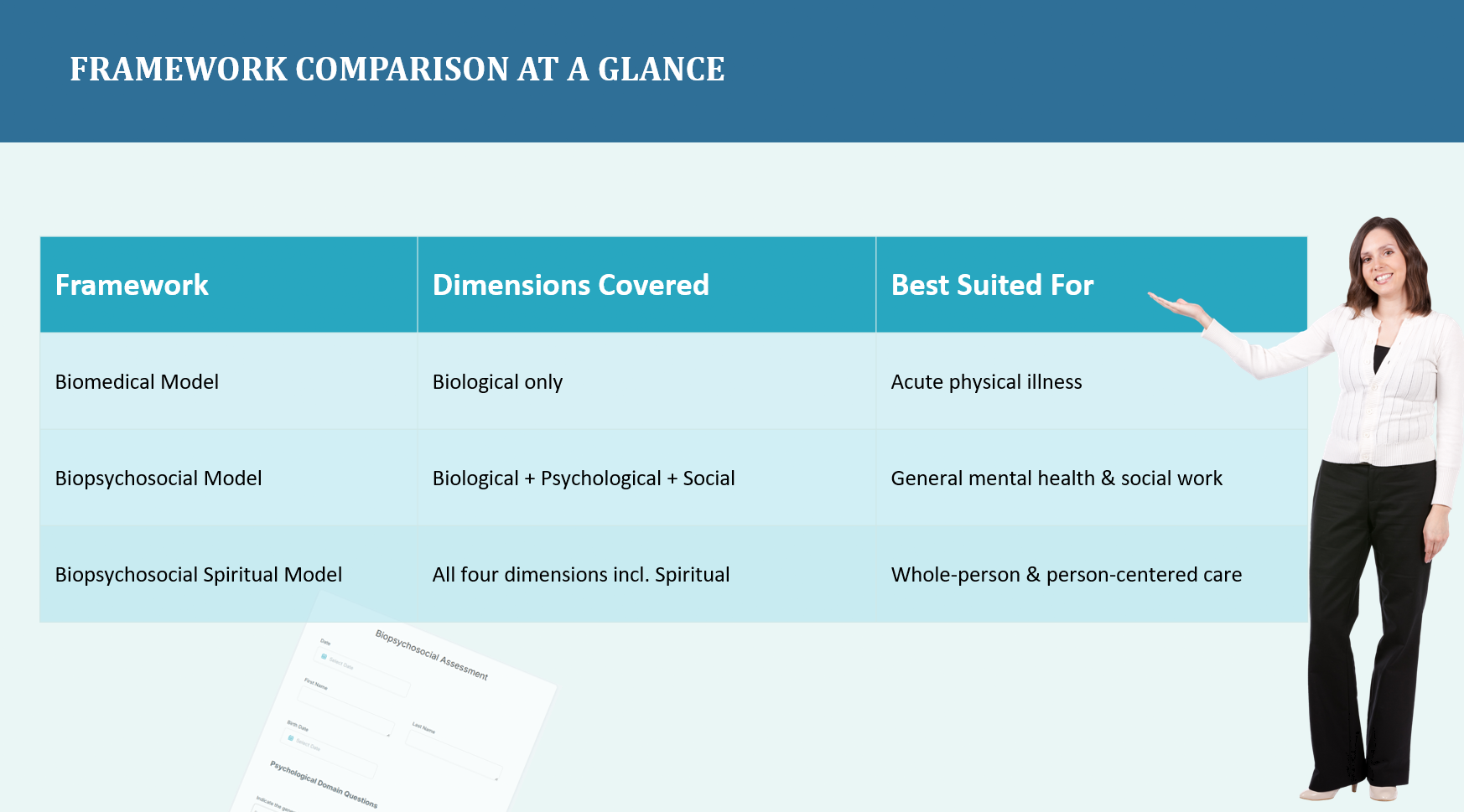
For practitioners deciding which social work assessment framework to use, it helps to understand how these models differ in practice.
The biomedical model focuses almost entirely on biological causes and physiological treatments. It is efficient for acute physical illness but poorly suited for complex mental health or social service contexts.
The biopsychosocial model improved on this by integrating psychological and social factors, making it a much stronger foundation for social work practice and mental health treatment. However, for clients whose spiritual life is a primary source of meaning, coping, or distress, this model still leaves a gap.
The biopsychosocial spiritual model fills that gap by treating spirituality as a legitimate clinical and assessment domain. A biopsychosocial spiritual assessment considers how a client’s faith, beliefs, community, and sense of purpose interact with their mental health, their social circumstances, and their physical health. This makes for richer biopsychosocial spiritual case conceptualization, more responsive treatment planning, and a stronger therapeutic relationship built on genuine understanding.
The practical difference shows up in conversations. A practitioner using only the biopsychosocial model might ask about family support and past trauma. A practitioner using the biopsychosocial spiritual model might also ask: “Are there spiritual practices or beliefs that help you get through difficult times?” or “Has your faith community been a source of support or stress for you?” Those questions open doors that would otherwise stay closed.
All-in-One Case Management Software
Sign Up Today, Free
No credit card needed!
Do You Have a Team? | ||
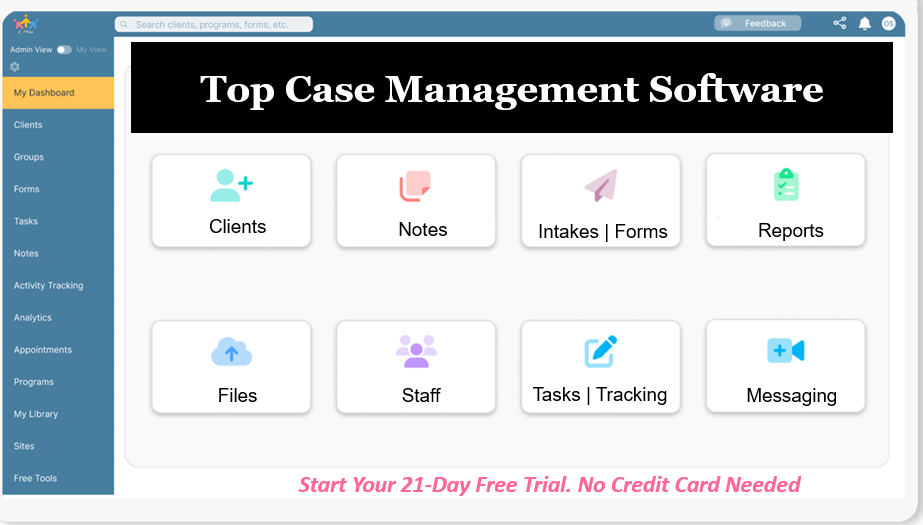
Our best all-in-one client and top case management software simplifies everything from client intake and assessments to programs, projects, goals tracking, planning, scheduling, documentation, reporting dashboard, and progress tracking.
How Is the Biopsychosocial Spiritual Model Applied in Social Work Practice?
Applying the biopsychosocial spiritual model in social work practice means building it into your assessment process from the beginning, not treating spirituality as an afterthought or an optional add-on.
A holistic client assessment using this framework typically covers several areas across each dimension. Biological: medical history, medications, physical health conditions, developmental history, and any neurological or genetic factors. Psychological: mental health history, diagnoses, trauma history, cognitive patterns, coping strategies, and emotional regulation. Social: family structure, support systems, housing, employment, cultural background, social determinants of mental health, and community involvement. Spiritual: religious or spiritual identity, meaning and purpose, practices, beliefs about illness or suffering, and the role of faith in coping.
Practitioners using a trauma-informed whole-person care lens will often find that the spiritual dimension is especially relevant for clients processing grief, identity disruption, recovery from addiction, or experiences of profound loss. Many clients describe their spiritual life as the thing that kept them going. A framework that does not ask about that is leaving out a critical part of their story.
Culturally responsive social work practice also connects directly to this model. For many communities, spirituality and cultural identity are inseparable. Faith traditions shape how illness is understood, how help-seeking is perceived, and what recovery looks like. An integrative mental health framework that accounts for spiritual and cultural context is far more likely to build trust, reduce bias, and produce outcomes that actually fit the client’s life.

What Should Practitioners Consider When Choosing an Assessment Approach?
For social workers, clinicians, therapists, and nonprofit organizations evaluating which assessment framework to adopt, a few factors are worth weighing carefully.
Client population and context
The biopsychosocial spiritual model is especially well-suited for populations where spirituality, faith, or meaning-making are significant parts of daily life. This includes older adults, clients navigating serious illness, individuals in recovery, and communities where religious identity is culturally central.
Setting and scope of practice
In hospital social work, hospice care, behavioral health, and community mental health settings, spiritual needs in clinical assessment frequently surface. The model gives practitioners language and structure for addressing those needs professionally.
Training and comfort
Addressing spiritual needs in clinical assessment requires cultural humility and a non-imposing approach. Practitioners do not need to share a client’s spiritual beliefs. They need to respect and understand them. If this is a newer area of practice, training in spirituality and mental health screening tools can be a useful investment.
Documentation and consistency
For organizations working across large teams, having a standardized holistic assessment social work framework ensures that spiritual and cultural factors are consistently documented and not left to individual practitioner discretion.
🔥Still using spreadsheets for case management?
Switch to an all-in-one case management platform.
👉 Try it Free - No credit card needed
Managing Whole-Person Care in Practice
Understanding a model like this is one thing. Putting it into practice across a full caseload, with consistent documentation, coordinated care, and real accountability, is another challenge entirely.
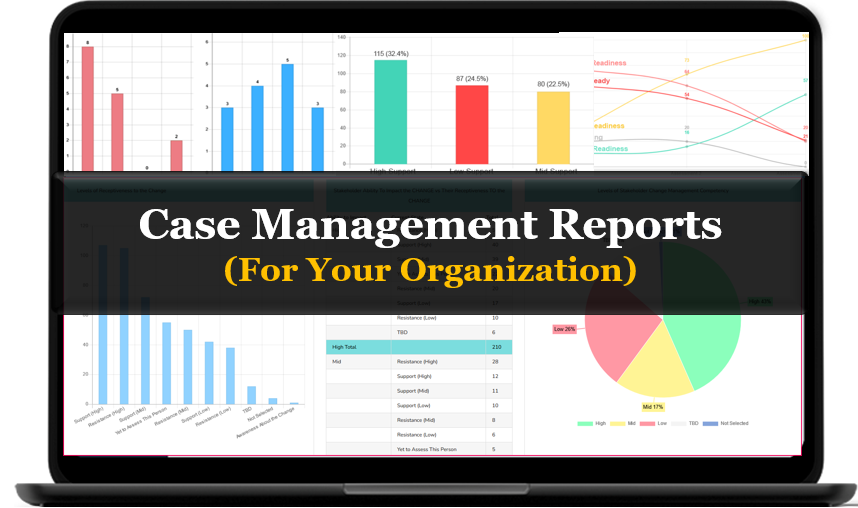
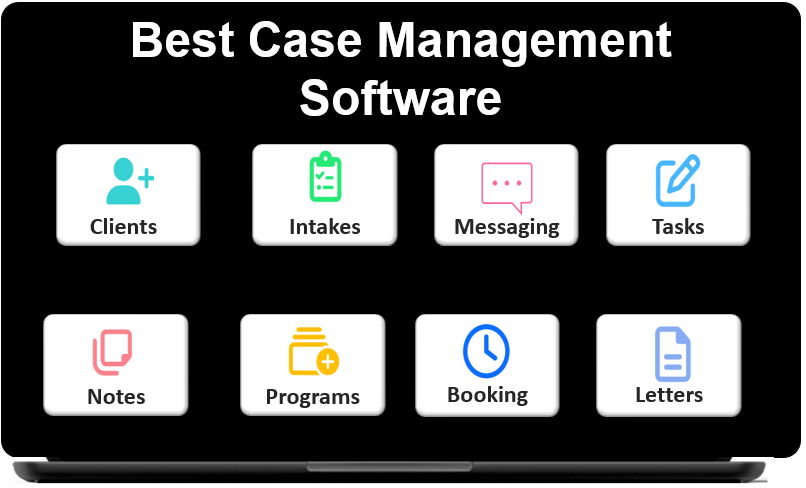
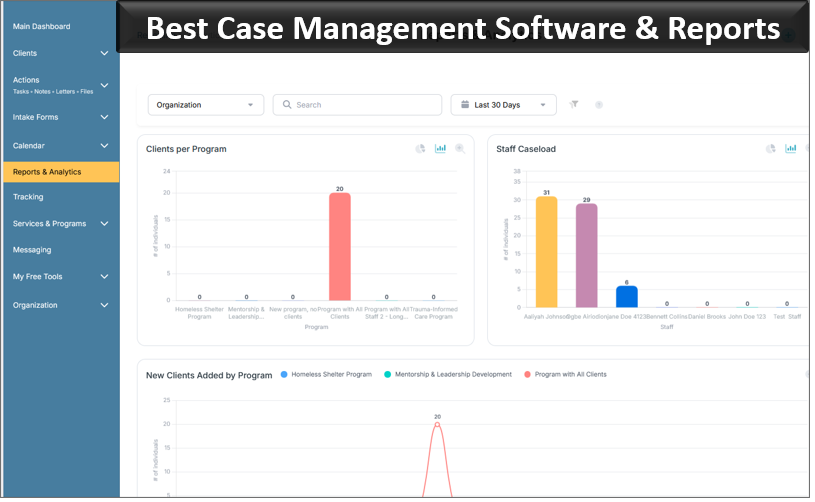
That is where having the right tools in place makes a difference. Case Management Hub is an all-in-one social work practice management platform built for social workers, therapists, case managers, and nonprofit organizations. It supports everything from client intake and holistic assessments to secure messaging, appointment scheduling, case notes, goal tracking, billing, and reporting, all in one place.
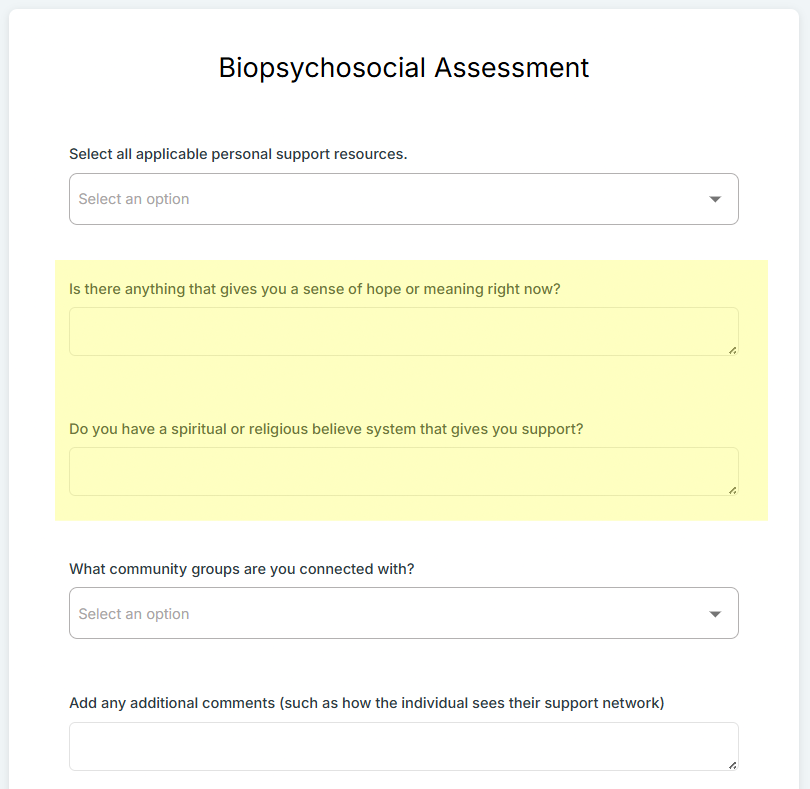
Easily add a spiritual component to your Biopsychosocial Assessment by adding a couple of spiritually-related questions. This is quick an easy in Case Management Hub’s drag-and-drop form builder.
For teams practicing person-centered care and working with complex client needs, having a centralized system means less time managing logistics and more time actually serving clients. If you are looking for a practice management platform built around the realities of social work, it is worth exploring what Case Management Hub offers. Sign up for a free 21-day trial (no credit card needed) and check it out with your team!
👉 Try this Case Management Software free today
No credit card needed
Frequently Asked Questions about the Biopsychosocial Spiritual Model
What is the biopsychosocial spiritual model?
The biopsychosocial spiritual model is a whole-person assessment and care framework that evaluates four interconnected dimensions of a person's health and wellbeing: biological, psychological, social, and spiritual. It expands on the original biopsychosocial model by formally including the spiritual dimension as a meaningful factor in mental health and clinical care.
How does the biopsychosocial spiritual model differ from the biopsychosocial model?
The core difference is the inclusion of spirituality as a formal assessment domain. The biopsychosocial model covers biology, psychology, and social context. The biopsychosocial spiritual model adds a fourth domain that addresses meaning, purpose, faith, beliefs, and spiritual practices, recognizing their influence on health outcomes and coping.
Is spirituality the same as religion in this model?
No. While religion is one form of spirituality, the biopsychosocial spiritual model uses a broader definition. Spirituality refers to a person's sense of meaning and purpose, their connection to something beyond themselves, and the values and practices that give their life structure. That can include religion, but it can also include non-religious sources of meaning, community, and identity.
Why is the spiritual dimension important in social work assessment?
For many clients, spiritual beliefs and practices are a primary source of resilience, coping, and community. Ignoring this dimension during assessment means missing information that may be directly relevant to treatment planning, cultural responsiveness, and the therapeutic relationship. Research consistently links spiritual wellbeing and mental health outcomes, making it a clinically relevant domain.
How do social workers incorporate spirituality into a clinical assessment?
Practitioners can incorporate spirituality by including open-ended questions about meaning, faith, and community during intake and assessment. Tools like the HOPE questions or FICA Spiritual History Tool offer structured approaches. The goal is to create space for clients to share what is relevant to them, without imposing assumptions about what that looks like.
Can this model be used in secular or non-religious settings?
Yes. The biopsychosocial spiritual model is used across a wide range of settings, including secular hospitals, community mental health centers, and nonprofit organizations. Because the model defines spirituality broadly rather than restricting it to organized religion, it is applicable across diverse client populations and practice environments.
👉 Try it free today - No credit card needed
Note: Content on this website (socialworkportal.com) is copyrighted and protected under applicable copyright laws. Unauthorized reproduction, distribution, or use of any content from the website, without explicit written permission, is strictly prohibited. Read: Terms of Use.
Social Work Portal Disclaimer: Social Work Portal is not a social work agency and we do not refer social workers. This web site is provided for educational and informational purposes only and does not constitute providing medical advice or professional social and healthcare services. The information provided should not be used for diagnosing or treating a health problem or disease, and those seeking personal medical advice should consult with ... Read our full disclaimer here: Social Work Portal Disclaimer.