Streamline Your Process: Top Social Work Intake Forms
If you work in social work, case management, or a related field, you already know that the intake process sets the tone for everything that follows. The social worker intake form a client completes on day one shapes how services get structured, how documentation flows, and how well your team can actually help. But with so many form types out there, it can be hard to know which ones matter most, which are worth standardizing, and how they compare across different practice settings.
This guide breaks down the most commonly used client intake form types in social work, what makes each one valuable, and how to think about choosing the right forms for your organization.
In this article, you will learn:
- The most frequently used social worker intake form types across settings
- What distinguishes a general intake form from a specialized assessment form
- How trauma-informed and mental health intake forms differ from standard forms
- What to look for when selecting or building your own intake form templates
- How electronic intake forms compare to paper-based processes
- How software can simplify the entire intake and assessment workflow
Let’s get started
Watch this video:
or
read the guide below.
What Is a Social Work Intake Form and Why Does It Matter?
A social work intake form is the structured document used to collect initial information from a new client at the start of the service relationship. It captures the details a practitioner needs to understand who the client is, what they are seeking help with, and what factors may be shaping their situation.
A well-designed client intake form for social work does more than collect data. It builds rapport, establishes expectations, and creates the documentation foundation for everything that follows, from case notes to progress tracking to eventual case closure. According to a social work intake process study published in the International Journal of Environmental Research and Public Health, effective intake documentation is directly linked to better service continuity and improved client outcomes.
For nonprofits, clinics, schools, and private practices alike, the social work intake process is often the first real touchpoint between a client and the organization. Getting it right matters.
💡All-in-one Case Management Software.
Everything in one place: clients, notes, forms, appointments, reports, and outcomes.
👉 Try it Free - No credit card needed
What Are the Most Common Types of Social Worker Intake Forms?
While every organization tailors its forms to its population and program model, several intake form types consistently show up across social work settings.
General Client Intake Form
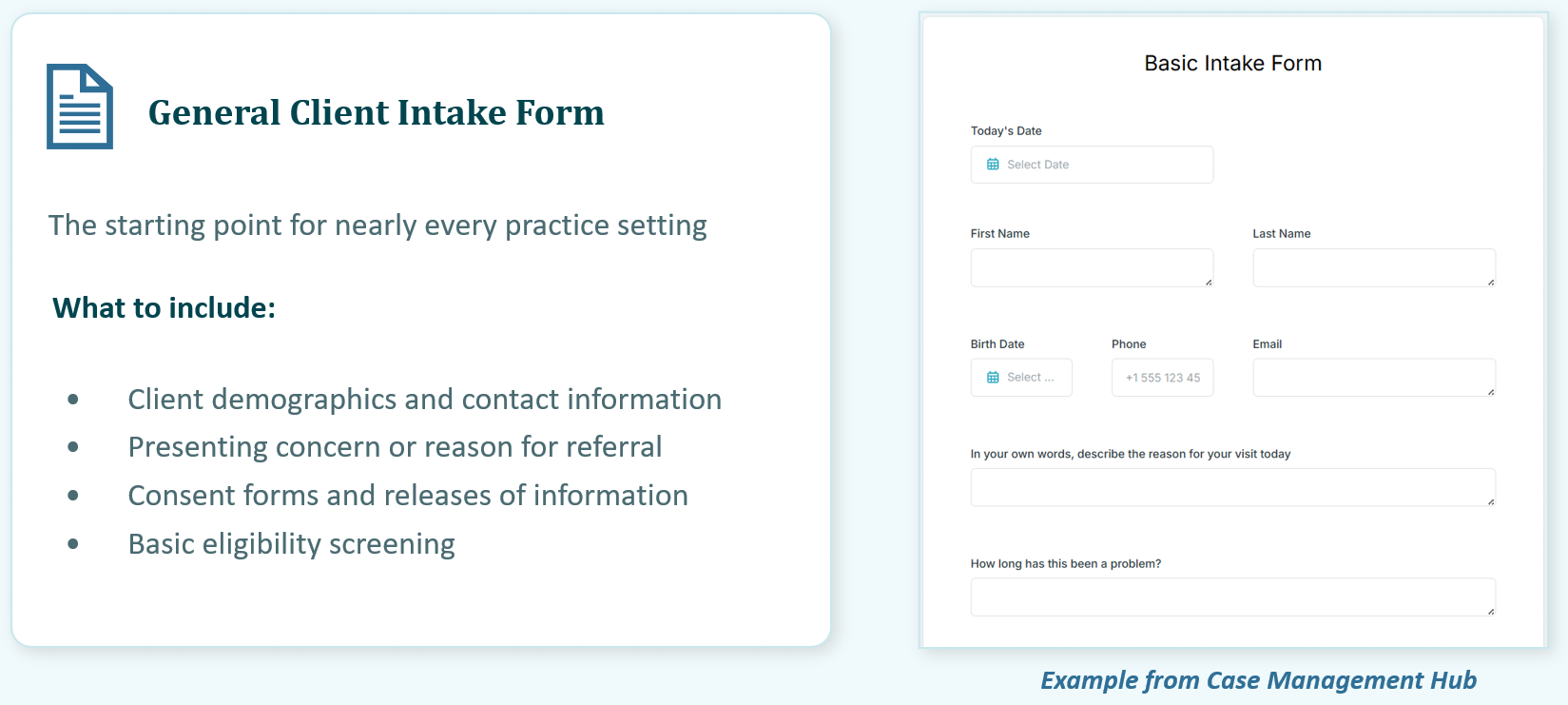
This is the foundational document used in nearly every practice setting. A general social work intake form typically collects demographic information, contact details, presenting concerns, referral source, and basic eligibility information. It is the starting point that allows a practitioner to open a case and begin the documentation process. For many organizations, this form doubles as a client onboarding tool that collects consent and releases of information as well.
Biopsychosocial Intake Form
One of the most thorough form types used in clinical and case management settings is the biopsychosocial intake form.
This form examines a client’s biological factors (health history, medications, physical needs), psychological factors (mental health history, emotional functioning, trauma), and social factors (family, housing, employment, support systems).
Because it captures the full picture of a person’s life and circumstances, it is widely used by LCSWs, therapists, and clinical case managers as the primary social work assessment form during intake.
Mental Health Intake Form
A mental health intake form is specifically designed for behavioral health and therapy settings. It typically includes questions about current symptoms, mental health history, previous diagnoses, medications, substance use, and risk factors such as self-harm or suicidality.
Therapists and mental health professionals rely on this intake form for therapy to establish clinical baselines and begin treatment planning. The depth of a mental health intake form often goes beyond what a general intake would capture, making it essential in any clinical or counseling context.
👉 Try it Free - Free Case Management System
Case Management Intake Form
In community-based, nonprofit, and social services settings, the case management intake form serves as the primary entry point for clients seeking wraparound support.
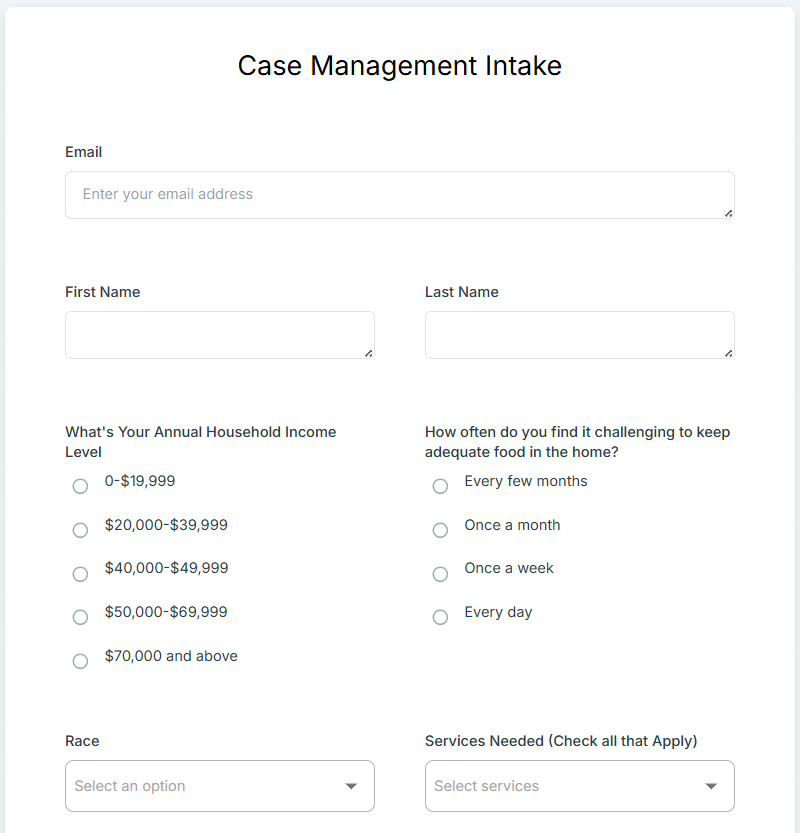
These forms focus on presenting needs across multiple life domains: housing, food security, employment, transportation, childcare, benefits access, and more. A strong case management intake form helps practitioners quickly identify gaps, prioritize services, and build an initial service plan.
They are especially common in nonprofit client intake workflows and social services intake processes.
Example Case Management Intake Form from Case Management Hub
Trauma-Informed Intake Form
A trauma-informed intake form is structured with sensitivity to the impact of trauma on clients’ lives and their ability to engage with services. Rather than asking blunt or potentially retraumatizing questions, these forms are designed to gather necessary information while building safety and trust.
Trauma-informed intake forms are increasingly used across social work settings, particularly in domestic violence programs, child welfare, refugee services, and behavioral health contexts. Using a trauma-informed intake form reflects an organizational commitment to client-centered practice.
Intake and Assessment Combined Form
Many organizations choose to combine the initial intake with a brief assessment in a single document. This approach streamlines the social work intake process by reducing the number of sessions required before services can begin.
These combined forms typically include demographic data, presenting needs, risk screening, and basic goal identification, giving practitioners enough to begin service delivery immediately. They are popular in high-volume settings where efficiency is important without sacrificing quality.
Specialty and Population-Specific Forms
Beyond these core types, many organizations use intake forms tailored to the specific population they serve. Youth and family services programs may use forms that gather school information, family composition, and child development history.
Housing and homelessness programs typically include questions about eviction history, income, and prior shelter use. Substance use programs use intake questions related to usage patterns, treatment history, and readiness to change. These forms reflect the reality that good social work documentation starts with asking the right questions for the right population.
All-in-One Case Management Software
Sign Up Today, Free
No credit card needed!
Do You Have a Team? | ||
Our best all-in-one client and top case management software simplifies everything from client intake and assessments to programs, projects, goals tracking, planning, scheduling, documentation, reporting dashboard, and progress tracking.
How Do Electronic Intake Forms Compare to Paper-Based Forms?
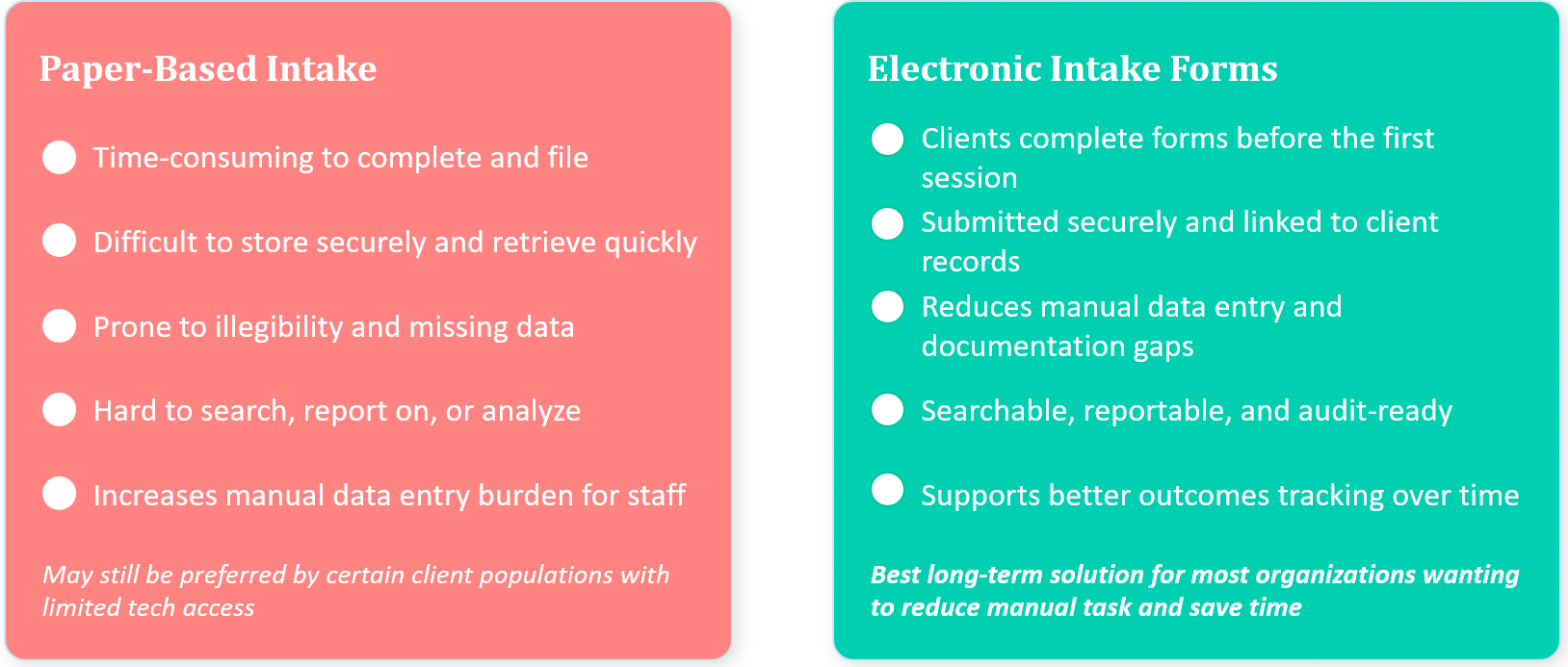
The shift toward electronic intake forms in social work has been significant, and for good reason. Paper-based intake processes are time-consuming, difficult to store securely, prone to illegibility, and hard to search or report on later. Electronic intake forms, by contrast, can be completed digitally by clients before their first appointment, submitted securely, and automatically linked to a client record in a case management system.
For organizations weighing the two approaches, the decision often comes down to client population and organizational capacity. Some clients genuinely prefer paper, and some settings have limited technology access. But for most organizations, the long-term benefits of digital intake, including reduced administrative burden, better data accuracy, and stronger reporting, make the transition worthwhile.
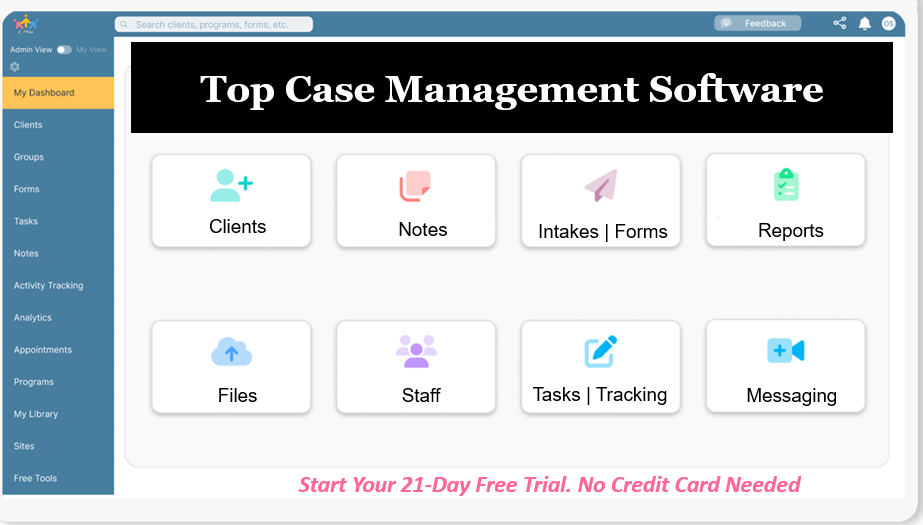
A free social work intake form template is a reasonable starting point for organizations building their first digital forms, but scalable organizations typically benefit more from a platform that allows forms to be customized, sent to clients electronically, and connected directly to client records.


What Should You Look for in a Social Work Intake Form Template?
Whether you are building your own forms or evaluating existing templates, a few factors consistently separate useful intake forms from ones that create more work than they save.
Clarity matters. Forms that use plain, accessible language reduce confusion and improve completion rates. Structure matters too. A well-organized social work assessment form guides the practitioner and the client through the information logically, reducing the chance of missing critical details. Coverage is important, but so is restraint. Forms that ask for too much upfront can feel overwhelming to new clients who are already navigating a stressful situation.
For organizations serving specific populations, alignment with best practice frameworks is a key decision-making factor. A trauma-informed intake form should reflect actual trauma-informed principles, not just be a standard form with softer language. A biopsychosocial intake form should genuinely explore all three domains with enough depth to guide clinical thinking.
🔥Still using spreadsheets for case management?
Switch to an all-in-one case management platform.
👉 Try it Free - No credit card needed
How the Right Software Can Simplify the Entire Intake Process (Get Free Templates!)
Managing intake forms across a busy caseload, especially across multiple staff members or program areas, gets complicated fast. That is where purpose-built social work case management software makes a real difference.
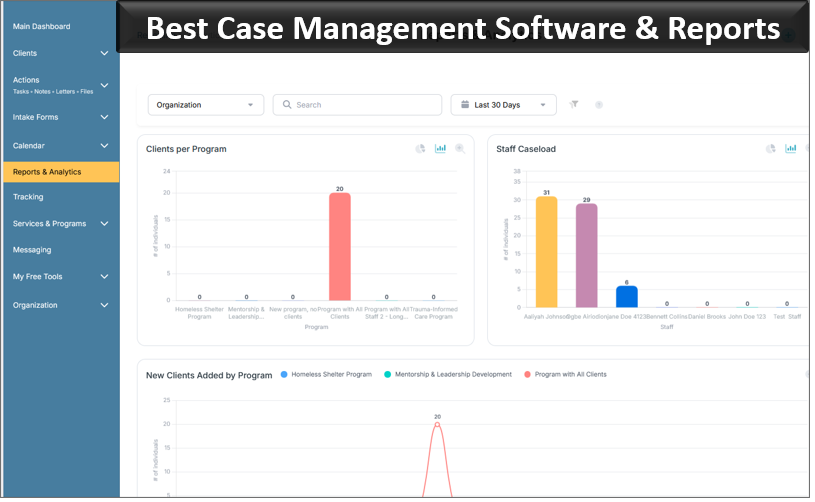
Case Management Hub, built by Social Work Portal, is an all-in-one platform designed specifically for social workers, case managers, therapists, and nonprofits. It supports digital intake forms and electronic assessments that can be sent directly to clients, completed on any device, and automatically connected to a client record. Organizations can build custom forms, use standardized templates, collect electronic signatures, and eliminate the manual data entry that comes with paper-based processes.
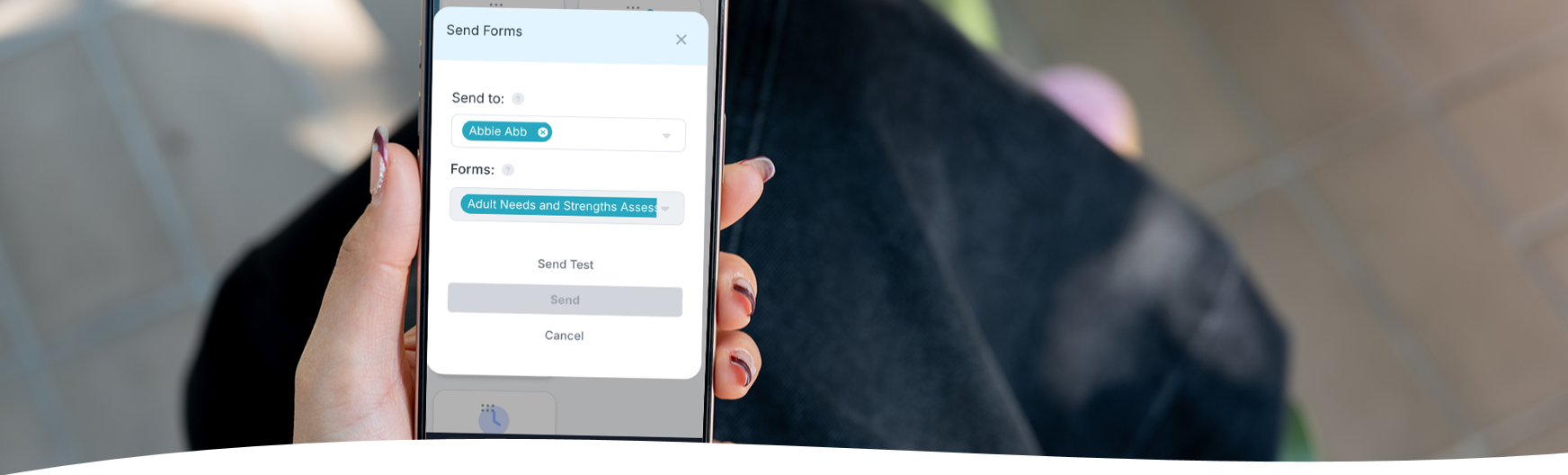
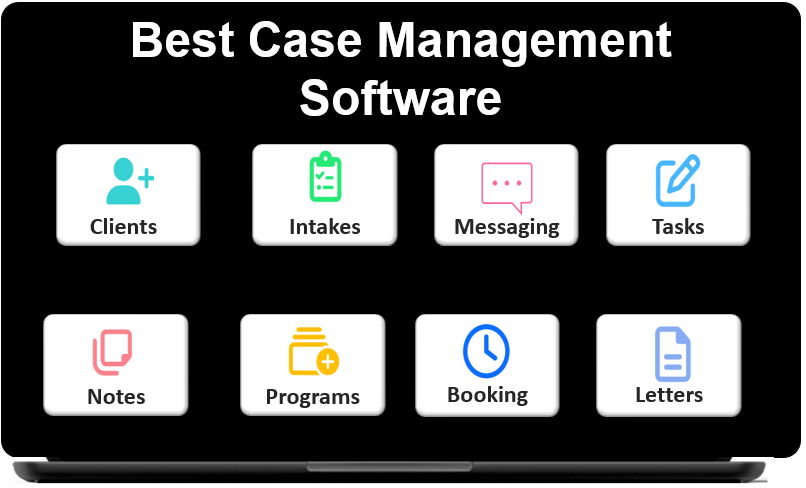
Beyond intake, the platform handles case notes, goal tracking, scheduling, secure messaging, file storage, timekeeping, billing, and reporting, all in one place. For organizations that want to standardize their social work intake process while also improving documentation and outcomes tracking across the board, it is worth exploring. Start a free trial here (no credit card needed!).
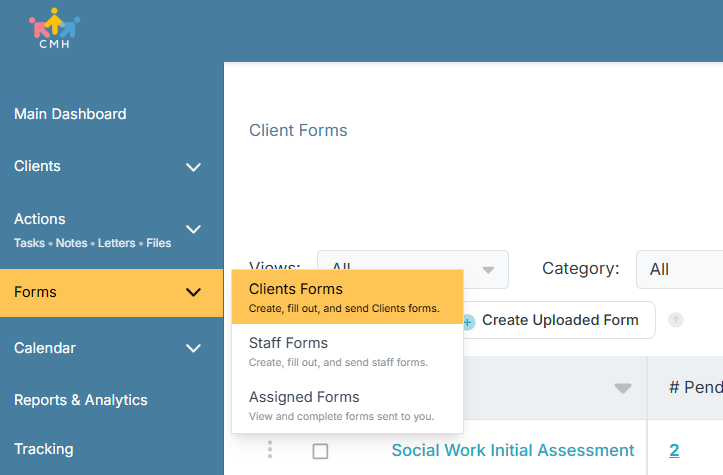
Plus, Case Management Hub includes over 40 free case management assessment and intake forms! Sign up and visit the “Forms > Client Forms” area.
👉 Try this Case Management Software free today
No credit card needed
Frequently Asked Questions About Social Work Intake Forms
What is the difference between a social work intake form and an assessment form?
An intake form collects foundational information to open a case, while an assessment form goes deeper into a client's strengths, needs, risks, and goals. In practice, many organizations use forms that blend both, especially in clinical or case management settings.
Are there free social work intake form templates available
Yes, free templates are available by signing up for a free trial of the Case Management Hub Software (just click the Free Trial link at top) as well as in various professional and educational resources. Keep in mind that digital forms inside a software offer more automation and less manual work than paper social services forms.
What should a mental health intake form include?
A mental health intake form should cover current symptoms, mental health and treatment history, diagnoses, medications, substance use, family psychiatric history, and risk screening areas such as suicidality or self-harm. The specific content will vary by setting and clinical model.
How is a trauma-informed intake form different from a standard intake form?
A trauma-informed intake form is designed to gather necessary information while minimizing the risk of retraumatization. This includes thoughtful question sequencing, warm and empowering language, client control over pacing, and explicit transparency about how information will be used.
What intake forms do nonprofits typically use?
Nonprofits commonly use general client intake forms, case management intake forms, and population-specific intake documents tailored to the services they provide. Organizations focused on housing, food access, or employment may use needs assessment forms that map directly to available services.
Can intake forms be sent to clients to complete before their first appointment?
Yes, and many organizations now use digital intake workflows that allow clients to complete forms online in advance. This reduces session time spent on paperwork and gives practitioners more complete information before the first meeting takes place.
👉 Try it free today - No credit card needed
Note: Content on this website (socialworkportal.com) is copyrighted and protected under applicable copyright laws. Unauthorized reproduction, distribution, or use of any content from the website, without explicit written permission, is strictly prohibited. Read: Terms of Use.
Social Work Portal Disclaimer: Social Work Portal is not a social work agency and we do not refer social workers. This web site is provided for educational and informational purposes only and does not constitute providing medical advice or professional social and healthcare services. The information provided should not be used for diagnosing or treating a health problem or disease, and those seeking personal medical advice should consult with ... Read our full disclaimer here: Social Work Portal Disclaimer.