The Blueprint for Transitioning from Social Worker to Supervisor: Adopting a Manager Mindset
Making the transition from social worker to supervisor is one of the most significant professional milestones you can achieve in the human services sector. It represents a fundamental evolution from providing direct, hands-on client care to steering the operational and emotional trajectory of an entire team. However, moving from frontline social worker to clinical supervisor requires a psychological and practical shift that many professionals find unexpectedly challenging.
When you operate on the front lines, your primary metric of success is the direct impact you have on individuals and families. Once you step into leadership, your success is measured by how effectively you support and empower the professionals who are delivering that care. In short, your focus expands from “how do I help this client?” to “how do I build a sustainable system so my team can help hundreds of clients?” This comprehensive guide outlines the critical operational shifts, software tools, and leadership strategies needed to step into your new role with absolute confidence.
Let’s get started
Watch this video:
or
read the guide below.
What You Will Learn in This Guide
- How to successfully shift your professional identity from direct practitioner to team leader
- Proven strategies for managing former peers without creating friction or resentment
- The fundamental differences between clinical supervision best practices and administrative oversight
- How to leverage an all-in-one social work practice management software to optimize agency workflows
- Methods for maintaining high ethical standards and preventing burnout across your entire staff
- Critical decision-making factors to evaluate when selecting case management technology
Everything in one place: clients, notes, forms, appointments, reports, and outcomes. 👉 Try it Free - No credit card needed💡All-in-one Case Management Software.
How Do You Overcome the Identity Crisis of the Mindset Shift?
The earliest hurdle during the transition from social worker to supervisor is managing the internal shift in identity. Frontline practitioners are driven by direct clinical or advocacy outcomes. When you step into management, you no longer receive the same immediate feedback from a successful client interaction. Instead, your days are consumed by social work supervisor responsibilities such as administrative oversight, regulatory compliance, and program design.
Developing a manager mindset in social work requires accepting that your relationship with direct practice has evolved. You are no longer the primary driver of frontline interventions; you are the facilitator of the environment that makes those interventions successful. If you do not consciously embrace this change, you risk falling into the trap of micromanagement, constantly stepping in to handle complex cases yourself rather than coaching your staff to find their own solutions.
What Is the Secret to Managing Former Peers in Social Work?
Perhaps no aspect of the transition from frontline social worker to clinical supervisor is more socially complex than managing people who were recently your equals. It is common to experience anxiety about exercising authority over individuals with whom you used to vent about agency policies or share casual lunches.
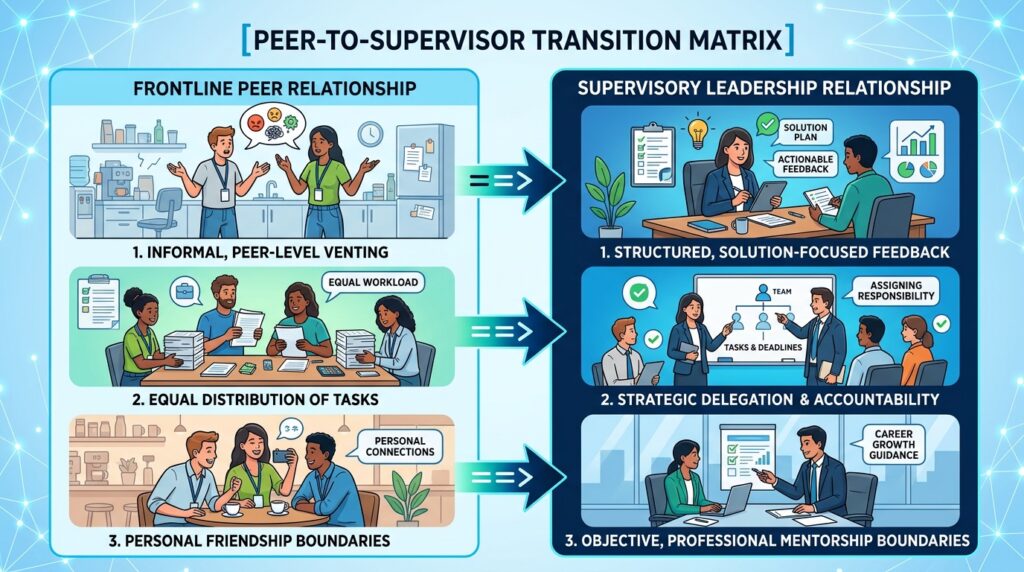
Successfully managing former peers in social work requires setting clear, compassionate boundaries early on. Acknowledge the shift openly in a team meeting or in one-on-one sessions. You do not need to alter your personality or become overly rigid, but you must establish that your primary responsibility is now to support their professional growth and hold the team accountable to institutional standards. Transparency, consistency, and absolute fairness in how you assign tasks and deliver feedback will prevent accusations of favoritism and ease the team’s systemic adjustment.
How Do Clinical and Administrative Supervision Roles Differ?
A common pitfall for newly promoted managers is failing to balance social work administrative vs clinical supervision. While both are necessary to run a healthy human service organization, they require entirely distinct skill sets and focus areas.
| Supervision Type | Primary Objective | Key Activities | Systemic Focus |
| Clinical Supervision | Enhancing practitioner competence, processing secondary trauma, and ensuring therapeutic efficacy. | Case reviews, clinical skills, bias management, and ethics. | The internal relationship between the practitioner and the client. |
| Administrative Supervision | Ensuring agency compliance, maximizing productivity, and maintaining data fidelity. | Quality assurance, workflow audits, monitoring timekeeping, billing verification, and performance reviews. | The external relationship between the practitioner and the organization. |
To achieve true social work team leadership strategies that last, you must learn to wear both hats without allowing administrative demands to completely crowd out clinical development. If you focus solely on compliance metrics, your staff will feel unsupported and reduced to mere numbers. Conversely, if you focus exclusively on clinical discussions, your program’s funding and data compliance could quickly fall apart.
Why Is Workflow Automation Vital for Modern Social Work Leaders?
The modern social services landscape is heavily reliant on structured data. As a new leader, you will quickly discover that managing social work caseloads efficiently is impossible if your team is bogged down by manual documentation, fragmented Excel spreadsheets, or archaic paper intake processes. This operational friction directly contributes to employee turnover and impacts service quality.
According to a comprehensive workforce study published in the peer-reviewed journal Social Work, administrative burden is consistently cited as a top predictor of professional exhaustion, with researchers noting that systemic underresourcing and high documentation demands severely compromise practitioner well-being. To combat this issue, modern clinical leads are turning toward an all-in-one social work practice management software to completely modernize their programs.
Implementing a platform that streamlines social work intakes and documentation allows your team to spend less time on repetitive data entry and more time on high-impact client care. When your agency utilizes automated tools for scheduling, secure client data storage, and timekeeping, you eliminate the operational bottlenecks that cause widespread administrative backlogs.
👉 Try it Free - Free Case Management System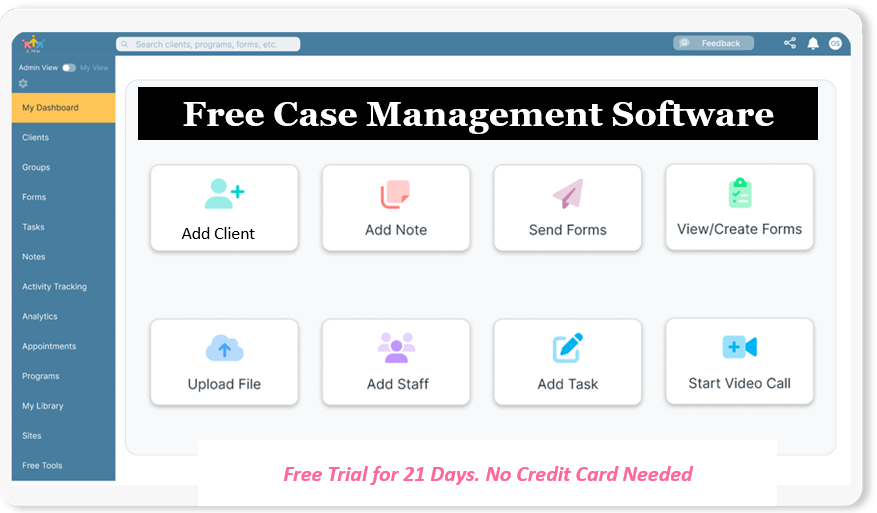
What Are the Core Decision-Making Factors When Selecting Team Tools?
When you step into a social service program administration role, you become a primary decision-maker for the tools your agency uses. Choosing technology for a human services team requires careful evaluation across multiple user and searcher considerations. You cannot simply select the cheapest option; you must select a platform designed specifically for the nuanced ethical and practical needs of social services.
- Rigorous Data Privacy & Compliance
Human service documentation demands the highest level of security. Your chosen platform must feature ironclad, secure client data storage for social services that complies with HIPAA and other local data privacy laws. Look for systems that offer role-based access controls so that staff members only see the files relevant to their specific caseloads.
- Streamlined Care Coordination
To keep your staff safely aligned, a platform must offer HIPAA-compliant secure messaging for care teams. This allows case managers, clinical leads, and administrators to discuss sensitive client updates in real time without resorting to insecure SMS or email networks.
- Clear Progress Tracking & Analytics
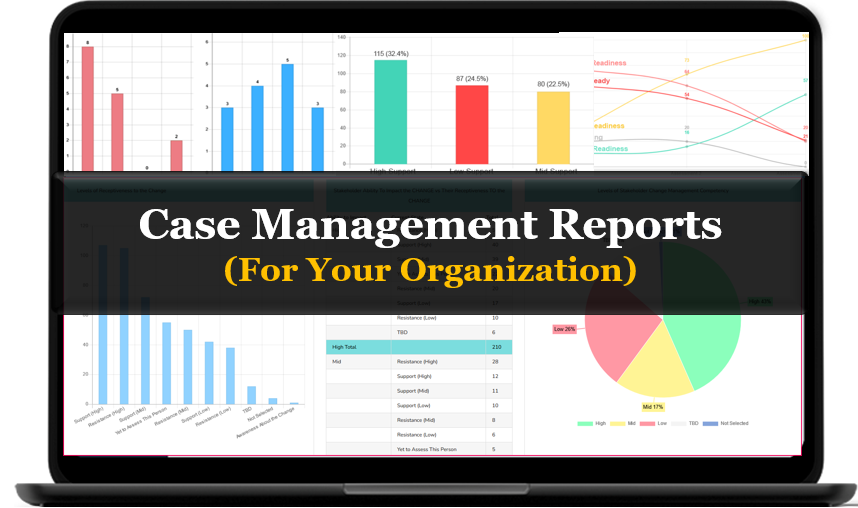
As a supervisor, you need macro-level insights to report to stakeholders, board members, or grant funders. Utilizing robust client progress tracking tools for supervisors ensures you can quickly generate visual charts on outcome metrics, check aggregate goals, and identify which programs are yielding the highest success rates.
Do You Have a Team? Our best all-in-one client and top case management software simplifies everything from client intake and assessments to programs, projects, goals tracking, planning, scheduling, documentation, reporting dashboard, and progress tracking.All-in-One Case Management Software
Sign Up Today, Free
No credit card needed!
How Can Supervisors Prevent Professional Burnout Across Their Staff?
The responsibility for preventing burnout in social work teams lies squarely on the shoulders of leadership. Frontline social work is inherently emotionally taxing. When workers are forced to battle clunky software, missing files, and unorganized schedules on top of processing secondary trauma, they reach their breaking point quickly.
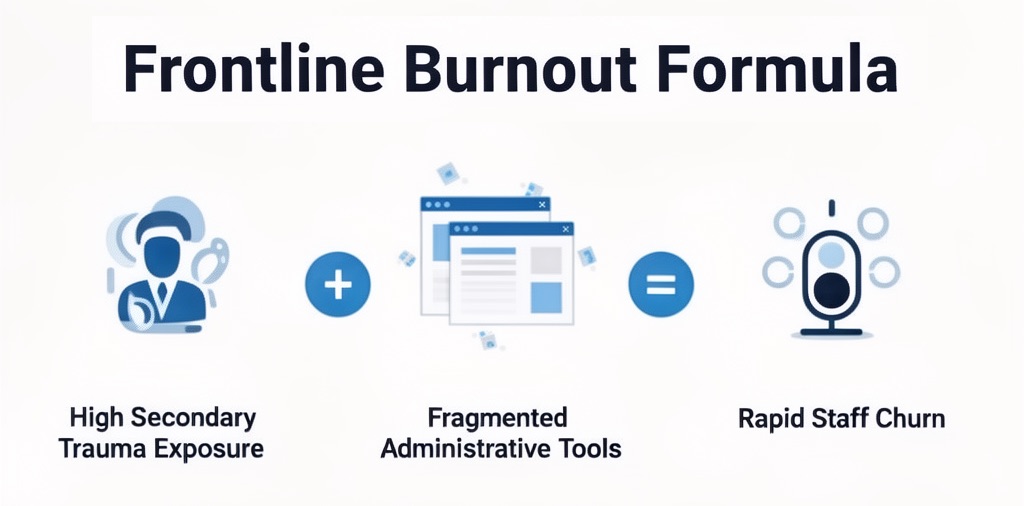
By prioritizing improving workflow efficiency in social services, you show your team that you value their labor and their mental health. Ensure that clinical supervision sessions are safe spaces for processing the emotional weight of their cases, rather than turning them into strict checklist reviews. Pair this emotional support with structural support by giving them intuitive, centralized case management software that simplifies billing, forms, and notes. When a supervisor removes systemic frustration from the daily workflow, team morale increases and client care naturally improves.

People Also Ask
How do I transition from a social worker to a manager?
Transitioning to a manager requires changing your focus from direct client care to team development, operational oversight, and program strategy. It involves setting professional boundaries with former peers, learning to delegate tasks effectively, and becoming proficient in social work administrative responsibilities like budgeting, compliance, and workflow optimization.
What are the main responsibilities of a social work supervisor?
The main responsibilities include providing clinical guidance to staff, ensuring adherence to the NASW Code of Ethics, conducting performance evaluations, auditing documentation for regulatory compliance, managing team caseload distribution, and facilitating professional development through structured supervision.
How do you supervise former coworkers in social services?
Supervising former coworkers requires holding an open, honest conversation early on to establish your new professional boundaries. It is critical to remain completely consistent, objective, and fair in your management, avoiding any appearance of favoritism while demonstrating that your primary focus is supporting their growth and protecting agency standards.
What is the difference between clinical and administrative supervision?
Clinical supervision focuses on a practitioner’s therapeutic skills, ethical dilemmas, case conceptualization, and processing secondary trauma. Administrative supervision focuses on organizational productivity, adherence to agency policies, accurate documentation, billing verification, and meeting grant or state metrics.
Why is case management software important for social work supervisors?
Case management software is important because it centralizes client records, automates timekeeping and billing, tracks client goals, and streamlines the intake process. This reduces the administrative burden on frontline staff, prevents data entry errors, and provides supervisors with the aggregate metrics needed for program reporting.
How can a social work supervisor reduce employee turnover?
A supervisor can reduce turnover by offering robust clinical support for secondary trauma, establishing manageable caseload limits, and deploying user-friendly practice management software to eliminate unnecessary paperwork. Creating a supportive, highly efficient work culture directly protects staff from professional burnout.
Streamline Your Transition with the Right Technology
Stepping into a leadership role is a complex journey, but you don’t have to navigate these logistical hurdles alone. Implementing an intuitive, specialized platform like Case Management Hub can quite literally make or break your team’s daily efficiency and overall morale.
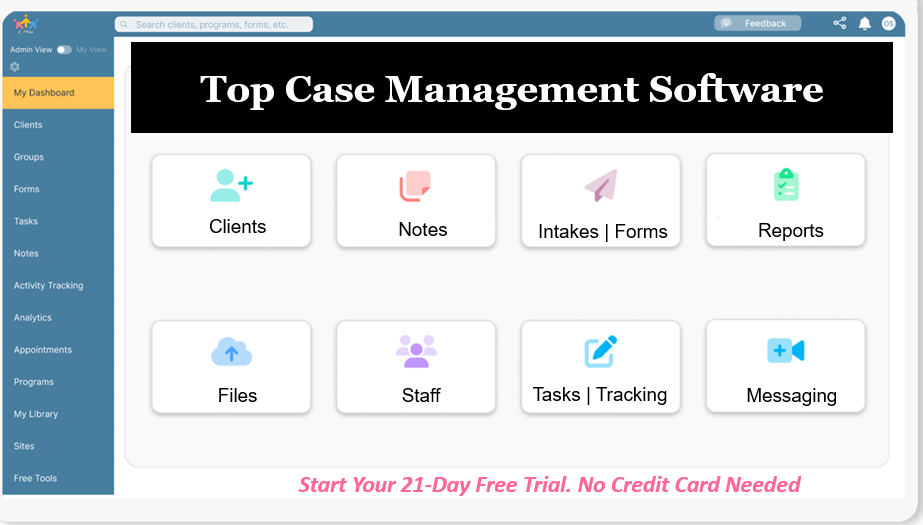
By unifying your operations under one roof, you can completely transform your agency’s administrative footprint. This streamlined ecosystem empowers you to deploy customizable intake forms, automate client scheduling, maintain secure file storage, and monitor compliant data tracking, all while accessing powerful reporting analytics.
To track clients per program, live staff caseloads, demographic equity, and aggregated form data all from a single, centralized dashboard:
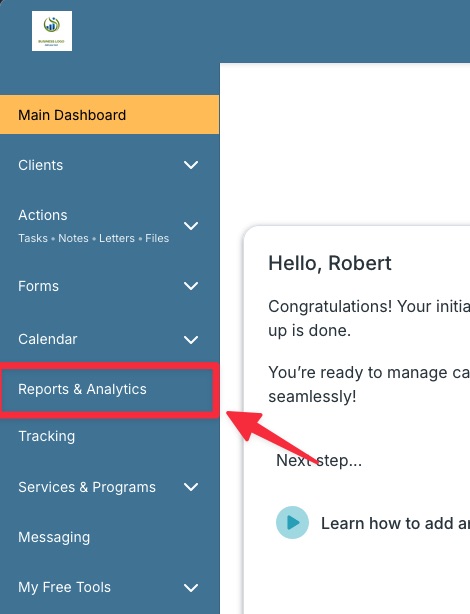
Step 1:
Navigate to the Reports & Analytics module from the sidebar.
Step 2:
Select whether you want view reports on: Organization (reports on clients per program, staff caseload, etc.) Demographics (reports on race, ethnicity, gender, marital status, etc.) Forms, or Goals.
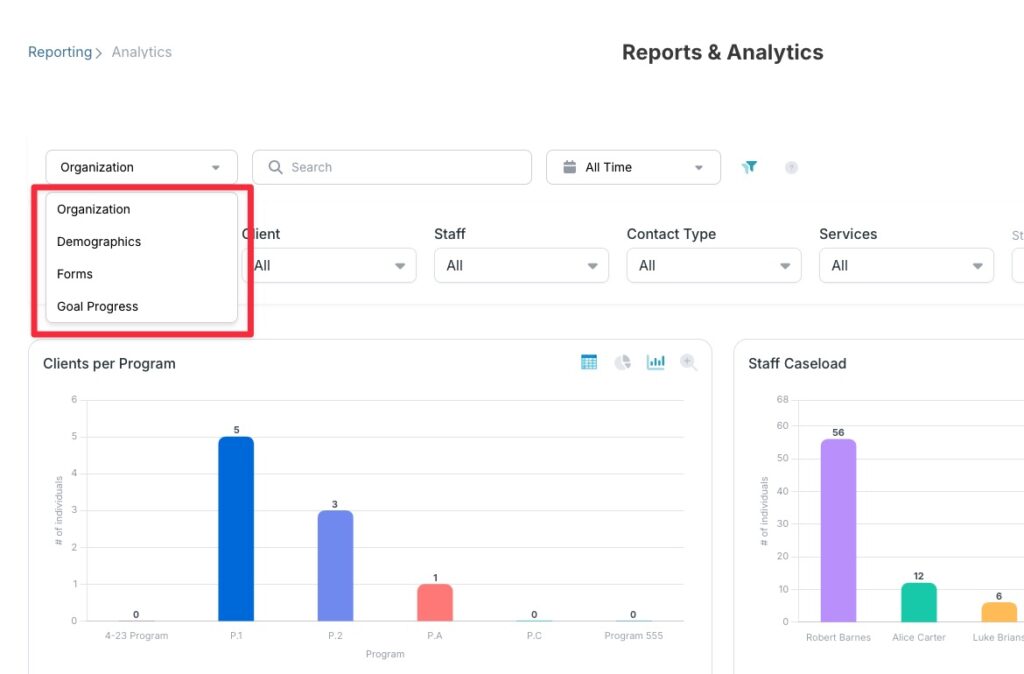
Tip: Reports can be filtered by date as well as other data such as program, client, staff, and much more.
Step 3:
Dig deeper into report details by clicking the magnifying glass. From the detailed popup you can export the graph and the data table.
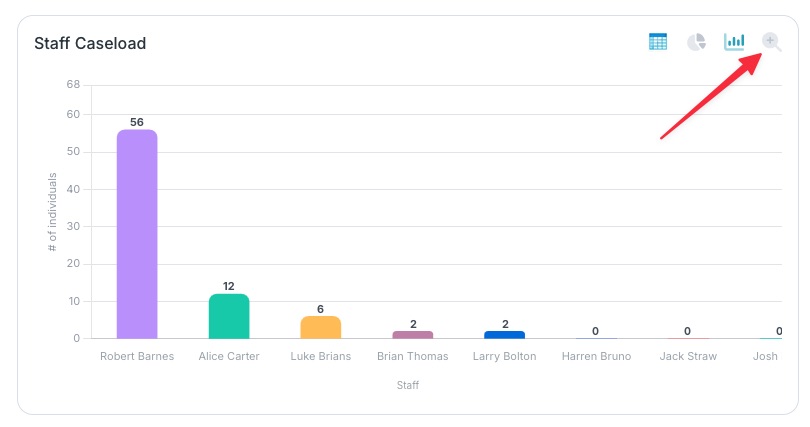
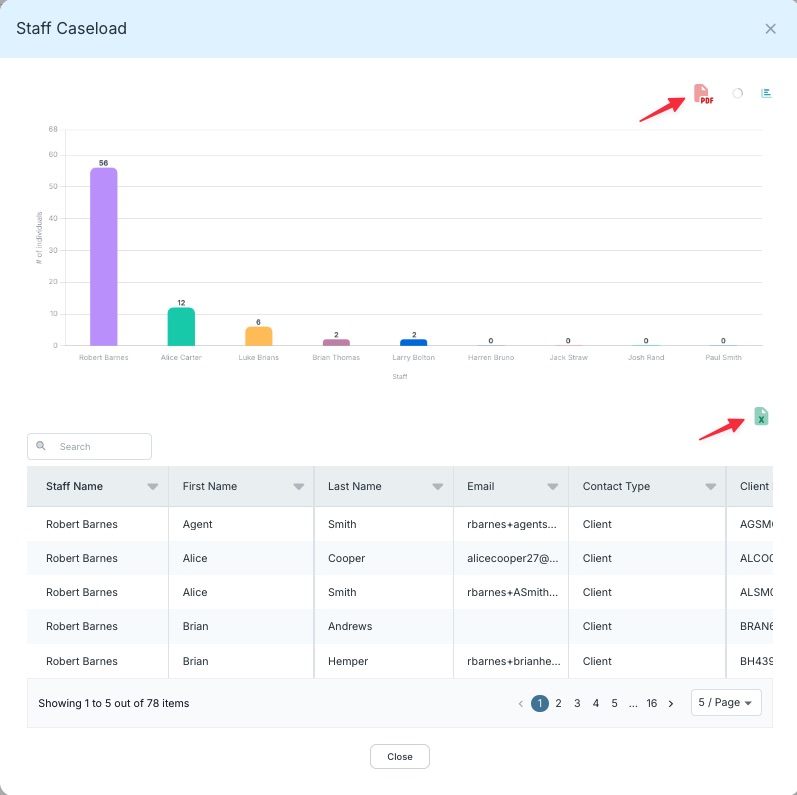
Tip: Graph reports can be viewed in either a bar or a pie chart for a better visual look.
Step 4:
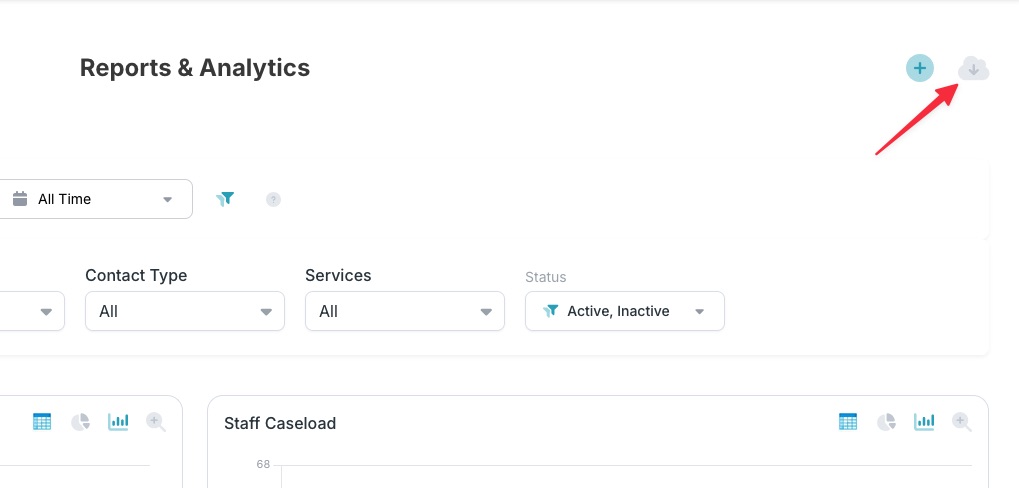
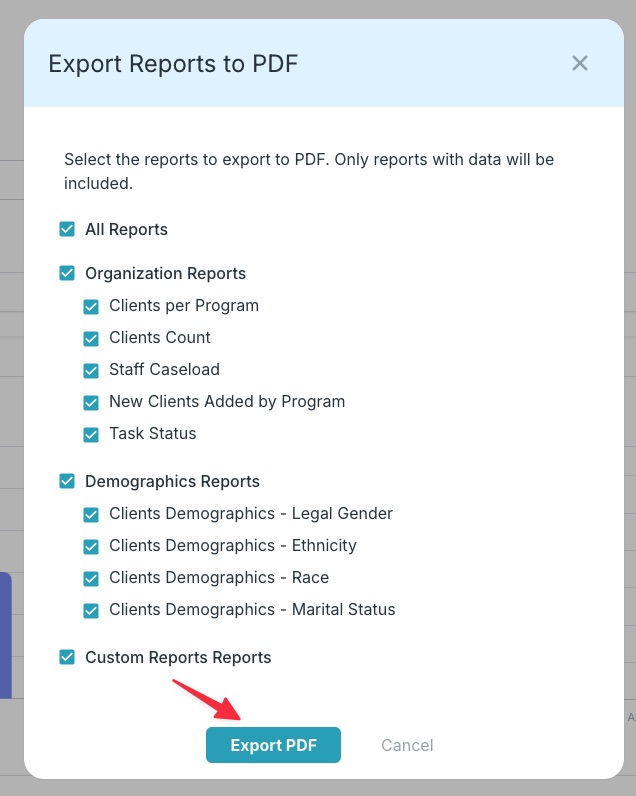
Export your entire dashboard or selected reports by clicking the cloud icon. When ready, click Export PDF.
Step 5:
Create a new custom report by clicking the plus icon and selecting from either client, staff, or program fields. Generate instantly a truly personalized report. Once done, click Create.
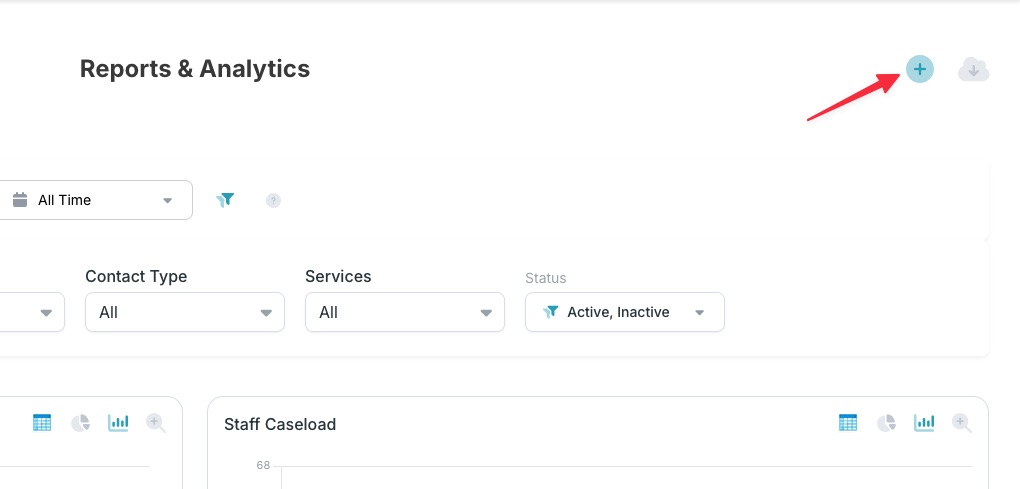
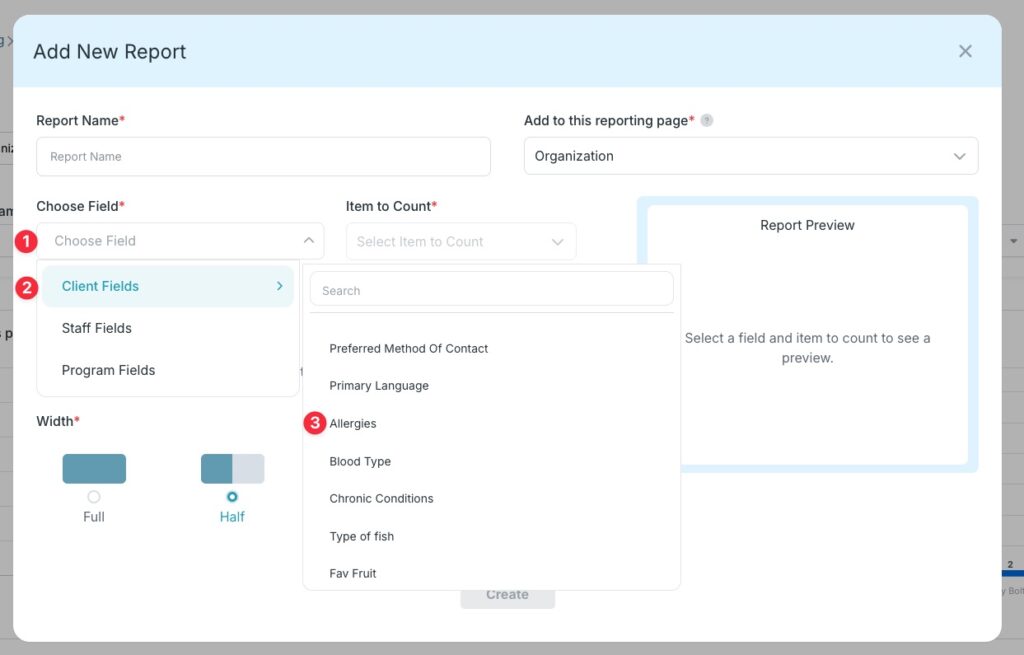
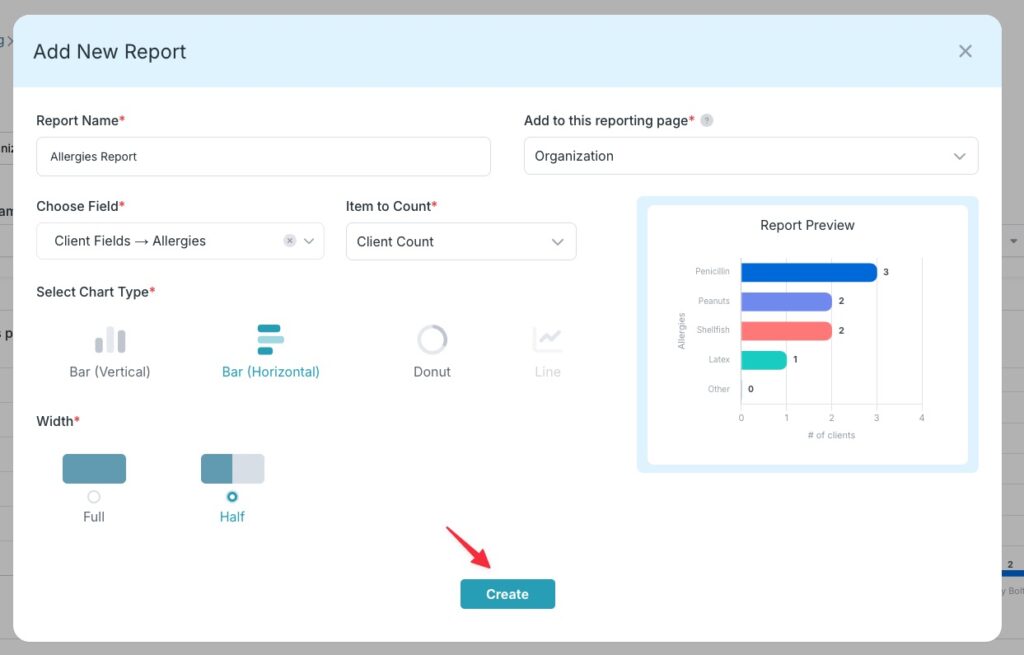
Tip: A report can also be created by selecting custom fields made on the client profile.
Ready to eliminate the paperwork bottleneck and elevate your team’s impact? Sign up for a free 21-day trial today with absolutely no credit card required, and experience how effortless modern team leadership can be.
Frequently Asked Questions
What are the most vital social work leadership skills?
The most vital skills include advanced empathetic communication, conflict resolution, strategic delegation, objective ethical decision-making, and a strong understanding of human services data systems and program administration.
How can I balance clinical guidance with administrative demands?
The best approach is to create a structured agenda for your supervision meetings that explicitly allocates distinct blocks of time for clinical case processing and administrative compliance audits, ensuring neither aspect is ignored.
What security features should I look for in social work software?
You should prioritize systems that feature verified HIPAA compliance, end-to-end data encryption, multi-factor authentication, secure cloud backups, and customizable role-based access permissions.
How can tools for tracking client progress help my agency secure funding?
Grant providers and donors want clear, verifiable proof of impact. Progress tracking tools allow you to aggregate anonymous client data to produce comprehensive outcome reports that demonstrate your program's concrete success rates.
What is the most effective way to address a performance issue with a staff member?
Address performance issues early through private, collaborative meetings. Use objective data from your case management platform to point out specific problem areas and work together to build a transparent performance improvement plan.
Can adopting a manager mindset help reduce my own professional stress?
Absolutely. When you stop trying to personally fix every single frontline issue and instead focus on building highly functional systems and empowering your staff, you protect yourself from executive exhaustion and build a more resilient organization.
👉 Try it free today - No credit card needed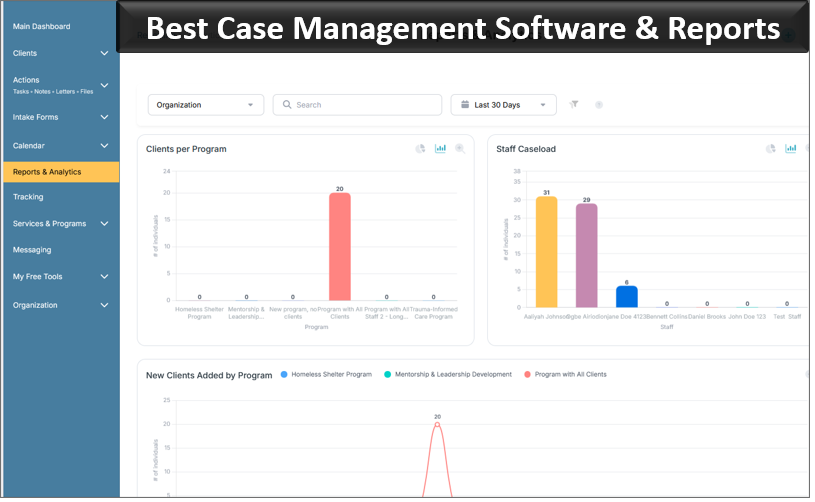
Note: Content on this website (socialworkportal.com) is copyrighted and protected under applicable copyright laws. Unauthorized reproduction, distribution, or use of any content from the website, without explicit written permission, is strictly prohibited. Read: Terms of Use.
Social Work Portal Disclaimer: Social Work Portal is not a social work agency and we do not refer social workers. This web site is provided for educational and informational purposes only and does not constitute providing medical advice or professional social and healthcare services. The information provided should not be used for diagnosing or treating a health problem or disease, and those seeking personal medical advice should consult with ... Read our full disclaimer here: Social Work Portal Disclaimer.