Practical Workflows for Clinicians and Case Managers
Tracking a three-to-ten-month Illness Management and Recovery (IMR) program across ten SAMHSA modules often buries licensed clinical social workers, behavioral health case managers, and outpatient mental health therapists in loose worksheets, static PDFs, and disconnected spreadsheets. That fragmented paperwork fuels behavioral health clinician charting fatigue and steals hours from direct client care.
Monitoring serious mental illness recovery goals should not cost you your evenings. By standardizing module checklists, session notes, and outcome tracking from day one, solo private practice clinicians and agency teams can protect clinical fidelity while cutting documentation time in half.
Let’s get started
Watch this video:
or
read the guide below.
What You’ll Learn in This Guide
- How to structure a 10-month IMR treatment plan around measurable, client-defined life goals.
- Which core indicators to monitor across the 10 SAMHSA IMR modules without over-charting routine visits.
- Concrete IMR clinical progress note examples in SOAP and DAP formats that take under five minutes to complete.
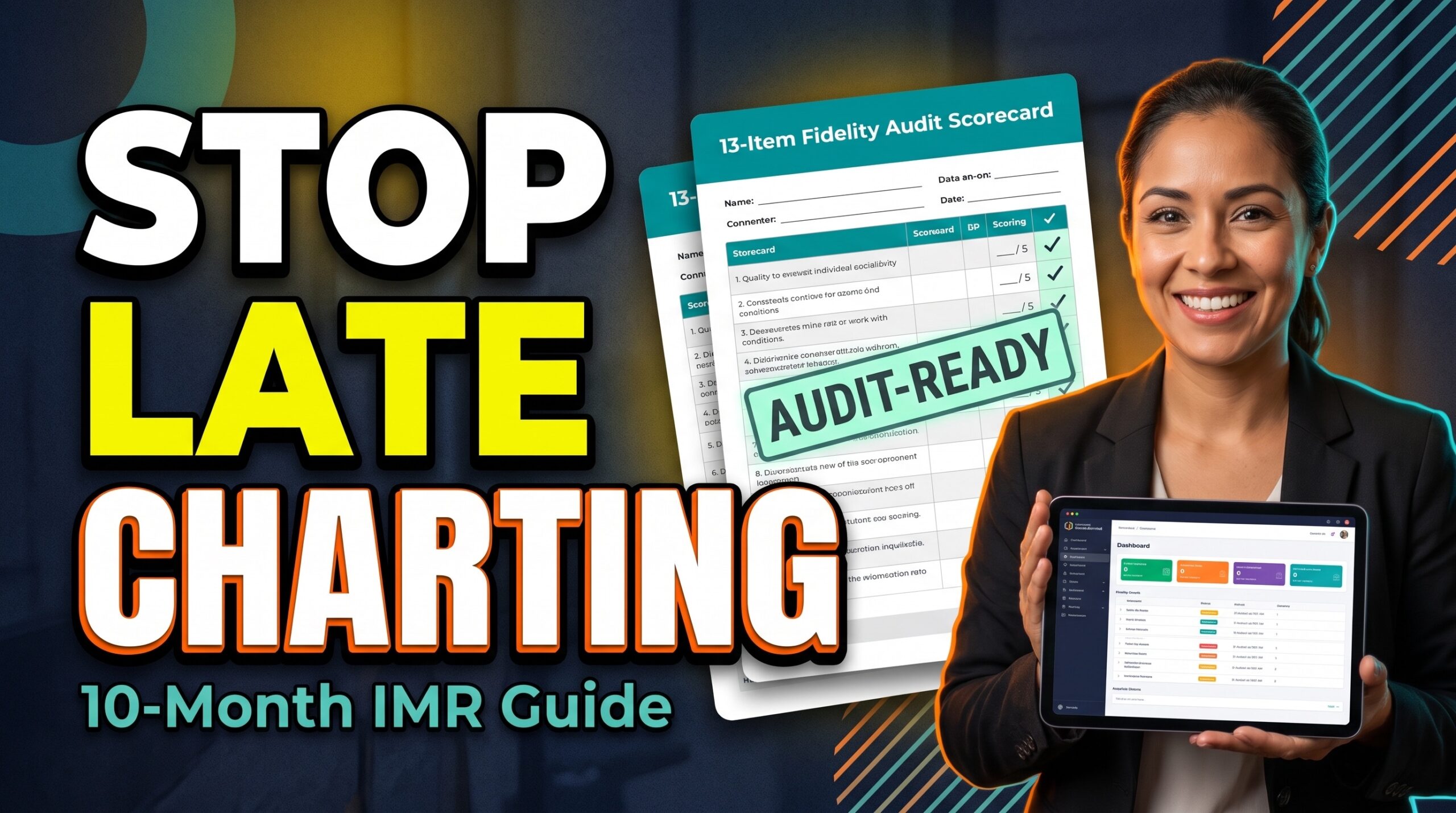
- How to prepare continuously for the 13-item Illness Management and Recovery Fidelity Scale checklist.
- Step-by-step workflows showing how digital tools replace manual binders with automated goal tracking and audit-ready reporting.
Free Supervisory Download: 13-Item IMR Fidelity Audit Scorecard
Preparing for a state or Medicaid review does not have to mean pulling dozens of physical charts at the last minute. Download our printable 13-Item IMR Fidelity Audit Scorecard & Supervisory Chart Review Tool to evaluate five sampled client records per clinician in under 20 minutes.
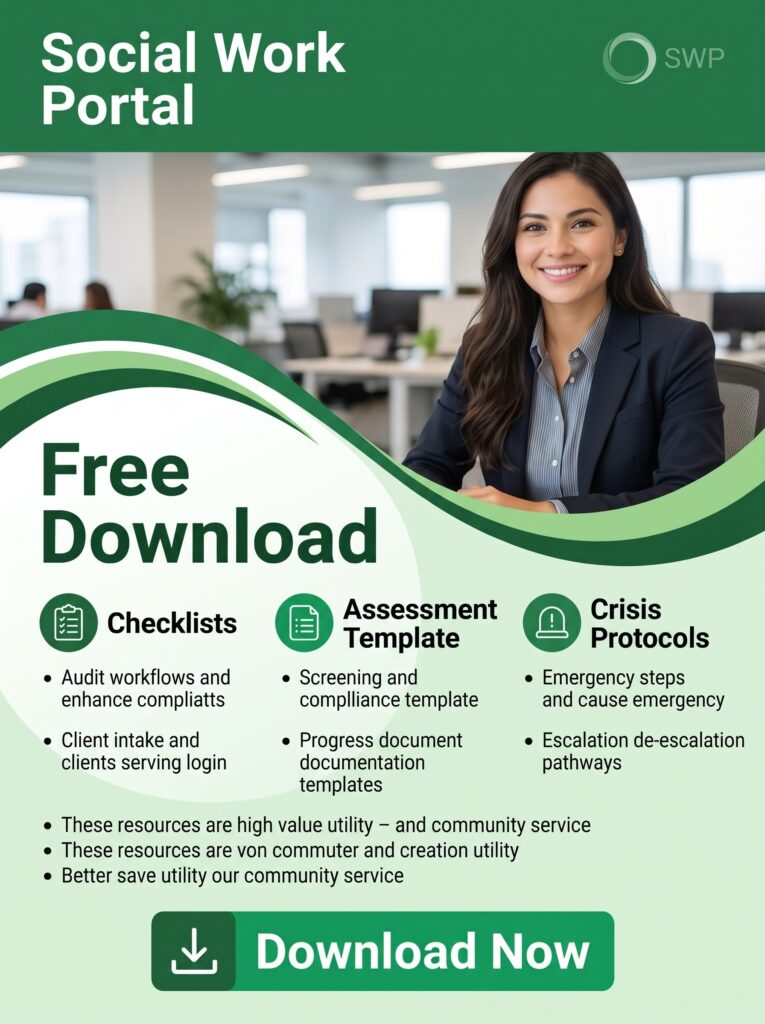
Download Your Free Resources Here
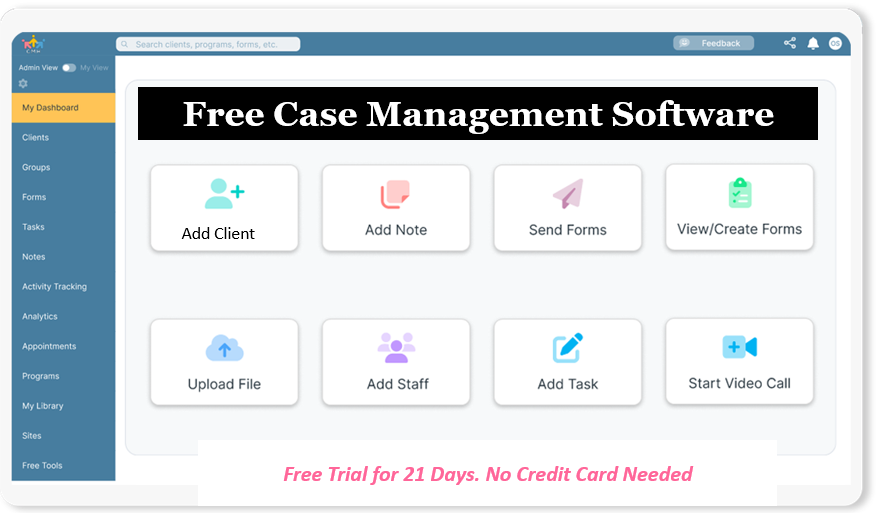
💡All-in-one Case Management Software.
Everything in one place: clients, notes, forms, appointments, reports, and outcomes.
👉 Try it Free - No credit card needed
Why Does Traditional IMR Tracking Cause Clinician Burnout?
According to the National Institute of Mental Health, more than one in five adults in the United States lives with a mental illness, and millions require structured, long-term support for conditions such as schizophrenia, bipolar disorder, and major depression. To help individuals move from passive symptom management to active self-direction, the Substance Abuse and Mental Health Services Administration developed the Illness Management and Recovery curriculum around ten structured educational modules, covering recovery strategies, practical facts about mental illness, the stress-vulnerability model, building social support, using medication effectively, drug and alcohol use, reducing relapses, coping with stress, managing persistent symptoms, and getting needs met by the mental health system.
While the clinical framework is proven, paper-heavy execution creates three predictable operational bottlenecks that drive reducing documentation burnout in behavioral health case management to the top of every supervisor’s priority list:
- Disconnected Client Homework and Clinical Records: Clients frequently complete IMR handouts on paper at home or during weekly groups, leaving community support specialists and peer support specialists to manually transcribe self-reported coping plans into an electronic chart hours or days later.
- Loss of Longitudinal Visibility Across Ten Modules: When progress lives inside chronological narrative paragraphs rather than structured trackers, dual-diagnosis counselors and assertive community treatment team leads must scroll through dozens of historical entries just to verify which modules a client has mastered and where relapse triggers remain unresolved.
- Pre-Audit Chart Scrambling: Behavioral health quality assurance managers and clinical supervisors must evaluate program delivery against the 13-item IMR Fidelity Scale and the General Organizational Index (GOI). When attendance logs, treatment plan reviews, and home practice follow-ups live in separate binders, preparing for a state or Medicaid audit forces teams into days of manual chart pulls.
👉 Try it Free - Free Case Management System
How Can Clinicians Structure a 10-Month IMR Treatment Plan?
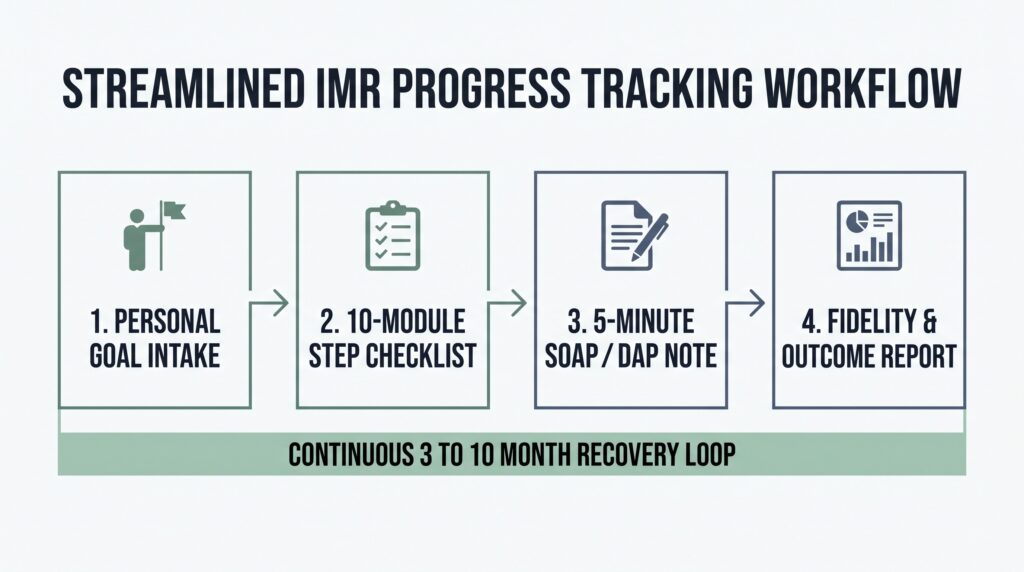
Effective SAMHSA IMR module tracking best practices start with separating curriculum delivery from longitudinal outcome tracking. Instead of rewriting a client’s entire clinical history every week, build your documentation architecture around three standardized anchors:
- Anchor 1: Translate Personal Aspirations Into Measurable Objectives. At intake, link the IMR curriculum directly to a tangible life goal the client cares about, such as returning to part-time employment, maintaining independent housing, or reconnecting with family. Every module worksheet then serves as a concrete stepping stone toward that personal milestone rather than an abstract classroom assignment.
- Anchor 2: Break Each SAMHSA Module Into Checkable Action Steps. Learning how to structure a 10-month IMR treatment plan becomes manageable when each of the ten modules is broken into three or four observable behavioral steps. For Module 7 (Reducing Relapses), your checklist tracks four concrete actions: identifying three personal early warning signs, documenting daily stress triggers, listing four immediate coping strategies, and sharing the written relapse prevention plan with a trusted supporter.
- Anchor 3: Pair Monthly Rating Scales With Hospitalization Metrics. When deciding how to measure client outcomes in IMR programs, combine module completion percentages with brief, standardized symptom and recovery rating scales administered every 30 days. Tracking quantitative shifts in symptom distress, medication adherence confidence, and emergency service utilization gives outpatient program managers hard outcome data without requiring multi-page narrative summaries.
What Belongs in High-Efficiency IMR Clinical Progress Notes?
Standardizing IMR clinical progress note examples eliminates blank-screen fatigue and ensures every entry satisfies medical necessity and fidelity standards. Rather than summarizing an entire 50-minute conversation, structure your SOAP (Subjective, Objective, Assessment, Plan) or DAP (Data, Assessment, Plan) note around four high-signal fields:
- Module Identifier and Delivery Modality: Specify the exact SAMHSA module and whether the contact was individual or group-based.
- Skill Practice Review: Document one specific way the client applied a coping skill or handout since the previous visit.
- Clinical Observation and Risk Check: Note observable affect, medication routine updates, and any substance use or relapse warning signs.
- Agreed Home Practice Action: Record one concrete task before the next session.
Here is a practical DAP template clinicians can complete in under four minutes:
- Data: Client attended 60-minute weekly IMR group session covering Module 3 (The Stress-Vulnerability Model). Client reported practicing paced breathing three times this week when workplace noise triggered auditory distress and rated current stress at 4/10 (down from 7/10 at baseline). Affect was calm, engaged, and future-oriented; client confirmed daily morning medication adherence with zero missed doses.
- Assessment: Client demonstrates strong uptake of biological vulnerability concepts and actively connects stress-reduction routines to their primary recovery goal of maintaining part-time retail employment. Relapse risk remains low with intact social support.
- Plan: Client will complete the Module 3 Personal Stress Triggers handout and post coping reminders on their refrigerator before next Tuesday’s session. Clinician will review coping log at next check-in.
For IMR group therapy attendance and outcome tracking, facilitators should enter the shared curriculum summary once across the group roster, then add a two-sentence individualized observation on each participant’s specific goal progress.
All-in-One Case Management Software
Sign Up Today, Free
No credit card needed!
Do You Have a Team? | ||
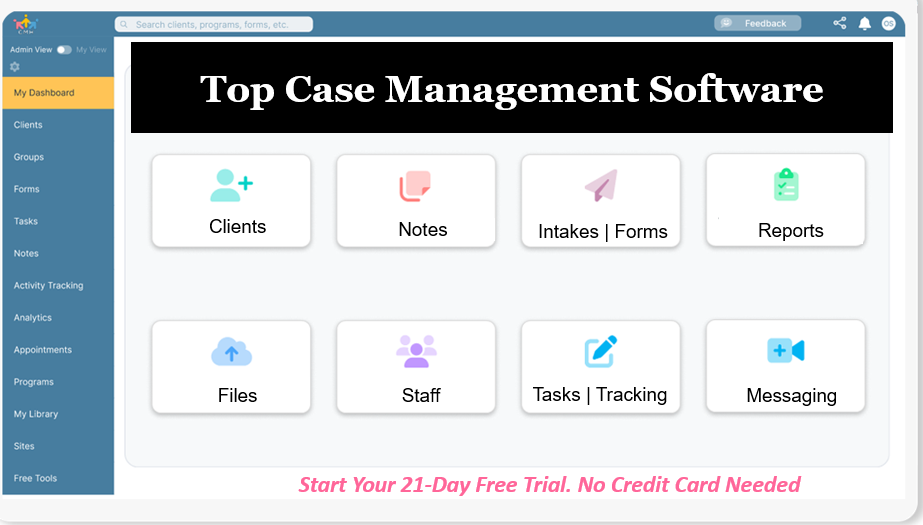
Our best all-in-one client and top case management software simplifies everything from client intake and assessments to programs, projects, goals tracking, planning, scheduling, documentation, reporting dashboard, and progress tracking.
How Digital Tools Streamline IMR Client Progress Tracking?
Moving from paper binders to purpose-built illness management and recovery case management software eliminates duplicate data entry and gives supervisors real-time visibility across every caseload. Modern HIPAA-compliant behavioral health goal tracking software unifies intake forms, module checklists, progress notes, and compliance reports inside one centralized client record.
- Two-Way Digital Intakes and Client Portal Handouts: Using digital intake and assessment forms for social workers, clinicians send mobile-friendly forms directly to a client’s portal or smartphone via a secure link. When clients submit baseline recovery goals or self-assessments online, responses sync automatically with their client profile fields, eliminating manual re-typing and duplicate records for clinic operations managers.
- Reusable 10-Module Program and Group Goal Templates: Behavioral health EHR administrators can configure the ten SAMHSA IMR modules once as standardized program or group goals broken into individual action steps. As clinicians or peer specialists check off completed steps, the system automatically calculates completion percentages for each individual and across the entire cohort.
- Rating Fields With Automated Risk Alerts and Trend Graphs: Instead of manually scoring paper scales, digital rating fields calculate assessment totals automatically, trigger instant staff notifications if a client scores in a moderate or severe distress range, and plot visual trend lines across every 30-day check-in.
- One-Click Group Notes and Integrated Time Tracking: With automated SOAP and DAP notes for case managers and bulk group note actions, facilitators can post shared curriculum notes directly into every group attendee’s profile while logging billable time, program tags, and service codes in the same workflow.
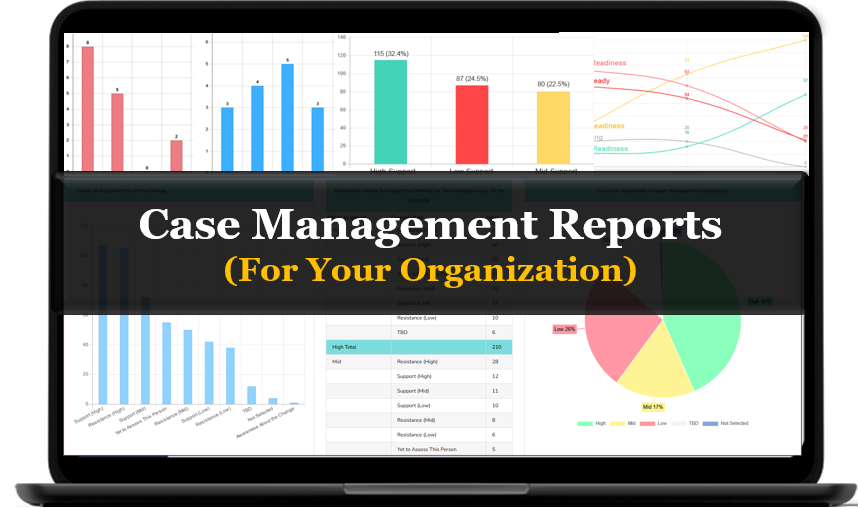
- Continuous Fidelity and Outcome Reporting: Equipped with an outpatient behavioral health outcome reporting tool and behavioral health quality assurance audit software, supervisors can filter custom single-select fields by module status, staff member, or date range and schedule automated PDF or Excel reports without pulling physical charts.
| Workflow Dimension | Manual / Paper-Based Workflow | Automated Digital Workflow |
| Client Intake & Self-Assessments | Printed packets scanned and manually re-typed into local spreadsheets | Online forms that sync directly to client profile fields and reports |
| 10-Module Progress Tracking | Paper checklists tucked inside physical binders with no cohort view | Centralized individual and program goal trackers with live completion percentages |
| Symptom & Distress Monitoring | Paper scales scored by hand and filed away between quarterly reviews | Auto-scored rating fields with high-risk email alerts and visual trend charts |
| Group Session Documentation | Separate progress notes typed individually for every group attendee | Shared group notes posted to all attendee profiles plus quick individual updates |
| Fidelity & QA Compliance Audits | Multi-day manual chart pulls before state, funder, or Medicaid reviews | Real-time analytics dashboards, role-based audit logs, and scheduled exports |

People Also Ask
How long does an Illness Management and Recovery program typically last?
Most Illness Management and Recovery programs span three to ten months of weekly or biweekly sessions. Individual 1-on-1 formats often move through the ten SAMHSA modules in three to six months, while group-based cohorts typically run nine to ten months to allow peer discussion and real-world skill practice.
What is the primary purpose of the IMR Fidelity Scale?
The IMR Fidelity Scale is a 13-item evaluation instrument used by clinical supervisors and quality assurance managers to verify that an agency implements the evidence-based IMR model accurately. It evaluates structural and clinical benchmarks, including practitioner training, comprehensive curriculum coverage, goal setting, and significant-other involvement.
How do you measure client outcomes in IMR programs?
Clinicians measure IMR outcomes by tracking step-by-step completion across the ten SAMHSA modules alongside standardized symptom and recovery rating scales, reductions in psychiatric hospitalizations, and measurable progress toward client-defined personal recovery goals.
Can peer support specialists document IMR sessions?
Yes, trained peer support specialists and community support specialists frequently co-facilitate IMR groups and lead community skill-building check-ins. Configuring role-based software permissions allows peer staff to log attendance and recovery goal steps while keeping restricted clinical records protected.
What is the difference between traditional IMR and Enhanced IMR?
Traditional IMR focuses on helping adults manage serious mental illnesses through psychoeducation, relapse prevention, and cognitive-behavioral coping strategies. Enhanced IMR (E-IMR) and Integrated IMR (I-IMR) expand that core curriculum to simultaneously address co-occurring substance use disorders and integrated physical health self-management.
How can solo practitioners run IMR without administrative support?
Solo private practice clinicians can deliver IMR efficiently by pairing the free SAMHSA IMR practitioner kit with digital intake forms, reusable 10-module goal checklists, and standardized SOAP/DAP note templates. Automating form syncing and assessment scoring eliminates repetitive administrative setup for each new client.
Streamline Your IMR Workflows With Case Management Hub
If scattered worksheets, repetitive progress notes, and pre-audit chart searches are slowing down your clinical team, Case Management Hub brings your entire Illness Management and Recovery workflow into one HIPAA-compliant platform.
Built as a practical client recovery plan tracking app for clinicians and behavioral health agencies, Case Management Hub gives your team:
- Digital Forms and Auto-Scored Rating Fields: Digitize IMR intakes and periodic symptom check-ins with two-way client profile syncing, automatic risk alerts, and visual trend reports over time.
- Individual, Group, and Program Goal Trackers: Configure the 10 SAMHSA IMR modules once as step-by-step goals and monitor individual and cohort completion percentages visually.
- Fast SOAP/DAP Notes and Group Logging: Document 1-on-1 or group IMR sessions in minutes with custom note templates, integrated time tracking, and granular role-based staff permissions.
- One-Click Outcome and Fidelity Reporting: Generate custom program reports, export clean PDF or Excel summaries, and automate recurring stakeholder updates without manual chart audits.
Start Your 21-Day Free Trial (No Credit Card Required).
Frequently Asked Questions
How can we migrate existing paper or spreadsheet IMR records into digital software without losing historical dates?
When transitioning active caseloads into the best EHR for community mental health and IMR programs, use a platform that supports backdated CSV imports for client profiles, historical progress notes, and past form submissions. Matching records through a unique client identifier preserves original session dates and maintains an unbroken longitudinal timeline of each client's 10-month recovery journey without creating duplicate profiles.
How does role-based access protect client confidentiality across multi-disciplinary IMR teams?
In community mental health and assertive community treatment settings, psychiatrists, licensed clinical social workers, peer support specialists, and quality assurance auditors all require different levels of chart visibility. Administrators can assign granular permissions across default or custom roles so support staff can log group attendance and goal steps while sensitive clinical notes remain restricted to authorized clinicians, backed by a detailed user audit log.
What is the fastest way to document an IMR group session with 10 to 12 participants?
Instead of opening twelve separate charts and pasting identical curriculum summaries twelve times, facilitators can create a single group note that automatically populates into every group attendee's profile. From there, clinicians simply open individual client widgets to add a brief, two-sentence note on each participant's specific goal progress, cutting group charting time dramatically.
How do digital rating fields help clinicians detect relapse warning signs earlier?
Paper symptom scales often sit inside physical folders until a scheduled quarterly review, delaying intervention when stress escalates. Digital forms built with custom rating fields calculate scores immediately upon submission, send automated email alerts to the assigned clinician whenever a client enters a moderate or severe risk range, and display multi-session score trajectories on a single trend graph.
Can clients complete IMR worksheets and self-assessments on their smartphones between sessions?
Yes. Sharing mobile-friendly digital forms through a secure client account or direct online link lets clients complete stress-vulnerability check-ins, medication logs, or recovery reflections from their phones. Because submitted responses sync directly to their client profile, clinicians can review completed exercises before the appointment starts rather than spending session minutes on paperwork.
How do clinical supervisors audit IMR fidelity without pulling dozens of physical charts?
Supervisors can track program fidelity continuously by standardizing custom single-select fields for module completion, session modality, and treatment plan review status. Using built-in analytics templates and custom reports, quality assurance managers can filter progress by program or clinician to spot stalled module steps or overdue assessments in real time rather than scrambling before an annual state audit.
👉 Try it free today - No credit card needed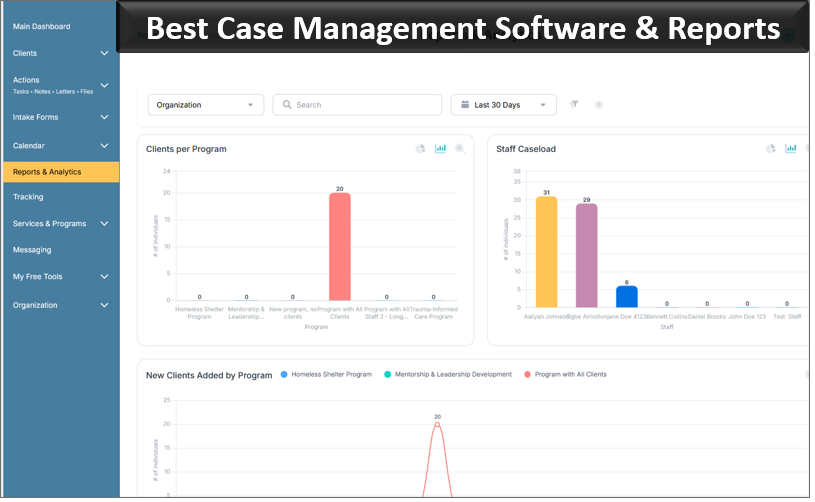
Note: Content on this website (socialworkportal.com) is copyrighted and protected under applicable copyright laws. Unauthorized reproduction, distribution, or use of any content from the website, without explicit written permission, is strictly prohibited. Read: Terms of Use.
Social Work Portal Disclaimer: Social Work Portal is not a social work agency and we do not refer social workers. This web site is provided for educational and informational purposes only and does not constitute providing medical advice or professional social and healthcare services. The information provided should not be used for diagnosing or treating a health problem or disease, and those seeking personal medical advice should consult with ... Read our full disclaimer here: Social Work Portal Disclaimer.