Building a Dignified, Grant-Compliant Intake Process
Every working day across community health centers, domestic violence shelters, and rapid re-housing programs, vulnerable individuals make the difficult decision to ask for help. When they arrive at an agency, the initial contact often feels less like an offer of support and more like an institutional audit. A person in immediate crisis sits in an open waiting area with a clipboard, filling out twelve pages of repetitive questionnaires about their income, family disputes, substance use, and traumatic experiences before speaking with a human being.
This approach creates severe friction. For community agencies, complicated onboarding protocols are the single largest driver of client attrition. Frontline case managers spend upwards of twenty hours each week manually re-typing handwritten paperwork into fragmented databases, leaving little time for therapeutic connection. Transitioning to a client-centered intake assessment nonprofit model requires rethinking the entire intake pipeline. By balancing psychological safety with operational compliance, human service leaders can build an intake experience that respects participant dignity while capturing clean, audit-ready data.
Let’s get started
Watch this video:
or
read the guide below.
What You’ll Learn in This Guide
- How to dismantle institutional barriers to human services intake completion without losing compliance data.
- Tactical, frontline protocols for reducing client re-traumatization during intake screenings.
- The critical operational boundaries between an initial intake assessment vs case management assessment.
- Field-tested scripts for introducing sensitive questions using trauma-informed principles.
- Practical methods for how to assess social determinants of health ethically without creating secondary distress.
- How digital tools streamline client intake workflows to cut administrative overhead in half.
💡All-in-one Case Management Software.
Everything in one place: clients, notes, forms, appointments, reports, and outcomes.
👉 Try it Free - No credit card needed
Why Do Traditional Human Services Intake Workflows Drive Away Clients in Crisis?
Traditional intake workflows were engineered around risk mitigation, funder reporting rules, and legal liabilities. Human comfort was rarely part of the system design. When agency protocols force participants to trade personal dignity for basic services, the intake process breaks down across three major operational fronts.
First, standard paper workflows create a devastating re-traumatization loop. When an agency relies on separate, unintegrated departments, a single mother seeking emergency housing assistance may recite the narrative of her domestic abuse three separate times: first to a front-desk receptionist, then to an intake specialist, and finally to an assigned caseworker. Each repetition forces the client to revisit acute emotional distress, heightening feelings of powerlessness.
Second, agencies face a persistent tension between funder mandates and clinical ethics. Federal grants through HUD, SAMHSA, or the Department of Justice require specific data points to prove program eligibility. Far too often, organizations front-load every single compliance question into the initial meeting. Forcing an unhoused individual or a survivor of violence to detail their complete five-year residential history, criminal background, and psychiatric diagnoses in session one destroys early therapeutic alliance.
According to research published by the Substance Abuse and Mental Health Services Administration (SAMHSA) and the Centers for Disease Control and Prevention (CDC), roughly 64% of adults report experiencing at least one adverse childhood experience (ACE). The National Association of Social Workers (NASW) Code of Ethics explicitly mandates that clinicians safeguard client self-determination and physical and emotional well-being. When onboarding procedures resemble interrogations, clients vote with their feet: no-show rates climb, phone numbers go dead, and agencies fail the very populations they were chartered to protect.
How Can Agencies Operationalize a Trauma-Informed Intake Assessment?
Adopting a trauma-informed client intake process requires moving past abstract concepts and establishing concrete field protocols. Frontline supervisors must equip intake teams with practical tools, structured schedules, and clear scripts.
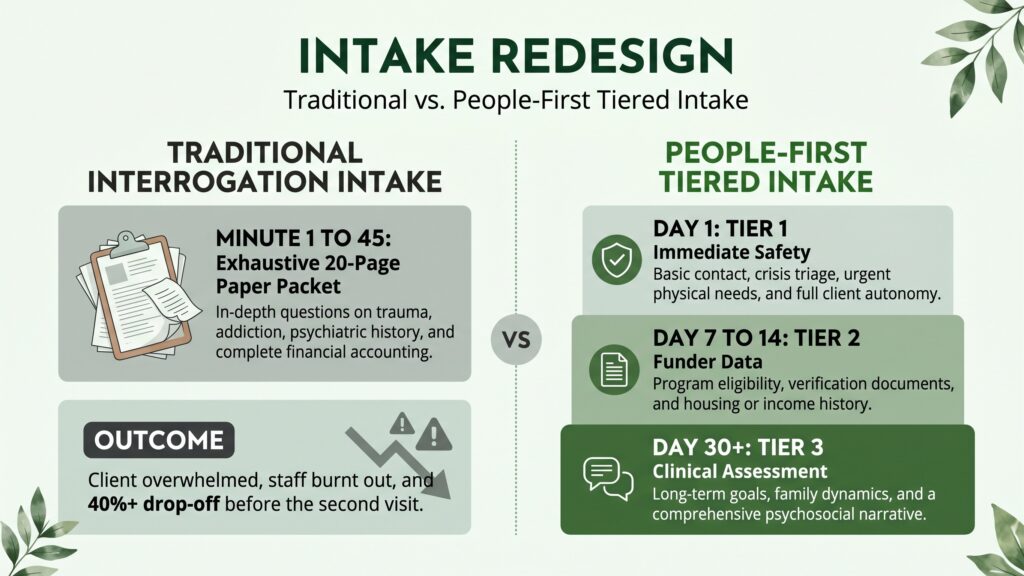
1. The Three-Tier Progressive Disclosure Model
Never collect non-essential information during the initial touchpoint. Group your intake inquiries into three progressive tiers:
- Tier 1: Immediate Safety and Basic Demographics (Day 1): Focus exclusively on contact information, immediate physical safety, acute medical needs, and primary goals for seeking help. Everything else waits.
- Tier 2: Program Eligibility and Mandated Reporting Data (Days 7 to 14): Gather required income verification, proof of residency, and funder-mandated demographic questions during the second or third interaction, after initial rapport has been established.
- Tier 3: Comprehensive Psychosocial Assessment (Day 30 and Beyond): Reserve detailed trauma histories, relationship assessments, and deep psychiatric backgrounds for ongoing case management sessions led by the primary clinician.
2. Concrete Frontline Scripts That Establish Psychological Safety
The words staff use during the opening three minutes determine whether a client opens up or shuts down. Train intake specialists to lead with direct autonomy and full transparency:
Opening Script for Staff:
“Before we begin, I want you to know that you are in control of our meeting today. Some of these questions help us connect you with our resources, but if we come to a question you do not feel comfortable answering right now, just say ‘skip,’ and we will move on immediately. You do not have to share anything you are not ready to share.”
Explaining Funder Data Collection:
“Our grant funding requires us to collect general household income data so we can offer our programs at no cost to your family. This information is kept strictly confidential within our encrypted system and will never be shared with outside agencies without your written consent.”
3. Ethical Evaluation of Social Determinants of Health
When learning how to assess social determinants of health ethically, follow this non-negotiable rule: do not screen for needs that your agency has no capacity to address or provide direct, verified referrals for. Documenting that a client suffers from severe food insecurity without offering a concrete meal pantry voucher or SNAP application pathway creates secondary trauma and breeds institutional cynicism.
👉 Try it Free - Free Case Management System
How Digital Tools Streamline Nonprofit Client Intake
Many nonprofit executives worry that modernizing to digital intake systems will make their services feel cold or impersonal. In practice, the opposite is true. When executed correctly, digital tools handle the administrative heavy lifting so human beings can spend their time listening. Implementing modern HIPAA compliant client intake software for nonprofits transforms cumbersome paperwork into an automated client onboarding workflow for human services teams.
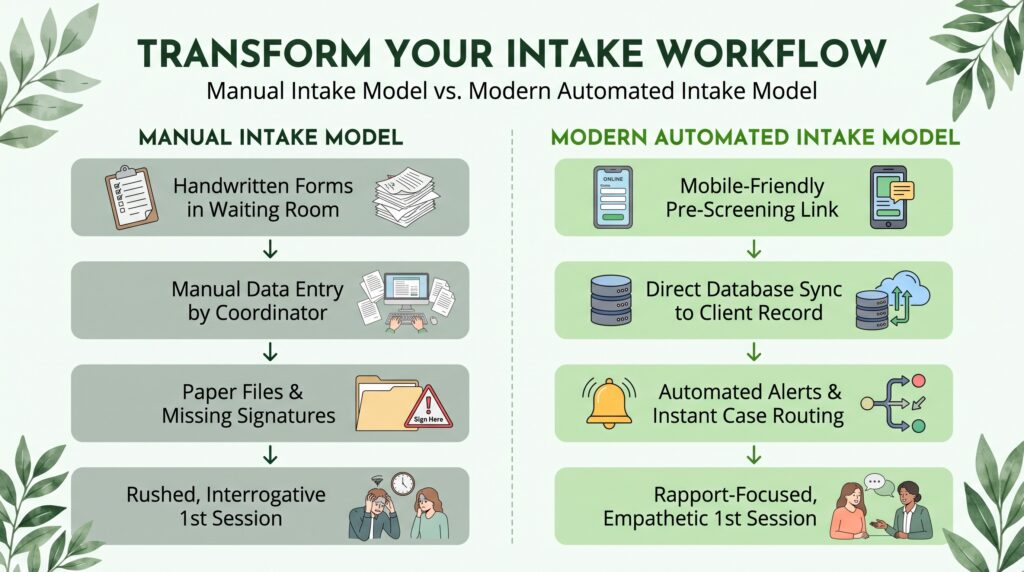
Step 1: Pre-Registration via a Secure Client Portal
Provide clients with a secure link delivered via SMS text or email before their scheduled appointment. Through a secure client portal for nonprofit intake, participants can complete basic registration, e-sign consent documents, and upload photos of utility bills or identification cards using their mobile phone in their own living room. For clients lacking internet access, set up a private, comfortable tablet station in your office where intake staff can assist them directly.
Step 2: Intelligent Form Logic and Accessibility
Traditional paper packets hand everyone the same daunting packet. Digital intake forms for case management use conditional branching logic. If an applicant indicates they do not have school-aged children, every subsequent question regarding child care, school enrollment, and immunization records automatically disappears. This cuts completion time from 40 minutes down to 12 minutes, dramatically reducing cognitive fatigue.
Step 3: Instant Record Creation and Integrated Documentation
The moment a participant submits their online form, a client tracking software with self service intake builds a verified master chart. There is no intermediate step of a caseworker spending lunch re-typing scribbled names and birthdates into an outdated spreadsheet. Emergency contact numbers, verified income brackets, and signed releases land directly into the client record, maintaining strict compliance without human error.
Step 4: Rapid Case Routing and Coordinated Care
Delays between initial screening and the first appointment represent the danger zone where most drop-offs occur. Modern intake platforms alert intake supervisors the moment an intake packet is finalized. The system matches the client’s needs against staff specialties and current caseload bandwidth, assigning the case and generating the first appointment invite within hours rather than weeks.
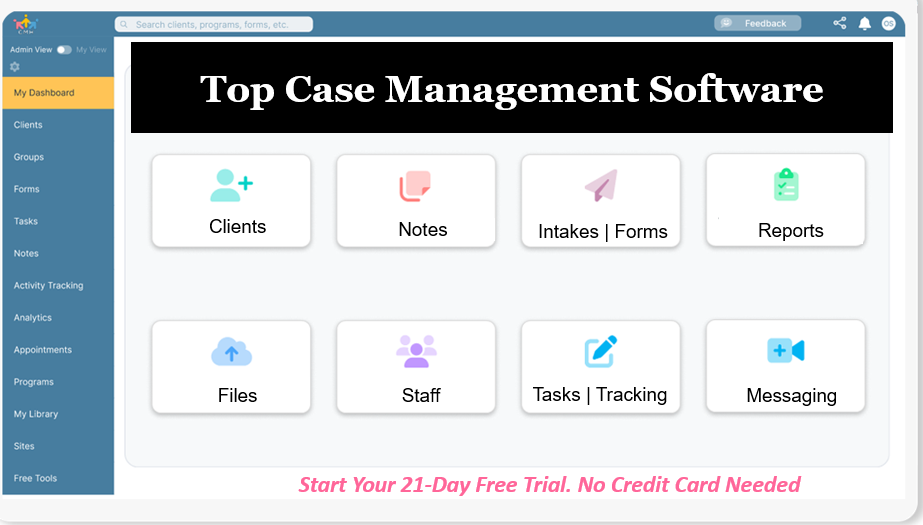
Do You Have a Team? Our best all-in-one client and top case management software simplifies everything from client intake and assessments to programs, projects, goals tracking, planning, scheduling, documentation, reporting dashboard, and progress tracking.All-in-One Case Management Software
Sign Up Today, Free
No credit card needed!
Manual Workflows vs. Automated Digital Workflows: The Operational Contrast
| Operational Metric | Manual Paper & Spreadsheet Pipeline | Automated Digital Intake Workflow |
| Intake Completion Time | 35 to 50 minutes completed on clipboards in public waiting rooms. | 10 to 15 minutes completed remotely on mobile devices or office tablets. |
| Administrative Data Entry | 20 to 30 minutes per client spent by coordinators manually entering notes. | Zero minutes; forms sync directly into the client master chart upon submission. |
| Data Privacy & Compliance | Physical clipboards and paper folders vulnerable to lost documents and prying eyes. | End-to-end encryption, role-based access, and complete HIPAA/FERPA audit logging. |
| Client Retention Rate | 30% to 45% drop-off rate between initial contact and the first scheduled session. | Less than 12% drop-off rate, supported by automated SMS confirmations and intake triage. |
| Caseworker Experience | Exhaustion and burnout driven by repetitive clerical work and audit anxiety. | High morale; clinicians dedicate their first session entirely to therapeutic support. |
| Audit Preparation | Days spent pulling physical banker boxes and tracking missing signature pages. | Grant-ready demographic and service outcome reports generated in seconds. |

People Also Ask
What makes an intake process truly trauma-informed?
A trauma-informed intake process prioritizes emotional safety, clear boundaries, and client control over their personal narrative. It replaces interrogative questioning with progressive disclosure, transparent data explanations, and private screening environments.
How can nonprofits reduce client drop-off rates during intake?
Agencies lower intake drop-offs by eliminating redundant questions, sending mobile-friendly pre-intake links via SMS, offering multilingual forms, and assigning a caseworker within 24 to 48 hours of the first contact.
What is the exact difference between an intake and an assessment?
An intake establishes initial service eligibility, gathers emergency contact details, and addresses immediate crises. A comprehensive case management assessment is an ongoing clinical process that explores family systems, strengths, and long-term goals across several appointments.
Why is HIPAA compliance mandatory for nonprofit case management software?
Nonprofits regularly handle protected health information (PHI), mental health records, and substance abuse disclosures. Using non-compliant tools exposes clients to privacy violations and leaves the agency vulnerable to severe regulatory fines and legal liability.
How do dynamic intake forms improve accessibility for clients?
Dynamic forms utilize conditional branching logic to hide questions that do not apply to the applicant. This significantly reduces reading requirements, prevents confusion, and allows clients to complete forms in a fraction of the time.
What is the best way to screen for social determinants of health ethically?
Only screen for needs where your organization can provide an immediate service or a direct warm referral to an established community partner. Always explain to the client why each question is being asked and how the answers will be used.
How Case Management Hub Powers Human-Centered Intake
Transitioning from an overwhelming paper system to an empathetic, highly efficient intake pipeline does not require an enterprise IT team. Case Management Hub is an all-in-one, HIPAA-compliant platform designed from the ground up for social workers, program directors, and case managers who want to spend their working hours helping clients rather than fighting administrative bottlenecks.
With Case Management Hub, your organization can:
- Build custom digital intake forms for case management using an intuitive drag-and-drop form designer with conditional logic.
- Offer participants a secure client portal for nonprofit intake that works on any smartphone, tablet, or home computer.
- Automatically sync incoming intake information into centralized charts, eliminating manual data entry and transcription mistakes.
- Streamline post-intake documentation with standardized clinical note templates, including SOAP, DAP, and BIRP formats.
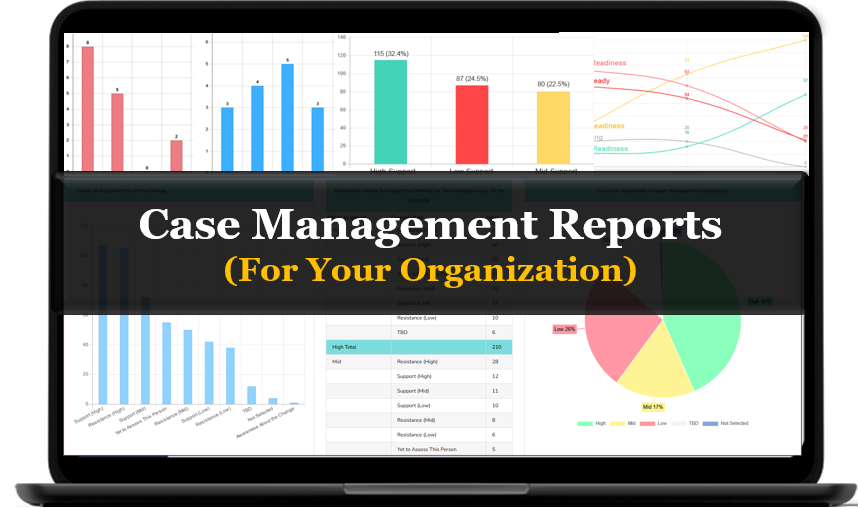
- Track client goals, automate SMS appointment reminders, manage calendars, and generate comprehensive funder reports with a single click.
Give your staff the tools they need to run an organized, audit-ready agency while giving your clients the welcoming, dignified intake experience they deserve.
Start your 21-day free trial today with complete platform access and zero commitment. No credit card is required.
Claim your 21-day free trial at Case Management Hub
Frequently Asked Questions (FAQs)
How can our agency transition from paper to digital intake without disrupting ongoing programs?
Start by rolling out digital intake to a single program or with one experienced caseworker for a two-week pilot period. Use this pilot to refine your question branching and test your intake staff scripts. Once the workflow is validated, expand the system agency-wide. Keep a dedicated tablet in your lobby so intake coordinators can walk clients with low digital literacy through the process step-by-step.
How does intake documentation software for social services handle multi-program agencies?
Enterprise platforms allow administrators to set up distinct, program-specific intake forms under one master agency account. A client seeking food pantry assistance completes a simple two-minute form, while an applicant entering rapid re-housing completes an eligibility screening. All data routes into a single, unified client record, preventing duplicate profiles while maintaining strict program boundaries.
What questions should our intake team remove immediately to make our process more trauma-informed?
Immediately eliminate deep historical trauma inventories, past substance use histories (unless operating an addiction recovery program), and non-essential criminal justice background questions from the initial intake form. These topics create high anxiety and should only be discussed during later sessions once a secure, therapeutic relationship has developed.
What technical safeguards are required for electronic intake forms under HIPAA?
HIPAA requires end-to-end encryption for data in transit and at rest, unique user logins with role-based permissions, automated session timeouts, and comprehensive audit logs that track every staff member who views or edits a file. Furthermore, the software vendor must sign a legally binding Business Associate Agreement (BAA) accepting statutory liability for data protection.
How do modern intake platforms assist with strict grant audits from federal funders?
When intake data is entered into structured digital fields rather than static paper pages, the software automatically tracks demographics, service dates, and verification records in a searchable database. When grant reporting deadlines arrive, supervisors can filter by funder, demographic category, or service period and export clean, audit-ready CSV or PDF reports in seconds.
How can case managers handle intake for clients who do not speak English or have limited reading ability?
Use digital intake software that offers native multilingual form translations, allowing clients to toggle the entire intake interface into their preferred language. For participants with limited reading proficiency, design intake forms that use simple vocabulary, clear icons, and large touch targets, or conduct the screening verbally using a tablet where the caseworker types the client's spoken responses.
👉 Try it free today - No credit card needed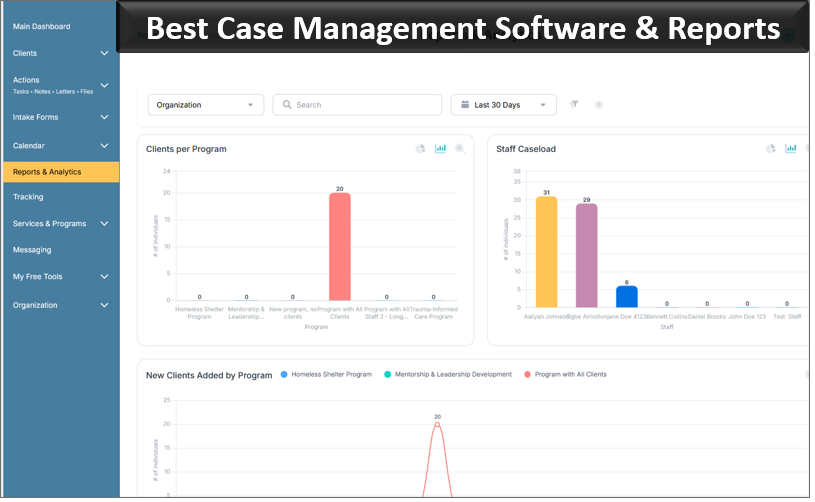
Note: Content on this website (socialworkportal.com) is copyrighted and protected under applicable copyright laws. Unauthorized reproduction, distribution, or use of any content from the website, without explicit written permission, is strictly prohibited. Read: Terms of Use.
Social Work Portal Disclaimer: Social Work Portal is not a social work agency and we do not refer social workers. This web site is provided for educational and informational purposes only and does not constitute providing medical advice or professional social and healthcare services. The information provided should not be used for diagnosing or treating a health problem or disease, and those seeking personal medical advice should consult with ... Read our full disclaimer here: Social Work Portal Disclaimer.