Build Compliant Follow-Up Protocols, Prevent Caseload Bottlenecks, and Streamline Behavioral Health Integration
Primary care clinics, outpatient practices, and community mental health agencies operate under relentless administrative pressure. When clinical teams administer the Patient Health Questionnaire-2 (PHQ-2) to detect major depressive disorder early, screening volume expands rapidly. However, identifying depressive symptoms is only the first step. Without standardized administrative and clinical infrastructure, managing an active caseload of positive screenings creates severe administrative bottlenecks, documentation gaps, and serious compliance vulnerabilities.
When a screening tool is administered on paper clipboards or unencrypted digital tablets, risk accumulates quickly. Staff members spend valuable hours transcribing numerical scores, tracking elevated scores on insecure spreadsheets, and scrambling to coordinate referrals before clients miss follow-ups. The U.S. Preventive Services Task Force (USPSTF) recommends screening all adults aged 19 and older for depression in primary care settings. Yet, without closed-loop systems to manage subsequent care, high screening rates fail to translate into improved client outcomes.
Let’s get started
Watch this video:
or
read the guide below.
What You’ll Learn in This Guide
- How to establish an ironclad PHQ-2 screening workflow in primary care and outpatient clinics
- The exact clinical cut-off scores that require immediate escalation to a comprehensive PHQ-9
- Essential steps to maintain HIPAA-compliant depression screening protocols across digital endpoints
- Methods for balancing behavioral health caseloads in outpatient clinics without burning out coordinators
- Strategies for capturing CPT billing codes like 96127 while satisfying annual CMS quality documentation measures
- How modern case management software automates intake, scoring, SOAP and DAP documentation, and client tracking
💡All-in-one Case Management Software.
Everything in one place: clients, notes, forms, appointments, reports, and outcomes.
👉 Try it Free - No credit card needed
Why Is PHQ-2 Screening Caseload Management So Difficult?
The primary obstacle in managing depression screening caseloads is administrative fragmentation. Front-desk staff, intake coordinators, primary care physicians, and clinical social workers frequently work in separate documentation silos.
When a client marks a 2 on question one (“little interest or pleasure in doing things”) and a 2 on question two (“feeling down, depressed, or hopeless”), they produce a total score of 4. This indicates a positive initial screen. In a fragmented system, that paper form sits in an intake basket until a medical assistant manually keys the score into the electronic health record (EHR). If the provider is running behind schedule, the critical score might not trigger an immediate secondary evaluation.
Furthermore, outpatient clinics often lack centralized registries to track clients who test positive. Once a referral is placed for counseling or care coordination, the client’s file easily disappears from immediate view. Social workers then spend significant portions of their week cross-referencing disjointed scheduling calendars, manual spreadsheets, and physical intake binders just to verify whether high-risk clients attended their appointments.
How Should Clinicians Interpret PHQ-2 Scores and Structure Immediate Next Steps?
The PHQ-2 is an ultra-brief, validated screening instrument derived from the first two questions of the PHQ-9. Each question is scored on a scale from 0 to 3:
- 0: Not at all
- 1: Several days
- 2: More than half the days
- 3: Nearly every day
The total score ranges from 0 to 6. A score of 3 or greater is the widely recognized clinical threshold indicating a positive screening result for potential major depressive disorder.
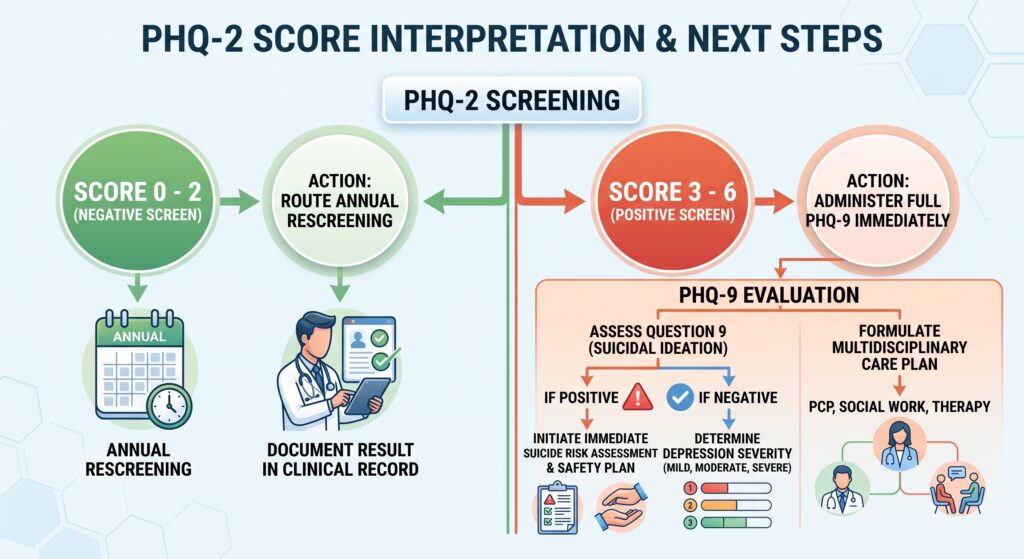
When an individual scores 3 or higher, best practice dictates administering the full 9-question PHQ-9 during that same encounter. The PHQ-9 evaluates the full spectrum of depressive symptoms, functional impairment, and crucially, suicidal ideation via question 9. If a client endorses thoughts of self-harm, clinicians must bypass routine scheduling and conduct an immediate suicide risk assessment and safety plan before the client departs the clinic or disconnects from a telehealth session.
👉 Try it Free - Free Case Management System
What Are the HIPAA Compliance Risks in Behavioral Health Screening?
Depression screening data represents highly sensitive Protected Health Information (PHI). Handling behavioral health assessments requires strict adherence to the HIPAA Privacy and Security Rules across several operational areas:
- Intake and Digital Collection: Collecting screening responses through unsecured web forms, generic PDF fillable documents, or unencrypted email violates federal data security mandates. Any digital intake mechanism must provide end-to-end encryption and store data within a secure environment backed by a signed Business Associate Agreement (BAA).
- Physical Workspace Security: Paper screening sheets left on intake clipboards, nurses’ stations, or check-in counters expose patient identities and mental health conditions to unauthorized individuals in waiting rooms.
- Internal Access Controls: Role-based permissions are essential. While an intake coordinator needs to verify that a screening questionnaire was submitted, detailed diagnostic breakdowns and clinician notes should remain accessible only to designated members of the direct care team.
- Caseload Tracking Storage: Maintaining client rosters, follow-up dates, and screening scores in unencrypted spreadsheets on local workstation hard drives is one of the most common HIPAA vulnerabilities in growing practices. A lost laptop or compromised local server immediately results in a reportable data breach.
How Can Teams Coordinate Positive PHQ-2 Screening Follow-Up Protocols?
Closing the loop on a positive screening requires structured interdisciplinary collaboration. In high-performing practices, care coordination follows the Collaborative Care Model, establishing a clear line of communication between primary care providers, psychiatric nurse practitioners, and clinical social workers.
When a positive screen occurs, the care team should deploy a standardized four-phase protocol:
- Immediate Secondary Evaluation: The provider or intake specialist administers the remaining seven items of the PHQ-9 to calculate full baseline severity.
- Warm Handoff to Case Management: If the client consents, the medical provider introduces the on-site or telehealth social worker directly during the visit. The social worker initiates an intake assessment, reviews social determinants of health (SDOH), and provides supportive psychoeducation.
- Structured Goal and Progress Tracking: Case managers partner with the client to establish measurable wellness goals. The team schedules mandatory re-assessments at 4, 8, and 12 weeks to monitor whether therapeutic or pharmacological interventions are reducing symptom severity.
- Automated Status Audits: Practice administrators monitor the entire caseload registry weekly to identify clients who have overdue follow-up evaluations or uncompleted referrals.
How Digital Tools Streamline PHQ-2 Screening Caseload Management
Manual administrative methods inevitably collapse under high patient volume. Digital platforms engineered specifically for social workers and case managers eliminate paperwork bottlenecks by automating the entire lifecycle of a behavioral health assessment.
Modern platforms transform this operational pipeline through five distinct functional stages:
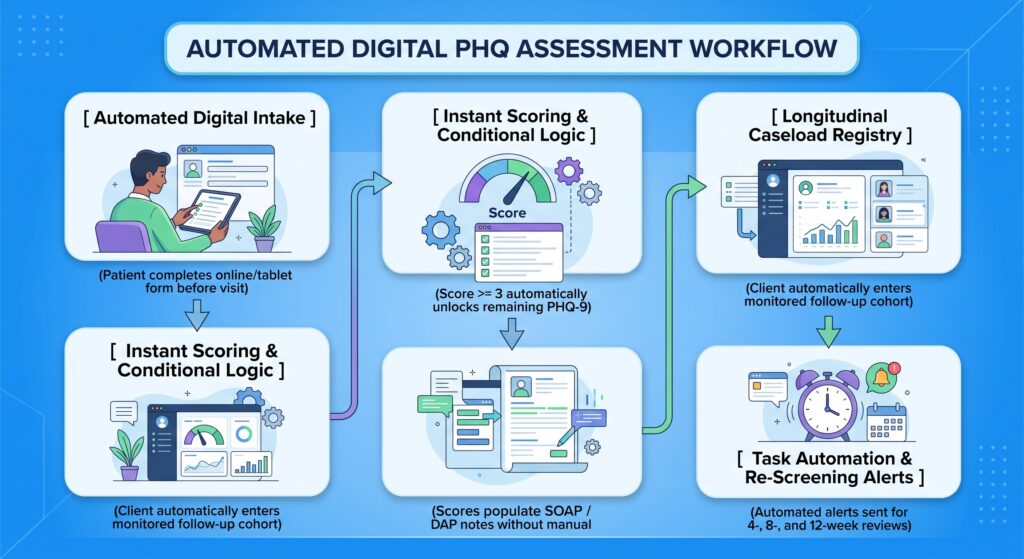
- Automated Intake Delivery: Rather than handing clients paper clipboards in busy waiting rooms, the platform sends a secure, mobile-friendly screening form before the appointment. The client completes the PHQ-2 from their smartphone or on a dedicated clinic tablet.
- Conditional Branching: If the client records a score of 3 or higher, the platform dynamically presents the remaining seven questions of the PHQ-9. The provider receives a fully scored assessment before ever entering the exam room.
- Direct Clinical Note Integration: The platform automatically inserts screening scores, date stamps, and clinical interpretations directly into pre-built SOAP or DAP clinical notes. Clinicians avoid repetitive double-entry and keep documentation current.
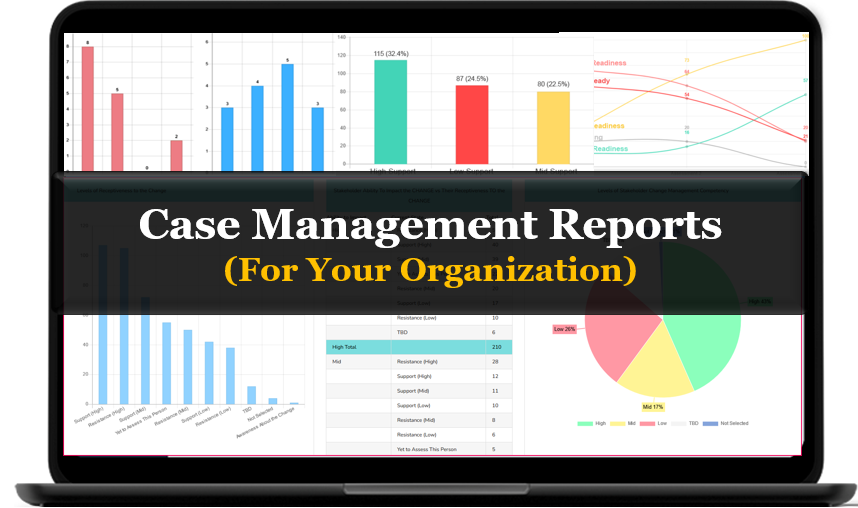
- Centralized Registry Management: Every client with an elevated score automatically populates an active caseload dashboard. Case managers can filter their cohort by risk level, assigned provider, or date of last contact.
- Automated Task Reminders: The system schedules automated tasks for care coordinators, reminding them to check in on medication compliance, verify therapy attendance, and trigger automated re-screening links after 30 days.
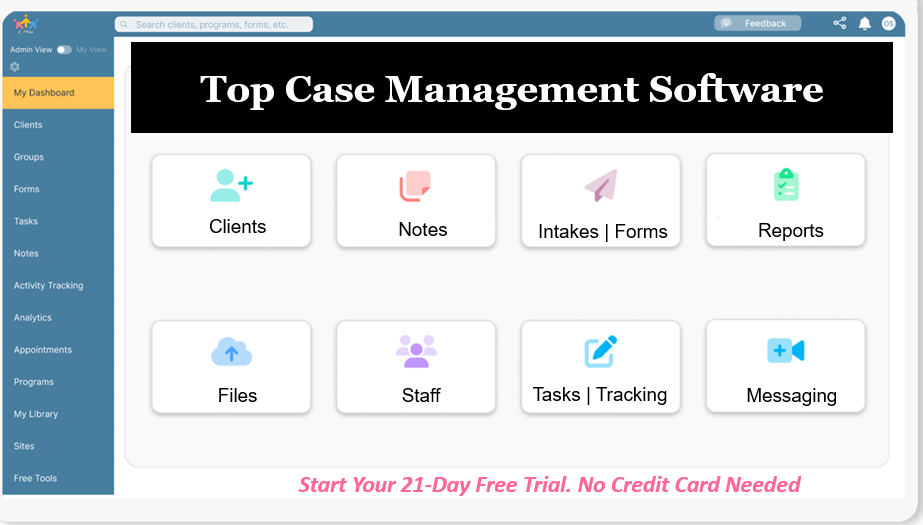
Do You Have a Team? Our best all-in-one client and top case management software simplifies everything from client intake and assessments to programs, projects, goals tracking, planning, scheduling, documentation, reporting dashboard, and progress tracking.All-in-One Case Management Software
Sign Up Today, Free
No credit card needed!
Manual Workflows vs. Automated Workflows: Operational Comparison
Moving from paper files and spreadsheet trackers to unified clinical software produces major gains in clinical time, compliance security, and client follow-through.
| Operational Step | Manual Paper / Spreadsheet Workflow | Automated Digital Caseload Platform |
| Assessment Delivery | Paper forms handed out at check-in; clipboard sanitation and storage overhead. | HIPAA-compliant digital intake links sent via SMS, email, or in-office tablet. |
| Scoring & Calculation | Clinicians manually tally numbers; math errors occur during rushed clinics. | Instantaneous algorithmic calculation; automated flags for scores . |
| PHQ-9 Secondary Trigger | Staff must notice score, pull a secondary form, and re-administer manually. | Conditional logic presents the remaining 7 questions automatically on the device. |
| Clinical Documentation | Staff re-type scores and interpretations into EHR notes; high risk of delayed charting. | Scores, dates, and severity tiers flow directly into SOAP or DAP note templates. |
| Caseload Visibility | Scattered Excel sheets across desktop computers; zero centralized visibility. | Secure cloud dashboard tracks longitudinal progress and cohort status in real time. |
| Audit & Billing Prep | Staff manually comb through paper charts to confirm CPT 96127 documentation. | One-click reporting outputs completed dates, billing codes, and follow-up plans. |
How Does Standardized Screening Improve Billing and Quality Reporting?
Routine depression screening is both a clinical imperative and a fundamental component of value-based reimbursement. CMS Quality Measure CMS2 (Preventive Care and Screening: Screening for Depression and Follow-Up Plan) evaluates the percentage of patients screened for depression on an annual basis, as well as whether a documented follow-up plan was initiated on the same day as a positive screen.
From a fee-for-service perspective, clinics can capture legitimate reimbursement using specific CPT codes:
- CPT Code 96127: Brief emotional or behavioral assessment (e.g., depression inventory, ADHD scale) with scoring and documentation, per standardized instrument.
- HCPCS Code G0444: Annual depression screening for Medicare beneficiaries, up to 15 minutes.
However, billable claims require airtight clinical records. Payers frequently deny claims or demand recoupment during audits if notes fail to document the specific instrument name, the numerical score, clinical interpretation, and the immediate follow-up plan executed by a qualified healthcare professional. Unified case management software ensures that every field required by auditors is filled before a note can be finalized.

People Also Ask
What is the primary difference between the PHQ-2 and the PHQ-9?
The PHQ-2 is a two-item screening instrument used to rapidly assess frequency of depressed mood and anhedonia over the prior two weeks. The PHQ-9 is a nine-item diagnostic aid that assesses all DSM criteria for major depression, establishes symptom severity, and evaluates suicidal ideation.
What is considered a positive result on the PHQ-2?
A total score of 3 or higher on the PHQ-2 is considered a positive screening result. This cut-off point yields optimal sensitivity and specificity, indicating that the patient should be assessed further with the comprehensive PHQ-9.
Can medical assistants or intake coordinators administer the PHQ-2?
Yes, non-clinical staff members, including medical assistants and intake coordinators, can administer and record the PHQ-2. However, a licensed clinician or qualified health professional must interpret the score, review the findings with the patient, and authorize any necessary care plan or referral.
Which CPT code should clinics bill for administering the PHQ-2?
Clinicians typically report CPT code 96127 for brief standardized behavioral or emotional assessments. For eligible Medicare patients receiving their annual screening, HCPCS code G0444 is used. Always verify payer-specific billing guidelines and medical necessity documentation rules.
How frequently should clinics re-screen patients with the PHQ-2?
Most major clinical guidelines, including those from the USPSTF and CMS, recommend annual universal depression screening for adults. However, patients undergoing active treatment or those with chronic risk factors should be monitored more frequently using full PHQ-9 evaluations every 4 to 12 weeks.
How does HIPAA regulate the storage of digital depression screening records?
HIPAA requires that all electronic Protected Health Information (ePHI) be encrypted both in transit and at rest, protected by multi-factor authentication, and maintained with role-based access controls. Any vendor hosting digital screening tools must execute a formal Business Associate Agreement (BAA).
Take Control of Your Screening Caseload with Case Management Hub
Managing elevated depression scores should never involve digging through paper charts, sorting through outdated spreadsheets, or worrying whether a vulnerable client missed a vital follow-up appointment.
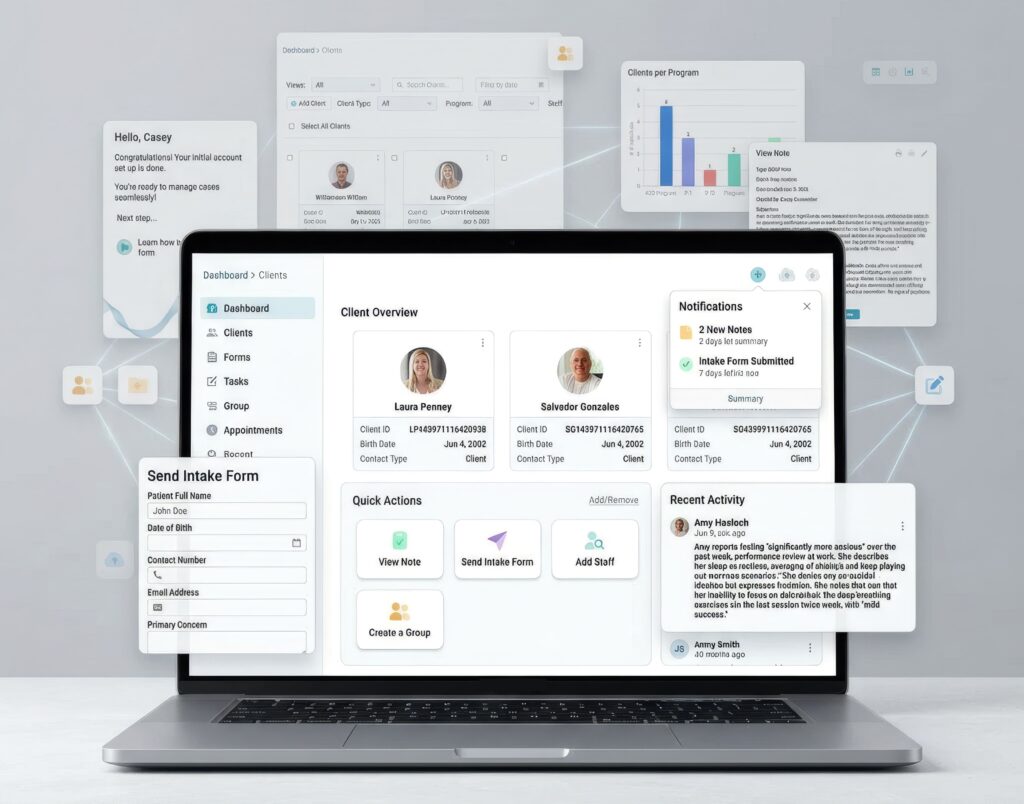
Case Management Hub delivers a comprehensive, HIPAA-compliant workspace purpose-built for social workers, case managers, and outpatient behavioral health teams. Our platform brings all your essential client operations together into one intuitive environment:
- Interactive Screening Forms: Deliver self-scoring, mobile-optimized PHQ-2 and PHQ-9 intake tools that dynamically escalate when scores cross clinical thresholds.
- Streamlined Clinical Charting: Populate structured SOAP and DAP notes in seconds, linking assessment scores directly to client treatment plans.
- Unified Caseload Tracking: Monitor your entire client cohort on a single centralized dashboard, complete with automated follow-up reminders, goal tracking, and progress metrics.
- Integrated Practice Management: Combine scheduling, secure client messaging, compliant file storage, and billing documentation without toggling between multiple disconnected apps.
Spend less time navigating administrative friction and more time delivering meaningful client care.
Start your 21-day free trial of Case Management Hub today
No credit card required. Full feature access. Fully HIPAA-compliant from day one.
Frequently Asked Questions (FAQs)
How can our clinic avoid duplicate documentation when administering the PHQ-2 and PHQ-9 on the same date?
Duplicate documentation occurs when clinical staff enter the initial screening in an intake module and then re-enter identical findings in the provider's progress note. To eliminate this duplication, use a digital platform featuring conditional logic. When a client scores 3 or higher on the PHQ-2, the software immediately presents the remaining seven questions of the PHQ-9. The entire questionnaire saves as a single, comprehensive record, and the total score auto-populates directly into the provider's SOAP or DAP note template for immediate review.
What immediate clinical steps are required if a patient endorses thoughts of self-harm on Question 9?
If question 9 on the PHQ-9 is positive (a score of 1, 2, or 3), clinical staff must follow an immediate, uncompromised safety protocol. The patient should not be left unattended. A qualified clinician must conduct an evidence-based suicide risk assessment, such as the Columbia-Suicide Severity Rating Scale (C-SSRS), evaluate intent and access to lethal means, and collaborate with the client on a written safety plan. If acute danger exists, arrange an immediate warm transfer to crisis services or an emergency department.
What are the specific documentation requirements to ensure CPT 96127 survives a payer audit?
To defend CPT 96127 under audit, clinical notes must substantiate four elements: the standardized instrument used (e.g., PHQ-2 or PHQ-9), the completed date and numerical score, the clinician's documented interpretation of that score, and the resulting clinical follow-up plan. If billed on the same day as an Evaluation and Management (E/M) service, append modifier 25 to denote a significant, separately identifiable service, and verify that the provider's note demonstrates distinct medical necessity.
Can non-clinical staff manage the follow-up task registry for depression screenings?
Intake coordinators, medical assistants, and administrative case managers can monitor the digital registry, identify clients due for re-screening, verify appointment attendance, and send intake links. However, clinical interpretations, diagnostic impressions, safety planning, and alterations to medical or therapeutic treatment plans must be conducted exclusively by licensed independent practitioners or qualified behavioral health professionals within their scope of practice.
How does a centralized case management platform prevent clients from falling through the cracks?
In manual systems, tracking depends on individual memory or desktop spreadsheets. A centralized case management platform utilizes automated status pipelines. Every positive screen triggers a time-bound care coordination workflow. If a client has not completed their recommended follow-up visit within 30 days, the platform alerts the designated case manager, generating an automated task to reach out via secure portal messaging or phone.
What features should clinic managers look for when choosing software for depression caseload tracking?
Clinic managers should prioritize platforms offering complete HIPAA compliance backed by an executed BAA, customizable SOAP/DAP templates, dynamic conditional intake forms, centralized client registries, automated task reminders, and integrated billing tools. Selecting an all-in-one platform avoids the security gaps and integration headaches created by cobbling together separate scheduling, charting, and intake applications.
👉 Try it free today - No credit card needed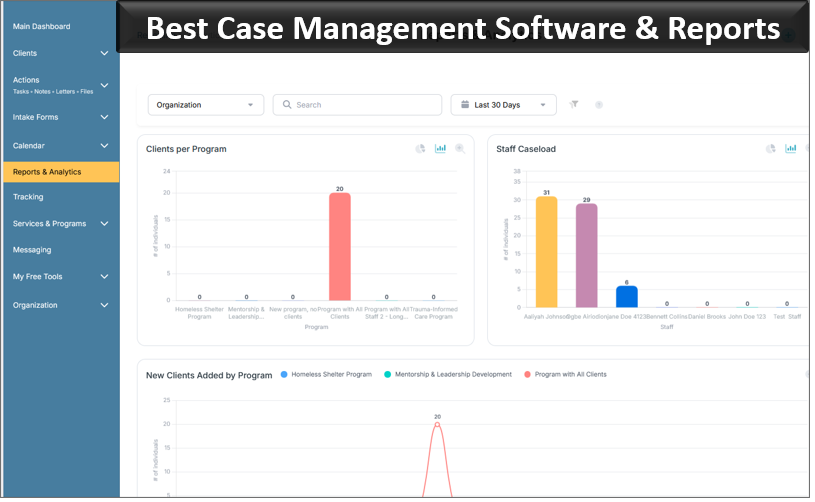
Note: Content on this website (socialworkportal.com) is copyrighted and protected under applicable copyright laws. Unauthorized reproduction, distribution, or use of any content from the website, without explicit written permission, is strictly prohibited. Read: Terms of Use.
Social Work Portal Disclaimer: Social Work Portal is not a social work agency and we do not refer social workers. This web site is provided for educational and informational purposes only and does not constitute providing medical advice or professional social and healthcare services. The information provided should not be used for diagnosing or treating a health problem or disease, and those seeking personal medical advice should consult with ... Read our full disclaimer here: Social Work Portal Disclaimer.