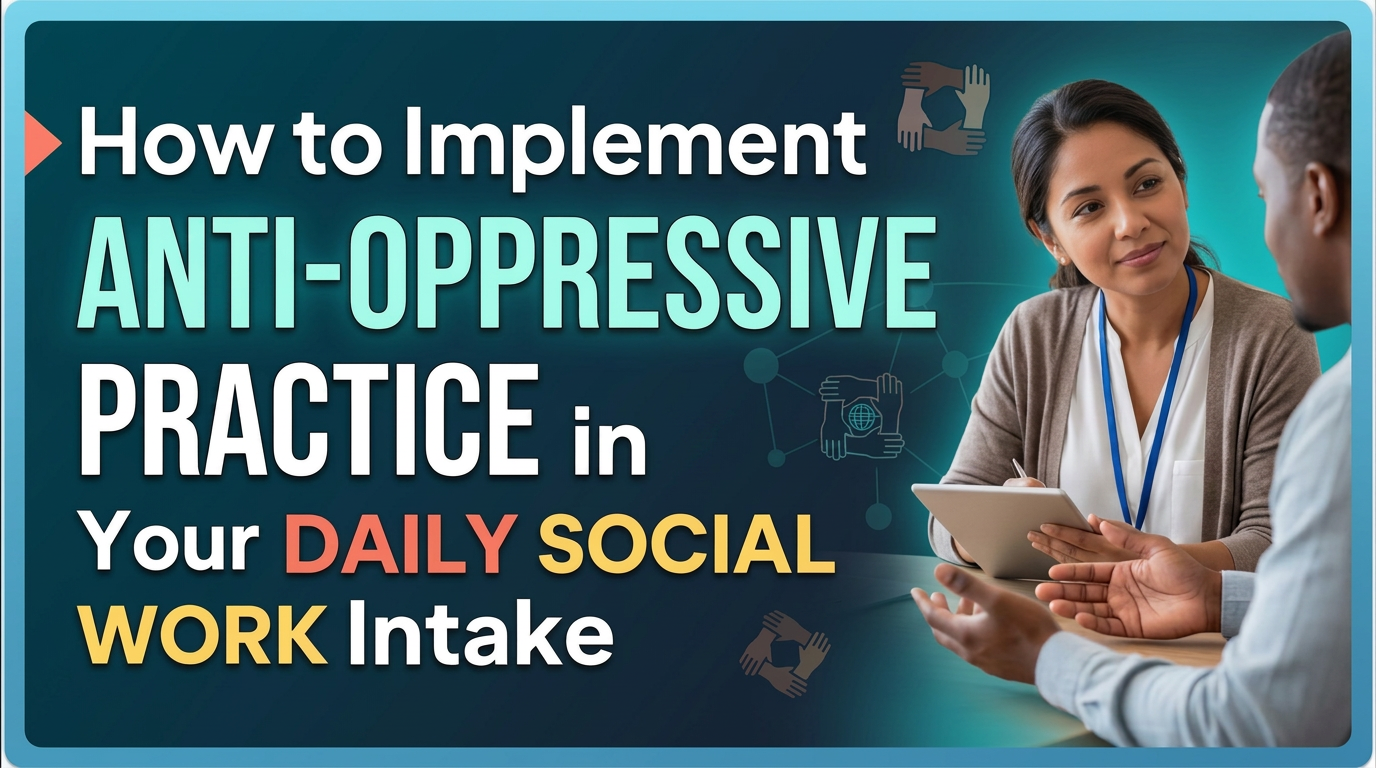
Redefining the First Session to Shared Power, Cultural Humility, and Collaborative Client Assessment
Anti-oppressive practice in social work requires shifting power back to the client during the very first interaction. Standard intake procedures often treat individuals as passive subjects to evaluate. In contrast, an anti-oppressive intake transforms the assessment into a collaborative partnership. This approach actively addresses power dynamics, replaces pathologizing language with strengths-based documentation, and gives clients direct control over their own narrative.
Let’s get started
Watch this video:
or
read the guide below.
What You Will Learn in This Guide
- How traditional social work intakes enforce institutional power dynamics
- Concrete anti-oppressive client intake interview questions to use in daily practice
- Strategies for sharing control over case records and goal setting
- Methods for implementing collaborative, trauma-informed documentation
- How to handle mandatory reporting without destroying client trust
- Key software tools that support anti-oppressive intake workflows
Everything in one place: clients, notes, forms, appointments, reports, and outcomes. 👉 Try it Free - No credit card needed💡All-in-one Case Management Software.
What Is Anti-Oppressive Practice in Social Work Assessment?
An anti-oppressive social work assessment is an intake framework that explicitly identifies, challenges, and minimizes structural power imbalances between practitioners and clients. Traditional intake protocols collect demographic details, diagnostic histories, and risk factors through an institutional lens. This practice positions the clinician as the expert and the client as the object of investigation.
An anti-oppressive approach views the client as the primary expert in their lived experience. Practitioners use cultural humility to understand how systemic racism, poverty, ableism, and institutional oppression impact the client’s current situation. Rather than focusing solely on personal deficits, the assessment evaluates environmental systems and structural barriers.
Assessment Approaches
| Traditional Intake | Anti-Oppressive Intake |
| Practitioner acts as expert evaluator | Client acts as expert on self |
| Focuses on individual deficits | Focuses on systemic barriers |
| Standardized, rigid questions | Flexible, client-led dialogue |
| Clinician writes notes in secret | Collaborative, shared notes |
| Compliance-oriented process | Autonomy-focused partnership |
Why Do Traditional Intake Protocols Reinforce Power Imbalances?
Traditional intake protocols reinforce power imbalances because they prioritize agency compliance, risk management, and billing criteria over human connection. When a social worker sits behind a desk filling out rigid form fields, the physical setup establishes immediate authority. The practitioner asks a series of intrusive questions while writing notes that the client cannot see.
This process creates an environment of surveillance rather than support. Research published in the Journal of Progressive Human Services demonstrates that over 65% of social work service users feel disempowered during standard intake procedures, reporting that traditional forms capture their deficits while ignoring systemic oppression.
Consider Marcus, a veteran child welfare case manager at a urban community center.
For years, Marcus used a standard agency intake form with his clients. During an intake with a mother seeking housing support, he asked required questions about employment history and parental stability. The mother grew guarded and quiet. Marcus realized his intake script felt like an interrogation designed to catch her failing, rather than an effort to offer help.
The next week, Marcus shifted his approach. He moved out from behind his desk, placed his notepad on the table between them, and started by asking what she hoped to achieve from their time together. The entire dynamic changed. By changing the assessment process, he built a working relationship rooted in mutual respect.
👉 Try it Free - Free Case Management System
What Questions Should You Ask in an Anti-Oppressive Social Work Assessment?
To conduct an anti-oppressive client intake, use questions that explicitly address power dynamics, offer choice, and highlight client strengths alongside systemic challenges. These anti-oppressive client intake interview questions shift the focus from diagnosis to collaboration:
Anti-Oppressive Intake Question Framework
| Domain | Practical Question Example |
| Establishing Power & Control | “What would make this space feel safe and comfortable for you today?” |
| Re-framing the Assessment | “What has worked for you in the past when dealing with challenges like this?” |
| Addressing Systemic Factors | “What institutional or financial barriers are making this situation harder than it should be?” |
| Defining Client Goals | “What does success look like to you, regardless of what our agency form asks?” |
Integrating these anti-oppressive psychosocial assessment tools ensures the process explores systemic issues rather than individual failings. You can also ask, “How have past experiences with social services or healthcare systems affected your trust in providers?” This acknowledges institutional harm directly and sets a clear baseline for your work together.
How Do You Implement Collaborative Goal Setting and Documentation?
Implement collaborative goal setting and documentation by inviting the client to co-create every entry in their chart. Collaborative documentation involves sitting side-by-side with the client or sharing your screen while entering clinical notes. You summarize the session together, write goals in the client’s exact words, and review written statements before saving them to the permanent record.
This practice transforms documentation into a therapeutic tool. Instead of writing notes in isolation after the session, dedicate the last 5 to 8 minutes of your appointment to collaborative review.
Steps for Collaborative Documentation
- Agree on the summary: Ask the client, “How would you summarize what we worked on today?”
- Use direct quotes: Record client goals using their exact language rather than clinical jargon.
- Validate progress: Highlight client strengths and personal achievements in the objective progress section.
- Review together: Read the final note aloud or view it together on screen to ensure accuracy and approval.
Using customizable social work intake templates helps streamline this process. It allows you to adjust required fields so they match the client’s actual goals rather than forcing them into pre-set clinical categories.
Do You Have a Team? Our best all-in-one client and top case management software simplifies everything from client intake and assessments to programs, projects, goals tracking, planning, scheduling, documentation, reporting dashboard, and progress tracking.All-in-One Case Management Software
Sign Up Today, Free
No credit card needed!
How Should You Address Mandatory Reporting Without Losing Client Trust?
Address mandatory reporting by explaining legal limits of confidentiality upfront, clearly, and without using defensive legal language. Frame mandatory reporting as an external legal requirement rather than a personal threat or a tool of control.
When introducing confidentiality during an intake, present the parameters directly:
“My goal is to support you and keep this space safe. I need to share that I am legally required to report specific situations involving harm to children, vulnerable adults, or immediate threats to life. If a situation ever comes up where I might need to make a report, my policy is to tell you first and complete that process with you whenever safely possible.”
This approach respects client autonomy while satisfying legal requirements. Transparent communication reduces shock and preserves the professional relationship if a report becomes necessary.
How Do You Select the Right Software for Anti-Oppressive Practice?
Select software that supports transparent record keeping, client access, and flexible intake processes. Many traditional systems restrict client access and enforce rigid clinical templates that pathologize client experiences. Anti-oppressive practice requires tools that support client autonomy.
When evaluating software options, look for these specific capabilities:
- Client Portals: Allows clients to review forms, update personal information, and access documentation on their own terms.
- Flexible Intakes: Provides customizable intake forms so you can remove stigmatizing language and add anti-oppressive questions.
- Secure Messaging: Enables direct, secure communications between sessions to maintain open lines of dialogue.
- Transparent Progress Tracking: Supports secure client progress tracking that focuses on client-defined milestones.
Software should adapt to your clinical framework, not dictate how you interact with the people you serve.

People Also Ask
What is the core principle of anti-oppressive practice in social work?
The core principle of anti-oppressive practice is identifying and reducing structural power imbalances between practitioners and clients. It recognizes how systemic inequalities impact individual well-being and seeks to empower clients through collaborative, client-centered care.
How does anti-oppressive practice differ from trauma-informed care?
Trauma-informed care focuses on understanding the impact of personal trauma on an individual’s life and behaviors. Anti-oppressive practice addresses the broader systemic, institutional, and cultural forces that generate trauma and inequality. The two approaches complement each other in clinical work.
Can anti-oppressive practice be used in mandated client settings?
Yes, anti-oppressive practice is particularly valuable in mandated settings like child welfare or criminal justice contexts. Practitioners practice transparency about legal requirements, offer choices whenever possible, and work collaboratively with clients within existing system constraints.
What are anti-oppressive psychosocial assessment tools?
Anti-oppressive psychosocial assessment tools are evaluation frameworks designed to assess systemic oppression, environmental stressors, and client strengths. They avoid pathologizing language and actively engage the client as a co-evaluator of their own circumstances.
How do you document client progress using an anti-oppressive framework?
Document client progress using strengths-based language and collaborative documentation methods. Avoid subjective labels or diagnostic jargon, write goals in the client’s own words, and review session notes directly with the client.
Is collaborative documentation HIPAA-compliant?
Yes, collaborative documentation is fully HIPAA-compliant when completed using secure, encrypted case management software. Sharing your screen or reviewing notes with a client during a session adheres to privacy laws while promoting transparency.
Streamlining Anti-Oppressive Workflows with the Case Management Hub
Implementing anti-oppressive principles in your daily practice requires tools that support transparency, collaboration, and flexible documentation. Case Management Hub offers an all-in-one case management software designed specifically to meet the needs of modern social workers, case managers, and human service agencies.
Case Management Hub features
| Feature | Anti-Oppressive Practice Benefit |
| Customizable Forms | Tailor intake questions to fit client needs and eliminate pathologizing language |
| Secure Client Portal | Give clients direct access to forms, progress tracking, and secure messaging |
| Collaborative Notes | Document sessions alongside clients using HIPAA-compliant intake templates |
| Centralized Records | Keep all client goals, forms, and billing organized in one secure location |
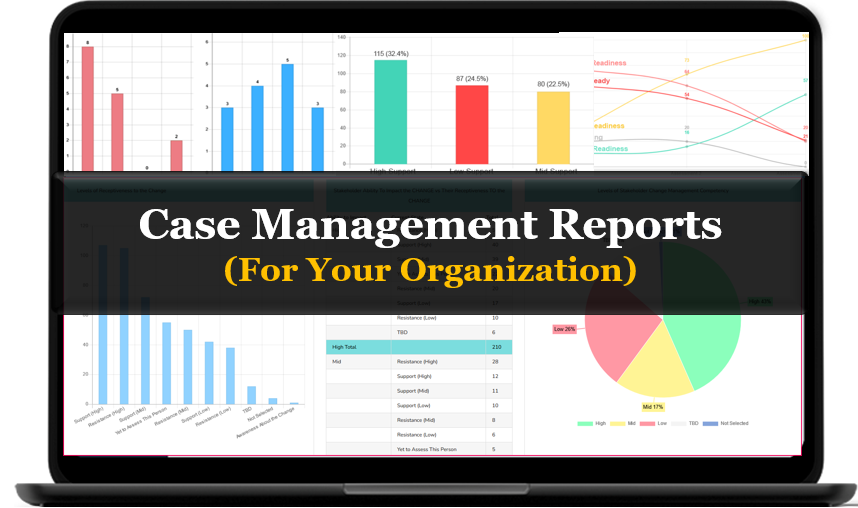
With integrated tools for client tracking, intakes, secure messaging, and documentation, the platform simplifies administrative tasks so you can focus on building meaningful partnerships with your clients. Learn more by visiting the Case Management Hub Software page.
See how easy it is to Create, Edit, and Send a form in Case Management Hub (Quick tip: These same steps work for any of our built in form templates):
Step 1:
From the sidebar, click on the Forms module, search for Basic Intake Form, then click the title to open it.
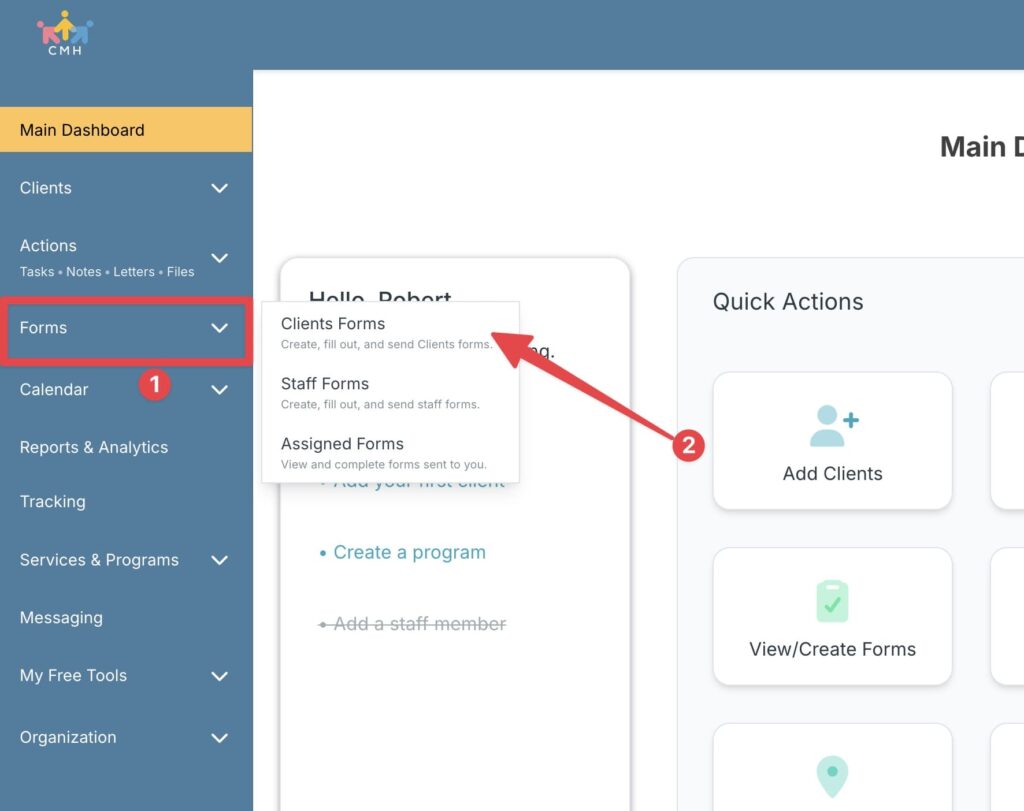
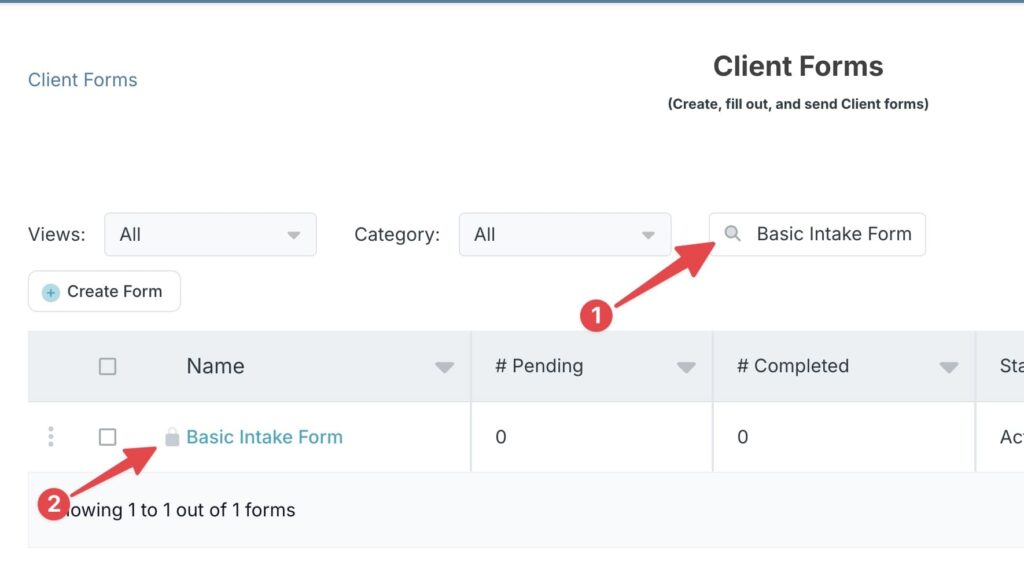
Tip: Forms with a padlock are master templates provided by Case Management Hub to help you get started. You can easily customize these to make them your own.
Step 2:
Click Edit Template to start customizing the form to your needs. Once done, click Save.
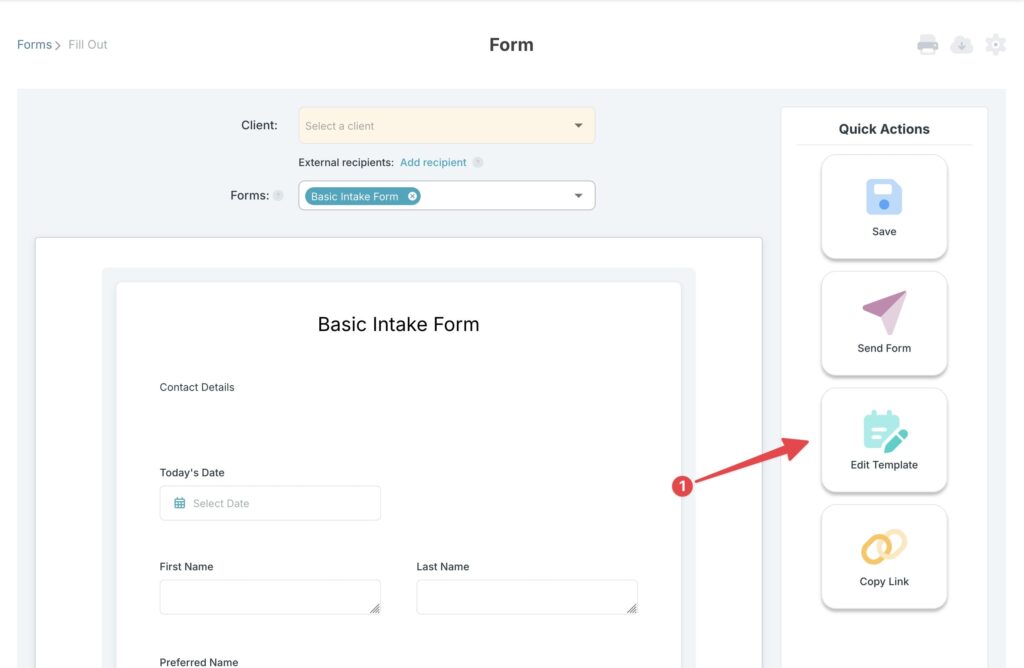
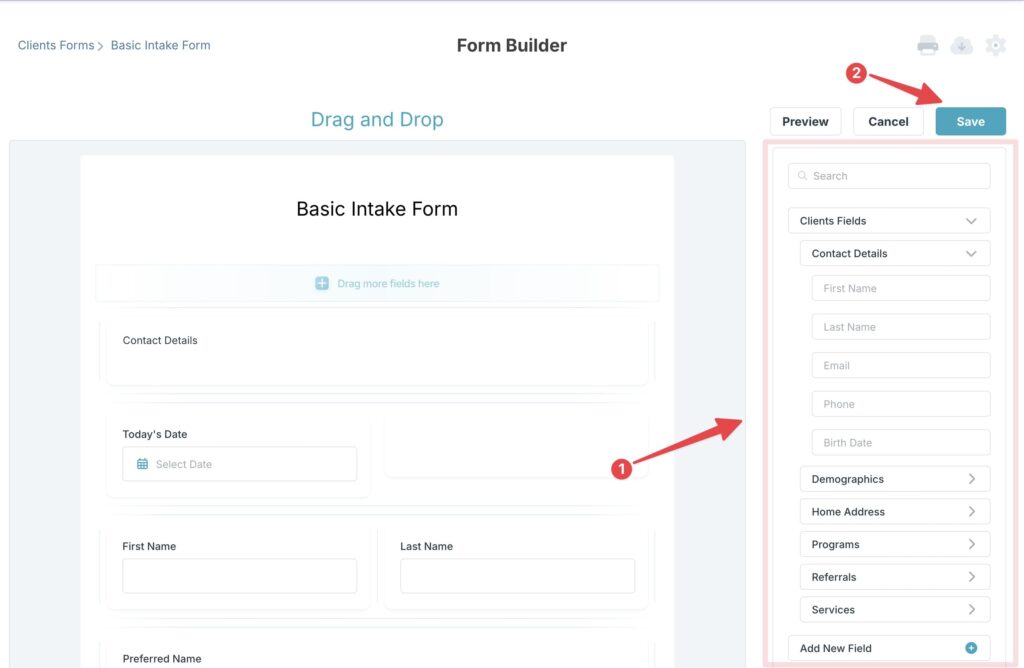
Tip: You can add new form fields using the right sidebar. Just drag them straight into your form.
Step 3:
Select a client to start filling out the form on their behalf. Once done, click Save.
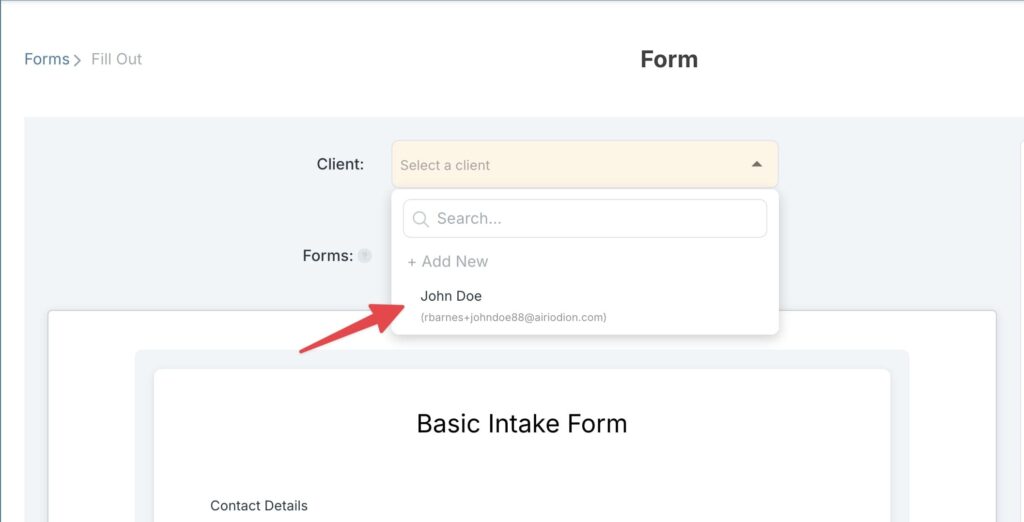
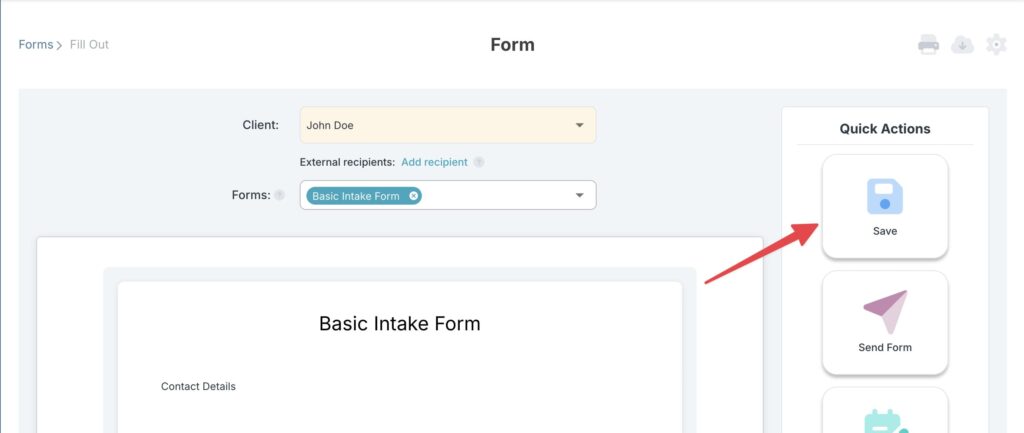
Tip: No need to re‑type your client’s data, it magically fills in the form for you, saving you time.
Step 4:
Or to send the form directly to a client, click Send Form, then select the clients. When you’re ready click Send.
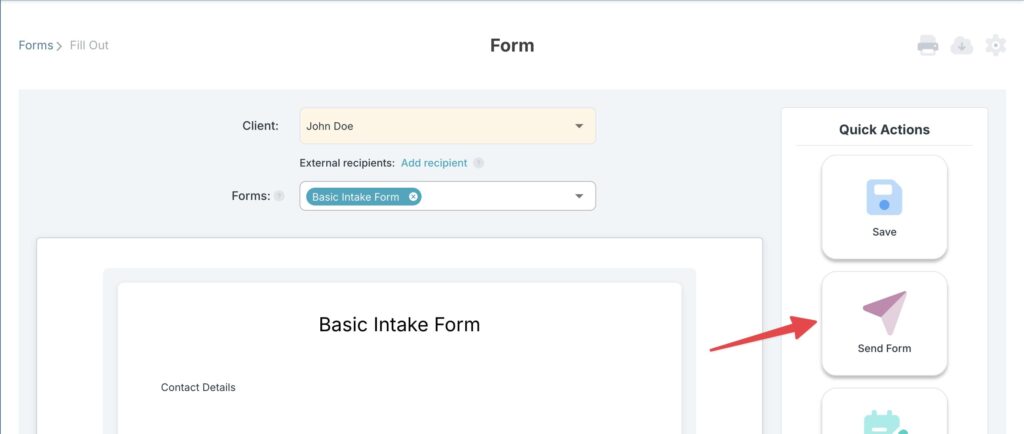
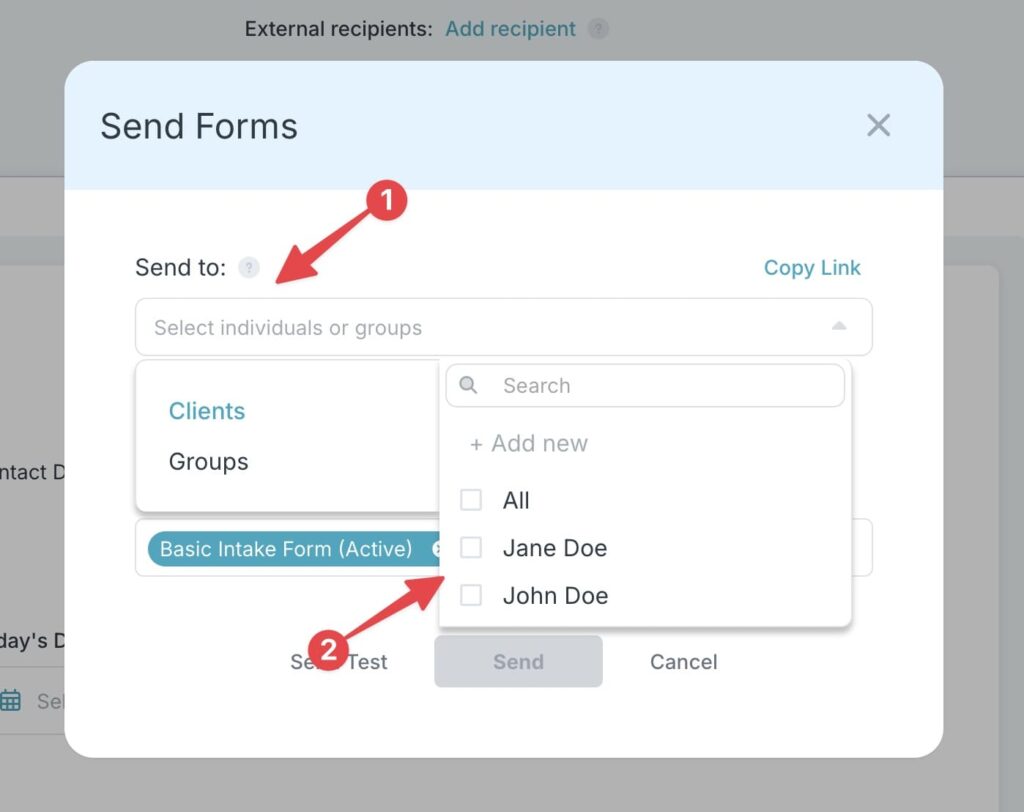
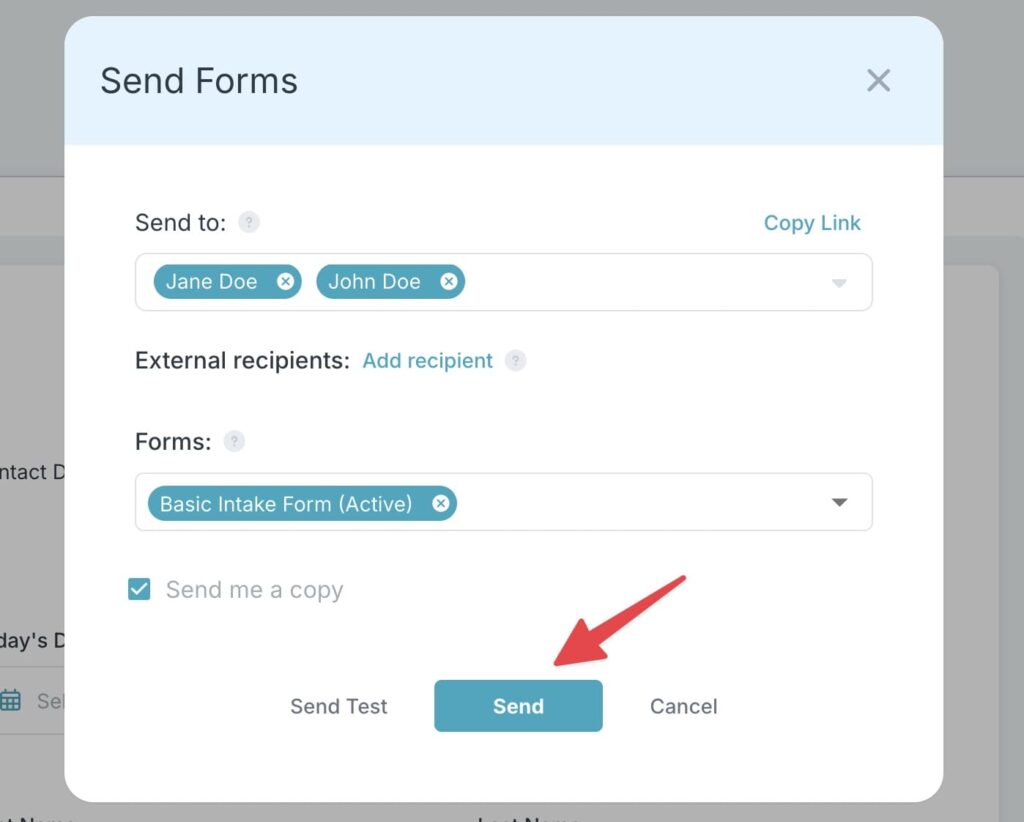
Tip: You can send the form to clients that are not yet part of Case Management Hub (External recipients) by clicking “Add recipient” and filling out their email, first name, and last name.
Step 5:
Create a public link for your form so you can easily share it with anyone. Just click Copy Link to publish your online form.
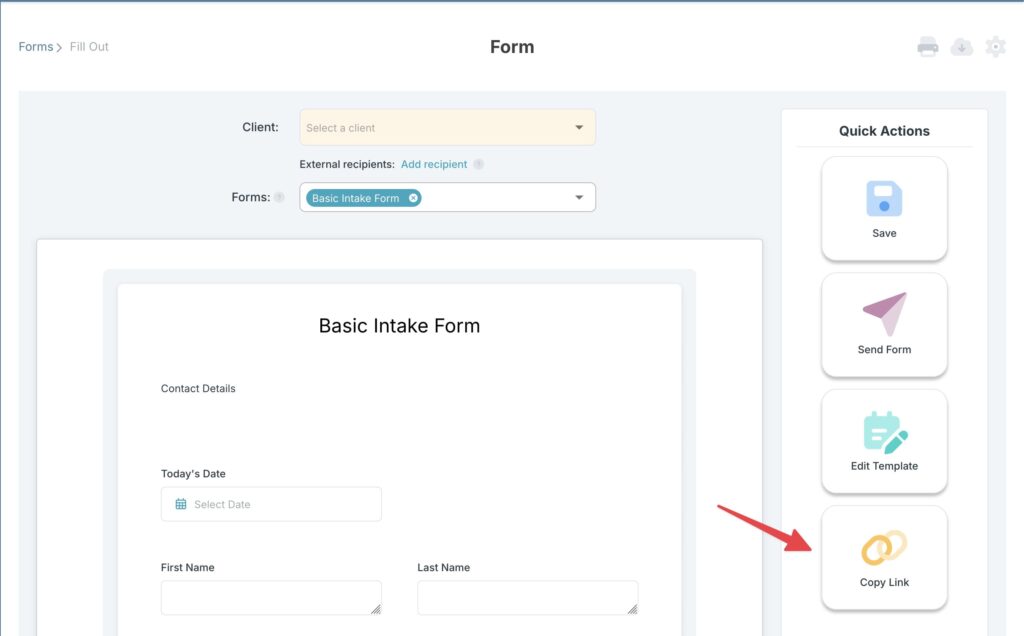
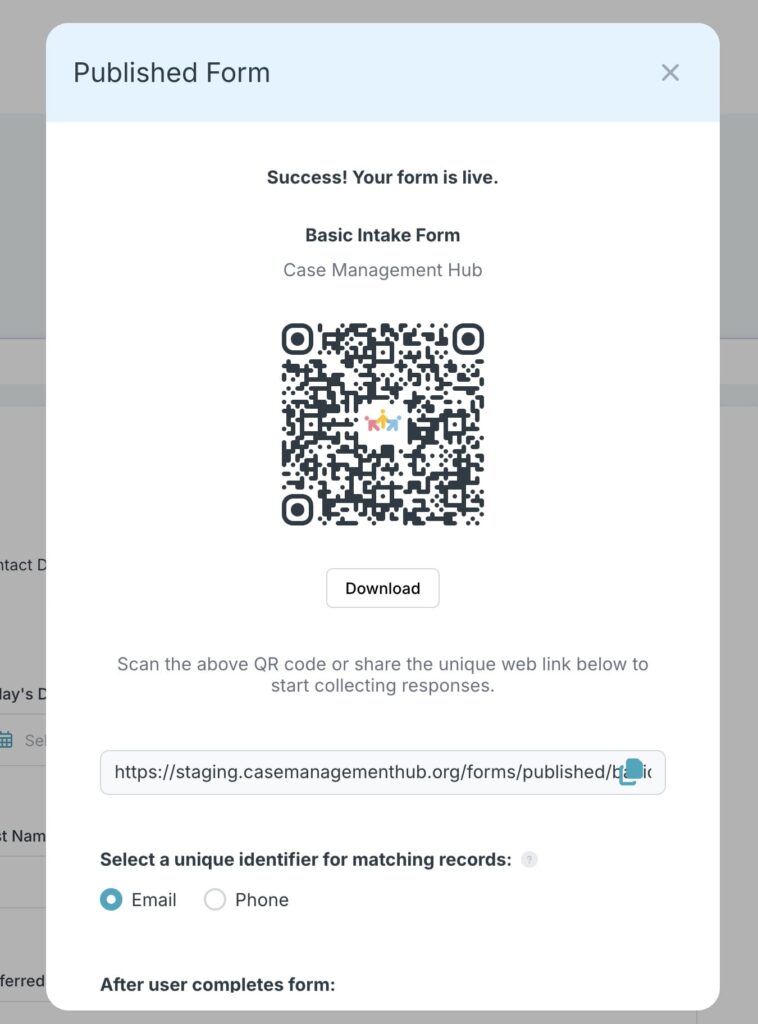
Tip: A link will automatically be created for you but you can always edit this and other form settings even after creating the online form. Just click on the gear icon in the top right corner of the form page to bring up the form settings.
Start integrating anti-oppressive workflows into your agency today. Sign up for a free 21-day trial of the Case Management Hub—no credit card required.
Frequently Asked Questions
How long does an anti-oppressive intake interview take compared to a traditional intake?
An anti-oppressive intake takes roughly the same amount of time as a traditional intake, usually 50 to 60 minutes. The difference lies in how you spend that time. Less time is spent asking rapid-fire demographic questions, and more time is dedicated to open dialogue, power-sharing, and collaborative goal setting.
How do I handle required agency forms that use pathologizing language?
Complete required fields to maintain compliance, but use open notes sections to add strengths-based context. You can explain agency form requirements to the client upfront, frame those fields as administrative necessities, and document the client's actual perspective alongside the required fields.
Does collaborative documentation slow down my workflow?
Collaborative documentation actually saves time. Writing notes with your client during the final 5 minutes of a session eliminates the need to complete hours of administrative paperwork at the end of the day.
Can anti-oppressive practice work with electronic health record (EHR) software?
Yes, if the software is flexible. Platforms that allow custom intake templates, client portal access, and customizable progress notes make it easy to align your administrative tasks with anti-oppressive values.
How can I introduce anti-oppressive intake practices to my clinical supervisor?
Present anti-oppressive intake practices as a method to improve client engagement, reduce dropout rates, and enhance documentation accuracy. Frame it as a quality-improvement initiative that aligns with NASW ethical standards for cultural humility and client self-determination.
What should I do if a client does not want to participate in collaborative documentation?
Respect the client's preference. Anti-oppressive practice centers on client autonomy. If a client prefers not to review notes or share the screen during documentation, honor that choice and document sessions independently using strengths-based language.
👉 Try it free today - No credit card needed
Note: Content on this website (socialworkportal.com) is copyrighted and protected under applicable copyright laws. Unauthorized reproduction, distribution, or use of any content from the website, without explicit written permission, is strictly prohibited. Read: Terms of Use.
Social Work Portal Disclaimer: Social Work Portal is not a social work agency and we do not refer social workers. This web site is provided for educational and informational purposes only and does not constitute providing medical advice or professional social and healthcare services. The information provided should not be used for diagnosing or treating a health problem or disease, and those seeking personal medical advice should consult with ... Read our full disclaimer here: Social Work Portal Disclaimer.