Strategies for Building Sustainable, Outcomes-Focused Case Plans That Drive Client Engagement and Compliance
Effective social work case planning is the cornerstone of client outcomes, yet many organizations struggle with fragmented processes that fail to integrate client input, evidence-based interventions, and measurable progress tracking. When case plans lack structure, alignment with organizational standards, and clear accountability mechanisms, clients experience poor engagement, goals remain unmet, and resources are wasted on inefficient service delivery.
This guide provides practitioners and leadership teams with actionable frameworks for designing and implementing social work case plans that produce demonstrable results while reducing administrative burden on frontline staff.
Let’s get started
Watch this video:
or
read the guide below.
What We Will Cover
- Foundational principles of evidence-based case planning and how they align with NASW standards for social work case management
- Step-by-step methodologies for conducting comprehensive assessments and identifying social determinants of health that influence outcomes
- Techniques for collaborative goal setting with clients and designing measurable goals in social work case planning
- Best practices for multidisciplinary care coordination and integration across service systems
- Approaches to tracking progress in social work interventions and measuring outcomes that demonstrate client compliance and engagement
- Solutions for reducing administrative burden while maintaining quality and regulatory compliance
Everything in one place: clients, notes, forms, appointments, reports, and outcomes. 👉 Try it Free - No credit card needed💡All-in-one Case Management Software.
Understanding the Foundation of Effective Case Planning
Effective case planning rests on three interdependent pillars: thorough assessment, client engagement, and outcome accountability. According to the National Association of Social Workers, comprehensive case planning integrates client strengths, environmental factors, and evidence-based interventions tailored to individual needs. Research published in the Journal of Evidence-Based Social Work demonstrates that case plans incorporating client voice during the planning process show 34% higher engagement rates compared to clinician-directed approaches.
The foundation of any effective social work case plan begins with understanding the client’s full context. This includes exploring social determinants of health in case planning, which encompasses housing stability, food security, employment barriers, educational attainment, and access to transportation. The Centers for Medicare and Medicaid Services increasingly recognizes these factors as essential to cost reduction and improved health outcomes, particularly for dual-eligible and high-risk populations.
Practitioners must employ social work assessment tools and templates that standardize the information-gathering process while remaining flexible enough to capture individual circumstances. Evidence-based approaches like the Biopsychosocial Assessment and Strengths-Based Assessment frameworks ensure that planning addresses biological, psychological, social, and environmental dimensions of client functioning.
👉 Try it Free - Free Case Management System
Alignment with Professional Standards and Regulatory Requirements
NASW standards for social work case management establish clear expectations for documentation, timeliness, frequency of contact, and outcome measurement. These standards mandate that case plans be developed collaboratively with clients, reviewed at least quarterly, and adjusted based on progress toward established goals. Social work case plan documentation requirements extend beyond internal agency compliance; they serve as legal evidence of adherence to duty of care, informed decision-making, and protection against liability.
Understanding documentation standards for case managers is critical for organizational risk management. Case records must clearly demonstrate the rationale for interventions, evidence supporting treatment selection, client consent, progress documentation, and adjustments to the plan. Failure to maintain adequate documentation exposes agencies to regulatory sanctions, malpractice claims, and loss of reimbursement.
Conducting Comprehensive Assessments That Inform Strategic Case Planning
The assessment phase determines the quality of everything that follows in the case planning process. Effective assessments gather data across multiple domains: presenting problems, medical and mental health history, substance use, family systems, employment and education, housing, legal involvement, strengths and resilience factors, and environmental resources. This comprehensive approach enables practitioners to identify both barriers and assets that will shape intervention strategy.
Electronic case management software now enables agencies to standardize assessment processes, reduce data entry time, and flag risk factors automatically. Systems that integrate assessment data with planning modules ensure seamless transition from evaluation to goal-setting phases, reducing the administrative work that has historically consumed 40-50% of a case manager’s time (Bureau of Labor Statistics).
When conducting assessments, practitioners should explicitly examine social determinants of health in case planning. Research from the National Academies of Sciences, Engineering, and Medicine indicates that addressing these factors can produce health improvements equivalent to medical interventions alone, yet remain underfunded and unaddressed in traditional case planning. Housing instability, for example, directly correlates with psychiatric hospitalization, emergency department utilization, and reduced medication adherence in clients with serious mental illness.
Standardizing Data Collection and Reducing Assessment Burden
Many organizations experience inconsistent assessment quality and incomplete documentation due to paper-based systems or poorly integrated software platforms. Transitioning to structured electronic case management software for social workers streamlines data collection while creating audit trails for compliance verification. Systems should include conditional logic that tailors questions based on client responses, reducing unnecessary questioning and improving client experience.
Key Assessment Domains and Information-Gathering Priorities
| Assessment Domain | Key Information to Gather | Evidence-Based Rationale | Impact on Case Planning |
| Presenting Problem and History | Chief complaint, onset, prior episodes, previous treatment response | Understanding problem trajectory improves intervention selection accuracy | Shapes prioritization of goals and selection of evidence-based interventions |
| Social Determinants of Health | Housing, food security, employment, education, transportation, social support | NASEM research links these factors to 80% of health outcomes | Identifies resource gaps requiring coordination or advocacy |
| Strengths and Resilience | Coping strategies, past successes, family/community connections, cultural identity | Strengths-based approaches increase client engagement and reduce dropout | Builds foundation for collaborative goal-setting and enhances client self-efficacy |
| Risk and Safety Factors | Suicidality, harm to others, self-care capacity, vulnerability to exploitation | Accurate risk assessment prevents harm and guides intensity of intervention | Determines frequency of contact, hospitalization need, and protective interventions |
| System Involvement | Justice system, child welfare, prior services, current providers | Identifies coordination needs and historical patterns | Informs multidisciplinary care coordination strategy |
Collaborative Goal Setting and Designing Measurable Goals in Social Work
Measurable goals in social work case planning must balance clinical appropriateness with client autonomy and motivation. Research on self-determination theory demonstrates that goals aligned with client values and autonomy produce higher completion rates and sustained behavior change. Practitioners employing collaborative goal setting with clients should facilitate a dialogue rather than presenting a predetermined plan for approval.
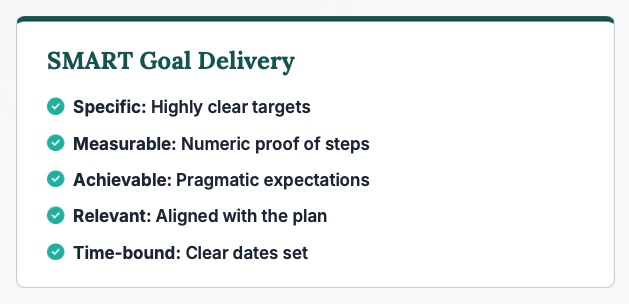
Effective goals follow the SMART framework (Specific, Measurable, Achievable, Relevant, Time-bound) while remaining grounded in client language and priorities. For example, rather than “improve medication adherence,” a more collaborative approach might be “take my antidepressant medication five days per week to help me have more energy for family time, with check-ins every two weeks.” This version clarifies the specific behavior, acknowledges the client’s motivation, establishes measurement criteria, and defines accountability intervals.
Improving client compliance in social work is not achieved through mandate but through alignment between case goals and client priorities. When clients perceive goals as externally imposed rather than personally relevant, engagement declines and dropout increases. Research in motivational interviewing and shared decision-making demonstrates that goals co-created with clients yield 2.5 times higher achievement rates compared to clinician-directed planning.
Do You Have a Team? Our best all-in-one client and top case management software simplifies everything from client intake and assessments to programs, projects, goals tracking, planning, scheduling, documentation, reporting dashboard, and progress tracking.All-in-One Case Management Software
Sign Up Today, Free
No credit card needed!
Integrating Evidence-Based Social Work Intervention Strategies
Once goals are established, practitioners must select interventions supported by empirical research. Evidence-based social work intervention strategies span cognitive-behavioral approaches, task-centered practice, motivational interviewing, family systems interventions, and community-based supports. Selecting interventions without evidence foundation risks wasting client and organizational resources while failing to produce meaningful change.
The following table outlines common social work goals and corresponding evidence-based interventions with established efficacy:
Goals, Evidence-Based Interventions, and Expected Outcomes
| Client Goal | Evidence-Based Intervention | Research Support | Expected Outcome Timeline |
| Stabilize housing and reduce homelessness | Housing First with assertive community treatment (ACT) | Supports sustained housing in 75-85% of cases | 6-12 months |
| Improve mental health symptoms and reduce hospitalization | Cognitive-behavioral therapy (CBT) or dialectical behavior therapy (DBT) | CBT produces symptom improvement in 60-75% of anxiety and depression cases | 8-16 weeks for initial gains |
| Increase employment and economic stability | Individualized placement and support (IPS) model | Competitive employment achieved in 50-60% of participants with serious mental illness | 3-6 months to first job; 12 months stabilization |
| Strengthen family relationships and reduce conflict | Multifamily group therapy or family psychoeducation | 50% reduction in relapse and hospitalization when family is engaged | 6-12 months |
| Increase social connection and reduce isolation | Peer support groups or community integration services | Social connection reduces psychiatric hospitalization by 23% | Ongoing; benefits within 2-4 months |
| Address substance use and achieve recovery goals | Evidence-based addiction treatment plus recovery support services | Medication-assisted treatment combined with psychotherapy achieves 50-60% sustained abstinence or reduction | 12-24 months for stabilization |
Implementing Multidisciplinary Care Coordination and Outcomes Measurement
Multidisciplinary care coordination in social work requires systematic approaches to communication, role clarity, and accountability across healthcare providers, behavioral health professionals, schools, justice systems, and community organizations. Fragmented service delivery results in duplicated services, gaps in care, and poor outcomes. Organizations implementing integrated care pathways for case management report 20-30% improvements in client satisfaction and reductions in emergency department utilization.
Electronic case management software enables real-time information sharing, alerts for upcoming appointments, and automated coordination of care conferences. Systems designed for care coordination should include secure messaging between providers, shared calendar functions, and integrated outcome dashboards accessible to authorized team members.
Care coordination challenges and solutions often center on three persistent barriers: insufficient communication protocols, unclear role definition across disciplines, and lack of shared outcome metrics. Addressing these challenges requires:
- Establishing written interdisciplinary protocols that specify communication frequency, escalation procedures, and decision-making authority
- Implementing regular care coordination meetings (monthly minimum for complex cases) with documented attendees and action items
- Adopting shared outcome measurement tools visible to all team members
- Creating feedback mechanisms for providers to report coordination effectiveness
Tracking Progress in Social Work Interventions and Outcomes Measurement
Tracking progress in social work interventions demands systematic data collection at baseline, regular intervals, and case closure. Outcomes measurement in social services should assess both behavioral changes (e.g., housing stability, employment status) and subjective wellbeing (e.g., satisfaction, hope, symptom severity). The most rigorous approaches employ validated instruments administered at defined intervals.
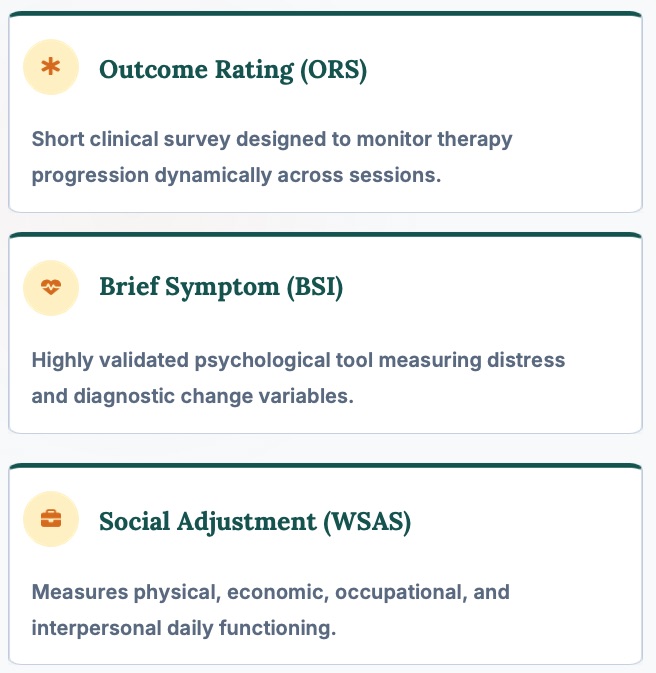
Common validated measures include the Outcome Rating Scale for session-by-session monitoring, the Brief Symptom Inventory for psychiatric symptom severity, the Work and Social Adjustment Scale for functional improvement, and client satisfaction surveys. Agencies should establish benchmarks for what constitutes meaningful progress; for example, a 25% reduction in psychiatric symptoms within three months may indicate intervention effectiveness for depression, while employment stability might require six-month tracking windows.
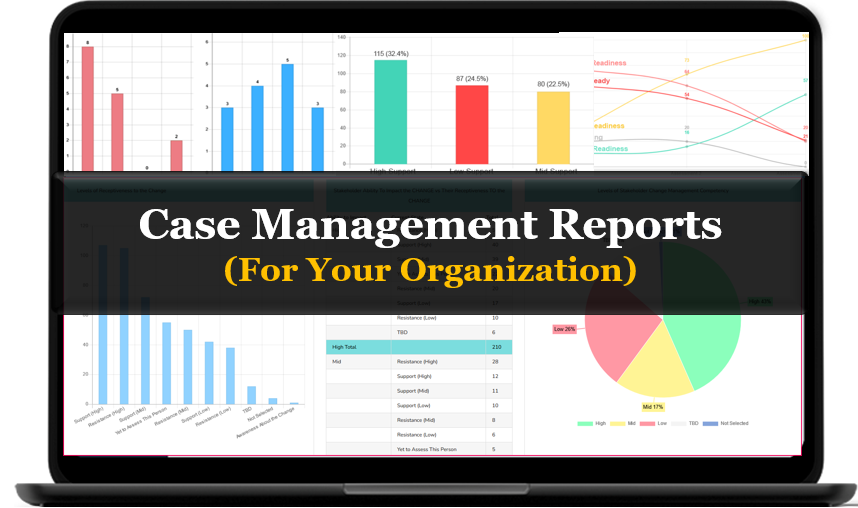
Reducing administrative burden while maintaining rigorous outcome tracking requires automation. Electronic case management software configured with automated data collection at scheduled intervals, pre-populated reminder systems, and dashboard visualization of aggregate outcomes reduces the documentation workload while improving data quality and completeness.

People Also Ask
What is the difference between a care plan and a case plan?
While the terms are sometimes used interchangeably, a case plan typically refers to the comprehensive document created by a case manager addressing all dimensions of a client’s life and service needs, while a care plan may be more narrowly focused on clinical treatment in a specific setting like a hospital or mental health clinic. Case plans are broader in scope and address social determinants alongside clinical needs.
How often should social work case plans be reviewed and updated?
NASW standards require formal review and update at least quarterly, with more frequent reviews for clients experiencing crisis, significant life changes, or insufficient progress toward goals. Progressive case management systems track goal achievement and automatically flag cases due for review, ensuring compliance with frequency requirements.
Can case plans be modified without client consent?
Significant changes to case plans should involve client input and documented consent, though crisis situations may necessitate immediate modifications with client notification and explanation following the intervention. Best practices in client-centered case management emphasize collaborative modification rather than unilateral changes.
What electronic systems do social workers use for case documentation?
Popular platforms include Apptio, Simpler, Footprint, and System4, along with agency-specific implementations. Selection should prioritize integration with existing health information systems, evidence-based assessment templates, and automation of routine documentation tasks.
How do you measure the success of a case plan?
Success is measured through tracking progress on established goals using validated instruments, client satisfaction surveys, and objective indicators like housing stability or employment status. Aggregate outcomes should be compared to benchmarks for similar populations to assess program effectiveness.
What are the most common barriers to effective case planning implementation?
Common barriers include insufficient staff training on evidence-based approaches, inadequate time allocation for thorough assessment and collaborative planning, lack of integration across service systems, and electronic systems that increase rather than decrease documentation burden. Organizations addressing these barriers through training investment, workflow optimization, and appropriate technology show significant improvements.
Switch to an all-in-one case management platform. 👉 Try it Free - No credit card needed🔥Still using spreadsheets for case management?
How Case Management Hub Can Help
Case Management Hub provides comprehensive solutions addressing the full spectrum of case planning challenges. Our platform integrates evidence-based assessment templates aligned with NASW standards, such as the GAD-7, PHQ-9, and the AUDIT (Alcohol Use Disorders Identification Test) forms, and features built-in client and program goal tracking, as well as progress tracking dashboards enabling real-time outcome monitoring.
Specifically, Case Management Hub addresses reducing administrative burden in social work by streamlining routine documentation tasks, eliminating duplicate data entry, and providing dashboard visibility to outcomes data that supports continuous quality improvement.
See how easy it is to setup client goals and review progress through a reports dashboard:
Step 1:
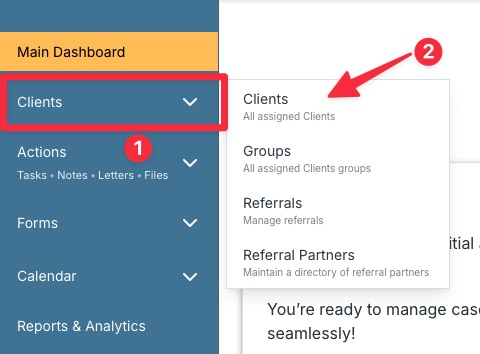
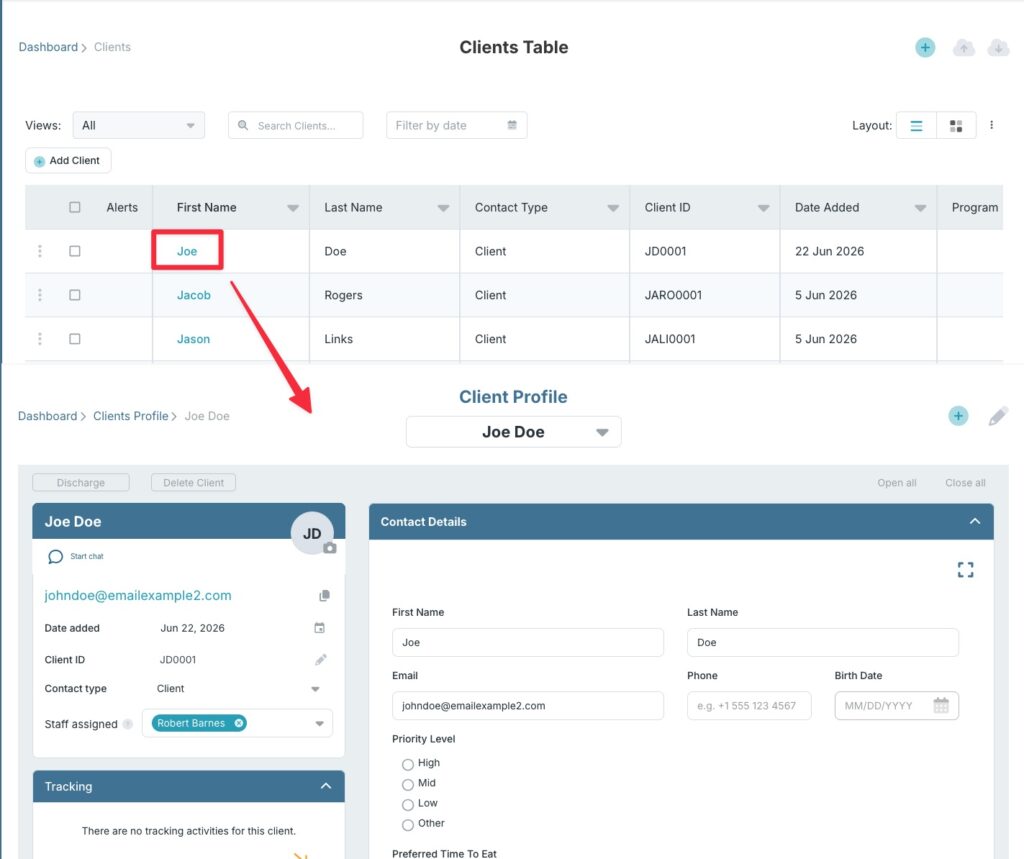
Navigate to the Client’s table and open a client profile.
Step 2:
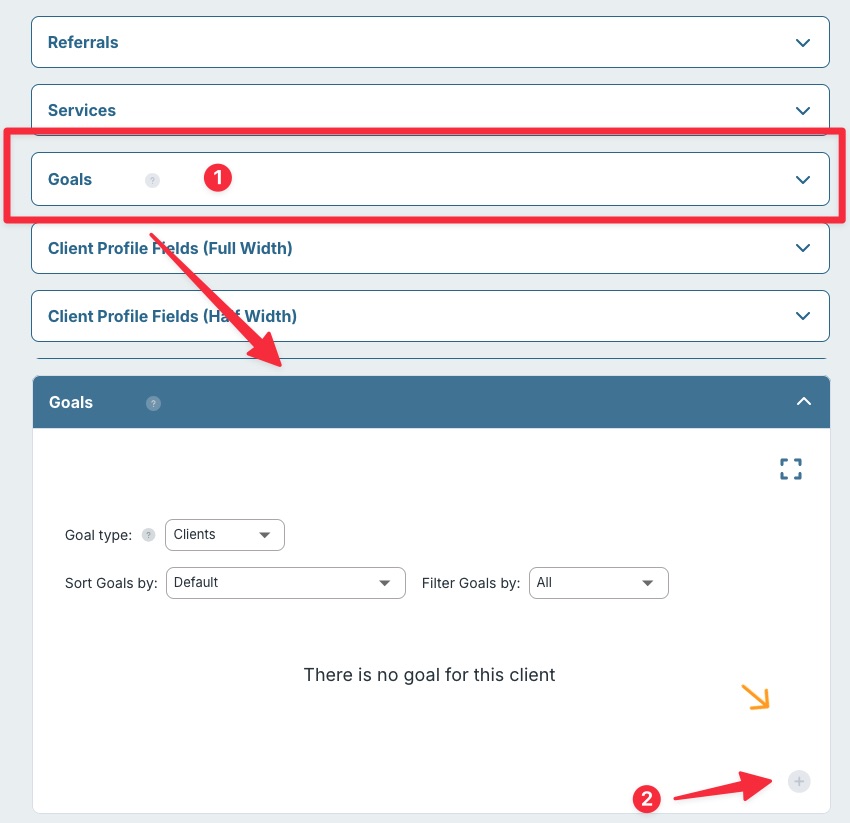
Scroll down to the Goals section and click the title to expand. Click the plus button to create new goal.
Step 3:
Give your goal a name and add in each of the steps required to achieve the goal. Start with the first step and add each subsequent step underneath it. When done, click Save.
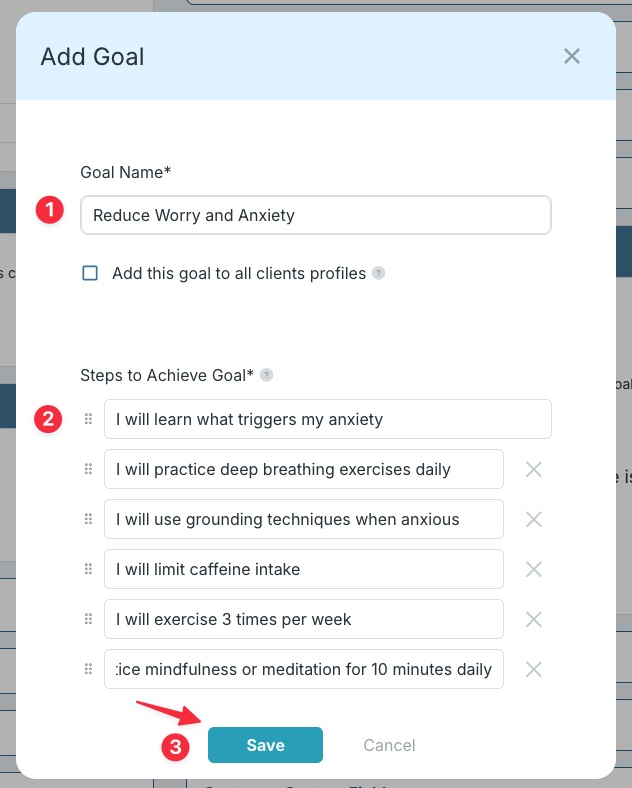
Tip: Goals can added automatically to all clients by placing a checkmark in “Add this goal to all students profiles”.
Step 4:
From the Goals section, you can manually mark steps as done, sort goals by date added, and filter out pending, in-progress, or completed goals.
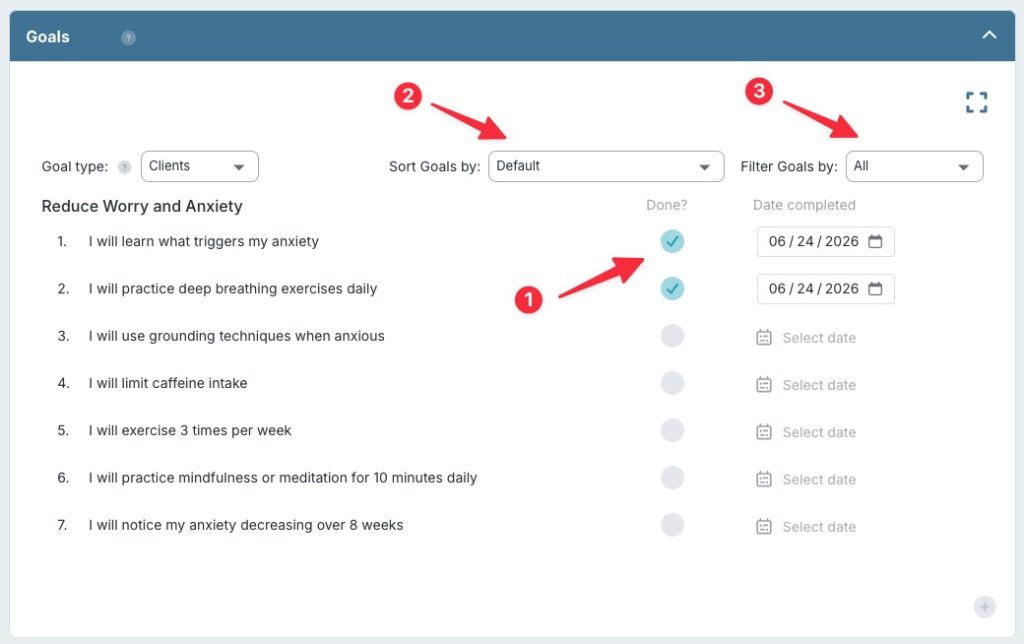
Tip: As you mark goals as done, the date completed field will automatically be filled in with today’s date, however you can change this by simply clicking on it and selecting the new date.
Step 5:
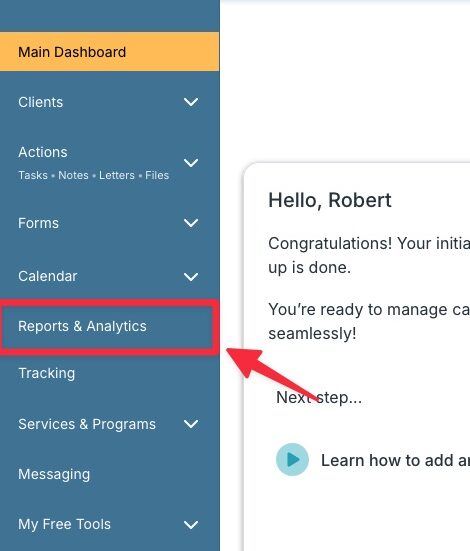
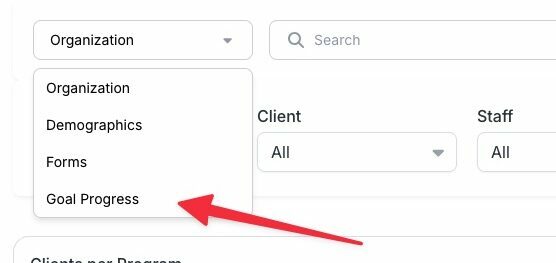
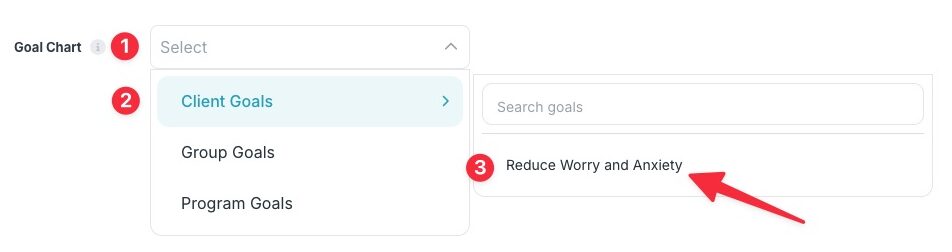
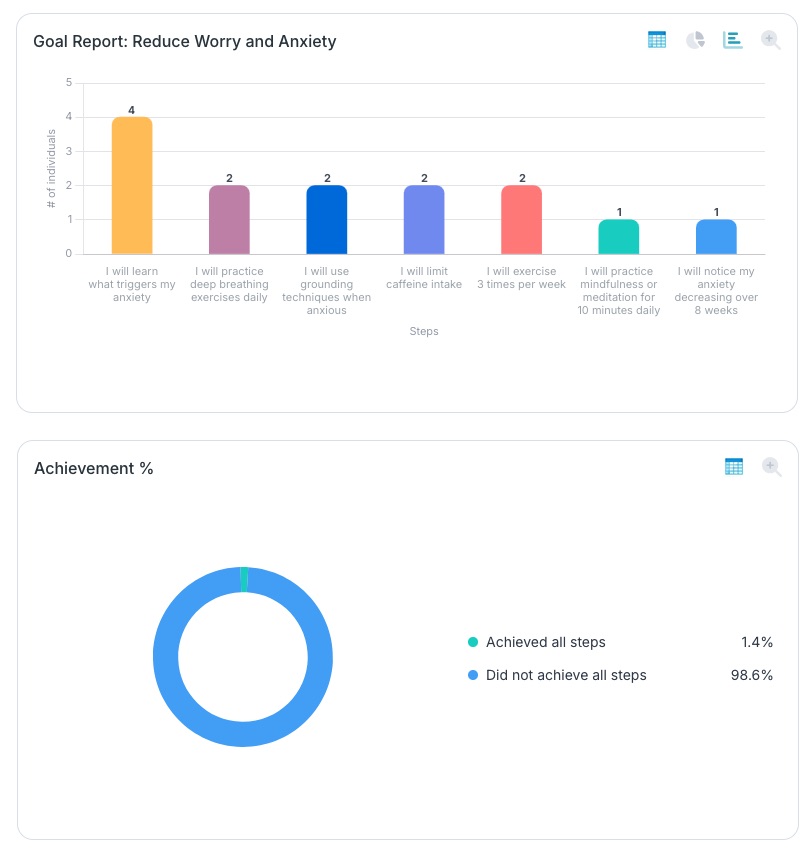
Review goal progress by heading to the Reports and Analytics module, selecting Goal Progress, and then selecting which goals. View reports on how many times a step was marked as done as well as the achievement percentage.
Ready to Transform Your Case Management Practice?
Experience the power of streamlined goal tracking, automated progress monitoring, and dynamic reports and analytics dashboards that eliminate the historical friction of tracking case management key performance indicators. Case Management Hub enables your team to spend less time on documentation and more time delivering meaningful client services while maintaining full compliance with NASW standards and regulatory requirements.
Start your free 21-day trial with no credit card needed and discover how your organization can reduce administrative burden, improve outcomes measurement, and demonstrate the true impact of your case management programs.
Frequently Asked Questions
What are the core components required in every social work case plan?
Every case plan should include a comprehensive assessment documenting presenting problems, strengths, social determinants of health, and risk factors; collaborative goals that are specific, measurable, achievable, relevant, and time-bound; evidence-based interventions selected to address each goal; identified roles and responsibilities for client, case manager, and other service providers; documentation of client consent and involvement in planning; frequency and intensity of services; planned review and revision dates; and clear outcome measures for evaluating progress.
How can social workers balance documentation requirements with direct client service time?
The most effective approach involves implementing electronic case management software designed to reduce documentation burden through automation, template structures preventing blank fields, and conditional logic eliminating unnecessary questions. Organizations should also conduct workflow mapping to eliminate redundant documentation systems, establish clear documentation standards to prevent excessive detail, and allocate staff time explicitly for documentation tasks rather than expecting completion outside regular work hours. Studies show that well-designed technology reduces documentation time by 25-40%, allowing reallocation to direct client contact.
What role does cultural humility play in effective case planning?
Cultural humility requires practitioners to acknowledge that clients hold expertise about their own culture, values, and preferences, and that these elements fundamentally shape what constitutes meaningful change and appropriate interventions. Case plans developed without cultural humility may impose goals misaligned with client values, reducing motivation and engagement. Practitioners should explicitly explore cultural identity, spiritual traditions, family structures, and community connections during assessment and planning phases, incorporating these elements into goal selection and intervention strategies.
How should case plans address social determinants of health in case planning?
Assessment should explicitly document housing stability, food security, transportation access, employment and education status, healthcare access, and social support networks. Case plans should then identify which determinants represent barriers to goal achievement and determine whether direct services, navigation to community resources, or system advocacy represents the appropriate intervention. For example, a case plan addressing depression symptoms is unlikely to succeed if the client experiences housing instability; addressing housing first through Housing First interventions or coordinated navigation may be prerequisite to clinical mental health treatment.
What metrics demonstrate that a case management program is effective?
Program-level metrics should track aggregate outcomes across case loads, including percentage of clients achieving established goals, average symptom reduction as measured by standardized instruments, employment rates, housing stability rates, hospitalization or emergency department visit reductions, and client satisfaction scores. Organizations should establish benchmarks for comparison populations from literature or comparable agencies and conduct quarterly analysis of aggregate outcomes to identify programs requiring improvement. Tracking metrics by worker enables identification of training needs and recognition of high-performing practitioners.
How do multidisciplinary teams ensure care coordination doesn't add administrative burden to case managers?
Care coordination requires clear protocols specifying communication frequency, methods, and decision-making authority. Electronic systems enabling automated alerts for upcoming appointments, shared documentation visible to authorized team members, and secure provider messaging significantly reduce the communication burden of coordination. Additionally, care coordination should be organized through designated care coordinators or team leads rather than expecting all team members to manage coordination independently. Regular care coordination meetings should follow structured agendas and documented action items to prevent duplicative communication.
👉 Try it free today - No credit card needed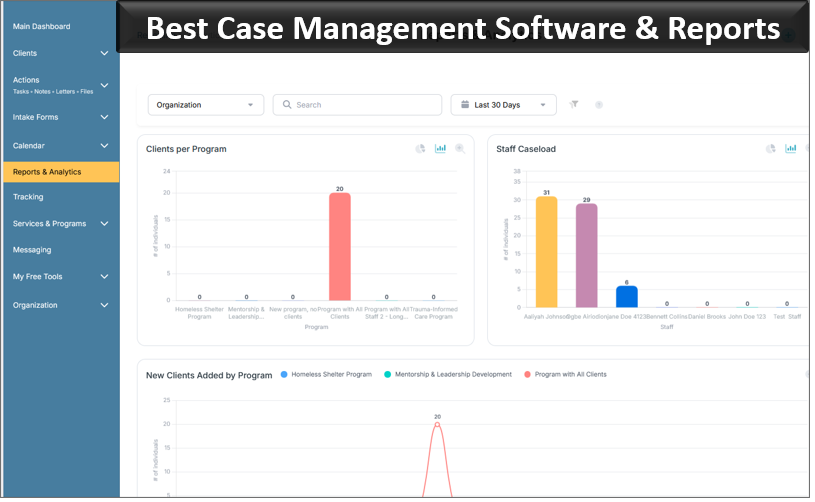
Note: Content on this website (socialworkportal.com) is copyrighted and protected under applicable copyright laws. Unauthorized reproduction, distribution, or use of any content from the website, without explicit written permission, is strictly prohibited. Read: Terms of Use.
Social Work Portal Disclaimer: Social Work Portal is not a social work agency and we do not refer social workers. This web site is provided for educational and informational purposes only and does not constitute providing medical advice or professional social and healthcare services. The information provided should not be used for diagnosing or treating a health problem or disease, and those seeking personal medical advice should consult with ... Read our full disclaimer here: Social Work Portal Disclaimer.