A Clinical Social Worker Guide to Safer Transitions
Every inpatient clinician knows the sinking feeling of the 2:00 PM “surprise discharge.” A hospitalist enters a discharge order for a medically stabilized patient with congestive heart failure, floor nursing calls transport, and you receive an urgent consult to resolve four unaddressed social barriers in forty-five minutes. When the patient returns to the emergency department seventy-two hours later with pulmonary edema because their local pharmacy did not stock the specialty diuretic or their wheelchair ramp was never built, the system labels it a clinical failure. In reality, it was an operational breakdown that started the moment they were admitted.
Safe transitions are clinical interventions, not logistical afterthoughts. Crucial to preventing post-discharge bouncebacks in acute care is catching structural risks while the patient is still in the hospital bed, reconciling clinical orders against domestic realities, and dismantling communication silos
Let’s get started
Watch this video:
or
read the guide below.
What You’ll Learn in This Guide
- How to identify unaddressed social determinants of health during the initial twenty-four-hour assessment window.
- Practical strategies to uncover hidden caregiver burnout, low health literacy, and functional decline before signing off.
- Methods to resolve medication access barriers, prior authorization delays, and equipment shortages before transport arrives.
- Why daily multidisciplinary rounds fail to prevent readmissions without structured social work integration.
- How modern digital tools eliminate tracking errors, unmonitored referrals, and lost discharge paperwork.
- Concrete steps to conduct high-yield, post-discharge telephone check-ins that intercept clinical crises.
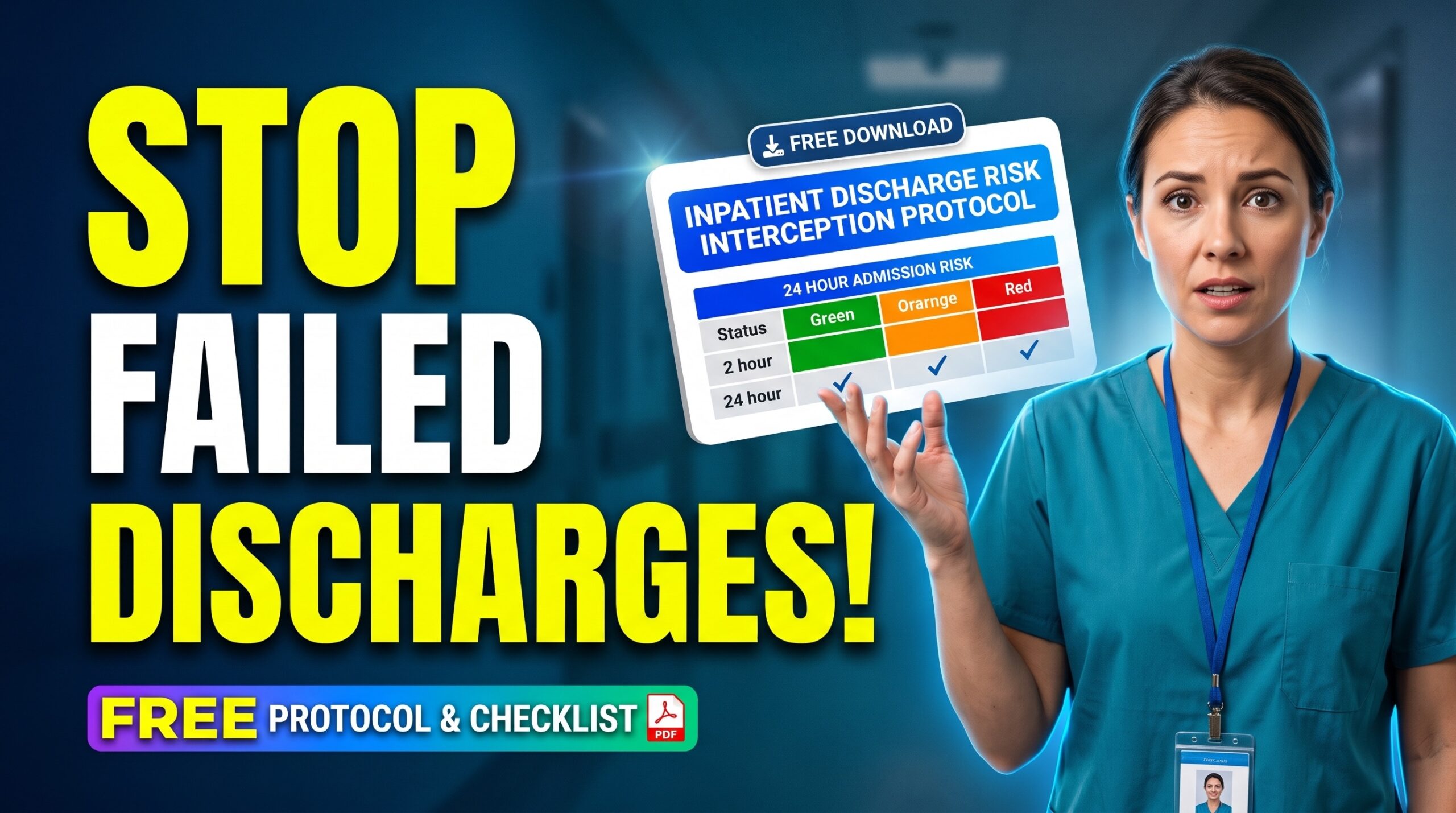
Free Download: Inpatient Discharge Risk Interception Protocol
Download the free Inpatient Discharge Risk Interception Protocol PDF. This practical desk reference is built specifically for hospital social workers and inpatient case managers and includes a rapid 24-hour admission risk matrix, bedside teach-back verification steps, and CMS-defensible clinical phrase templates to justify necessary transition delays in your progress notes.
Download Your Free Resources Here
💡All-in-one Case Management Software.
Everything in one place: clients, notes, forms, appointments, reports, and outcomes.
👉 Try it Free - No credit card needed
Why Do Clinically Stable Patients Fail Within 72 Hours of Discharge?
A clean metabolic panel and a stable electrocardiogram do not keep a vulnerable patient alive at home. Hospital discharge planning clinical social work repeatedly proves that patients fail when clinical discharge criteria ignore domestic friction. According to research published by the Agency for Healthcare Research and Quality, nearly twenty percent of hospital patients experience an adverse clinical event within three weeks of leaving the facility, with the vast majority stemming from unmanaged medication regimens and unaddressed functional disabilities.
When an acute care team treats discharge as a checklist rather than a clinical trajectory, critical gaps open up. A patient might nod cooperatively during nursing discharge education, yet possess third-grade reading literacy or suffer from mild executive dysfunction unmasked by hospital delirium. If that patient returns home to an empty refrigerator, stairs they cannot climb, or an insulin copay they cannot afford, readmission is practically inevitable. Fixing failed discharges requires clinical social workers to interrogate whether the patient’s home environment can physically support the physician’s recovery plan.
What High-Risk Patient Discharge Assessment Protocol Should Teams Run on Day One?
Waiting until the day of discharge to evaluate social determinants of health discharge barriers guarantees operational chaos. Safe hospital discharge planning steps must initiate at triage. Clinicians who proactively assess safety and risk in case management during the first twenty-four hours uncover compounding vulnerabilities that informal bedside observations routinely miss. Objective screening frameworks like the LACE Index give care teams days rather than hours to build safe discharge plans.
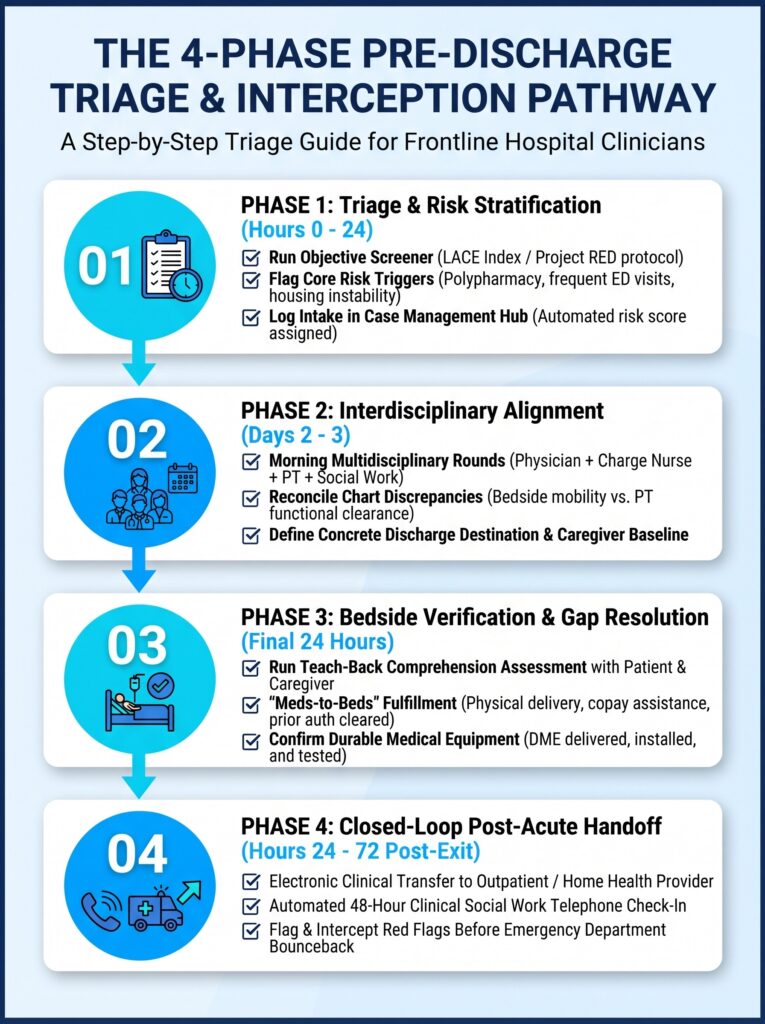
Frontline clinicians must prioritize comprehensive evaluations for patients presenting with three or more of these validated risk triggers:
- Frequent Inpatient Utilization: Any patient with two or more emergency department visits or unplanned hospitalizations in the preceding six months.
- Polypharmacy and High-Alert Medications: Regimens exceeding five daily maintenance medications, or new prescriptions for anticoagulants, subcutaneous insulin, or scheduled pain medications.
- Fragile Support Networks: Patients living alone, individuals acting as sole caregivers for a dependent, or families showing visible signs of acute emotional burnout.
- Functional Deficits vs. Architecture: A newly diminished mobility status paired with home architectural hazards such as narrow doorways, second-floor bedrooms, or absent bathroom grab bars.
- Cognitive and Behavioral Nuance: Concurrent diagnoses of substance use disorder, active depression, or progressive dementia without a designated power of attorney.
Flagging these factors upon intake transforms social workers from frantic problem-solvers into proactive case strategists who have days, rather than hours, to secure placement or organize complex outpatient services.
👉 Try it Free - Free Case Management System
Where Does Multidisciplinary Care Transition Breakdown Most Frequently?
Communication in acute care hospital units is notoriously fragmented. Hospitalists focus on acute symptom resolution, bedside nurses focus on immediate medication administration and shift documentation, physical therapists evaluate isolated motor function, and social workers track community resources. When these clinical lines do not intersect daily, each discipline makes conflicting assumptions about the patient’s post-acute trajectory.
The breakdown becomes acute during interdisciplinary morning rounds. If a physical therapist notes that a patient requires maximum assistance with a walker, but the medical team notes “ambulating well” based on a three-foot shuffle to the bedside commode, the discharge plan rests on a faulty foundation. Addressing clinical social work patient transition challenges means enforcing true interdisciplinary alignment. Teams must eliminate medical record transfer delays between inpatient floors and receiving facilities while confirming four non-negotiable points: the exact discharge destination, confirmed caregiver competence, verified medication access, and funded transportation.
How Digital Tools Streamline Hospital Discharge Planning
Relying on physical clipboards, handwritten intake notes, and loose post-discharge tracking spreadsheets creates severe compliance vulnerabilities and workflow bottlenecks. Learning how to streamline hospital discharge workflows with modern cloud software centralizes the entire coordination process into a structured, trackable system accessible across clinical teams. When clinical notes remain trapped on paper or buried in disjointed software tabs, critical discharge steps slip through the cracks. Inpatient case management discharge workflow software solves this administrative drag by unifying clinical documentation, referral management, and task delegation into a single operational interface.
The operational divide between legacy methods and a dedicated digital care transition tracking platform is stark:
| Operational Dimension | Manual / Paper-Based Workflow | Automated Digital Workflow |
| Intake Risk Triage | Paper checklists completed inconsistently across shifts | Standardized clinical assessment forms for social workers with automated risk scoring |
| Referral Management | Manual faxing to home health and skilled nursing facilities | Centralized digital referral tracking with automated delivery confirmation |
| Clinical Documentation | Freeform, non-standardized progress entries in fragmented charts | Automated social work SOAP progress notes tied directly to treatment milestones |
| Interdisciplinary Tasking | Verbal hallway requests and adhesive desktop reminders | Digital task assignment with real-time status alerts and clear audit trails |
| Post-Acute Monitoring | Ad hoc follow-up calls logged in disconnected spreadsheets | Structured post-discharge follow-up tracking system with automatic call prompts |
| Regulatory Compliance | Manual chart pulling for utilization review and audits | HIPAA-compliant discharge planning software with one-click compliance reporting |
By deploying dedicated tools designed to automate case management tasks, social workers replace frantic administrative paperwork with automated clinical social work intake templates and centralized client tracking for clinical social workers. Clinicians reclaim hours previously lost to manual data entry, enabling them to direct their clinical expertise where it matters most: preparing patients and families for a secure transition home.
All-in-One Case Management Software
Sign Up Today, Free
No credit card needed!
Do You Have a Team? | ||
Our best all-in-one client and top case management software simplifies everything from client intake and assessments to programs, projects, goals tracking, planning, scheduling, documentation, reporting dashboard, and progress tracking.
How Can Frontline Social Workers Intercept Discharge Failures at the Bedside?
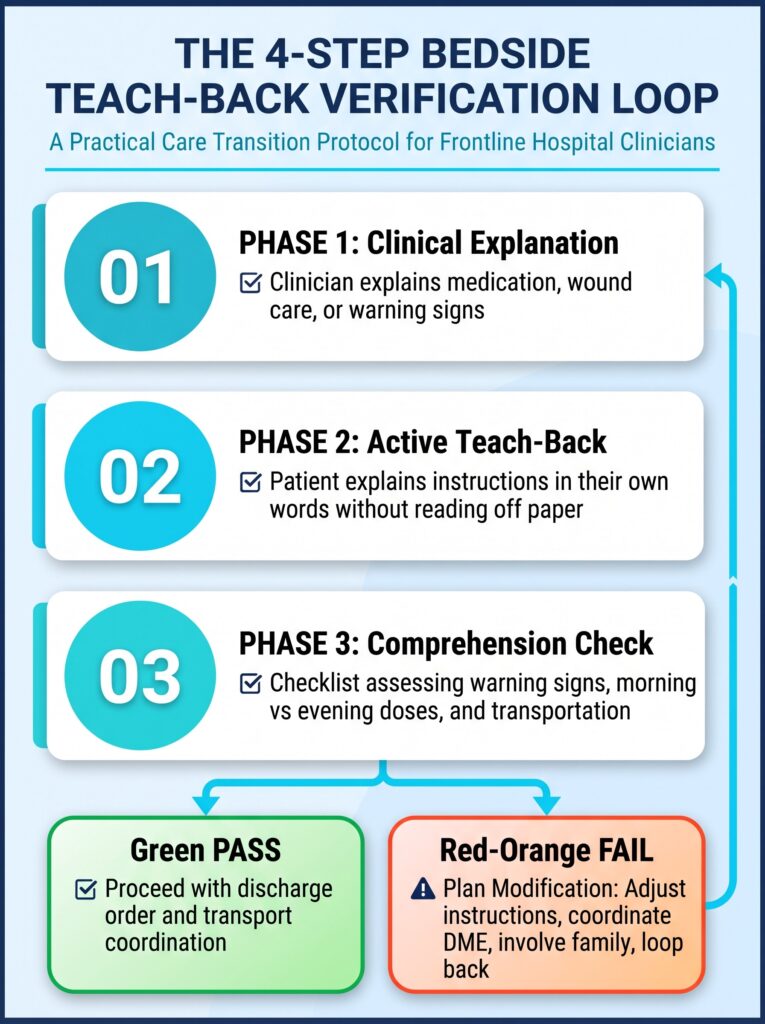
Preventing discharge failure requires aggressive bedside advocacy during the final twenty-four hours of an inpatient stay. Clinicians must move past perfunctory inquiries like “Do you have any questions?” and instead deploy structured teach-back assessments. Asking a patient or family member to explain in their own words how they will take their morning medications or what symptoms should prompt an emergency call immediately exposes dangerous gaps in comprehension.
Furthermore, clinicians must verify medication access before the patient leaves their room. A written prescription handed to a patient at the bedside is useless if their community pharmacy requires a prior authorization that will take four days to resolve. Social workers should collaborate with hospital discharge pharmacies to run a “meds-to-beds” delivery service, ensuring every bottle is physically in the patient’s hands, copays are resolved, and dosing schedules are verified before transport arrives.

People Also Ask
What causes most hospital readmissions within 30 days?
Most thirty-day hospital readmissions stem from unaddressed social determinants of health, confusing medication changes, and a lack of prompt post-acute clinical follow-up. Inadequate caregiver training and financial barriers to obtaining prescribed therapies also drive early bouncebacks.
What is the role of a clinical social worker during discharge?
A clinical social worker conducts comprehensive psychosocial evaluations to identify barriers to recovery, including financial limitations, cognitive deficits, and home safety hazards. They coordinate post-acute care services, arrange community resources, and advocate for safe transition timing.
How does the LACE Index identify high-risk discharges?
The LACE Index scores readmission risk by evaluating four specific variables: length of stay, acuity of the admission, patient comorbidities, and recent emergency department utilization. Higher scores alert clinical social workers to deploy intensive transitional care interventions immediately.
When should discharge planning begin for an inpatient?
Discharge planning must begin within twenty-four hours of hospital admission to ensure regulatory compliance and patient safety. Early screening provides the social work team adequate time to coordinate rehabilitation placements, arrange medical equipment, and resolve insurance hurdles.
What happens when a patient refuses a safe discharge plan?
Competent adult patients retain the right to refuse recommended discharge plans, including skilled nursing facility placement or home health services. In these scenarios, clinical social workers must assess decision-making capacity, provide clear harm-reduction education, document informed refusal thoroughly, and arrange the safest alternative support available.
How can hospitals improve communication with post-acute providers?
Hospitals improve transitions by standardizing electronic handoffs, transferring updated clinical summaries within twenty-four hours, and establishing direct clinician-to-clinician phone check-ins. Ensuring that post-acute providers receive verified medication lists and durable medical equipment orders eliminates deadly post-discharge gaps.
Streamline Your Care Transitions With Case Management Hub
Clinical social workers, case managers, and transitional care teams carry immense responsibility under demanding hospital constraints. Juggling high patient loads, complex insurance authorizations, and tight bed-turnover expectations without unified tools creates extreme administrative fatigue and dangerous clinical vulnerabilities.
Case Management Hub delivers a dedicated, HIPAA-compliant platform designed from the ground up to solve these operational hurdles. Featuring intuitive client tracking, standardized intake assessments, structured SOAP and DAP notes, integrated appointment scheduling, and comprehensive reporting dashboards, Case Management Hub replaces scattered spreadsheets with clinical clarity. By standardizing transition documentation and streamlining multidisciplinary coordination, the platform gives your team the structure needed to resolve discharge barriers early, eliminate regulatory compliance risks, and safeguard patient outcomes.
Equip your social work and case management department with the modern digital infrastructure required to stop discharge failures before they start.
Start Your 21-Day Free Trial (No Credit Card Required).
Frequently Asked Questions (FAQs)
How does Case Management Hub maintain patient privacy during care transitions?
Case Management Hub meets rigorous HIPAA and HITECH standards by incorporating end-to-end data encryption, automated audit logging, role-based access permissions, and continuous data backup protocols. Protected health information remains secure whether clinicians are entering clinical notes at the hospital bedside, communicating with multidisciplinary colleagues, or coordinating post-acute referrals with community agencies.
Can our department customize clinical assessment forms to match our current hospital protocols?
Yes, the platform includes a dynamic form builder alongside validated screening templates for social determinants of health, anxiety, depression, and readmission risk. Clinical supervisors can tailor intake assessments, discharge safety checklists, and psychosocial evaluation templates to match specific hospital policies, departmental needs, or grant reporting requirements.
How does automated progress note generation save clinical time?
The platform features structured SOAP and DAP note templates that pull relevant assessment data directly into clinical documentation fields. By eliminating duplicate data entry and providing structured narrative prompts, clinicians can document thorough, audit-ready clinical notes in minutes, significantly reducing daily overtime and administrative exhaustion.
What is the most effective workflow for tracking post-discharge phone calls?
Within Case Management Hub, clinicians can set automatic follow-up reminders triggered by the patient's recorded discharge date. The system prompts the care transition team to complete standardized forty-eight-hour and seven-day telephone evaluations, recording patient responses, symptom checks, and medication reconciliation updates directly in the client's permanent record.
How does centralized client tracking improve departmental oversight?
Centralized client tracking provides clinical directors and supervisors with real-time visibility across all active hospital cases. Dashboard views display pending assessments, incomplete discharge referrals, and upcoming transition deadlines, allowing leadership to balance team caseloads and identify high-risk transition bottlenecks before they result in discharge delays or readmission penalties.
Can our team export data for hospital quality improvement and utilization review committees?
Yes, Case Management Hub provides comprehensive reporting features that allow administrators to aggregate and export documentation completion metrics, referral timelines, and caseload volumes. These reports provide objective data for hospital utilization review meetings, interdisciplinary quality improvement committees, and institutional accreditation reviews.
👉 Try it free today - No credit card needed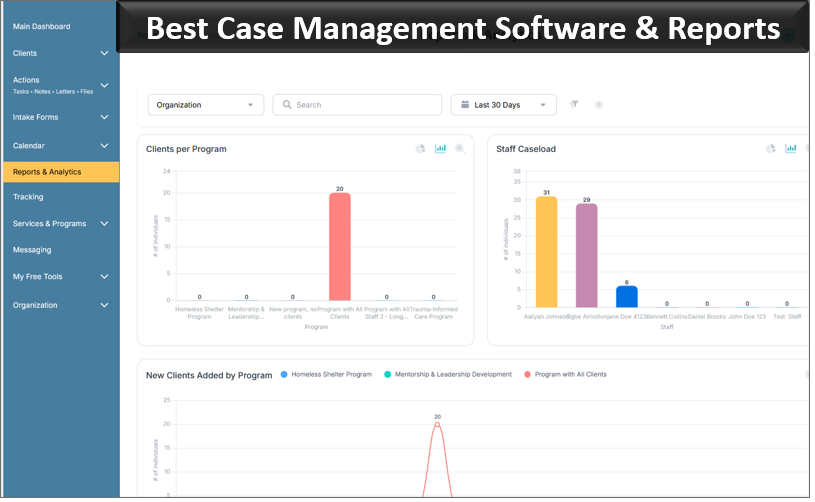
Note: Content on this website (socialworkportal.com) is copyrighted and protected under applicable copyright laws. Unauthorized reproduction, distribution, or use of any content from the website, without explicit written permission, is strictly prohibited. Read: Terms of Use.
Social Work Portal Disclaimer: Social Work Portal is not a social work agency and we do not refer social workers. This web site is provided for educational and informational purposes only and does not constitute providing medical advice or professional social and healthcare services. The information provided should not be used for diagnosing or treating a health problem or disease, and those seeking personal medical advice should consult with ... Read our full disclaimer here: Social Work Portal Disclaimer.