Utilizing Collaborative Assessment Tools for Families to Strengthen Client Outcomes
In the complex world of human services, an individual is never just a list of symptoms; they are the center of a dense web of external influences. Research from the National Association of Social Workers highlights that approximately 80% of health outcomes are driven by social determinants, factors outside the clinical setting, rather than medical care alone.
Despite this, many agencies struggle with fragmented documentation; according to insights from the Office of the National Coordinator for Health IT, administrative burden and poor communication between providers remain top contributors to care coordination failures. By learning how to create an ecomap for holistic case management, you gain an analytical framework that addresses this ‘invisible’ 80%, transforming clinical data into a visual strategy that optimizes client outcomes.
Let’s get started
Watch this video:
or
read the guide below.
What We Will Cover
- Core components of collaborative assessment tools
- Comparing the ecomap and the genogram
- Understanding standard symbols and relationship lines
- Strategic mapping of stressors and supports
- Improving clinical documentation and case efficiency
- Implementing digital solutions for modern workflows
💡All-in-one Case Management Software.
Everything in one place: clients, notes, forms, appointments, reports, and outcomes.
👉 Try it Free - No credit card needed
The Foundation of Visualizing Social Support Systems in Case Management
Effective care coordination requires a birds-eye view of a client’s ecosystem. Visualizing social support systems in case management provides the structural clarity necessary for high-stakes decision making across diverse professional fields.
This practice is rooted in systems theory in professional practice, which recognizes that personal progress is often tethered to the quality of external relationships. When a practitioner can map these connections, they move from a reactive posture to a strategic one.
By utilizing a graphical representation of social relationships, care providers can pinpoint the exact source of a client’s friction or support. For instance, a school counselor and a nurse case manager might both use the same ecomap to see that a family’s lack of reliable transportation is the primary hurdle to both educational attendance and medical compliance.
Using evidence based intervention strategies like these ensures that the care team is treating the root cause rather than the symptoms.
👉 Try it Free - Free Case Management System
Ecomap vs Genogram Comparison for Care Providers
For any professional conducting intake, the ecomap vs genogram comparison for care providers is a vital distinction.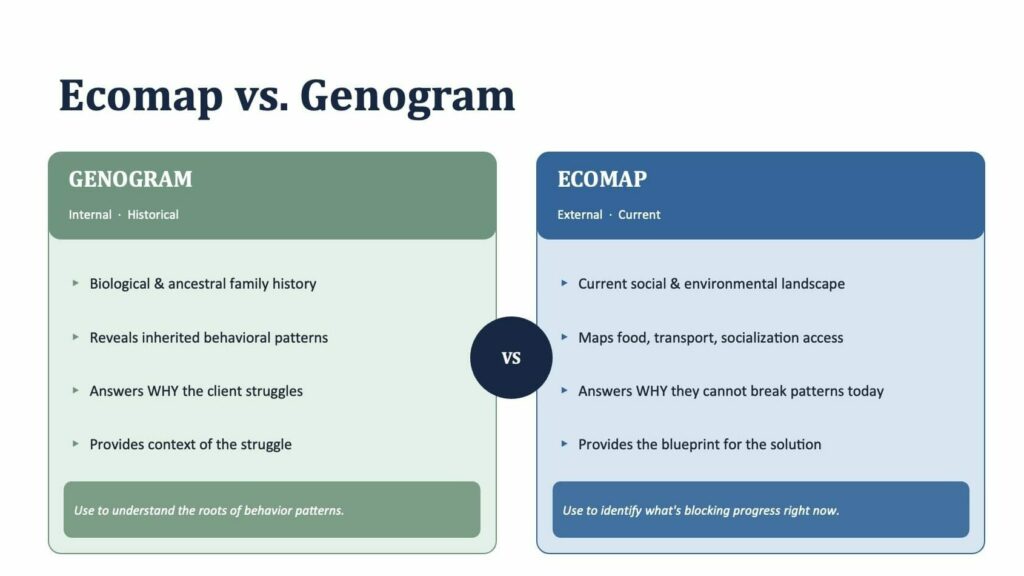
A genogram is a retrospective look at internal family history and heritage, while an ecomap is a real-time scan of current external social health. Understanding this tactical difference is a core part of ecomap professional development for case managers and clinicians who must decide which diagnostic tool will best serve the immediate needs of the client.
Comparative Framework: Ecomaps and Genograms
| Feature | Ecomap | Genogram |
| Primary Focus | External social and community systems | Internal biological and family history |
| Scope of Time | Current social snapshot | Multi-generational history |
| Key Goal | Identifying gaps in social support networks | Tracking hereditary or behavioral patterns |
| Main Components | Agencies, clubs, work, friends | Marriage, birth, death, genealogy |
Standard Ecomap Symbols and Lines for Accurate Documentation
Universal symbols are the language of interdisciplinary care. Using standard ecomap symbols and lines ensures that a file can transition from a non-profit advocate to a state agency without losing its clinical meaning. The central household unit is surrounded by the “planets” of the client’s universe: the legal system, healthcare providers, employment, and social groups.
The lines connecting these circles tell the story of the client’s daily life. A strong, bold line represents a reliable resource, while a jagged or zig-zag line is used for mapping environmental and social stressors.
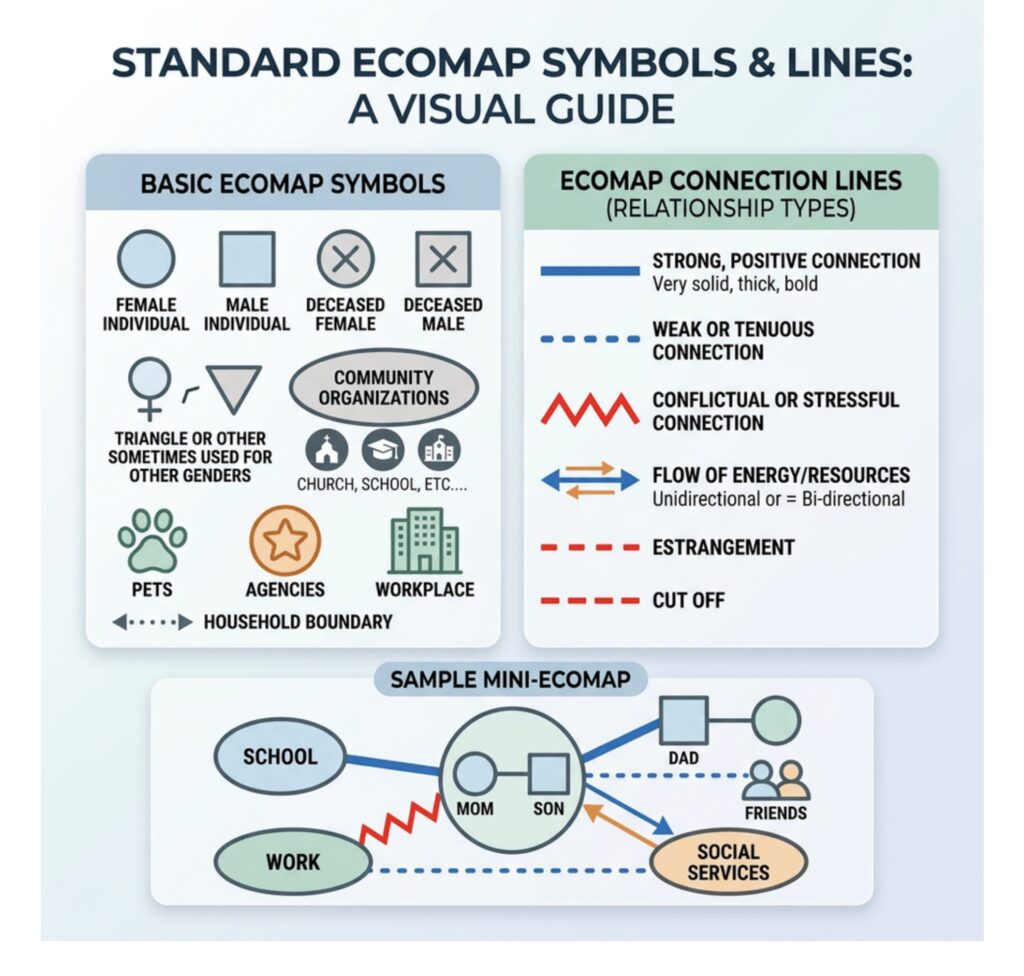
These symbols provide an immediate visual summary of where a client is being supported and where they are being drained. This makes them among the most powerful collaborative assessment tools for families available to the modern practitioner.
Do You Have a Team? Our best all-in-one client and top case management software simplifies everything from client intake and assessments to programs, projects, goals tracking, planning, scheduling, documentation, reporting dashboard, and progress tracking.All-in-One Case Management Software
Sign Up Today, Free
No credit card needed!
Enhancing Psychosocial Assessment Accuracy Through Visual Mapping
The transition from a written checklist to a visual map is essential for enhancing psychosocial assessment accuracy. Narrative notes are often subjective and prone to omission, but an ecomap demands a complete accounting of the client’s world.
When a practitioner maps out every agency and individual involved in a case, they can see the “fracture points” where communication is failing or where a client is being overwhelmed by too many conflicting requirements.
This visual intelligence is the cornerstone of collaborative care planning in clinical settings. It allows a multi-disciplinary team to align their goals with the client’s actual capacity.
If an ecomap shows that a client is connected to five different medical specialists but has zero positive lines to a support group or friend, the team knows that social isolation is the primary threat to their recovery. This objective approach is vital for any team serious about modernizing case management workflows.
Efficiency Comparison in Case Management
| Method | Data Collection Time | Analysis Clarity | Long Term Utility |
| Narrative Only | High | Low | Moderate |
| Ecomap Alone | Low | Moderate | High |
| Integrated Digital Mapping | Low | High | Very High |
Identifying Gaps in Social Support Networks to Drive Intervention
The most valuable ecomaps are often the emptiest ones. Identifying gaps in social support networks allows a practitioner to see the “social deserts” where a client has no resources to lean on during a crisis. By identifying these voids, care providers can prioritize referrals and community connections that will have the greatest impact on long-term stability.
This proactive data leads to improved patient outcomes and social support mapping that substantiates the need for increased funding or resource allocation. When you can prove, visually and empirically, that a client population lacks specific community supports, you move from individual case work to systemic advocacy. This is the ultimate goal of any professional committed to modernizing case management workflows in the 21st century.

People Also Ask
What is the difference between a genogram and an ecomap?
A genogram maps the “who” and “where from” of a family tree, focusing on heritage and internal dynamics. An ecomap maps the “how” and “where to” of a client’s current life, focusing on their energy exchange with the world around them. Professionals use both collaborative assessment tools for families to get a 360-degree view of the individual.
How do you introduce an ecomap to a client?
Introduce it as a “community map.” You might say, “Let’s draw a picture of all the different groups and people in your life so we can see who’s giving you strength and where things are feeling stressful.” This collaborative approach helps in visualizing social support systems in case management while building rapport with the client.
Can individuals use an ecomap for self-assessment?
Yes, ecomaps are excellent tools for self-reflection. They help an individual see why they might feel burnt out or unsupported by mapping environmental and social stressors in their own lives. This makes the ecomap a versatile tool for both professionals and those they serve.
What do the different lines mean on an ecomap?
Mastering standard ecomap symbols and lines is key to professional clarity. Solid lines show strong bonds, dotted lines show weak ones, and jagged lines represent conflict. Arrows show the direction of support—whether the client is giving more than they are receiving or vice-versa.
Are ecomaps evidence-based?
They are fundamentally rooted in the ecological perspective of human development. This framework is a standard of evidence based intervention strategies across psychology, nursing, and social services because it provides a reliable, repeatable way to assess social determinants of health.
Switch to an all-in-one case management platform. 👉 Try it Free - No credit card needed🔥Still using spreadsheets for case management?
How Case Management Hub Can Help
Transitioning from manual, paper based assessments to a streamlined digital environment is the most effective way to improve the quality of care. Case Management Hub provides the digital case management assessment solutions necessary to bring your practice into the future. By integrating visual tools directly into the workflow, we help agencies achieve better patient outcomes and social support mapping with less administrative overhead.
Download the free Case Management Hub Ecomap along with many other free assessment templates by:
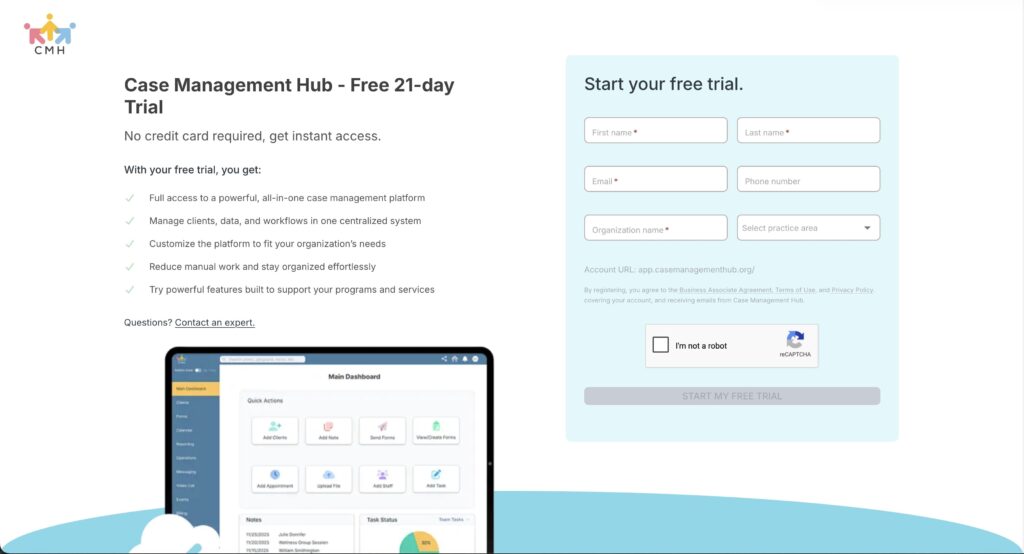
Step 1:
Signup for a 21-day free trial (no credit card needed).
Step 2:
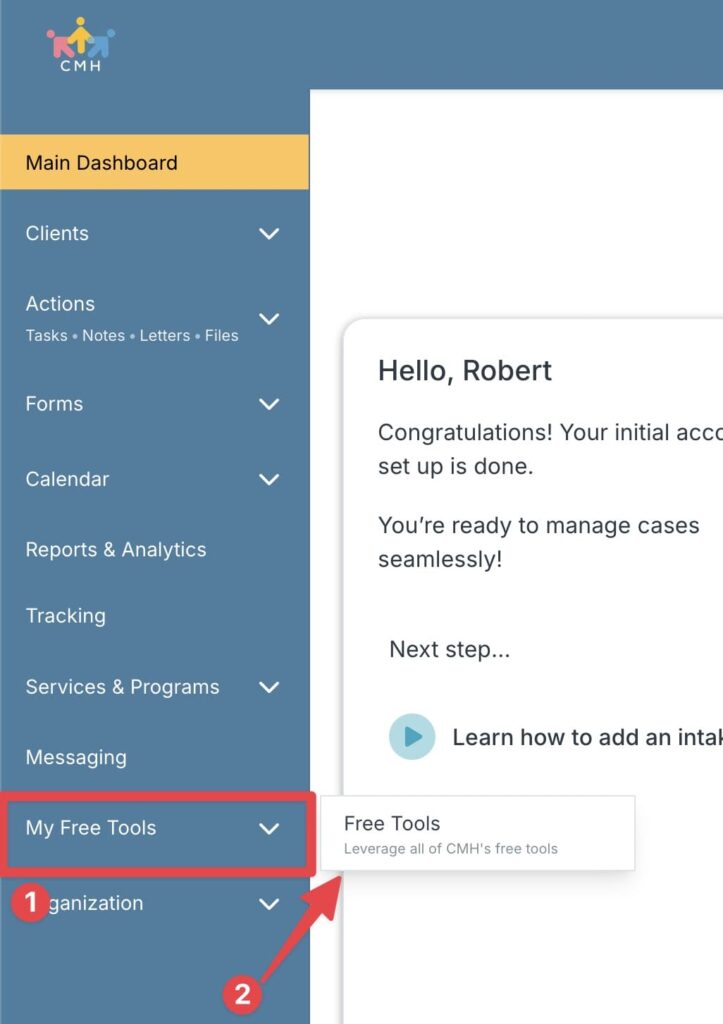
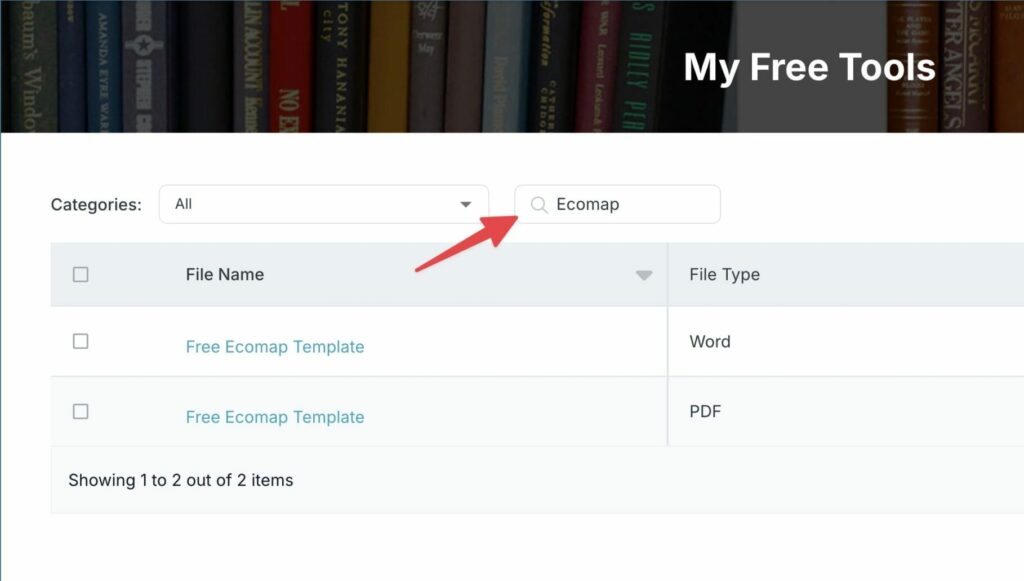
Click on Free Tools from the sidebar and search for Ecomap.
Step 3:
Click the title of the file start the download or you can select multiple files to download them all at once.
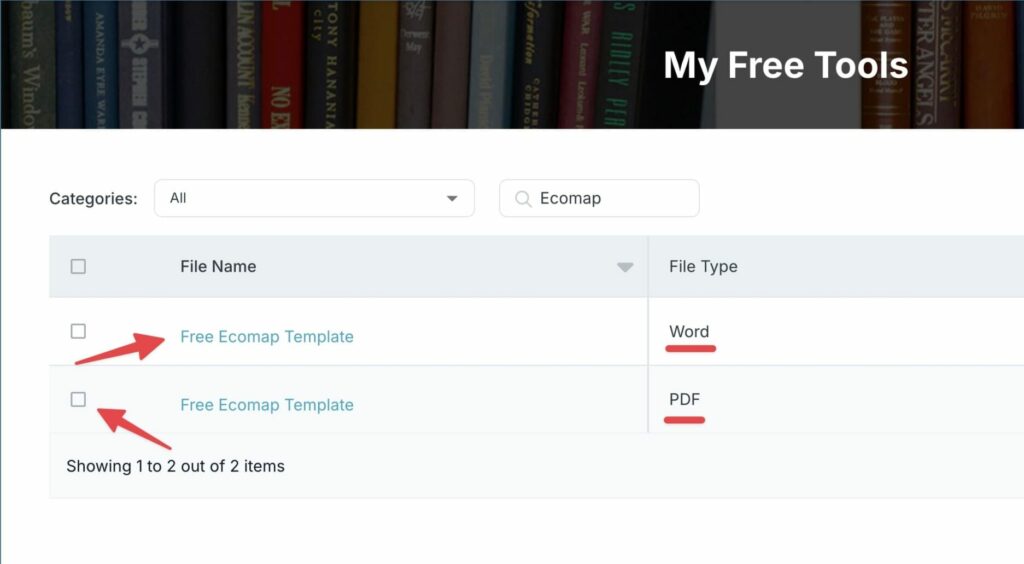
Tip: Many of the free tools come in different file types such as Word, PDF, PowerPoint, and Excel.
Stop guessing where your client’s support systems are failing and start seeing the full picture of their ecosystem. Streamline your documentation and improve your care efficiency today with a free 21-day trial. No credit card needed.
👉 Try it Free today - No credit card needed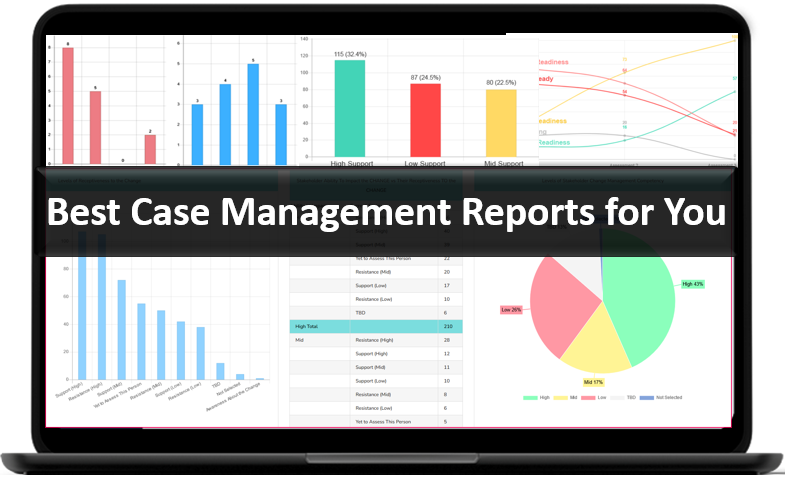
Frequently Asked Questions
Any entity that exerts influence on the client should be included. This includes formal institutions like hospitals and courts, but also informal ones like a local gym, a neighborhood friend, or even a pet. The more comprehensive the circles, the better the tool is at enhancing psychosocial assessment accuracy.
In dynamic cases, it should be updated quarterly or whenever a major life event occurs. Regular review ensures that you are improving clinical documentation efficiency and that the care plan is reflecting the client's current reality rather than their past.
While many people still use paper, the shift toward interoperable digital health tools for care providers is making visual mapping much easier. Digital platforms allow for real-time updates and easier sharing across the professional care team.
It is one of the most effective tools for discharge planning. By identifying gaps in social support networks before a client leaves a facility, providers can ensure that the necessary community bridges are built, significantly reducing the chance of readmission.
While insurance companies primarily look for narrative and code-based documentation, including an ecomap as part of a comprehensive assessment enhances the clinical case for why certain services are necessary. This is a key part of using digital case management assessment solutions to prove medical necessity.
Since an ecomap reveals sensitive social data, it must be treated as Protected Health Information (PHI). When utilizing social work ecomap templates and examples, ensure they are stored within a secure, encrypted system that meets all legal privacy requirements.What belongs in the external circles of an ecomap?
How often should an ecomap be reviewed?
Can digital tools handle ecomaps?
Is an ecomap useful for discharge planning?
Do insurance companies recognize ecomaps?
How do I protect client privacy with an ecomap?
👉 Try it free today - No credit card needed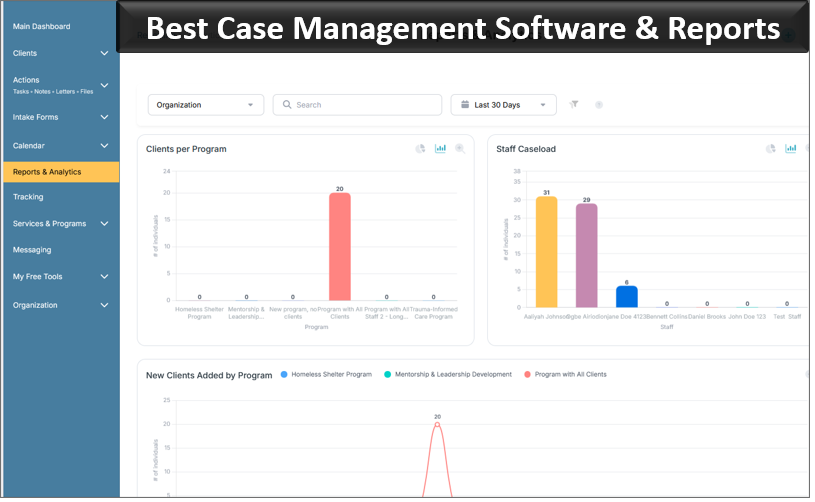
Note: Content on this website (socialworkportal.com) is copyrighted and protected under applicable copyright laws. Unauthorized reproduction, distribution, or use of any content from the website, without explicit written permission, is strictly prohibited. Read: Terms of Use.
Social Work Portal Disclaimer: Social Work Portal is not a social work agency and we do not refer social workers. This web site is provided for educational and informational purposes only and does not constitute providing medical advice or professional social and healthcare services. The information provided should not be used for diagnosing or treating a health problem or disease, and those seeking personal medical advice should consult with ... Read our full disclaimer here: Social Work Portal Disclaimer.