Visualizing Intergenerational Patterns to Streamline Social Work Workflows from Intake to Billing
Family dynamics are rarely linear. For social workers, family therapists, and mental health counselors, understanding a client’s background requires looking beyond the individual to uncover the hidden histories that shape present behavior. This is where learning how to create a clinical genogram becomes an invaluable skill.
A genogram is a multi-generational map of a family’s medical, emotional, and relational history. Unlike a traditional family tree, it uncovers behavioral trends, hereditary medical conditions, and psychological vulnerabilities. By utilizing family systems mapping tools, practitioners can transform complex narratives into a clear, actionable visual format.
According to a study published in the Journal of Marital and Family Therapy, over 72% of marriage and family therapists report utilizing genograms or similar family mapping tools during the initial assessment phase to identify systemic behavioral patterns. Mastering this assessment method is essential for building robust, trauma-informed treatment plans.
Let’s get started
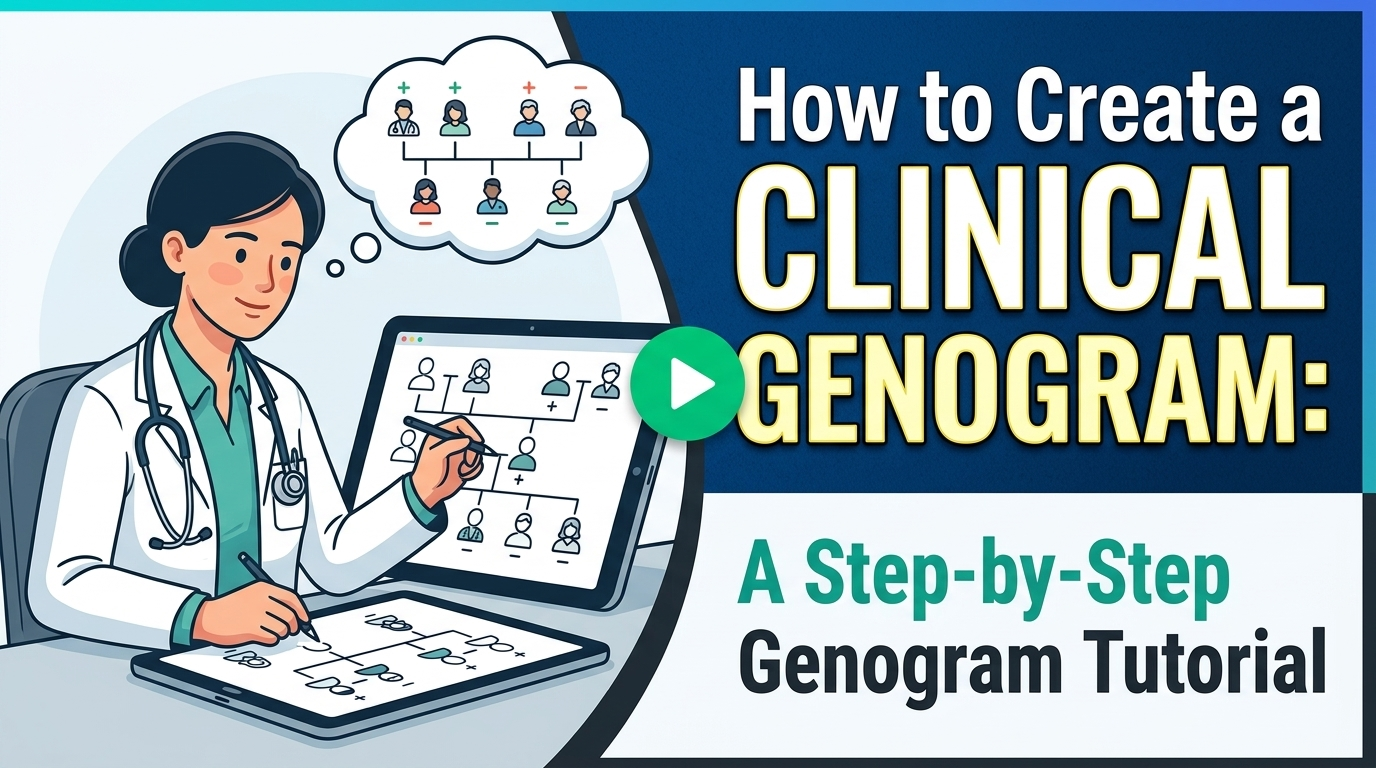
Watch this video:
or
read the guide below.
What You Will Learn in This Tutorial
- The foundational principles of mapping multi-generational family dynamics
- How to interpret standard symbols using a genogram symbols and meanings guide
- A clear step-by-step genogram tutorial for your daily clinical practice
- Methods for identifying intergenerational trauma mapping indicators
- Ways to choose between manual sketching and modern digital solutions
- How to integrate these visual tools into all-in-one mental health practice management software
💡All-in-one Case Management Software.
Everything in one place: clients, notes, forms, appointments, reports, and outcomes.
👉 Try it Free - No credit card needed
Why Should Practitioners Invest Time in Family Systems Mapping Tools?
When conducting a social work assessment tools review, practitioners often find themselves balancing extensive narrative notes with the need for quick, accessible insights. A clinical genogram solves this issue by consolidating pages of case notes into a single graphic.
Traditional Genograms vs. Digital Software Mapping
| Feature | Manual Paper Genograms | Digital Case Management Software |
| Preparation Time | High (hand-drawn, prone to messy corrections) | Low (drag-and-drop symbols, neat layouts) |
| Accessibility | Limited to physical paper files | Available anywhere via secure client documentation and file storage |
| Updating Information | Requires completely redrawing the map | Instant, dynamic editing as new details emerge |
| Collaborative Potential | Hard to share securely with care teams | Easy sharing via HIPAA-compliant secure messaging and notes |
For a busy clinician, the decision-making factors come down to time management and clinical utility. Manual drawings work well during a live, fluid session with a client sitting in the room. However, they lack long-term efficiency when it comes to reporting, compliance audits, and collaborative care.
What Do the Standards in a Genogram Symbols and Meanings Guide Represent?
Before sketching, you must understand the clinical visual alphabet. Consistency allows any care coordinator, supervisor, or psychiatric nurse who picks up the file to instantly comprehend the family system.
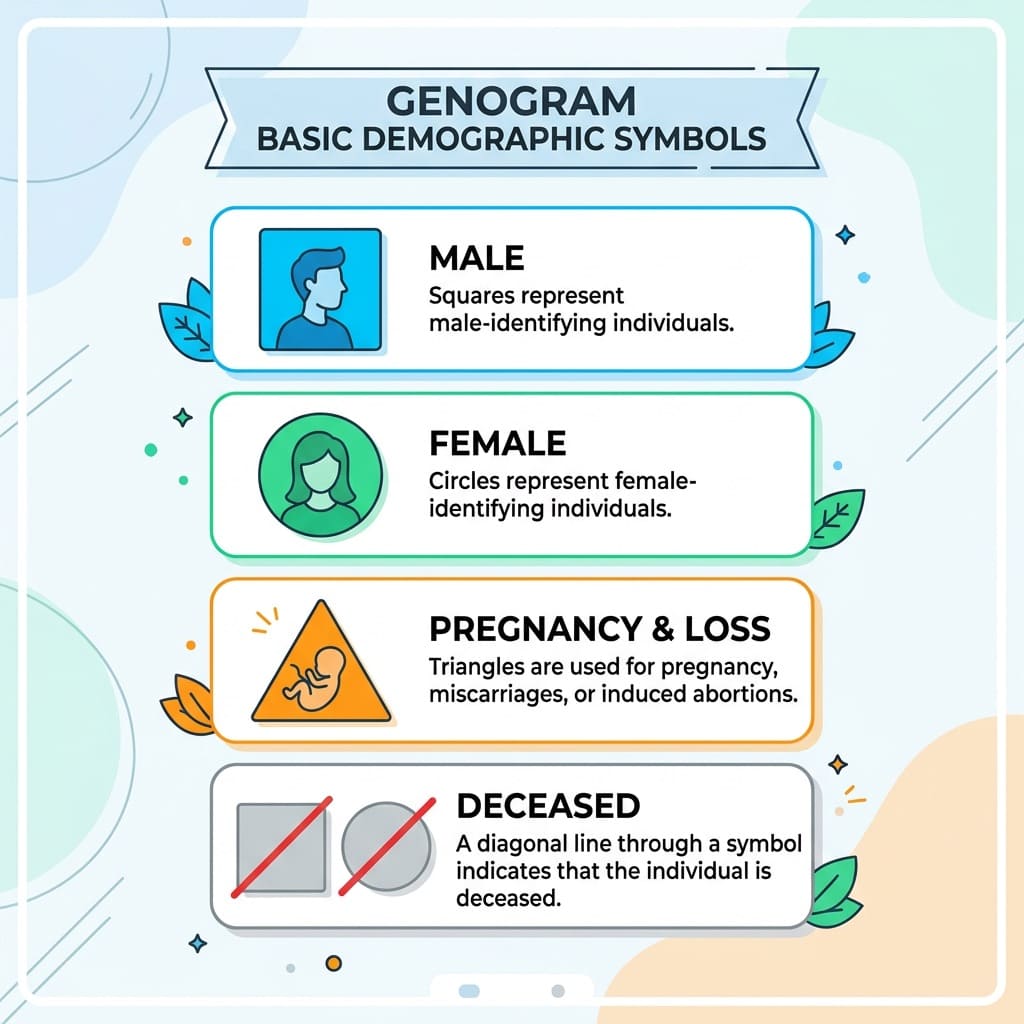
Basic Demographic Symbols
- Squares represent male-identifying individuals.
- Circles represent female-identifying individuals.
- Triangles are used for pregnancy, miscarriages, or induced abortions.
- A diagonal line through a symbol indicates that the individual is deceased.
Relational and Emotional Lines
The lines connecting the geometric shapes define the psychological climate of the household.
- Solid horizontal lines signify marriage or long-term committed partnerships.
- Dotted horizontal lines indicate cohabitation or casual relationships.
- A single slash represents a physical separation, while two parallel slashes mean a legal divorce.
- Jagged, zigzag lines indicate high conflict or alienation between two parties.
- Three parallel lines signify an enmeshed, overly fused relationship.
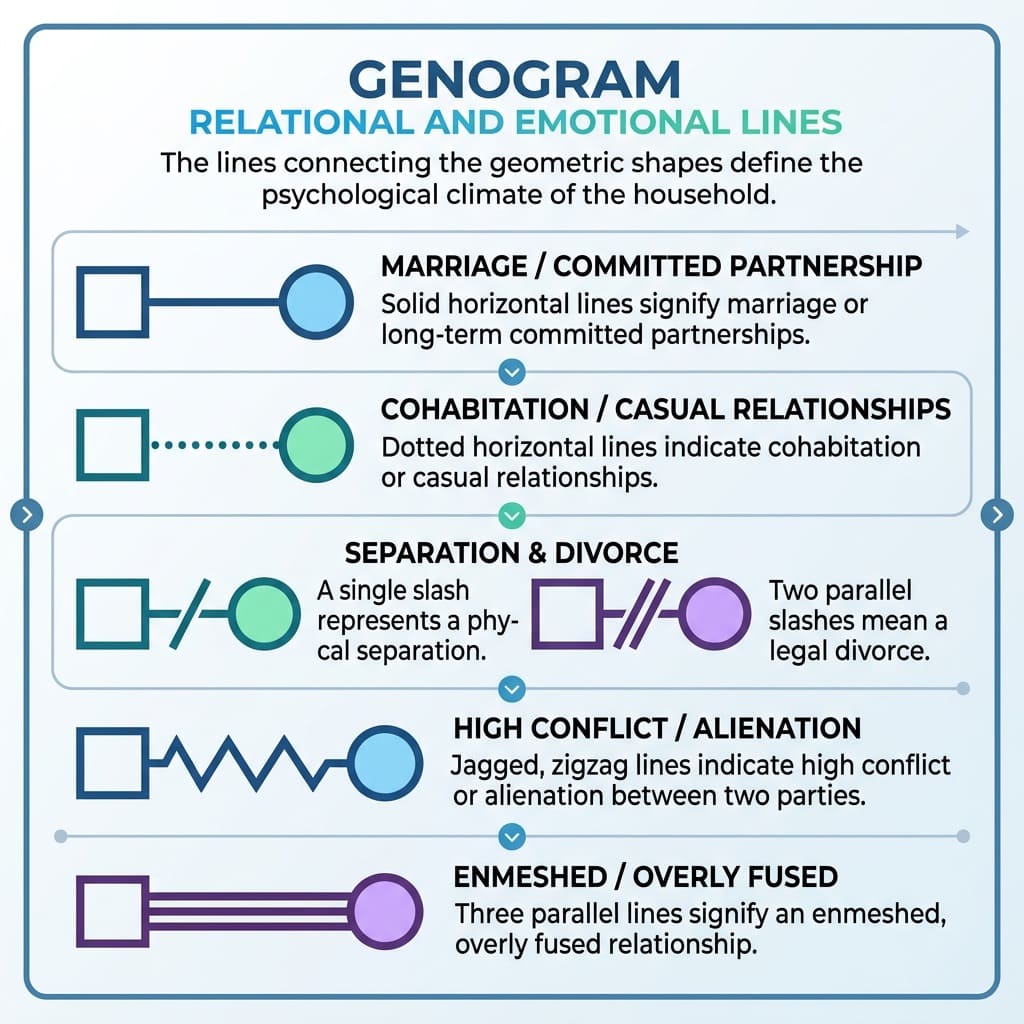
By tracking these symbols, clinicians can begin visualizing family patterns in therapy that might otherwise take months of standard talk therapy to uncover.
👉 Try it Free - Free Case Management System
How Do You Execute a Step-by-Step Genogram Tutorial in Daily Practice?
Building a genogram is an organic process that unfolds across the intake session and subsequent treatment meetings. Follow these core stages to maintain consistency and clarity.
Stage 1: The Initial Intake and Data Gathering
Begin your process during your standard intake procedure. While managing integrated intake forms and client progress tracking, note the names, ages, and vital statistics of the immediate family members. Ask open-ended questions about who lives in the home and who the client considers to be their primary support system.
Stage 2: Mapping the Structure (Three Generations)
Start in the middle of the page or screen with the index client, also known as the proband. Double-line their circle or square to mark them clearly. From there, map outward:
- Draw their siblings and partner on the same horizontal level.
- Move upward to map their parents, aunts, uncles, and grandparents.
- Move downward to include children and grandchildren.
Stage 3: Adding the Emotional and Medical Layers
Once the structural framework is established, layer on the qualitative data. Use this phase for intergenerational trauma mapping by noting instances of substance abuse, mental health diagnoses, physical illnesses, incarceration, or domestic displacement. Connect the family members using the relational lines discussed in the symbols guide to highlight where support exists and where systemic strain is concentrated.
Do You Have a Team? Our best all-in-one client and top case management software simplifies everything from client intake and assessments to programs, projects, goals tracking, planning, scheduling, documentation, reporting dashboard, and progress tracking.All-in-One Case Management Software
Sign Up Today, Free
No credit card needed!
How Can Digital Tools Optimize Social Work Workflows?
Modern social service providers face immense administrative pressure. Practitioners must balance direct client care with scheduling, extensive compliance documentation, and tracking treatment goals.
When searching for the best digital tools for family relationship mapping, searcher/user considerations center heavily on convenience and security. Clinicians need a system where a genogram does not live isolated on a hard drive but is instead directly attached to the client’s comprehensive clinical chart.
Integrating your therapeutic tools with an all-in-one mental health practice management software solution saves valuable time. When family maps link seamlessly with software for tracking client goals and outcomes, it creates an organized, professional workflow. The insights gathered from the genogram directly inform the treatment plan, which is tracked via routine notes, which eventually informs the billing code used for reimbursement.

People Also Ask
How many generations should a clinical genogram include?
A standard clinical genogram should include a minimum of three generations. This typically encompasses the index client’s generation (including siblings and spouses), their parents’ generation (including aunts and uncles), and their grandparents’ generation. Including three generations allows practitioners to notice distinct behavioral, medical, and psychological patterns passing down through the family system.
What is the difference between a family tree and a genogram?
A family tree tracks basic genealogical relationships, births, marriages, and deaths to show ancestry. A genogram goes much deeper by mapping psychological relationships, emotional bonds, medical histories, behavioral disorders, and hereditary patterns. Genograms are specialized clinical tools used for assessment and therapy rather than simple historical records.
Can genograms be used for trauma-informed care?
Yes, genograms are powerful tools for trauma-informed care. They allow clinicians to visually track intergenerational trauma, noting patterns of abuse, addiction, neglect, or systemic displacement across multiple decades. This bird’s-eye view helps practitioners recognize that a client’s current struggles may be deeply rooted in inherited family trauma.
Simplifying Your Practice Management
Beyond mapping family relationships, modern practitioners need a cohesive ecosystem to handle day-to-day administrative burdens. Utilizing a specialized case management software for social workers can revolutionize how your entire practice operates. From the moment a client fills out an online form to the final invoice generation, having your tools unified eliminates errors and frees up hours of your week.
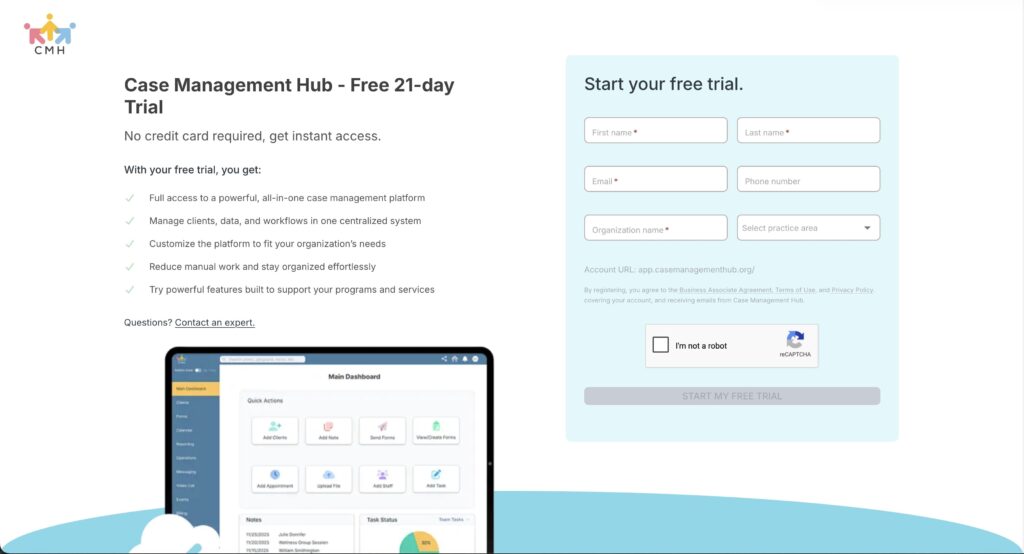
Download the free Case Management Hub Genogram along with many other free assessment templates by:
Step 1:
Signup for a 21-day free trial (no credit card needed).
Step 2:
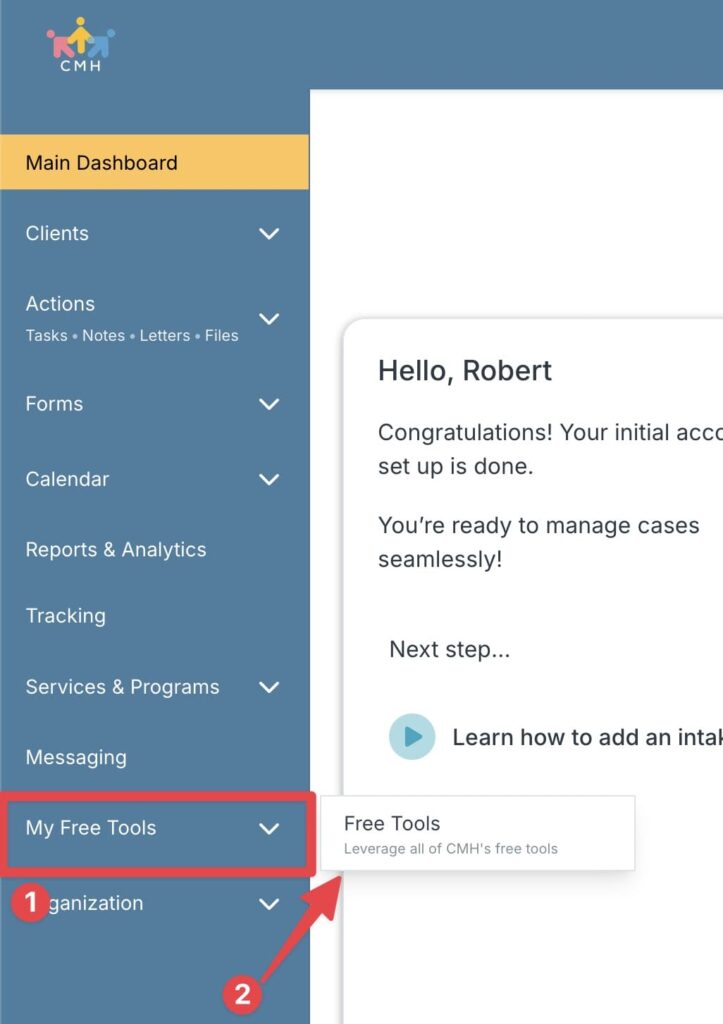
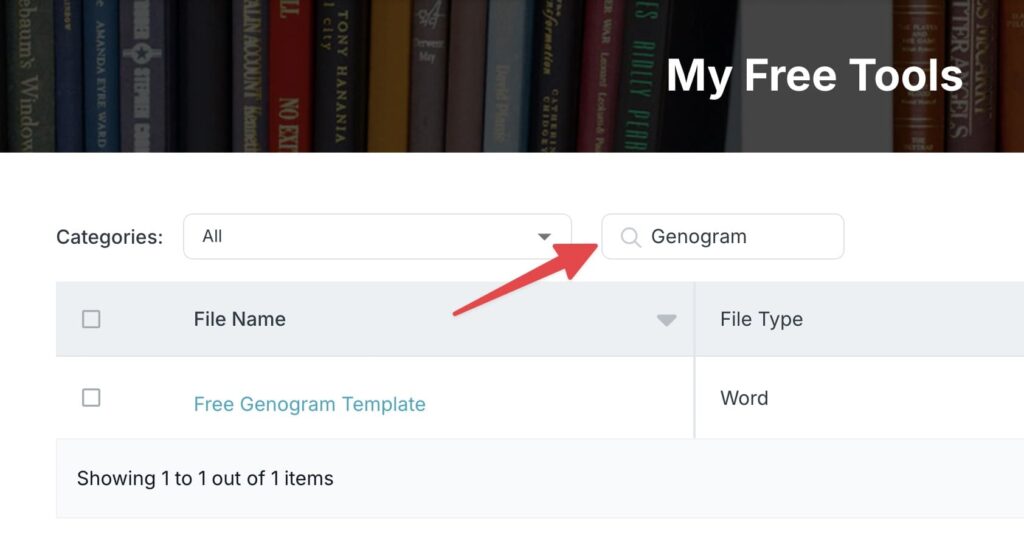
Click on Free Tools from the sidebar and search for Genogram.
Step 3:
Click the title of the file start the download or you can select multiple files to download them all at once.
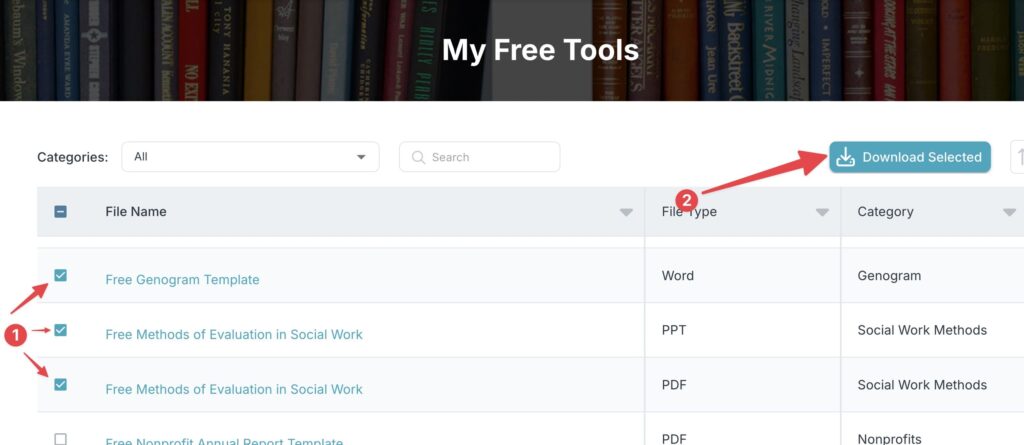
Tip: Many of the free tools come in different file types such as Word, PDF, PowerPoint, and Excel.
If you want to experience an easier way to coordinate care, organize your documentation, and keep your practice secure, sign up for a free 21-day trial today to see how it fits your daily routine, with no credit card required.
Frequently Asked Questions
What is the primary purpose of a genogram in social work
The primary purpose is to provide a comprehensive, visual assessment of a client's family structure and psychological relationships. It helps social workers identify multi-generational patterns of behavior, illness, trauma, and resilience, which informs more accurate treatment planning.
How do you represent an adopted child on a genogram?
An adopted child is represented by drawing a standard relationship line from the parents to the child's symbol, but changing the solid line into a dashed or dotted vertical line. Additionally, a small letter A is often placed inside or next to the line to clarify the legal adoption status.
Is a genogram considered protected health information (PHI)?
Yes. Because a genogram contains highly sensitive medical histories, psychological trends, names, and relationship statuses of identifiable individuals, it is considered protected health information (PHI). It must be kept secure under HIPAA guidelines using tools like secure client documentation and file storage.
How do you introduce a genogram to a client who might be hesitant?
Introduce it as a collaborative tool to help both of you understand the broader picture of their life. Frame it as a way to look at strengths and challenges within the family ecosystem, emphasizing that they control how much information they choose to share during the session.
Can automated billing and scheduling for therapists link to client charts?
Yes, in modern cloud platforms, scheduling, billing, and clinical charts are unified. When you complete an intake note or update a family map, the system automatically links that activity to the client's account for seamless automated billing and scheduling for therapists.
What are the signs of an enmeshed relationship on a genogram?
An enmeshed or overly fused relationship is indicated by drawing three parallel horizontal lines directly between the symbols of the two family members. This shows a boundary configuration where individual identities are highly intertwined.
👉 Try it free today - No credit card needed
Note: Content on this website (socialworkportal.com) is copyrighted and protected under applicable copyright laws. Unauthorized reproduction, distribution, or use of any content from the website, without explicit written permission, is strictly prohibited. Read: Terms of Use.
Social Work Portal Disclaimer: Social Work Portal is not a social work agency and we do not refer social workers. This web site is provided for educational and informational purposes only and does not constitute providing medical advice or professional social and healthcare services. The information provided should not be used for diagnosing or treating a health problem or disease, and those seeking personal medical advice should consult with ... Read our full disclaimer here: Social Work Portal Disclaimer.