Cultivating Authentic Connections and Improving Care Outcomes through Respectful, Tech-Forward Engagement
Human services professionals understand that the initial intake process is much more than a routine administrative task. It establishes the foundation for the entire therapeutic or supportive relationship. For individuals seeking help, sharing personal details with a stranger can feel incredibly vulnerable. When a practitioner approaches this interaction without an understanding of cultural nuances, a profound disconnect can form before the first goal is even set.
To truly serve an increasingly diverse population, practitioners must move past static checklists and embrace a dynamic, reflexive practice. This means prioritizing a culturally sensitive client assessment that honors the unique intersectional identity of every individual. Implementing this approach successfully requires a careful blend of clinical humility and the right operational tools.
By utilizing an all-in-one human services software, organizations can minimize the burden of paperwork and focus their energy entirely on the person sitting across from them.
Let’s get started
Watch this video:
or
read the guide below.
What You Will Learn in This Guide
- The core principles of cultural humility in social work intake processes.
- Strategies to recognize and actively mitigate implicit bias in healthcare assessments.
- Methods to ensure complete linguistic competence in client intake and communication.
- How to balance clinical protocols with a deeply trauma-informed cultural assessment.
- Best practices for evaluating specialized examples of culturally competent assessment tools.
- Key features to look for in a client goals and progress tracking platform to support diverse care paths.
Everything in one place: clients, notes, forms, appointments, reports, and outcomes. 👉 Try it Free - No credit card needed💡All-in-one Case Management Software.
Why Is a Culturally Sensitive Client Assessment Critical to Care Outcomes?
When a healthcare provider, social worker, or educational advocate meets a client, they bring their own cultural lens into the room. If left unexamined, this lens can inadvertently pathologize normal cultural behaviors or completely misinterpret a client’s expression of distress. Taking the time to conduct a culturally sensitive client assessment ensures that care plans are accurate, respectful, and genuinely aligned with the individual’s worldview.
According to a comprehensive study published by the Substance Abuse and Mental Health Services Administration (SAMHSA), culturally responsive care significantly reduces premature drop-out rates in human services, improving client retention by up to 43%. When clients feel fundamentally understood and respected for who they are, their engagement levels rise, leading to more accurate self-reporting and significantly better long-term clinical outcomes.
Conversely, a standardized, rigid assessment process can alienate individuals. For example, a practitioner might interpret a client’s lack of direct eye contact as a sign of depression or defensiveness, completely missing the fact that in many cultures, avoiding direct eye contact is a profound sign of respect toward authority figures. By embedding diversity and inclusion in human services, agencies can prevent these systemic misunderstandings and build stronger, trust-based relationships from day one.
How Can Practitioners Practice True Cultural Humility in Social Work Intake?
Transitioning from cultural competence to cultural humility requires a shift in perspective. Competence implies there is an ultimate destination or an absolute mastery over another group’s customs. Humility acknowledges that learning is a lifelong process and positions the client as the ultimate expert on their own lived experience.
Implementing cultural humility in social work intake requires active self-reflection before the client even enters the room. Practitioners must regularly audit their own beliefs to uncover hidden assumptions.
Key Considerations for Cultural Humility
- Acknowledge Power Differentials: Recognize that the role of a clinician or case manager inherently carries systemic power.
- Practice Active and Respectful Listening: Allow the client to explain their struggles using their own terms, idioms, and framing.
- Validate Diverse Worldviews: Avoid correcting a client’s cultural explanation of an illness, problem, or family dynamic.
To help practitioners navigate this shift, it is highly beneficial to look at established frameworks. The table below compares traditional intake methods with a culturally responsive, humility-based approach:
| Assessment Dimension | Traditional Intake Approach | Culturally Responsive Approach |
| Primary Goal | Gathering data to fit standard diagnostic criteria | Understanding the client’s unique story and context |
| Linguistic Approach | Relying on family members or ad-hoc translation | Professional linguistic competence in client intake |
| Family Dynamics | Focusing strictly on the nuclear family or individual | Honoring extended kinship systems and community bonds |
| Problem Definition | Utilizing Westernized, clinical terminology exclusively | Validating cultural idioms of distress and holistic views |
What Steps Eliminate Implicit Bias in Healthcare Assessments?
Even the most well-intentioned human services professionals possess unconscious biases. These internalized cultural stereotypes can subtly influence clinical decision-making, leading to disparities in care quality and resource allocation. Addressing implicit bias in healthcare assessments requires conscious, deliberate effort and continuous structural support.
First, practitioners must become comfortable asking open-ended questions that allow clients to define their identity. Rather than guessing an individual’s background or preferences based on physical appearance or surname, simply ask how they identify and what traditions matter most to them.
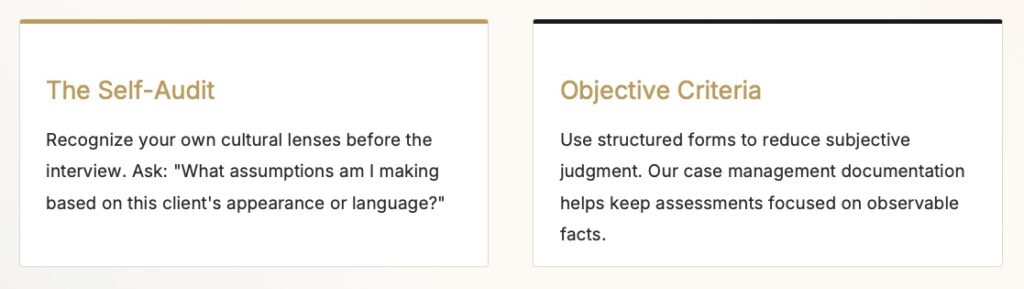
Second, organizations should adopt a formal cross-cultural mental health evaluation framework. These frameworks guide clinicians to evaluate how systemic racism, historical discrimination, and socioeconomic status intersect with a client’s current well-being. By utilizing structured, objective assessment criteria within their digital forms, agencies can significantly minimize the subjective judgments that often allow bias to influence care paths.
👉 Try it Free - Free Case Management System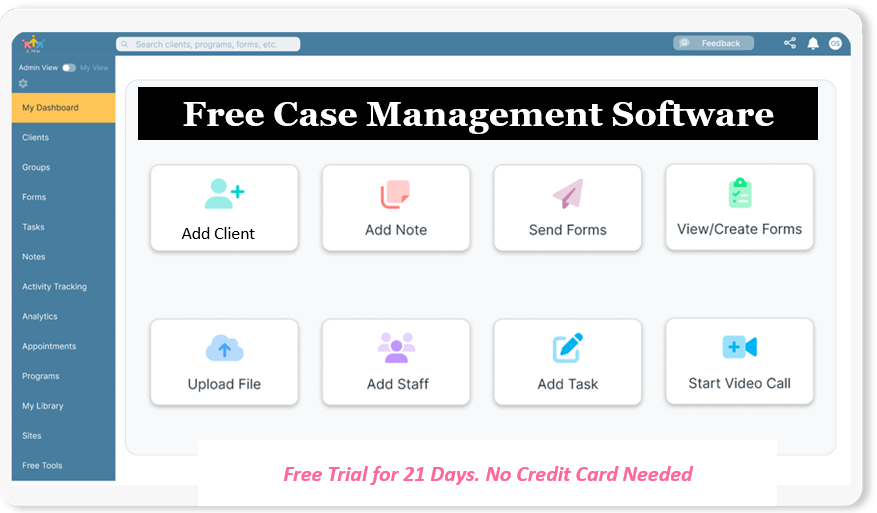
How Does a Trauma-Informed Cultural Assessment Change the Care Dynamic?
Culture and trauma are deeply intertwined. The ways in which individuals experience, express, and cope with traumatic events are heavily shaped by their cultural upbringing and historical background. A truly trauma-informed cultural assessment recognizes that marginalized communities often carry layers of collective, historical, and intergenerational trauma that standard intake forms completely overlook.
When conducting a culturally responsive case management review, it is vital to avoid re-traumatizing the individual. Forcing a client to repeatedly recount painful experiences during their very first visit can rupture the developing therapeutic alliance.
Instead, professionals should utilize secure client intake forms for social workers that allow clients to share their history at their own pace, in a private, digital space before their first in-person appointment. This approach gives the individual control over their narrative, establishing safety and predictability right from the start.
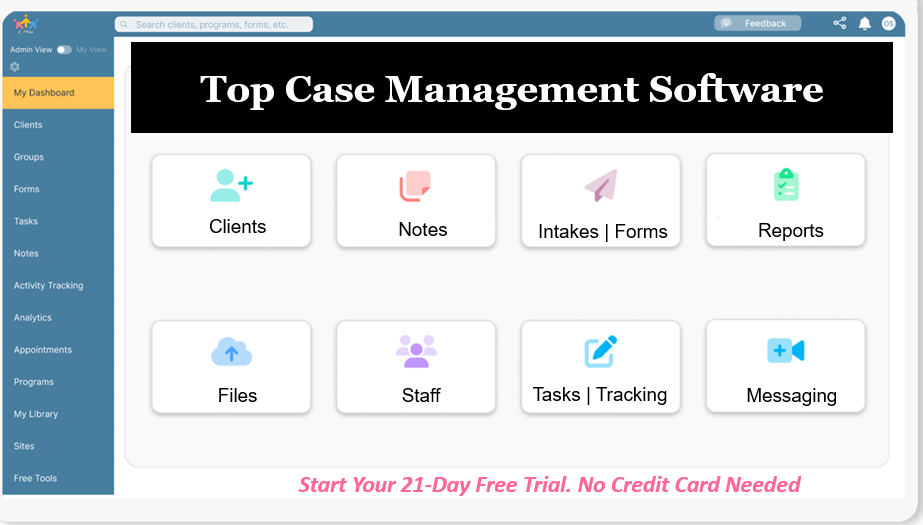
Do You Have a Team? Our best all-in-one client and top case management software simplifies everything from client intake and assessments to programs, projects, goals tracking, planning, scheduling, documentation, reporting dashboard, and progress tracking.All-in-One Case Management Software
Sign Up Today, Free
No credit card needed!
Which Examples of Culturally Competent Assessment Tools Offer the Most Value?
Practitioners do not need to reinvent the wheel to deliver inclusive care. Several validated examples of culturally competent assessment tools exist to guide the intake process effectively.
One of the most widely respected frameworks is the Cultural Formulation Interview (CFI), a 16-question tool included in the DSM-5. The CFI helps clinicians systematically review the cultural impact on a client’s problem presentation, coping mechanisms, and expectations of care.
Another vital tool is the culturagram, developed by social work professor Dr. Elaine Congress. This tool helps case managers map out a family’s relationship to their culture of origin, their reasons for relocating, their legal status, and their language preferences.
Integrating these specialized tools into daily workflows becomes remarkably straightforward when utilizing modern technology. With advanced mental health documentation and note storage systems, these cultural frameworks can be converted into reusable digital templates. This ensures that every staff member, from community outreach workers to public health officials, can easily access and utilize these vital assessment models.
How Can Technology Support Culturally Responsive Case Management?
Delivering culturally sensitive care requires time, presence, and deep mental focus. If a case manager is buried under a mountain of disorganized paper files, missing schedules, and disjointed administrative tasks, their ability to be truly present with a client is severely compromised. This is exactly where an all-in-one human services software (like Case Management Hub) steps in to transform administrative workflows.
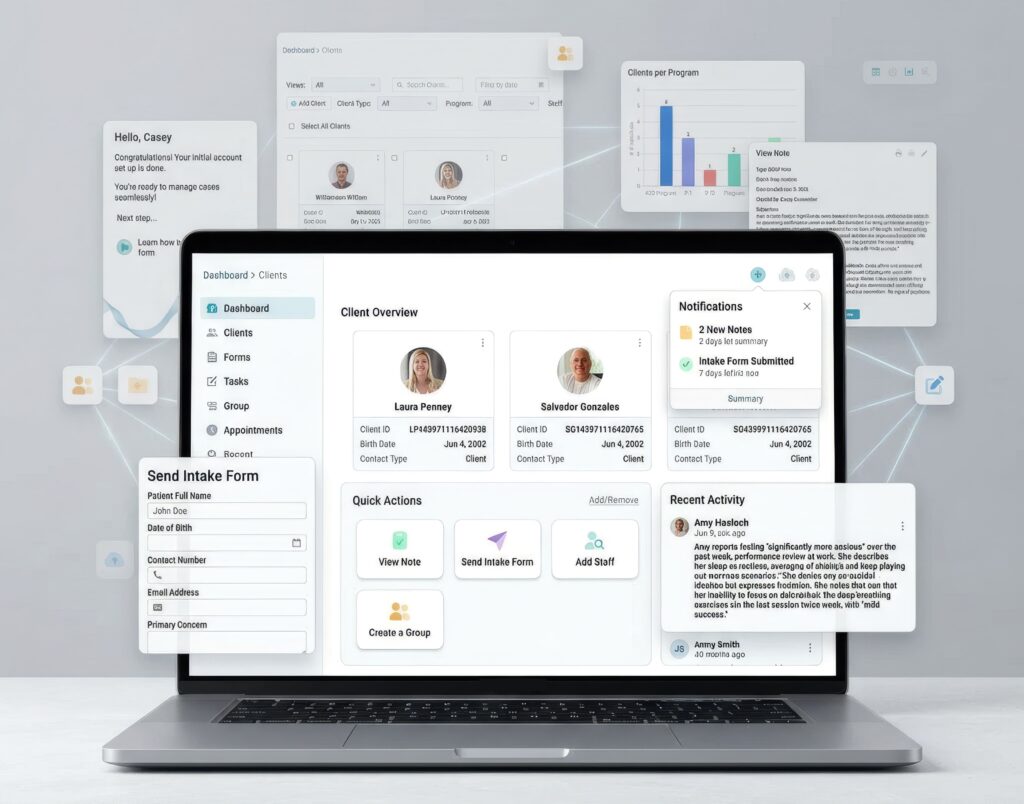
Modern platforms streamline operations by consolidating multiple essential functions into a single dashboard. By automating routine processes like automated client scheduling and appointment software, professionals can reallocate their valuable time back to direct, high-quality client care.
Furthermore, monitoring long-term outcomes across highly diverse communities requires robust tracking mechanisms. An advanced client goals and progress tracking platform allows agencies to co-create personalized, culturally meaningful goals with their clients. Instead of measuring progress solely through rigid, standardized metrics, practitioners can capture qualitative changes that celebrate a client’s unique journey.
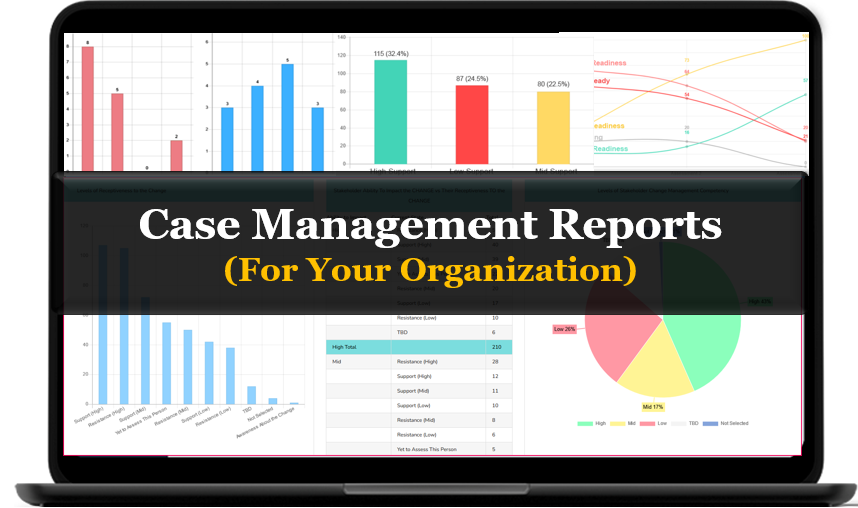
With built-in human services reporting and timekeeping tools alongside secure billing and cost tracking for non-profits, leadership teams can easily demonstrate the tangible success of their culturally responsive programs to grant funders and stakeholders alike.

People Also Ask
What is a culturally sensitive client assessment?
A culturally sensitive client assessment is an evaluation process used by human services professionals that actively accounts for a client’s cultural background, language, beliefs, values, and traditions. This approach ensures that the client’s identity is fully respected and that the resulting care plan is accurate, meaningful, and effective.
Why is cultural humility important in social work?
Cultural humility is vital because it shifts the focus from achieving an arbitrary level of “cultural mastery” to entering a lifelong process of self-reflection. It encourages social workers to listen deeply, check their own biases, and honor the client as the ultimate expert on their own life and culture.
How do you conduct a culturally competent intake interview?
To conduct a culturally competent intake interview, use open-ended questions to learn how the client defines their own identity, problem, and goals. Avoid making assumptions based on appearances, utilize professional translation services when necessary, and remain highly mindful of historical and systemic factors that influence the client’s situation.
What are some examples of culturally competent assessment tools?
Prominent examples include the Cultural Formulation Interview (CFI), which explores the cultural context of a client’s mental health challenges, and the culturagram, a visual tool that maps out a family’s cultural background, immigration history, and community connections.
How can software improve human services case management?
An all-in-one case management platform streamlines administration by integrating scheduling, intake forms, clinical notes, progress tracking, and secure communication. This drastic reduction in paperwork allows professionals to focus more energy on providing direct, culturally responsive care to their clients.
How do you protect client data during a digital intake process?
Client data is protected by using secure, HIPAA-compliant software systems that feature end-to-end encryption for forms, messaging, and file storage. This ensures that sensitive personal and cultural details remain completely confidential and accessible only to authorized personnel.
Elevate Your Practice with Dedicated Software Solutions
Implementing these inclusive, trauma-informed principles across an entire agency requires a reliable operational foundation. Case Management Hub provides an intuitive, comprehensive platform specifically engineered to meet the unique demands of human services professionals. By bringing all of your essential tools into one centralized location, you can reduce administrative burdens and spend more time focusing on what truly matters: your clients.
See how easy it is to Create, Edit, and Send a form in Case Management Hub:
Step 1:
From the sidebar, click on the Forms module, search for Basic Intake Form, then click the title to open it.
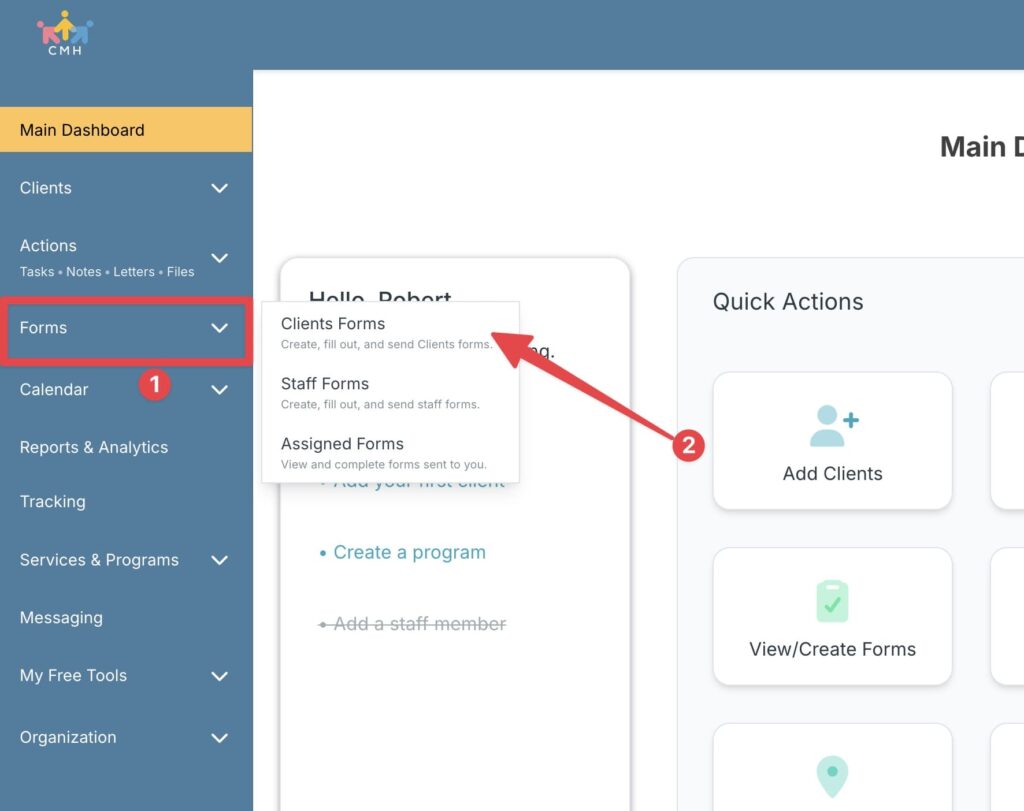
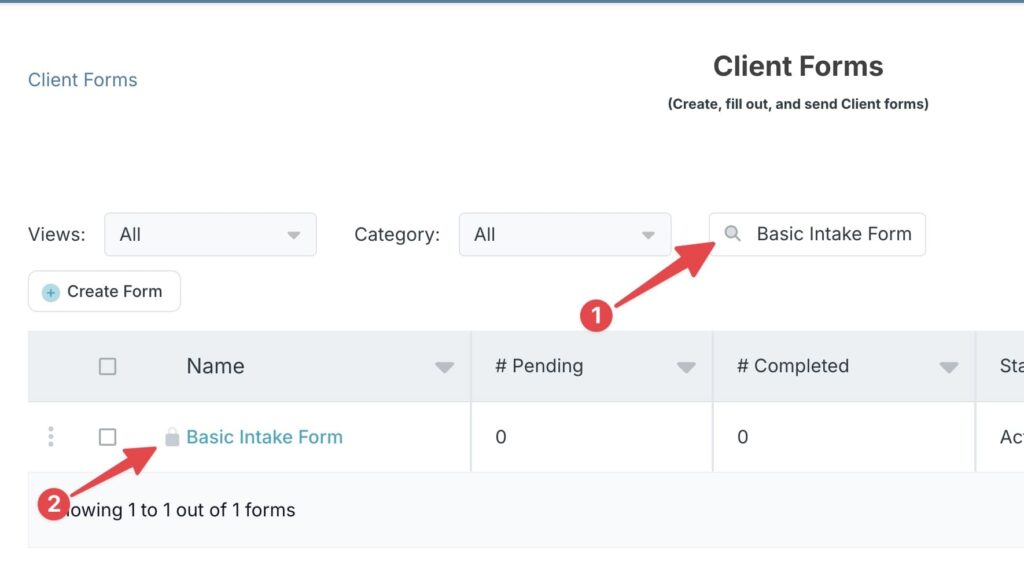
Tip: Forms with a padlock are master templates provided by Case Management Hub to help you get started. You can easily customize these to make them your own.
Step 2:
Click Edit Template to start customizing the form to your needs. Once done, click Save.
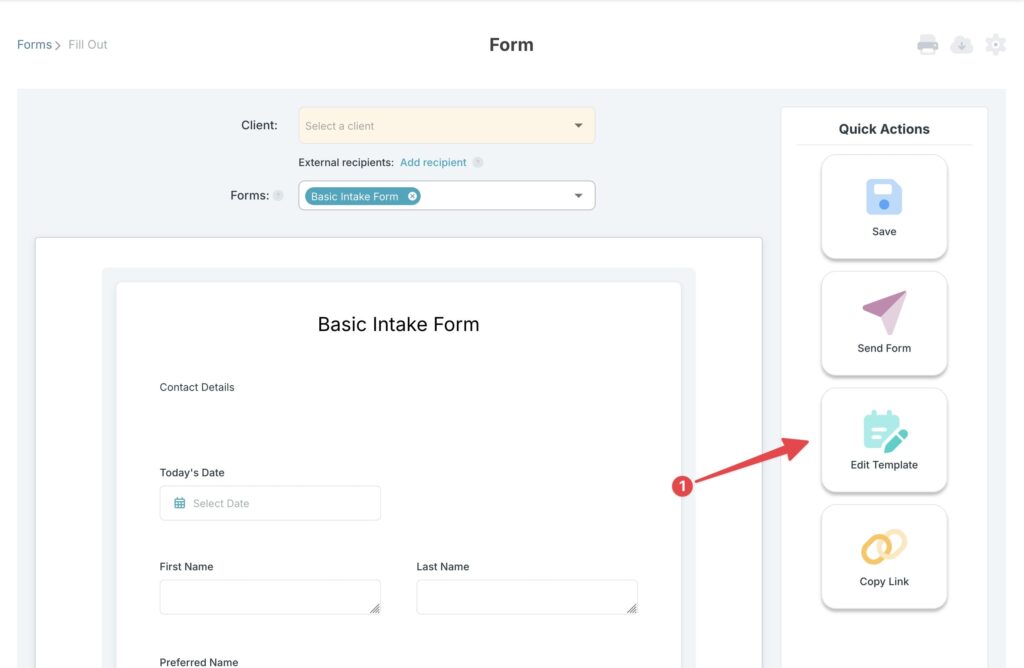
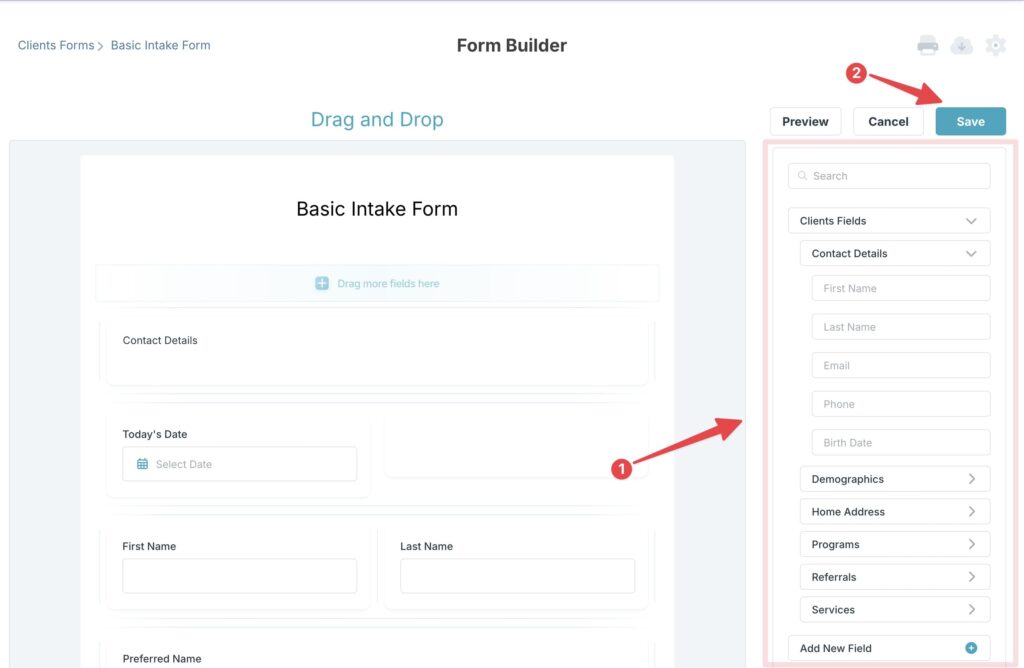
Tip: You can add new form fields using the right sidebar. Just drag them straight into your form.
Step 3:
Select a client to start filling out the form on their behalf. Once done, click Save.
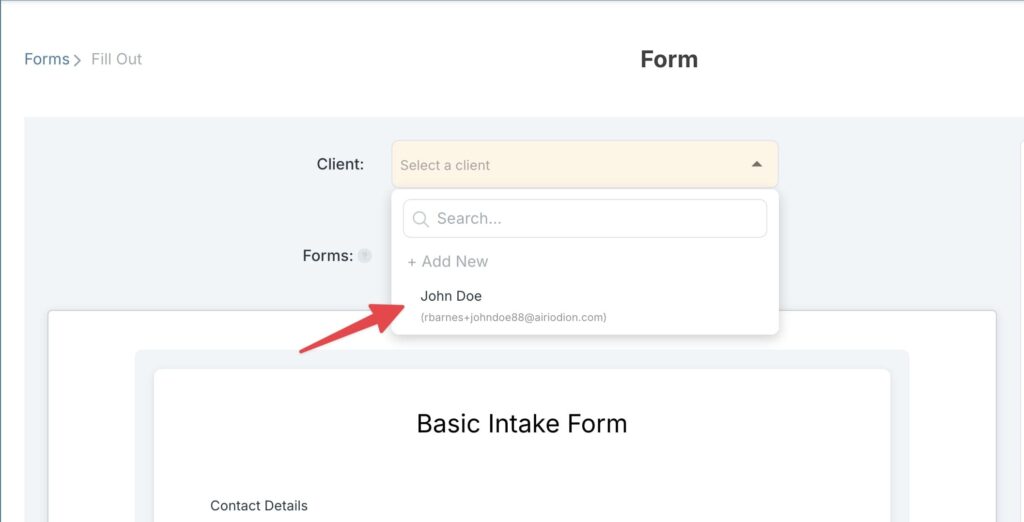
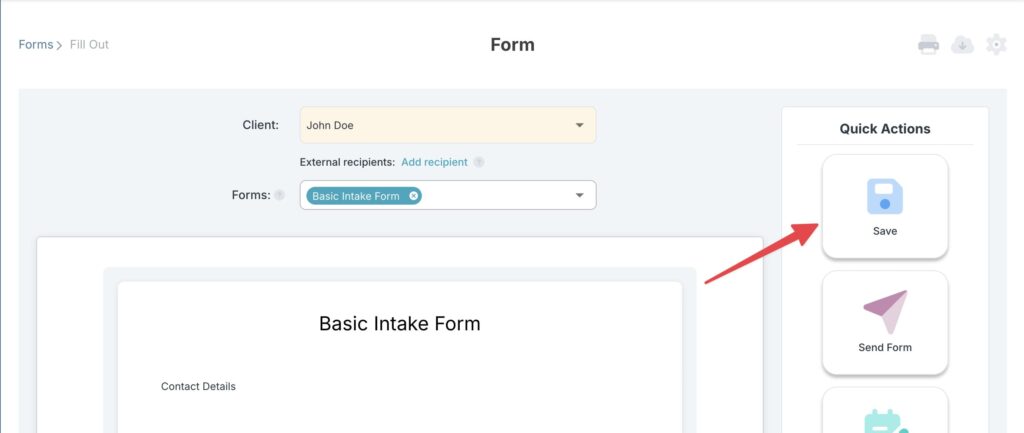
Tip: No need to re‑type your client’s data, it magically fills in the form for you, saving you time.
Step 4:
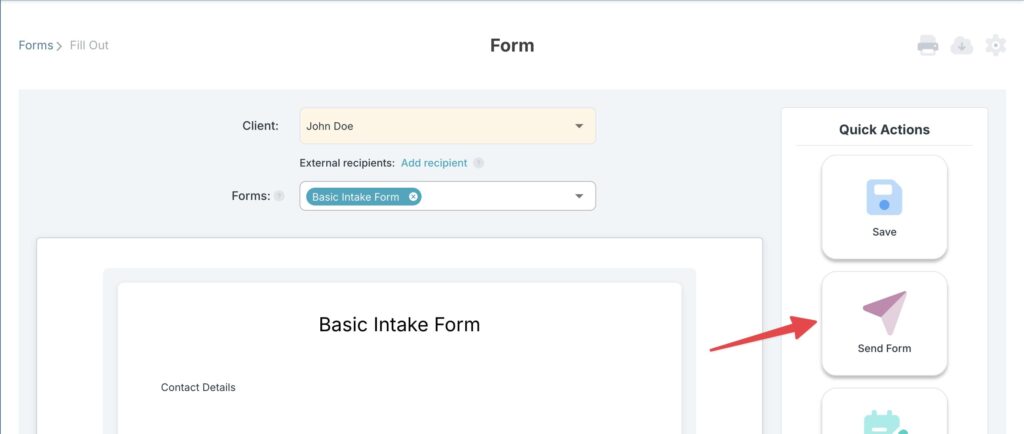
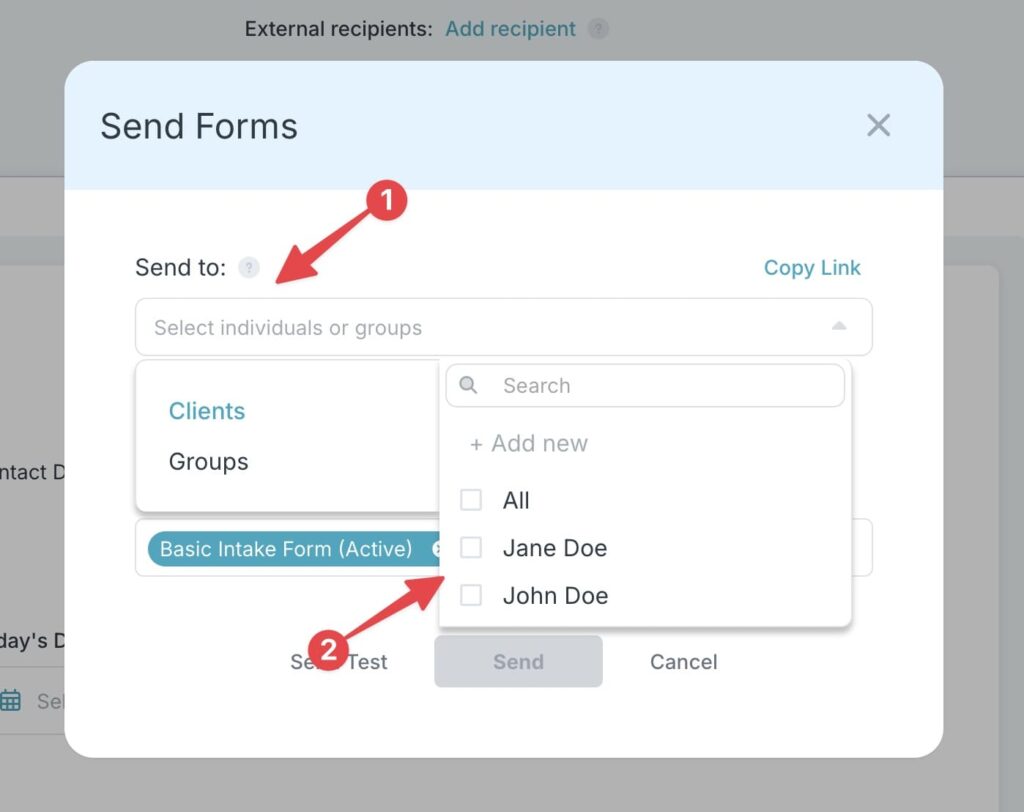
Or to send the form directly to a client, click Send Form, then select the clients. When you’re ready click Send.
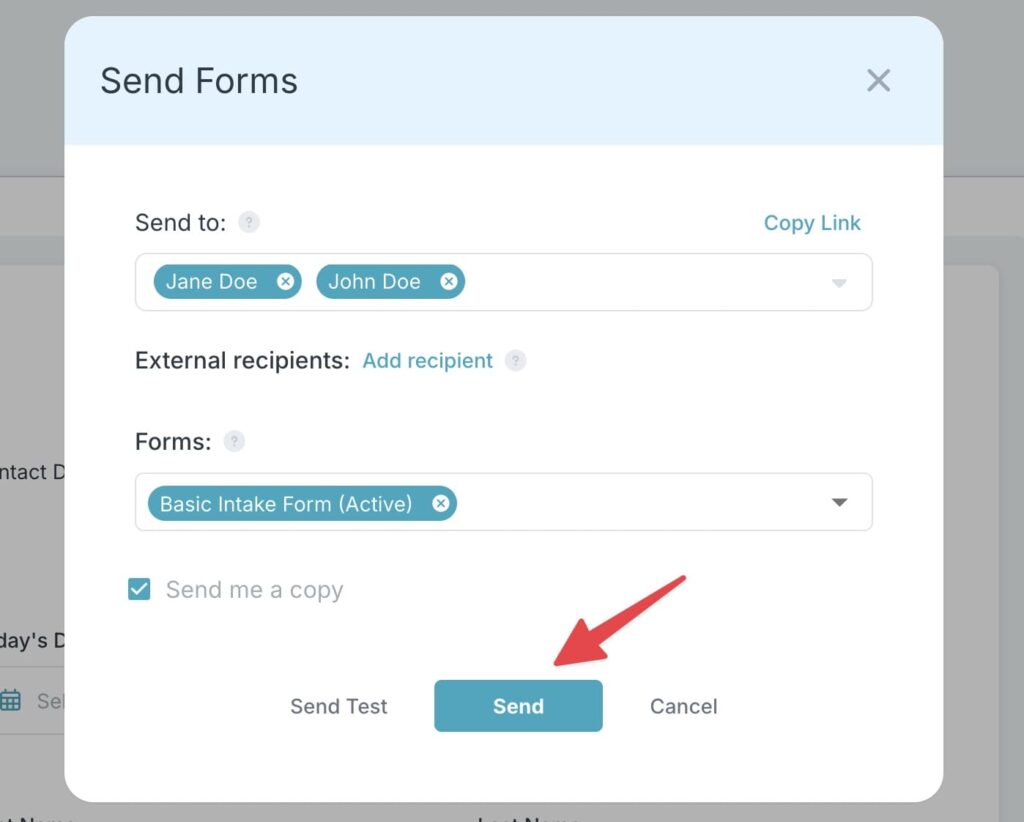
Tip: You can send the form to clients that are not yet part of Case Management Hub (External recipients) by clicking “Add recipient” and filling out their email, first name, and last name.
Step 5:
Create a public link for your form so you can easily share it with anyone. Just click Copy Link to publish your online form.
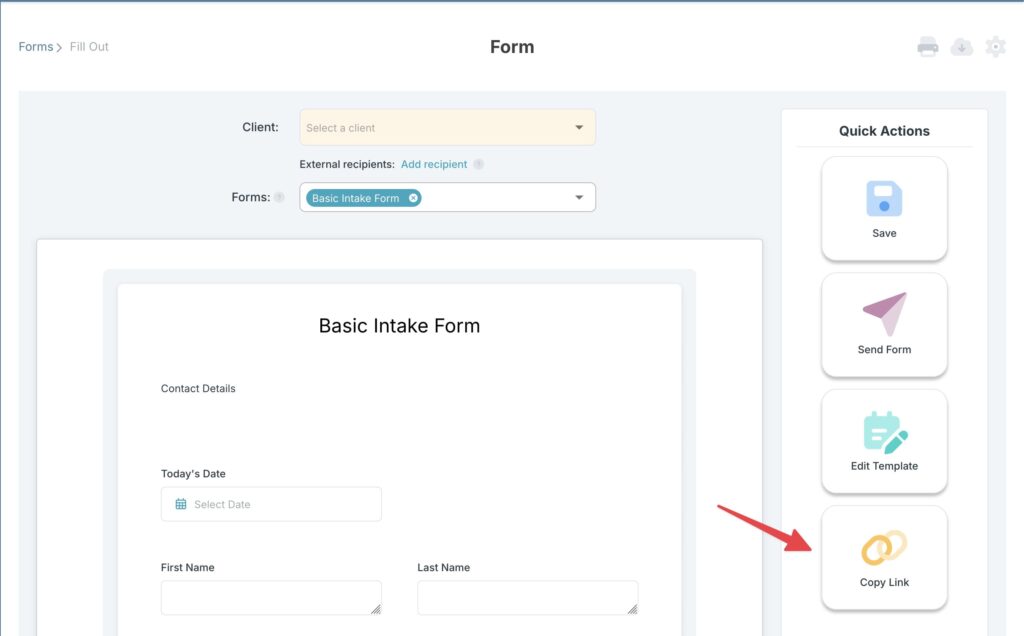
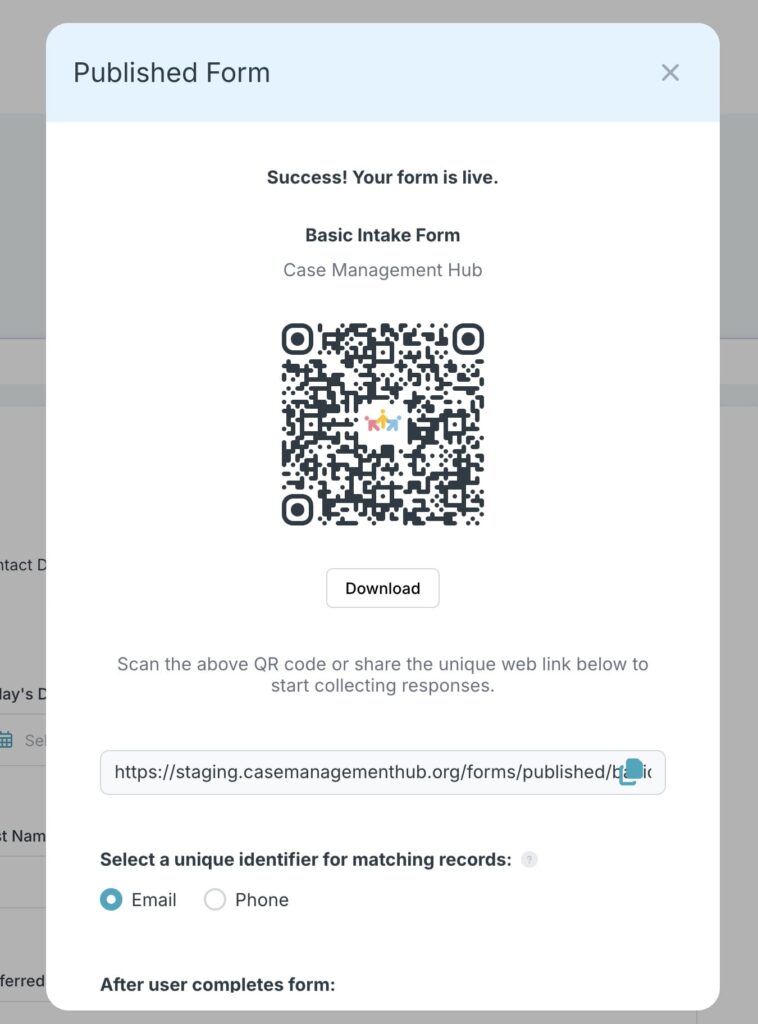
Tip: A link will automatically be created for you but you can always edit this and other form settings even after creating the online form. Just click on the gear icon in the top right corner of the form page to bring up the form settings.
Ready to see how the right technology can transform your practice? Sign up for a free 21-day trial today with no credit card required, and experience a smoother, more efficient way to manage your cases.
👉 Try it Free today - No credit card needed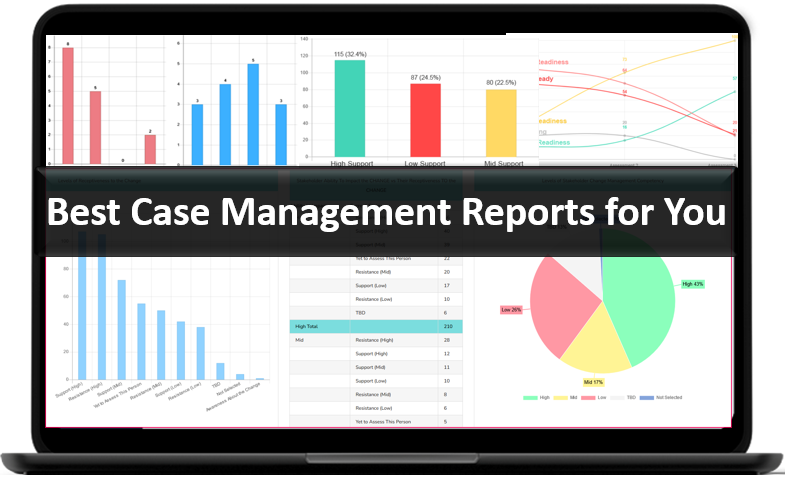
Frequently Asked Questions
What does linguistic competence mean in a client intake setting?
Linguistic competence means providing meaningful access to services for individuals with limited English proficiency. This involves using professional, trained interpreters and translating all vital intake forms, rather than relying on a client's bilingual family members or children to translate complex clinical terms.
How does implicit bias affect client outcomes in healthcare?
Implicit bias can lead to misdiagnoses, inappropriate care plans, and a profound lack of trust between the client and provider. When professionals unconsciously apply stereotypes, they may dismiss a client's self-reported symptoms or fail to offer all available resources, worsening health disparities.
Can an all-in-one software platform handle non-profit billing and cost tracking?
Yes, modern all-in-one human services platforms include robust financial modules designed specifically for non-profit operations. These features allow you to seamlessly manage billing, monitor service hours, track program expenses, and generate detailed financial reports for your funding sources.
Is secure messaging safe for sharing sensitive cultural background information?
Yes, provided that the communication occurs within a fully secure, HIPAA-compliant platform. Secure messaging tools use advanced encryption protocols to safeguard all client communications, allowing case managers and clients to discuss sensitive details with total peace of mind.
How do you track client goals that do not fit into standard checkboxes?
An advanced client goals and progress tracking platform allows practitioners to build highly customized qualitative and quantitative milestones. This flexibility ensures you can track non-traditional, community-focused, or culturally specific goals that matter deeply to the individual.
What is the difference between cultural competence and cultural humility?
Cultural competence focuses heavily on acquiring specific knowledge about different cultural groups. Cultural humility, on the other hand, emphasizes continuous self-reflection, actively addressing institutional power imbalances, and maintaining a respectful, learning-oriented relationship with every client.
👉 Try it free today - No credit card needed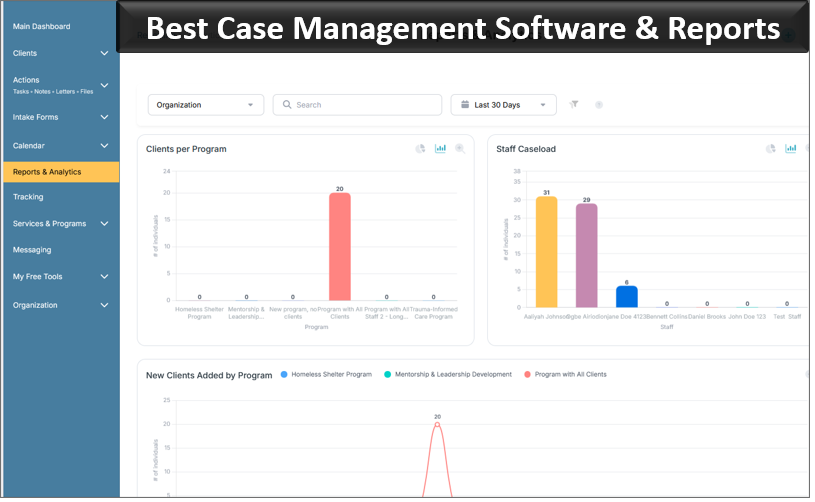
Note: Content on this website (socialworkportal.com) is copyrighted and protected under applicable copyright laws. Unauthorized reproduction, distribution, or use of any content from the website, without explicit written permission, is strictly prohibited. Read: Terms of Use.
Social Work Portal Disclaimer: Social Work Portal is not a social work agency and we do not refer social workers. This web site is provided for educational and informational purposes only and does not constitute providing medical advice or professional social and healthcare services. The information provided should not be used for diagnosing or treating a health problem or disease, and those seeking personal medical advice should consult with ... Read our full disclaimer here: Social Work Portal Disclaimer.