A Practical Guide to Social Work Assessment
A client sits down across from you seeking help. Maybe they’re facing homelessness, struggling with their mental health, or trying to access community resources. You have limited time, a growing caseload, and a lot of information to gather. The challenge is not simply completing an assessment form. It’s understanding the whole person behind the referral.
A well-conducted social work assessment helps uncover the client’s needs, strengths, barriers, risks, and goals so you can develop an effective service plan.
Done well, it creates the foundation for meaningful outcomes. Done poorly, important details can be missed, leading to ineffective interventions, incomplete documentation, and missed opportunities to help.
Whether you work in a nonprofit, behavioral health organization, housing program, social services agency, or private practice, this guide will walk you through the social work assessment process, common challenges, best practices, and practical ways to improve both assessment quality and efficiency.
Let’s get started
Watch this video:
or
read the guide below.
What Is a Social Work Assessment?
A social work assessment is a structured process used to gather and evaluate information about a client’s circumstances, functioning, support systems, challenges, and goals. The information collected helps professionals make informed decisions about interventions, referrals, and ongoing services.
A comprehensive client assessment often includes:
- Demographic information
- Presenting concerns
- Physical and behavioral health factors
- Housing and employment status
- Financial stability
- Family and support systems
- Strengths and protective factors
- Risks and safety concerns
- Client goals and priorities
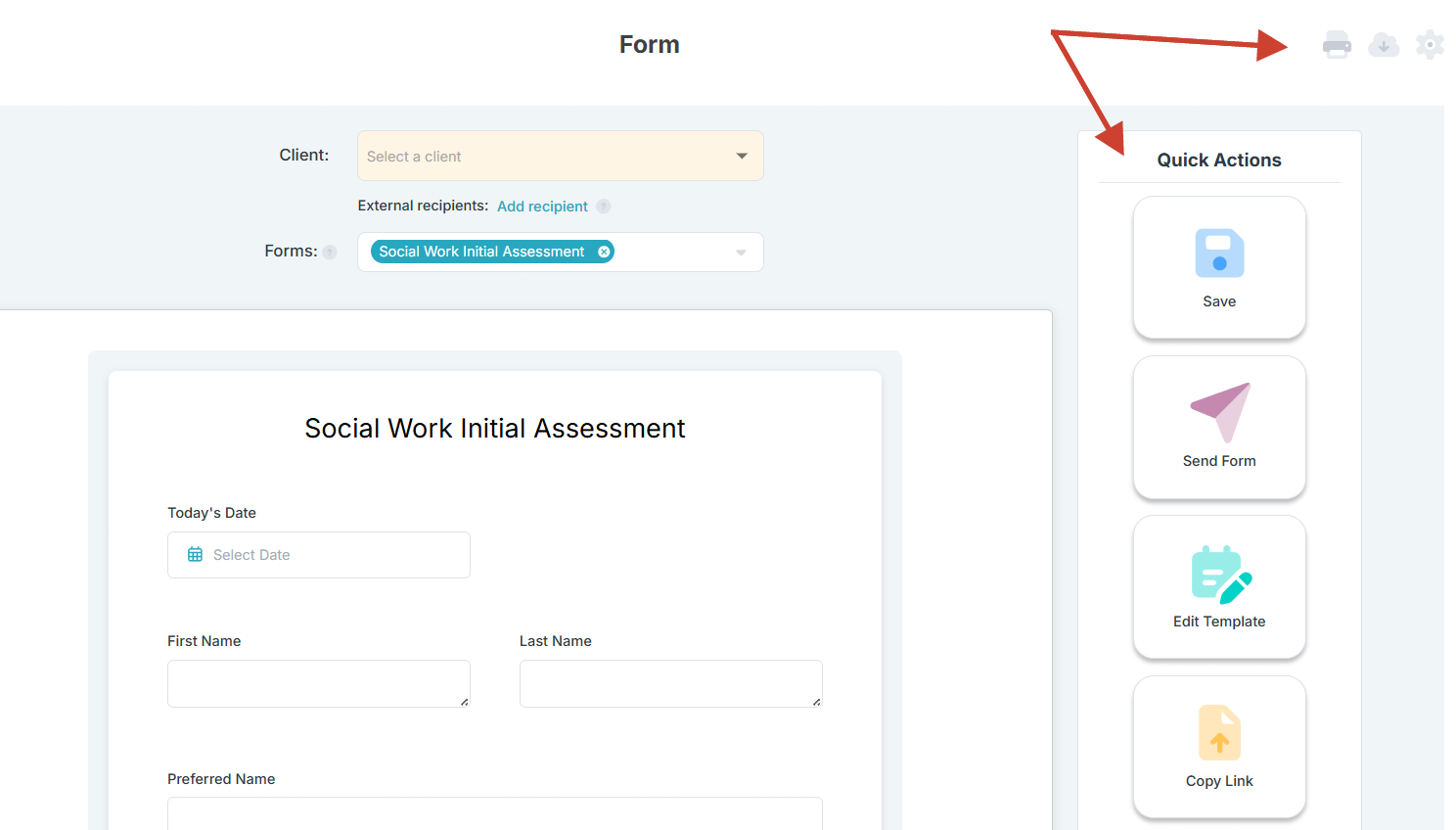
Here is an example of some of the questions on a social work assessment template available in the Case Management Hub platform.
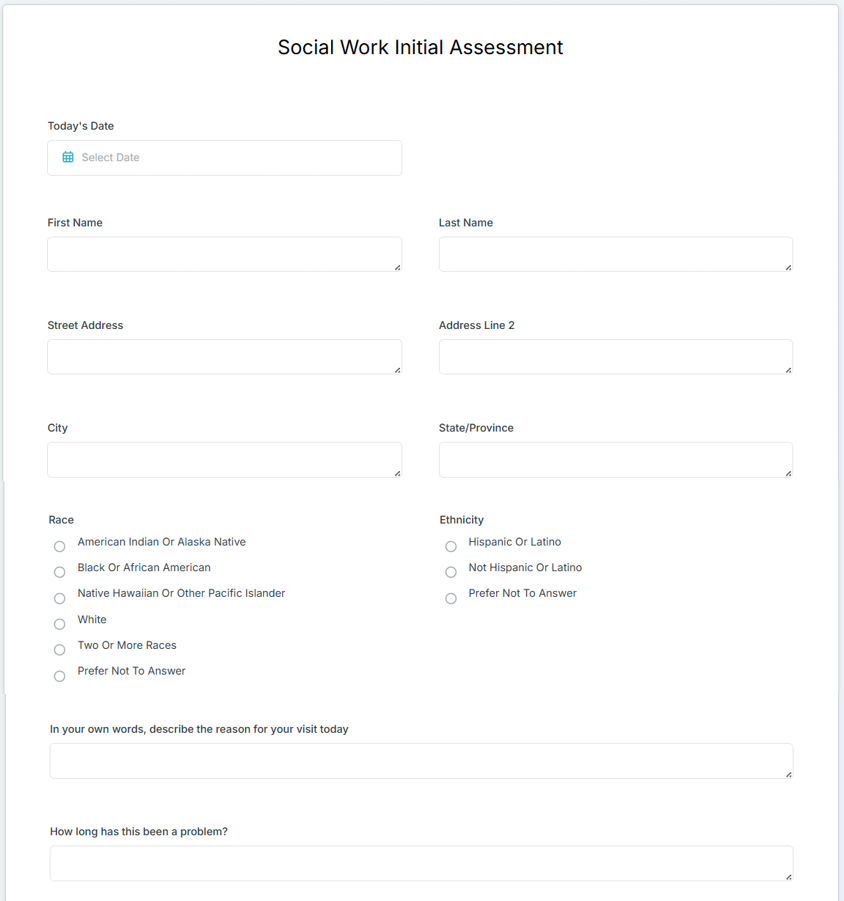
For example, a housing case manager may conduct a social services intake assessment to determine eligibility for assistance while identifying barriers such as transportation challenges, unemployment, or mental health concerns.
The assessment serves as the foundation for treatment planning, case management, documentation, and outcome tracking.
💡All-in-one Case Management Software.
Everything in one place: clients, notes, forms, appointments, reports, and outcomes.
👉 Try it Free - No credit card needed
Why Is the Social Work Assessment Process Important?
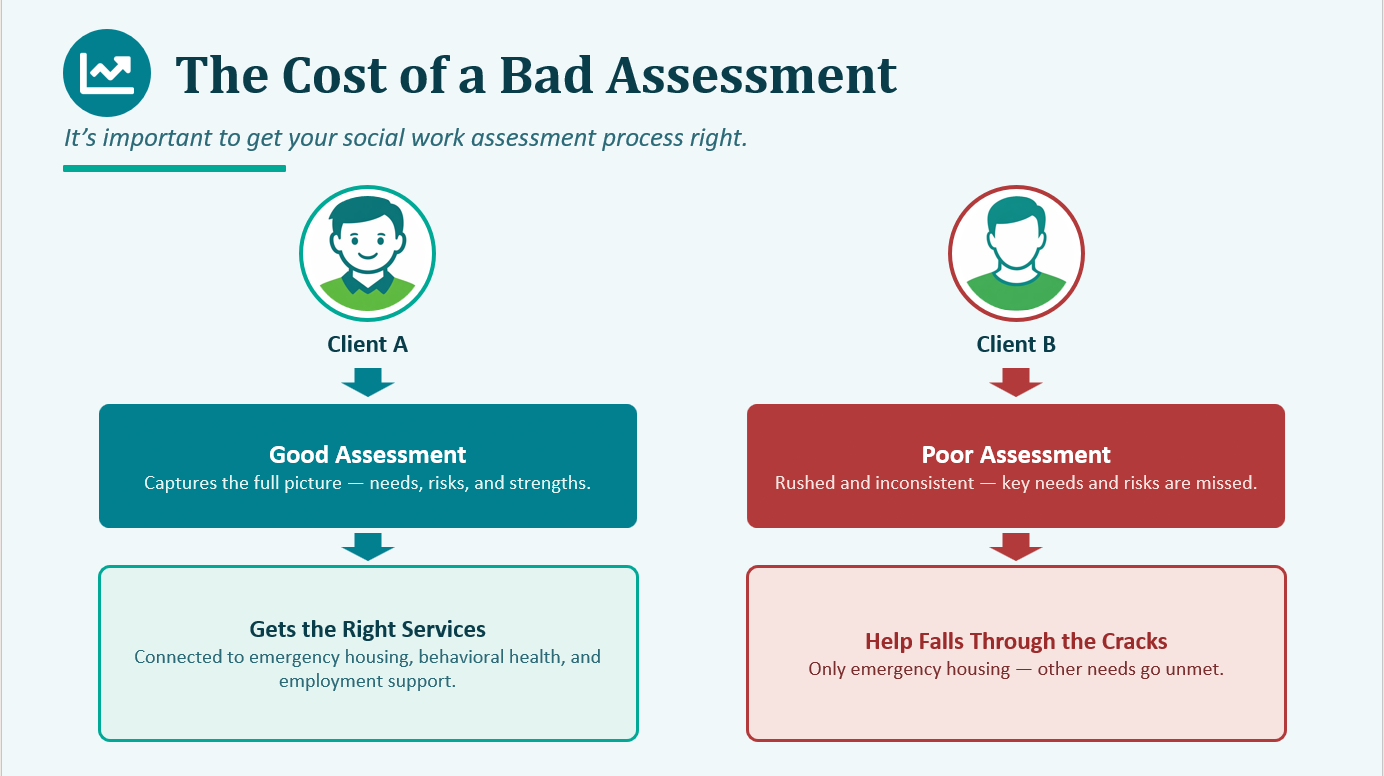
The quality of an assessment often determines the quality of services that follow.
Without a structured assessment process, organizations risk missing critical information, providing ineffective interventions, or creating inconsistent client experiences.
Effective assessments help organizations:
- Develop individualized service plans
- Improve client engagement
- Identify risks early
- Meet documentation requirements
- Support reporting and funding needs
- Improve program outcomes
Research consistently shows that structured assessments contribute to better service planning and stronger client outcomes. Organizations that use standardized social work assessment tools often achieve greater consistency across staff and programs than those relying solely on informal interviews.
👉 Try it Free - Free Case Management System
What Are the Steps in a Social Work Assessment?
While every organization has unique requirements, most assessments follow a similar process.
1. Prepare for the Assessment
Review referral information, previous records, and any available documentation before meeting with the client.
2. Establish Rapport
Build trust by creating a respectful and supportive environment. Clients are more likely to provide accurate information when they feel comfortable.
3. Gather Background Information
Collect information about the client’s circumstances, history, support systems, and presenting concerns.
4. Identify Needs and Strengths
Assess both challenges and existing resources. A strengths-based approach helps create more realistic and empowering service plans.
5. Evaluate Risks and Barriers
Identify any safety concerns, urgent needs, or obstacles that may affect the client’s progress.
6. Define Goals With the Client
Collaboratively establish goals that are meaningful, achievable, and measurable.
7. Document Findings
Record assessment results clearly and consistently using your organization’s documentation standards.
8. Develop a Service Plan
Use assessment findings to determine interventions, referrals, and next steps.
9. Reassess as Needed
Client circumstances change over time. Regular reassessments help ensure services remain effective and relevant.

All-in-One Case Management Software
Sign Up Today, Free
No credit card needed!
Do You Have a Team? | ||
Our best all-in-one client and top case management software simplifies everything from client intake and assessments to programs, projects, goals tracking, planning, scheduling, documentation, reporting dashboard, and progress tracking.
What Information Should Be Included in a Social Work Assessment?
Although assessment requirements vary, several categories are commonly included.
Client Background
Basic demographic and household information provides important context.
Presenting Needs
Document the primary reason the client is seeking services and any immediate concerns.
Strengths and Resources
Identify factors that can support progress, such as family relationships, employment skills, education, community connections, or personal resilience.
Risk Factors
Assess for concerns such as homelessness, domestic violence, substance use, child welfare issues, or mental health crises.
Goals and Desired Outcomes
Understanding what success looks like from the client’s perspective helps create more effective service plans.
A well-rounded assessment balances needs, risks, strengths, and opportunities rather than focusing solely on problems.

What Questions Should You Ask During a Social Work Assessment?
One of the most common challenges for newer professionals is determining what questions should be asked during a social work assessment.
Effective questions encourage meaningful conversation while gathering critical information.
Examples include:
- What brought you here today?
- What challenges are affecting your daily life?
- What support systems do you currently have?
- What strengths have helped you manage difficult situations in the past?
- What goals would you like to achieve?
- Are there any immediate safety concerns we should address?
- What services have you used previously?
- What barriers are preventing you from reaching your goals?
Open-ended questions often provide more valuable information than simple yes-or-no questions.
🔥Still using spreadsheets for case management?
Switch to an all-in-one case management platform.
👉 Try it Free - No credit card needed
What Challenges Commonly Occur During Assessments?
Even experienced professionals encounter obstacles during the assessment process.
- Incomplete Information: Clients may be hesitant to share information or may not remember important details.
- Practical insight: Follow-up assessments often reveal additional information as trust develops.
- Limited Time: Heavy caseloads can make it difficult to complete comprehensive assessments.
- Practical insight: Standardized assessment templates help improve efficiency and consistency.
- Documentation Burdens: Many organizations still rely on multiple systems for assessments, notes, forms, and reporting.
- Practical insight: Integrated case management platforms reduce duplicate data entry and administrative work.
- Staff Inconsistency: Different staff members may collect information differently.
- Practical insight: Standardized social work assessment templates and workflows help create consistency across teams.
How Do Assessment Methods Compare Across Different Settings?
Assessment priorities vary based on the population being served.
| Service Setting | Primary Assessment Focus |
| Behavioral Health | Mental health, functioning, risk factors |
| Housing Programs | Housing stability, income, barriers |
| Child Welfare | Safety, family dynamics, protective factors |
| Nonprofits | Service eligibility and client needs |
| Substance Use Programs | Recovery readiness and support systems |
While the focus may differ, all assessments aim to understand client circumstances and inform service planning.
Organizations should ensure their assessment process aligns with program goals, reporting requirements, and funding expectations.
👉 Try this Case Management Software free today
No credit card needed
What Does a Real-World Social Work Assessment Look Like?
Consider a client seeking emergency housing assistance after losing employment.
During the assessment, the case manager identifies several interconnected challenges:
- Imminent risk of homelessness
- Lack of transportation
- Untreated anxiety
- Limited family support
- Difficulty maintaining employment
Without a comprehensive assessment, the organization might only address the immediate housing need.
Instead, the assessment reveals opportunities for a broader service plan that includes temporary housing support, transportation assistance, employment resources, and behavioral health referrals.
This example highlights why comprehensive client assessments often lead to more effective outcomes than addressing a single presenting problem.
💡All-in-one Case Management Software.
Everything in one place: clients, notes, forms, appointments, reports, and outcomes.
👉 Try it Free - No credit card needed
How Can Technology Improve the Social Work Assessment Process?
Many organizations still use paper forms, spreadsheets, or disconnected systems to manage assessments.
These approaches often create challenges such as:
- Duplicate data entry
- Lost documentation
- Delayed reporting
- Inconsistent records
- Limited visibility across programs
Modern client intake software for social services helps streamline assessment workflows by centralizing information in one system.
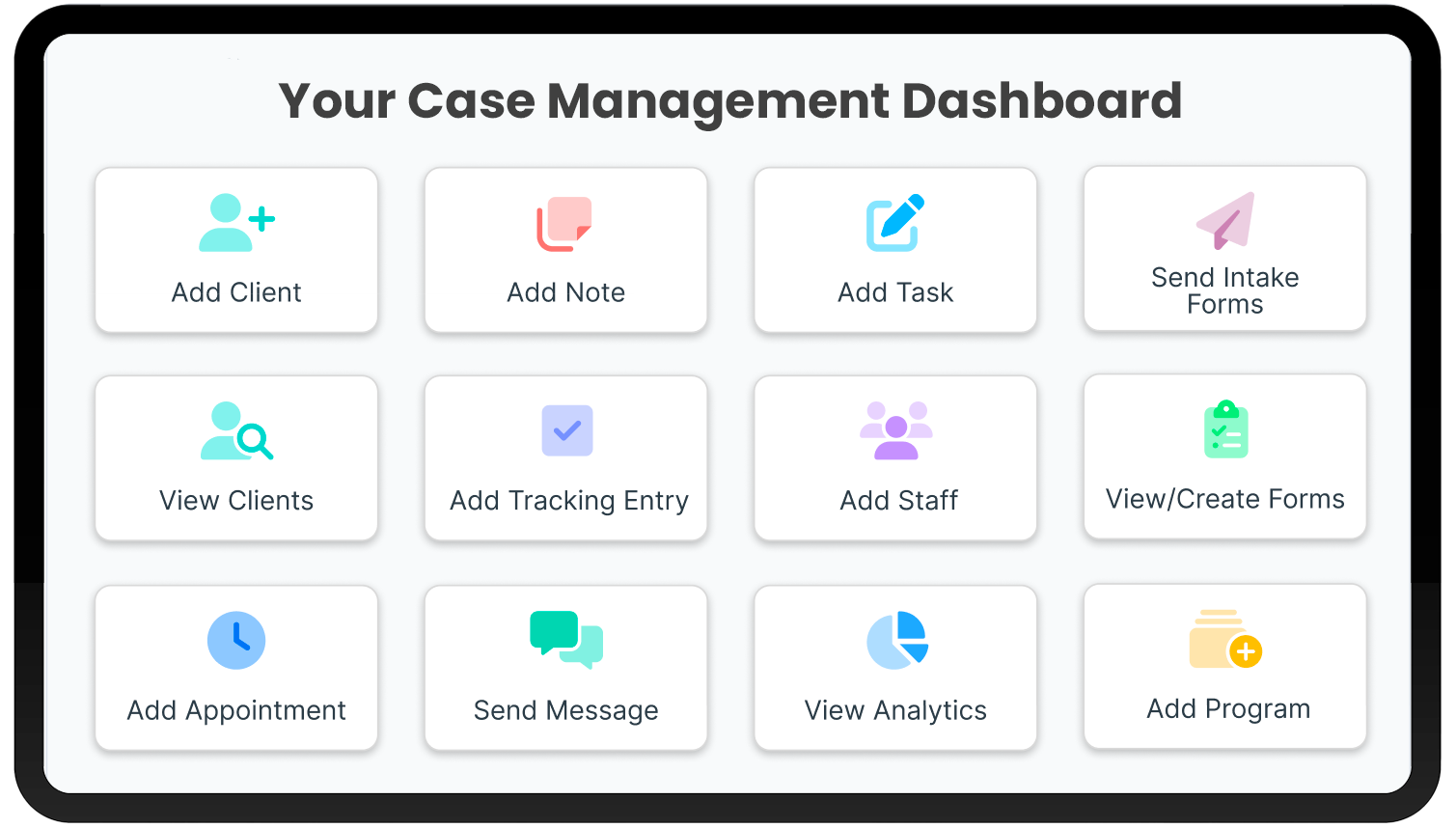
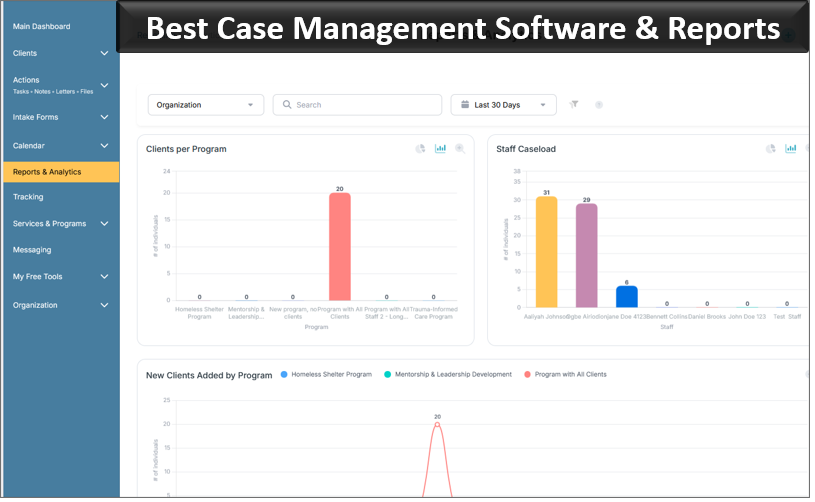
Case Management Hub’s Easy-to-Use Dashboard
Benefits often include:
- Digital assessment forms
- Integrated client records
- Secure file storage
- Automated reporting
- Goal and progress tracking
- Appointment scheduling
- Documentation management
For agencies managing large caseloads, technology can improve both efficiency and service quality.
What Should Organizations Consider When Choosing Assessment Software?
Many organizations eventually reach a point where manual processes become difficult to manage.
When evaluating social work case management software, consider:
Ease of Use
Staff adoption is critical. The software should be intuitive and easy to learn.
Assessment and Intake Capabilities
Look for built-in assessment forms, customizable workflows, and digital intake tools.
Documentation and Reporting
The platform should support case notes, reporting, file storage, and outcome tracking.
Security and Compliance
Client information must be stored securely and in accordance with privacy requirements.
Long-Term Value
An all-in-one platform that combines assessments, scheduling, secure messaging, client records, and reporting often provides greater value than multiple disconnected tools.
Looking for an Easier Way to Manage Social Work Assessments?
Conducting quality assessments is only one part of effective case management. Organizations must also manage documentation, appointments, reporting, client communications, goals, files, and ongoing service delivery. Many agencies struggle with duplicate data entry, incomplete records, disconnected systems, and time-consuming reporting requirements.
Case Management Hub is a social work case management software solution designed specifically for nonprofits, social service agencies, behavioral health providers, and human services organizations. The platform includes built-in assessment forms, client intake tools, scheduling, documentation, secure messaging, reporting, file storage, goal tracking, and case management features within a single system.
Try it out for free for 21-days! No credit card needed, no risk. Add up to 10 staff members so you can all try it together.
Here’s how to get a free Social Work Assessment Template:
1. Sign up for the free trial here
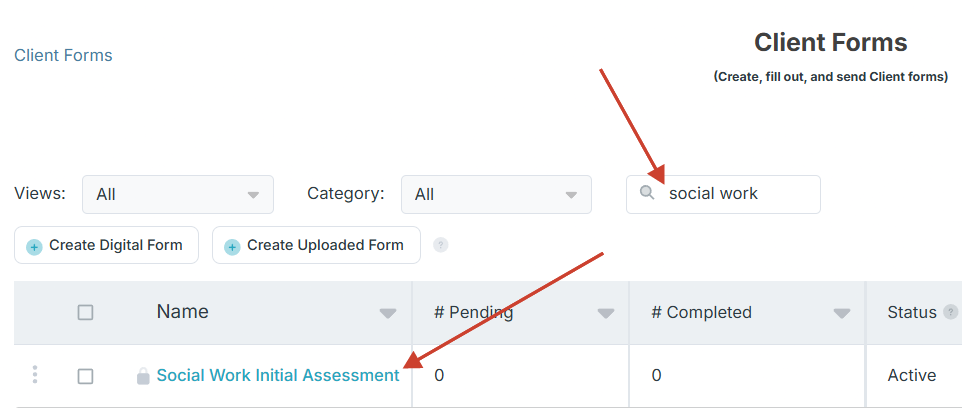
2. Once you’re in your account, in the sidebar, click Forms > Client forms
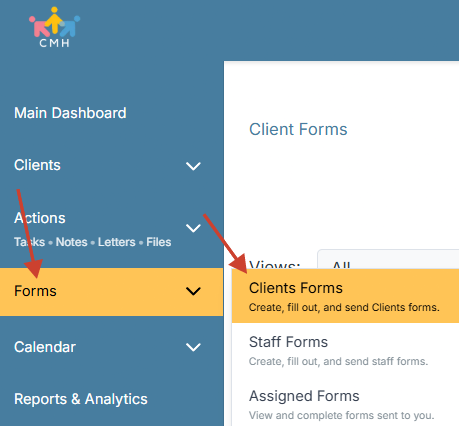
3. In the search bar, search for “Social Work”, then click the name “Social Work Initial Assessment”
4. Use the form in the platform (you can send it to clients and they can fill it out online!) or export and print
👉 Try it Free - Free Case Management System
Frequently Asked Questions About Social Work Assessments
How long should a social work assessment take?
The length varies depending on complexity. A quick screener can take 1-5 minutes. A more expensive assessment can take between 30 to 60 minutes.
What is the difference between an intake and an assessment?
An intake gathers basic information and determines eligibility, while an assessment provides a deeper evaluation of needs, strengths, risks, and goals.
What should be included in a psychosocial assessment?
A psychosocial assessment typically includes mental health history, social functioning, family relationships, support systems, strengths, and environmental factors.
How often should assessments be updated?
Many organizations update assessments every six to twelve months or whenever significant life changes occur.
What are the most common social work assessment tools?
Common tools include psychosocial assessments, strengths assessments, risk assessments, needs assessments, and standardized screening instruments. (such as the GAD-7 or PHQ-9)
Can assessment forms be completed digitally?
Yes. Many organizations now use digital forms and case management software to streamline assessments, improve accuracy, and reduce administrative workload.
👉 Try it free today - No credit card needed
Note: Content on this website (socialworkportal.com) is copyrighted and protected under applicable copyright laws. Unauthorized reproduction, distribution, or use of any content from the website, without explicit written permission, is strictly prohibited. Read: Terms of Use.
Social Work Portal Disclaimer: Social Work Portal is not a social work agency and we do not refer social workers. This web site is provided for educational and informational purposes only and does not constitute providing medical advice or professional social and healthcare services. The information provided should not be used for diagnosing or treating a health problem or disease, and those seeking personal medical advice should consult with ... Read our full disclaimer here: Social Work Portal Disclaimer.