The Step-by-Step Blueprint for Compliant, Person-Centered Support Plans
Disability social workers, case managers, and care coordinators carry some of the heaviest administrative burdens in modern human services. Crafting an effective individual support plan is rarely just about clinical insight. It is an exercise in balancing Medicaid Home and Community-Based Services (HCBS) regulatory mandates, coordinating across fragmented provider networks, and honoring a participant’s self-determination.
Frontline practitioners often find themselves drowning in static forms, disjointed spreadsheets, and manual email follow-ups. When documentation systems do not communicate, critical details slip through the cracks: assessments fail to translate into actionable goals, behavioral protocols fall out of alignment with daily notes, and annual review deadlines approach without warning.
A well-structured disability support plan is not bureaucratic paperwork. It is a living, functional roadmap that safeguards participant rights, justifies essential service authorizations, and establishes transparent clinical accountability across every stakeholder.
Let’s get started
Watch this video:
or
read the guide below.
What You’ll Learn in This Guide
- How to conduct comprehensive functional assessments that form the bedrock of participant-directed care.
- Concrete frameworks for drafting measurable, dignity-centered goals and structured behavioral protocols.
- Strategies to balance participant dignity of risk with institutional duty of care using proactive risk matrices.
- Best practices for establishing automated review frequencies that maintain state and federal compliance.
- Step-by-step methods to replace manual administrative friction with modern, HIPAA-compliant digital workflows.
💡All-in-one Case Management Software.
Everything in one place: clients, notes, forms, appointments, reports, and outcomes.
👉 Try it Free - No credit card needed
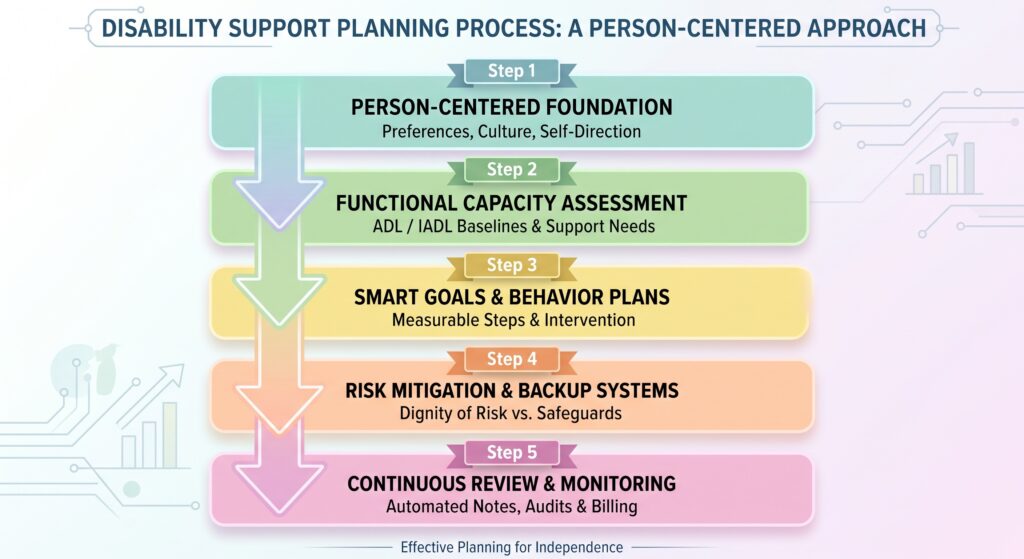
Why Is a Person-Centered Foundation Critical for Support Planning?
A legally defensible and clinically sound plan must be rooted in authentic person-centered thinking. Federal regulations under the Centers for Medicare & Medicaid Services (CMS) HCBS Settings Rule (42 CFR § 441.301) mandate that the individual direct the planning process to the maximum extent possible.
Research published by the Community Living Policy Center highlights the direct impact of this approach: participants who actively direct their service planning experience significantly fewer unmet daily living needs, report higher satisfaction with their community life, and maintain greater autonomy over their daily schedules. Conversely, plans written in clinical isolation generate compliance vulnerabilities, low participant engagement, and service delivery failures.
Case managers must anchor the document in what is important to the person (their relationships, routines, personal aspirations, and cultural identity) alongside what is important for the person (health, physical safety, and medical stabilization). Examining tangible person centered support plan examples demonstrates that successful plans frame services as vehicles for independence rather than custodial oversight.
How Do You Conduct a Rigorous Functional Capacity Assessment?
Every actionable support plan begins with an accurate functional capacity assessment case management workflow. This diagnostic evaluation establishes baseline capabilities across Activities of Daily Living (ADLs) like eating, bathing, and mobility, as well as Instrumental Activities of Daily Living (IADLs) like budgeting, medication administration, and public transit navigation.
When documenting functional limitations, avoid broad generalizations like “client requires physical assistance with hygiene.” Clinical auditors and funding sources require specific, observable measures:
- Level of Independence: Specify whether the participant requires total physical dependence, hand-over-hand physical guidance, verbal cueing, or independent setup.
- Environmental Context: Document environmental triggers and physical barriers that alter functioning, including sensory overstimulation or architectural obstacles.
- Assistive Technology: List existing adaptive equipment, current modifications, and identified gaps where assistive tech could replace direct human labor.
Grounding your disability support plan template in precise functional assessments provides clear clinical justification for authorization hours and establishes clear targets for skill acquisition.
How Do You Write Measurable Goals and Behavior Protocols?
Knowing how to write an individual support plan disability document requires translating broad life hopes into clear, measurable milestones. Many plans fail during audit reviews because their objectives are vague, open-ended, or lack accountability.
Constructing Clinical Support Goals
Study these concrete disability care plan goals examples to see how subjective wishes transform into verifiable objectives:
- Vague: “Alex will become more involved in the neighborhood.”
- Actionable & Measurable: “Alex will independently select and participate in one local community recreational activity per week with the assistance of a direct support professional, maintaining this for 16 consecutive weeks by October 2027.”
- Vague: “Sarah wants to manage her own finances.”
- Actionable & Measurable: “Using visual budgeting templates and bi-weekly verbal check-ins from her care coordinator, Sarah will track and balance her monthly living expenses across three consecutive billing cycles.”
Integrating Behavior Support Protocols
When an individual exhibits complex behavioral needs, the plan must incorporate clear behavior support plan documentation guidelines. The support plan should detail:
- Known Antecedents and Triggers: Clear descriptions of specific sensory, emotional, or social events that prompt distress.
- De-escalation Protocols: Step-by-step guidance outlining verbal techniques, environmental adjustments, and preferred calming spaces.
- Restrictive Interventions: Comprehensive legal justifications demonstrating that all positive, non-restrictive interventions were exhausted prior to any rights modification, complete with documented informed consent.
How Do You Balance Dignity of Risk with Institutional Duty of Care?
Case managers navigate an ongoing tension between protecting a client’s health and respecting their civil right to make decisions involving risk. Denying an individual the opportunity to experience risk undermines independence and dignity.
To resolve this challenge, clinicians utilize a structured risk assessment matrix for disability support. Rather than eliminating potential risks through excessive restrictions, this matrix analyzes the probability and severity of a potential hazard against the participant’s stated autonomy goals.
Effective risk planning documents:
- The specific risk scenario (e.g., cooking independently or navigating the city on public buses).
- The participant’s informed understanding of potential consequences.
- Proactive harm-reduction measures, such as automatic stove shut-off sensors or emergency contact smart cards.
- Contingency and emergency backup protocols outlining who steps in if the regular support system experiences an unplanned outage.
When and How Often Must a Disability Support Plan Be Reviewed?
Establishing an accurate disability support plan review frequency is essential for Medicaid HCBS compliance and clinical integrity. Federal regulations stipulate that person-centered plans must undergo a formal, comprehensive review:
- At least once every 12 months.
- When the individual’s functional circumstances, health condition, or needs change significantly.
- At the explicit request of the participant or their authorized representative.
Beyond regulatory minimums, best-practice agencies schedule quarterly internal touchpoints. These regular reviews identify common case management barriers in disability care, such as service provider shortages, unutilized authorization hours, or emerging behavioral challenges, well before an annual audit. This continuous oversight makes measuring outcomes in disability support planning an ongoing operational habit rather than an annual panic.
How Digital Tools Streamline Disability Support Planning
Social workers and case managers spend up to 40% of their working hours on administrative documentation, manual scheduling, and compliance data entry rather than direct participant interaction. Relying on paper charts, scattered PDFs, and isolated desktop files produces severe operational bottlenecks.
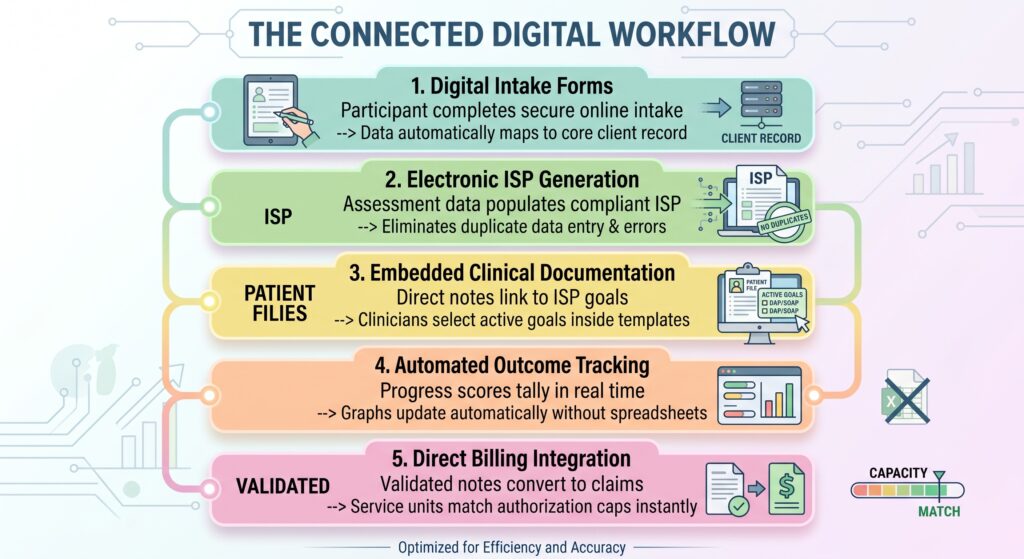
Modern disability case management software transforms this process from a fragmented administrative scramble into an integrated, accurate workflow.
The Transition to an Integrated System
- Automated Intake and Client Tracking: Implementing digital intake forms for disability service agencies eliminates the need for manual data transcription. Information entered by families or referral sources populates directly into a centralized human services client tracking system, creating a single source of truth.
- Standardized Electronic ISP Workflows: Dedicated electronic individual support plan software guides coordinators through structured, compliant templates that enforce necessary regulatory fields, safeguarding against missing required consent forms or unaddressed risk factors.
- Closing the Loop Between Notes and Goals: One of the most severe documentation vulnerabilities occurs when daily shift notes fail to reference active support plan objectives. Using an integrated DAP SOAP note generator for disability services, clinicians check off active ISP goals directly inside their daily progress notes. This enables automated care plan goal tracking for social workers, generating real-time progress charts without manual spreadsheet tracking.
- Coordinated Scheduling and Multi-Agency Collaboration: Managing team members, families, and speech or occupational therapists requires dedicated coordination. Utilizing care coordination scheduling software for case managers pairs calendar events with automated reminders, drastically reducing missed appointments and review delays.
- Secure Family and Stakeholder Engagement: By deploying a secure client portal for disability support coordinators, teams can securely share support plan drafts, collect electronic signatures, and exchange messages while meeting all legal data privacy standards.
- Unified Billing and Claims Generation: Discrepancies between authorized hours and billed services cost agencies substantial revenue. Utilizing dedicated case note to billing software for disability providers ensures that every billed unit ties directly to an approved service code and an active, signed support plan.
Manual Systems vs. Automated Case Management Platforms
| Operational Dimension | Manual & Paper-Based Workflows | Automated Digital Platform Workflows |
| Intake & Onboarding | Paper forms re-typed manually into spreadsheets; high error rate. | Web-based intake auto-populates client files instantly. |
| ISP Drafting | Disconnected Word or PDF templates; missing compliance fields common. | Standardized, validated workflows with built-in regulatory checklists. |
| Goal Tracking | Manual tallying of notes at the end of the quarter or year. | Real-time objective tracking populated automatically from daily clinical notes. |
| Review Management | Calendar reminders easily overlooked; tracking via desktop spreadsheets. | Automated alerts trigger 90, 60, and 30 days prior to mandatory review dates. |
| Audits & Security | Physical file cabinets, unencrypted email attachments; HIPAA vulnerability. | Role-based permissions, end-to-end encryption, and comprehensive audit logs. |
| Billing Alignment | Manual cross-referencing of paper sign-in sheets against billing claims. | Billable units generate automatically from completed, signed clinical documentation. |
People Also Ask
What are the main components of a disability support plan?
An effective disability support plan includes the participant’s background and communication preferences, a functional assessment of daily living skills, measurable personal goals, detailed support services, a risk mitigation plan, and emergency backup protocols. It also assigns specific provider responsibilities and defines an ongoing review schedule.
What is the difference between an ISP and a BSP?
An Individual Support Plan (ISP) is an overarching document outlining an individual’s comprehensive life goals, healthcare needs, and social services. A Behavior Support Plan (BSP) is a targeted clinical sub-plan focused exclusively on identifying behavioral triggers, environmental modifications, and de-escalation strategies.
Who is legally required to attend a support plan meeting?
Under federal HCBS guidelines, the planning meeting must be led by the participant (or their authorized representative) and include their assigned case manager or care coordinator. The participant retains the right to invite chosen family members, friends, independent advocates, and direct support professionals.
How do you measure progress on non-clinical disability goals?
Progress on non-clinical goals is measured using standardized scales, frequency counts, task-analytic step completion percentages, and qualitative feedback gathered during clinical note capture. These markers assess whether an individual’s level of required prompting decreases over time.
How does HIPAA apply to shared disability care plans?
HIPAA requires that any electronic transmission of Protected Health Information (PHI) occur across encrypted, access-restricted networks. When sharing support plans among multidisciplinary teams, agencies must utilize platforms that maintain Business Associate Agreements (BAAs) and offer role-based access control.
What should you do when a participant refuses a recommended support service?
When a participant refuses a service, the case manager must document the informed discussion, noting that risks and alternatives were thoroughly explained. The planning team should explore less intrusive alternatives that honor the individual’s preferences while addressing essential safety concerns.
Centralize Your Support Planning with Case Management Hub
Creating and maintaining person-centered support plans should not require long hours of administrative data entry, lost paperwork, or constant compliance worries.
Case Management Hub provides a modern, fully integrated, HIPAA compliant support plan software solution designed specifically for disability social workers, case managers, and service agency directors.
Our platform brings every phase of your clinical workflow together under one intuitive umbrella:
- Connected Individual Support Plans: Build standardized, person-centered plans that integrate directly with baseline functional evaluations.
- Integrated SOAP & DAP Notes: Link daily notes straight to active plan objectives, populating goal tracking data automatically.
- Digital Intake & Client Portals: Onboard new participants seamlessly with digital forms and coordinate securely with families and providers.
- Automated Audit Safeguards: Receive automated notifications for annual reviews and maintain a comprehensive audit log.
- Direct Documentation-to-Billing Pipelines: Convert authorized service hours and completed notes directly into error-free billing claims.
Eliminate manual tracking errors and give your team more time to focus on supporting participants.
Start Your Free 21-Day Trial of Case Management Hub
No credit card required. Experience full platform access in minutes.
Frequently Asked Questions (FAQs)
How can case managers maintain compliance with CMS HCBS Settings Rule during plan creation?
To comply with the CMS HCBS Settings Rule (42 CFR § 441.301), case managers must ensure the planning meeting is scheduled at times and locations chosen by the participant. The final document must record individual preferences, demonstrate that the setting was selected from integrated community options, and confirm that any rights modifications are justified by assessed needs and supported by informed consent.
What is the best method to document when a client's goals change mid-year?
When a participant's priorities or circumstances shift, the case manager should conduct a formal addendum or interim review rather than waiting for the annual evaluation. The clinician updates the target goals, records the rationale in a DAP/SOAP progress note, and secures signatures from the participant and necessary team members.
How do you resolve conflicts between family expectations and participant self-direction?
When family desires conflict with a participant's expressed wishes, the case manager must center the planning process on the individual receiving services. Clinicians should facilitate open discussions that explore underlying safety worries, introduce assistive technology or compensatory strategies, and emphasize the participant's legal right to self-direction.
How do automated goal tracking systems handle qualitative outcomes?
Modern systems allow clinicians to score qualitative outcomes by attaching structured rating scales (such as Goal Attainment Scaling or prompting hierarchies) alongside narrative clinical notes. The software translates these qualitative entries into quantifiable progress trends over successive quarters.
What technical safeguards are mandatory for digital disability case management software?
Under HIPAA Security Rules, software handling client support plans must maintain end-to-end data encryption (in transit and at rest), unique user authentication credentials, automatic session time-outs, detailed audit logs tracking document access, and routine off-site backups. The vendor must also sign a formal Business Associate Agreement (BAA).
How does an agency transition from physical binders to cloud-based support plans without downtime?
Agencies achieve a smooth migration through phased rollouts: starting with digital intake forms for new participants, transitioning active clients during their regular annual review cycles, and training staff in small cohorts. Cloud platforms with pre-configured templates minimize data entry friction and eliminate operational disruption.
👉 Try it free today - No credit card needed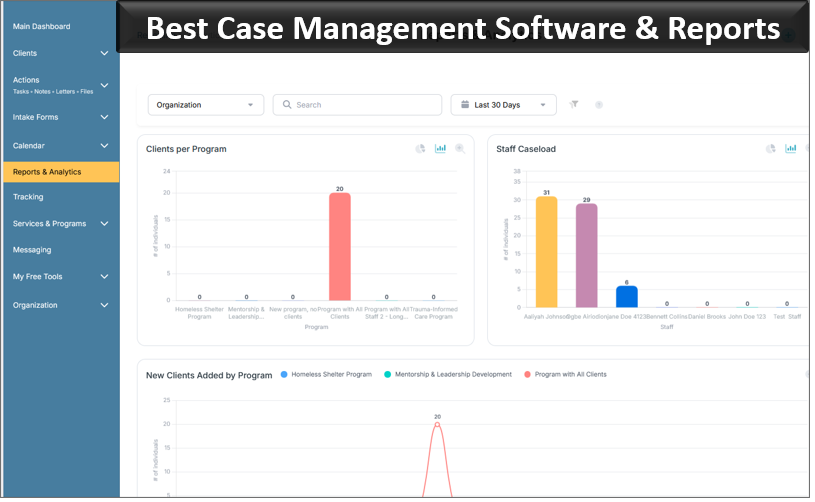
Note: Content on this website (socialworkportal.com) is copyrighted and protected under applicable copyright laws. Unauthorized reproduction, distribution, or use of any content from the website, without explicit written permission, is strictly prohibited. Read: Terms of Use.
Social Work Portal Disclaimer: Social Work Portal is not a social work agency and we do not refer social workers. This web site is provided for educational and informational purposes only and does not constitute providing medical advice or professional social and healthcare services. The information provided should not be used for diagnosing or treating a health problem or disease, and those seeking personal medical advice should consult with ... Read our full disclaimer here: Social Work Portal Disclaimer.