Translating Family Patterns into Measurable Progress
When clients present with refractory anxiety, relational burnout, or somatic panic, they are rarely dealing with an isolated individual crisis. More often, they are carrying the unexpressed grief, defensive adaptations, and implicit survival rules of ancestors they barely knew. As licensed therapists and clinical social workers, we recognize that symptom relief is fleeting when these deep systemic roots remain unexamined.
The traditional family genogram has long been taught in graduate clinical programs as the cornerstone of a comprehensive biopsychosocial assessment, but in everyday practice it often languishes as an academic intake exercise. Clinicians sketch a quick tree on scratch paper, file it into an obscure folder, and rarely revisit it. Diagramming family history does not heal systemic wounds by itself. To break repeating cycles, clinicians must move beyond passive diagramming and apply active, trauma-informed genogram psychology. This guide outlines how to uncover covert generational trauma, guide clients through Bowenian de-triangulation, and convert complex systemic assessments into structured, measurable clinical workflows.
Let’s get started
Watch this video:
or
read the guide below.
What You’ll Learn in This Guide
- Clinical Vignette Integration: How to trace transgenerational trauma across three generations using a real-world case formulation.
- Covert Pattern Identification: How to spot unwritten family loyalty scripts, somatization, and parentification using standardized notation.
- Bowenian Differentiation Protocols: Concrete clinical scripts to dismantle dysfunctional emotional triangles and resolve chronic cutoffs.
- Administrative Workflow Streamlining: How modern digital tools eliminate paperwork bottlenecks, fragmented charts, and documentation delays.
- Structured Clinical Documentation: How to write rigorous, audit-proof DAP and SOAP notes that capture systemic interventions and measure cycle-breaking goals.
💡All-in-one Case Management Software.
Everything in one place: clients, notes, forms, appointments, reports, and outcomes.
👉 Try it Free - No credit card needed
What Is the Psychology Behind Transgenerational Trauma in Family Systems?
Transgenerational trauma occurs when chronic stress, attachment injuries, and catastrophic life disruptions pass across ancestral lines without narrative integration. While intergenerational trauma often describes direct behavioral modeling between parent and child, transgenerational transmission operates largely beneath conscious awareness. It travels through unspoken family myths, somatic distress patterns, and implicit loyalty contracts.
Grounded in the clinical principles of Bowen Family Systems Theory and Differentiation and Ivan Boszormenyi-Nagy’s contextual model, family systems naturally seek emotional equilibrium. When a catastrophic stressor strikes an earlier generation (such as sudden bankruptcy, displacement, war, severe domestic abuse, or maternal mortality), the system develops rigid defense mechanisms to survive. If that primary trauma remains unmourned, the adaptive defense becomes an invisible household rule.
Consider a practical clinical scenario:
Case Study: Jennifer (Age 34) Jennifer sought individual therapy for persistent generalized anxiety, work exhaustion, and paralyzing guilt whenever setting basic boundaries with her romantic partner. On paper, her life was stable. However, she reported feeling an overwhelming compulsion to monitor everyone’s emotional state, describing herself as the sole emotional buffer in her household.
In systemic terms, Jennifer was not just experiencing generalized anxiety. She was acting as an emotional shock absorber. Her hypervigilance was a legacy survival adaptation developed two generations earlier. Without an objective systemic map, clients like Jennifer believe their anxiety is a personal pathology. Genogram psychology externalizes this struggle, showing clients that their symptoms originated as necessary survival strategies for an overwhelmed family system.
How Do Clinicians Map Intergenerational Trauma Across Three Generations?
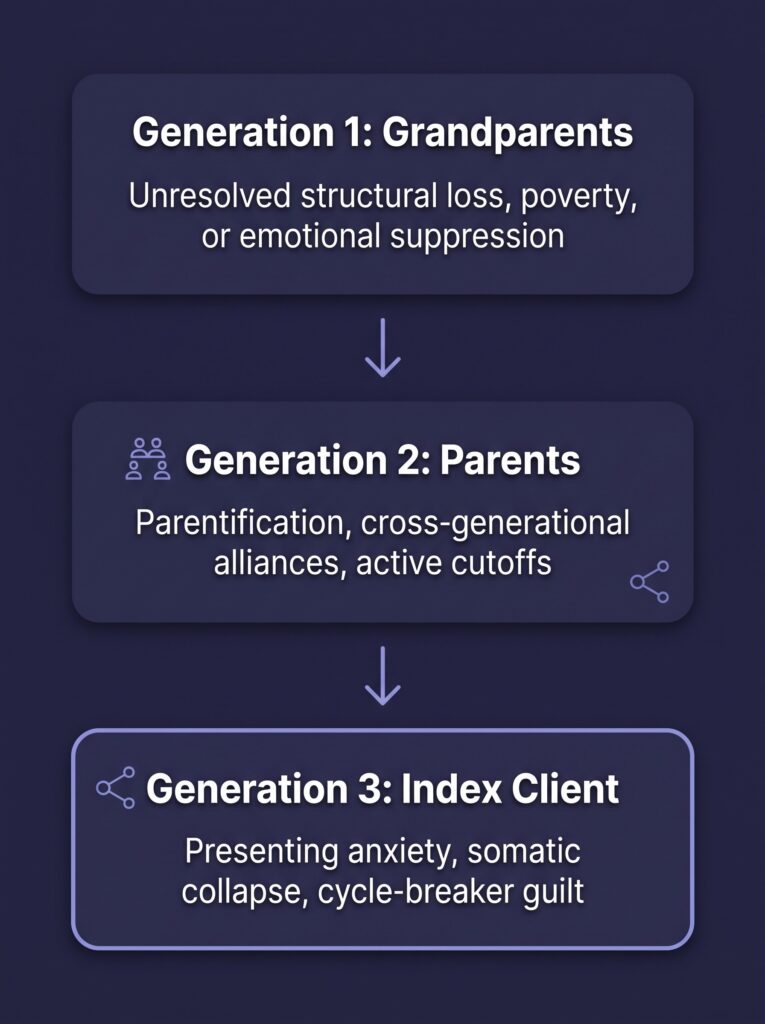
Mapping transgenerational trauma requires an intentional, three-tiered clinical interview. Clinicians must gather biological markers, historical timelines, and emotional relationship lines across grandparents, parents, and the index client.
1. Visual Architecture and Emotional Coding
Standard genogram conventions use squares for males, circles for females, and diagonal crosses for deceased relatives. Clinicians needing a refresher on foundational shapes and structural rules should consult our step-by-step clinical genogram construction guide before adding complex relational notation. Trauma mapping depends on accurate relational lines drawn between figures:
- Fused or Enmeshed Relationships: Three parallel horizontal lines showing a lack of psychological boundaries and high emotional reactivity.
- Conflictual Bonds: Jagged zigzag lines indicating overt, recurring hostility.
- Fused and Conflictual: Overlaid parallel lines and zigzags, common in trauma bonds and codependent partnerships.
- Estrangements and Cutoffs: A solid line broken by single or double vertical hash marks, showing physical or emotional withdrawal.
In Jennifer’s case, mapping her maternal lineage immediately unlocked the systemic architecture:
- Maternal Grandfather: Struggled with chronic, unacknowledged alcohol dependence following wartime displacement, dying suddenly in his early forties.
- Maternal Grandmother: Responded to her husband’s volatility by adopting rigid, hyper-controlling emotional suppression. She parentified her eldest daughter (Jennifer’s mother, Maria), demanding emotional caretaking and absolute compliance.
- Mother (Maria): Grew up feeling chronically unloved and unprotected. Maria internalized the rule that personal needs invite rejection. When Maria married, she replicated this enmeshment by pulling Jennifer into an intense cross-generational alliance, treating Jennifer as a surrogate confidante rather than a daughter.
2. Identifying Cumulative Trauma Prevalence
Systemic dysfunction rarely occurs in isolation. According to the CDC Adverse Childhood Experiences (ACEs) Data, 64% of surveyed adults reported experiencing at least one ACE category before age 18, with one in six adults experiencing four or more types of childhood adversity.
When high ACE scores cluster across three generations, clinicians observe distinct clinical signatures:
- Substance Use Clusters: Self-medication passed down as an acceptable coping tool for unprocessed grief.
- Somatic Manifestations: Unexplained autoimmune conditions, chronic pelvic pain, migraines, and GI dysregulation appearing in individuals who carry systemic family secrets.
- Relational Enactments: Repeating patterns of choosing emotionally distant or volatile partners to recreate familiar childhood anxiety loops.
3. Deploying Circular and Systemic Inquiry
Clinicians must avoid passive data entry during genogram construction. When mapping a genogram collaboratively with a client, use circular questioning to activate client insight in real time:
- “When your maternal grandmother withdrew emotionally, who was expected to cheer her up?”
- “Who held the anger in that household, and who carried the quiet depression?”
- “Jennifer, looking at this visual line connecting your mother and grandmother, who gave your mother permission to be an independent child?”
- “If you decide to step back from managing your mother’s daily anxiety, whose story are you rewriting?”
👉 Try it Free - Free Case Management System
How Can Practitioners Break Triangles and Resolve Emotional Cutoffs?
Once family dynamics are mapped on paper or screen, the genogram becomes an intervention framework. Two primary systemic forces prevent clients from breaking cycles: triangulation and reactive cutoffs.
De-Triangulation Protocols
Triangulation occurs when two individuals in tension pull a third person into their relationship to stabilize their own anxiety. In Jennifer’s family, her mother (Maria) and father were in chronic conflict. Instead of confronting her husband, Maria channeled her marital frustration into Jennifer, seeking daily comfort and reassurance.
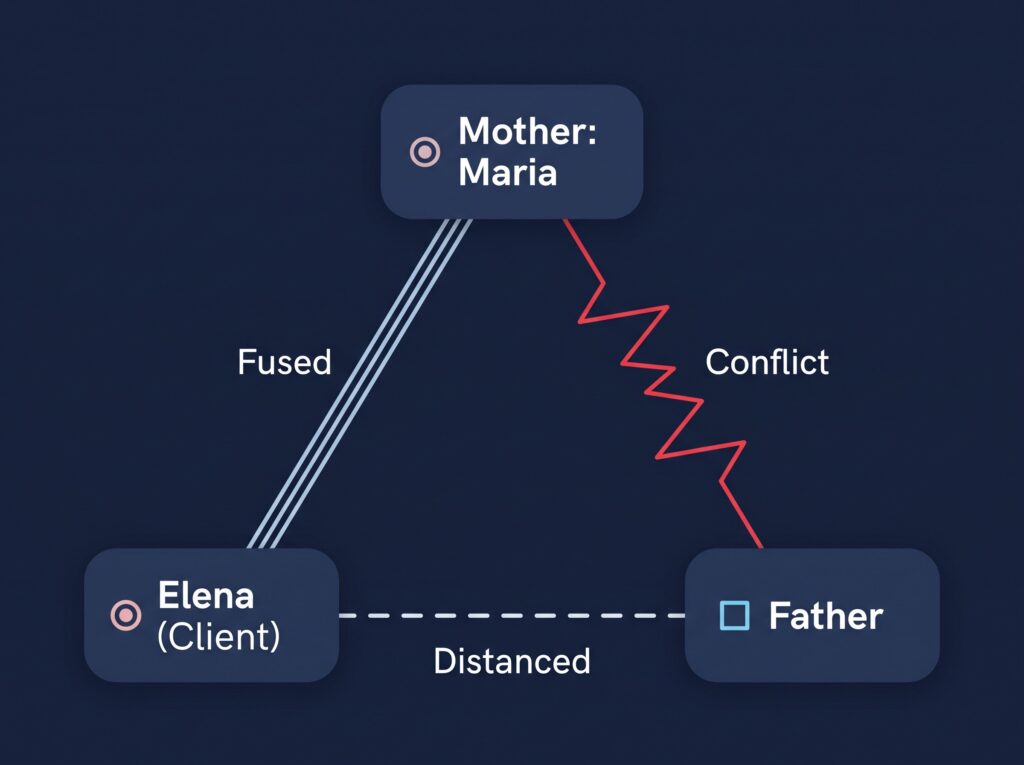
To help Jennifer de-triangulate, the clinician used a three-step intervention:
- Visualizing the Triangle: The clinician showed Jennifer the diagram: “Notice how every time Mom and Dad argue, Mom calls you with an emotional emergency. You take the burden, their tension subsides, and you carry the physical panic into your work week.”
- Neutral Differentiation Scripts: Jennifer practiced clear verbal boundaries to redirect parental communication without hostility:
- “Mom, I know you are frustrated with Dad, but that is a conversation you two need to have directly. I love you both too much to step in the middle.”
- Tolerating Systemic Backlash: When a client stops absorbing tension, the family system inevitably pushes back, often using guilt (“You have changed,” or “You are abandoning the family”). Clinicians must prepare clients for this backlash, framing it as proof that the system is feeling the boundary, rather than proof that the client has done something wrong.
Resolving Cutoffs Through Differentiation
Many cycle-breakers assume that severing all ties is the ultimate expression of strength. However, Murray Bowen emphasized that emotional cutoffs often mask intense reactivity. An angry, reactive estrangement keeps the individual emotionally bound to the family system because their internal identity is still determined by rebellion against family rules.
Unless physical safety or severe abuse necessitates complete estrangement, clinicians should help clients cultivate differentiation of self. Tracking this emotional stability aligns with established frameworks for measuring success in trauma-informed care. Clinicians focus on developing an “I-position” (stating clear limits without attacking or defending), remaining calm in the field of anxiety, and using graduated, structured contact.
- Developing an “I-Position”: Stating personal beliefs, values, and limits clearly without attacking or defending.
- Remaining Calm in the Field of Anxiety: Training the client through nervous system regulation techniques so they can remain physically present at family gatherings without absorbing collective tension.
- Graduated, Structured Contact: Establishing safe, time-limited interactions (such as meeting at a neutral restaurant for one hour rather than staying overnight at a family home) to practice holding boundaries in real time.
All-in-One Case Management Software
Sign Up Today, Free
No credit card needed!
Do You Have a Team? | ||
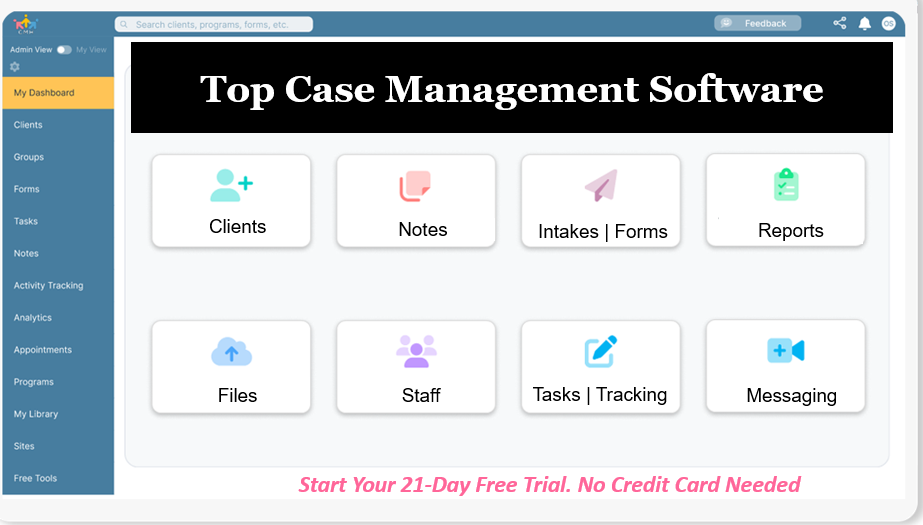
Our best all-in-one client and top case management software simplifies everything from client intake and assessments to programs, projects, goals tracking, planning, scheduling, documentation, reporting dashboard, and progress tracking.
How Digital Tools Streamline Genogram Psychology and Clinical Workflows
While the clinical theory behind genogram psychology is transformative, real-world execution often collapses under administrative strain. Clinicians frequently draw genograms on notepads or dry-erase boards, leaving essential multi-generational insights isolated from formal case files. Tracking extended kinship networks, documenting complex family sessions, and monitoring long-term treatment milestones across paper charts wastes valuable clinical hours and increases compliance vulnerabilities.
Integrating modern digital operations platforms turns static diagrams into structured, actionable case data:
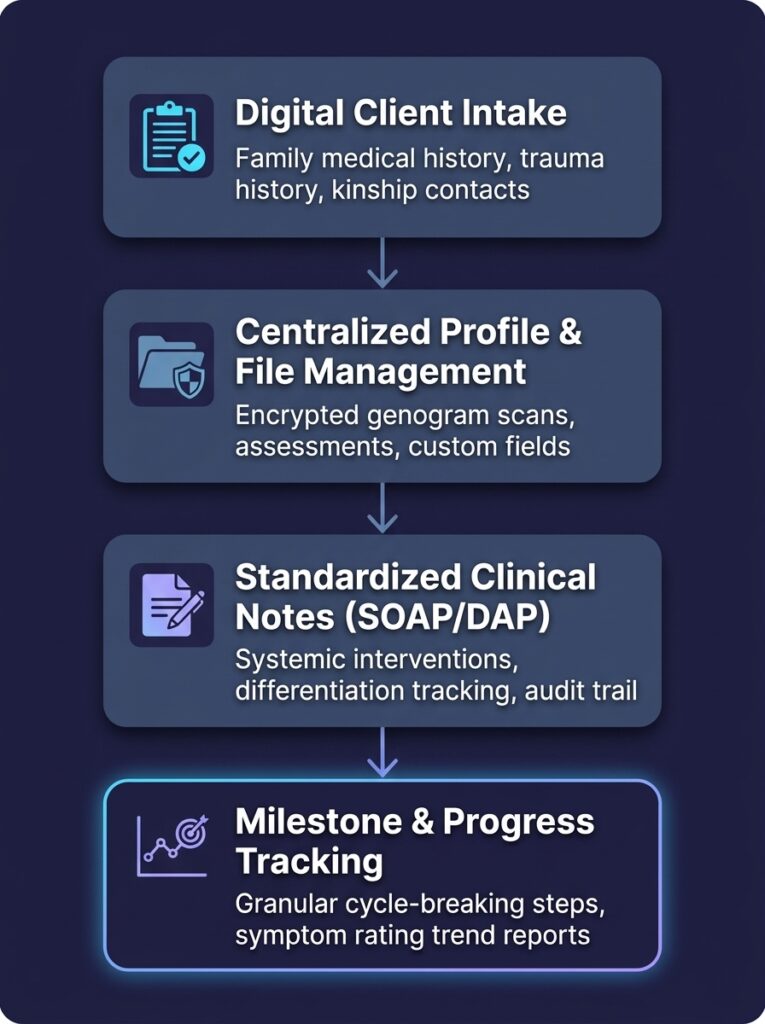
- Intake Automation and Kinship Records: Instead of manually retyping family structures, clinics deploy digital intake questionnaires through a secure client portal. Family members, household contacts, emergency connections, and medical histories populate directly into centralized client profiles.
- Centralized Diagram and File Security: Hand-drawn genograms or digital diagrams can be scanned, uploaded, and organized into dedicated, autogenerated client file repositories. This eliminates lost paper charts and ensures full HIPAA compliance with automatic audit logging.
- Structured Clinical Note Generation: Documenting systemic interventions requires linking family insights directly to billing codes and treatment plans. Pre-built SOAP and DAP note templates allow therapists to document Bowenian de-triangulation, family script dismantling, and somatic interventions in minutes.
- Actionable Milestone and Outcome Tracking: Breaking ancestral cycles requires concrete, measurable goals. Digital platforms allow clinicians to establish treatment goals with incremental steps (such as “Maintain verbal boundaries during Sunday phone call” or “Complete 3 weekly somatic grounding practices”), marking steps complete as clients advance. Furthermore, standardized rating scales can be administered periodically, allowing providers to focus on matching GAD-7 scores to clinical interventions as clients work through inherited somatic hypervigilance.
Comparison: Manual Family Systems Workflows vs. Automated Digital Systems
| Workflow Stage | Traditional Manual Workflow | Modern Automated Platform |
| Intake & History Gathering | Paper intake packets mailed or handed out; manual re-entry of family data into electronic charts. | Encrypted digital forms sent via secure client portal; auto-syncs demographic data straight to client record. |
| Diagram File Management | Physical paper genograms filed in metal cabinets; unencrypted scans saved locally on individual desktops. | Centralized, HIPAA-compliant document repositories with autogenerated client folders and role permissions. |
| Progress Documentation | Free-text narrative notes written after hours; inconsistent structure lacking clear intervention milestones. | Standardized DAP/SOAP templates with built-in custom fields and integrated time tracking for billing. |
| Goal & Boundary Tracking | Vague mental notes or handwritten treatment plans reviewed sporadically every six months. | Discrete digital goal steps marked complete across sessions with visual progress reports for clients. |
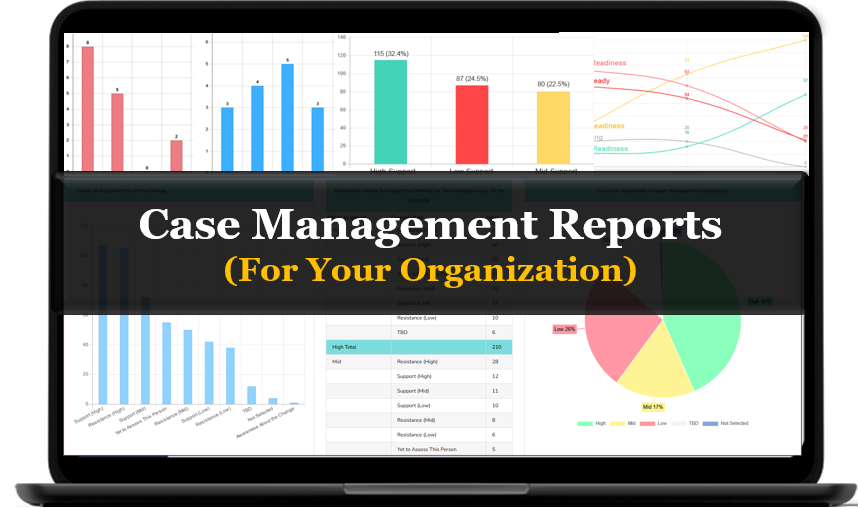
| Symptom Outcome Monitoring | Paper questionnaires hand-scored and manually calculated; outcome trends buried in narrative charts. | Automated digital rating fields with longitudinal trend reports and risk alerts for clinical supervisors. |
| Team Coordination | Informal hallway updates; insecure inter-office emails; high risk of boundary or confidentiality breaches. | Role-based permissions, automated internal staff alerts, and secure guest access for referral partners. |
How Do You Document Genogram Psychology Interventions in Clinical Notes?
Third-party payers, state licensing boards, and the NASW Code of Ethics and Clinical Standards require clear proof of medical necessity, specific therapeutic interventions, and measurable progress toward treatment goals. Avoid generic documentation such as “Therapist discussed family history with client.” For complete structural templates and case samples, review our specialized guide on writing clinical notes from a genogram. Systemic documentation must detail the relational dynamics, client reactions, and assigned behavioral steps.
Sample Clinical Progress Note (DAP Format)
- Description (Data): Clinician conducted a 50-minute individual psychotherapy session focused on transgenerational trauma and differentiation of self. Clinician and client reviewed Jennifer’s 3-generation maternal genogram, specifically evaluating the emotional triangle between client, mother, and father. Client identified somatic tightness in chest (rated 6/10) when discussing weekly boundary setting. Clinician facilitated in-session role-play of an “I-position” boundary statement to redirect maternal complaints regarding marital discord. Client successfully rehearsed boundary script twice without defensive over-explaining.
- Assessment: Client is demonstrating increased clinical insight regarding the connection between inherited maternal loyalty rules and current generalized anxiety. While client previously relied on avoidance and reactive emotional cutoffs, she is beginning to tolerate the emotional discomfort of holding clear interpersonal boundaries. Client exhibits moderate differentiation of self with low risk of symptom decompensation.
- Plan: Client will implement the rehearsed verbal boundary if mother initiates triangulation regarding marital conflict this week. Client will log somatic activation and grounding exercises in her client portal journal. Clinician to review milestone progress and advance boundary maintenance work during next scheduled session on November 3.

People Also Ask
What is the primary difference between a family tree and a clinical genogram?
A family tree simply records biological lineages, marriages, and dates of birth or death. A clinical genogram maps psychological functioning, emotional relationship qualities (such as enmeshment, estrangement, and conflict), medical diagnoses, trauma histories, and behavioral patterns across three or more generations.
How does Bowenian family therapy explain generational trauma?
Bowen theory posits that emotional anxiety and unresolved conflict are transmitted across generations through the multi-generational transmission process. When individuals fail to differentiate from their family of origin, they unconsciously select partners with similar levels of differentiation, passing identical or magnified relational dysfunction down to their children.
What does an emotional triangle look like on a genogram?
An emotional triangle appears as a three-sided closed geometric connection between three family members or two family members and an issue. Typically, it features two individuals experiencing relational tension (indicated by a zigzag line) who channel their stress toward a vulnerable third individual via enmeshed parallel lines.
Can genogram psychology help adult cycle-breakers heal without family reconciliation?
Yes. Cycle-breaking is defined by an individual’s internal differentiation of self rather than external family dynamics. By understanding systemic roots on a genogram, clients can stop participating in dysfunctional dynamics, cultivate independent values, and heal personal trauma even if family members remain hostile or refuse contact.
Why do clinicians document ACE scores alongside genogram mapping?
Documenting Adverse Childhood Experience (ACE) scores alongside genograms provides an evidence-based measure of cumulative developmental stress. It helps clinicians connect historical family adversity directly to current chronic illnesses, mental health conditions, and behavioral patterns.
How do modern EHR systems keep family genogram records secure?
Modern platforms store genograms and family assessments within encrypted, access-controlled environments that meet HIPAA and state privacy regulations. They employ automated role-based permissions, data encryption in transit and at rest, and detailed audit logs to ensure only authorized care team members access sensitive family records.
Streamline Your Clinical Workflows with Case Management Hub
Uncovering transgenerational trauma demands deep therapeutic attunement, active listening, and rigorous diagnostic formulation. Clinicians should not have to spend their evenings fighting clunky administrative systems, re-entering family history across disconnected forms, or hunting through physical charts.
Case Management Hub provides an all-in-one, HIPAA-compliant platform designed to simplify clinical case management and documentation.
- Comprehensive Client Records: Centralize family demographics, extended kinship networks, and trauma assessments within one intuitive client profile.
- Pre-Built Clinical Note Templates: Complete audit-proof SOAP and DAP notes in minutes using structured templates that link directly to billing and tracking.
- Goal & Milestone Tracking: Break overwhelming cycle-breaking goals into clear, measurable steps, giving clients a visual roadmap of their therapeutic progress.
- Encrypted File Repositories: Upload and store clinical genograms, family scans, and assessment PDFs within autogenerated, secure client file folders.
- Automated Rating Scale Trends: Distribute standardized intake and symptom rating forms (such as the GAD-7 and PHQ-9) and automatically track client outcome trends over time.
Spend less time on administrative busywork and more time helping clients break generational cycles.
Start your 21-day free trial of Case Management Hub today. No credit card required, instant setup.
Frequently Asked Questions (FAQs)
How many generations must be evaluated to identify transgenerational trauma?
A thorough clinical genogram requires a minimum of three full generations: the index client, their parents, and their maternal and paternal grandparents. Examining three tiers allows clinicians to distinguish between isolated situational stress and entrenched systemic patterns that repeat across decades.
How can a clinician introduce genogram mapping without triggering defensive resistance?
Frame the exercise as an objective diagnostic map rather than a critical assessment of the client's parents. Use non-pathologizing language: Every family develops unique operational rules to survive difficult times. By mapping your family system across three generations, we can see which survival strategies you inherited so you can consciously decide which ones serve you today.
How do clinicians prevent client retraumatization when exploring painful ancestral histories?
Establish somatic stabilization and emotional containment skills before mapping traumatic lineages. Inform the client that they remain in complete control of the pacing and disclosure depth. If autonomic arousal spikes (indicated by rapid breathing, cognitive dissociation, or muscle bracing), immediately pause the structural mapping to engage in grounding and sensory regulation exercises.
Is digital storage of genograms compliant with federal privacy regulations?
Yes, provided the software vendor satisfies all HIPAA Security Rule mandates. The platform must sign a formal Business Associate Agreement (BAA), maintain end-to-end encryption for stored documents, enforce granular role-based access permissions, and generate immutable audit logs tracking user activity.
What should a therapist do if a client has no knowledge of their biological family?
For adopted individuals, foster alumni, or estranged clients who lack biological background, construct a dual-track genogram. Map the known structural elements of their adoptive or foster family system, and create an adjacent, open branch to explore the client's internal fantasies, emotional meanings, and ambiguous loss surrounding their missing biological lineage.
How can clinical supervisors utilize genograms during case consultation?
Supervisors can review genograms to help clinicians identify countertransference triggers. When a clinician becomes overly invested in rescuing an index client or feels uncharacteristic irritation toward a client's parent, mapping parallel processes reveals where the client's family dynamics intersect with the clinician's own family-of-origin scripts.
👉 Try it free today - No credit card needed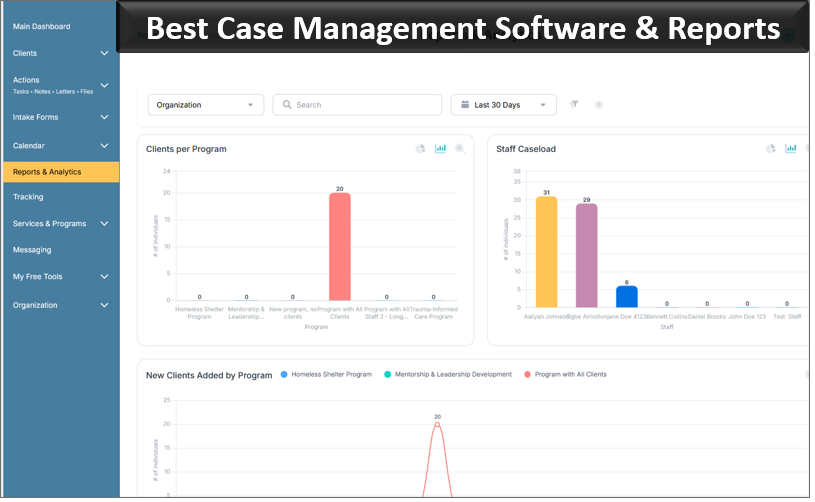
Note: Content on this website (socialworkportal.com) is copyrighted and protected under applicable copyright laws. Unauthorized reproduction, distribution, or use of any content from the website, without explicit written permission, is strictly prohibited. Read: Terms of Use.
Social Work Portal Disclaimer: Social Work Portal is not a social work agency and we do not refer social workers. This web site is provided for educational and informational purposes only and does not constitute providing medical advice or professional social and healthcare services. The information provided should not be used for diagnosing or treating a health problem or disease, and those seeking personal medical advice should consult with ... Read our full disclaimer here: Social Work Portal Disclaimer.