From Degree to Licensure: A Complete Roadmap to Launching Your Career
Youth and family social workers serve as essential pillars of support for children and caregivers navigating complex social systems. Whether helping a family overcome crisis, assisting youth in foster care, or coordinating community resources, these dedicated professionals create lasting stability for vulnerable populations.
If you are an undergraduate student, a community mentor, or a career switcher looking for a meaningful field, this guide outlines the practical steps required to build a fulfilling career in social work.
Let’s get started
Watch this video:
or
read the guide below.
What You Will Learn in This Guide
- Educational pathways comparing BSW, MSW, and related degrees
- Essential field experiences and practical skill requirements
- Step-by-step state licensing and certification pipelines
- Career advancement strategies for paraprofessionals and mentors
- Key operational tools that streamline case management and daily workflows
💡All-in-one Case Management Software.
Everything in one place: clients, notes, forms, appointments, reports, and outcomes.
👉 Try it Free - No credit card needed
What Does a Youth and Family Social Worker Actually Do?
Child and family social workers protect vulnerable children, strengthen family units, and connect individuals with critical community resources. Daily responsibilities range from conducting safety assessments and home visits to coordinating foster care placements and facilitating family counseling.
According to data from the U.S. Bureau of Labor Statistics, over 399,000 child, family, and school social workers are currently employed across the United States. The overall field is projected to grow consistently through 2034, driven by the ongoing need to support child welfare initiatives and family stabilization services.
While the emotional rewards are significant, case management involves complex logistics. Social workers spend substantial time maintaining case notes, tracking goals, and managing documentation across multi-member family units.
BSW vs MSW: Which Degree Path Fits Your Career Goals?
Choosing the right educational path is a critical first decision. While related degrees in psychology, sociology, or human services provide strong foundational knowledge, specialized social work degrees open specific professional doors.
| Degree Level | Primary Roles | Licensing Potential | Career Trajectory |
| Bachelor of Social Work (BSW) | Entry-level case manager, youth advocate, intake coordinator | Licensed Baccalaureate Social Worker (LBSW) where recognized | Direct service, agency coordination, foundational field work |
| Master of Social Work (MSW) | Clinical therapist, program director, family counselor, supervisor | Licensed Master Social Worker (LMSW), Licensed Clinical Social Worker (LCSW) | Clinical practice, administrative leadership, advanced policy work |
A Bachelor of Social Work (BSW) allows graduates to enter the workforce immediately in entry-level positions. For individuals holding degrees in psychology or sociology, pursuing an MSW provides an efficient transition into specialized practice. Many accredited MSW programs offer traditional two-year tracks for candidates with non-social work bachelor’s degrees, as well as advanced standing options for BSW holders.
👉 Try it Free - Free Case Management System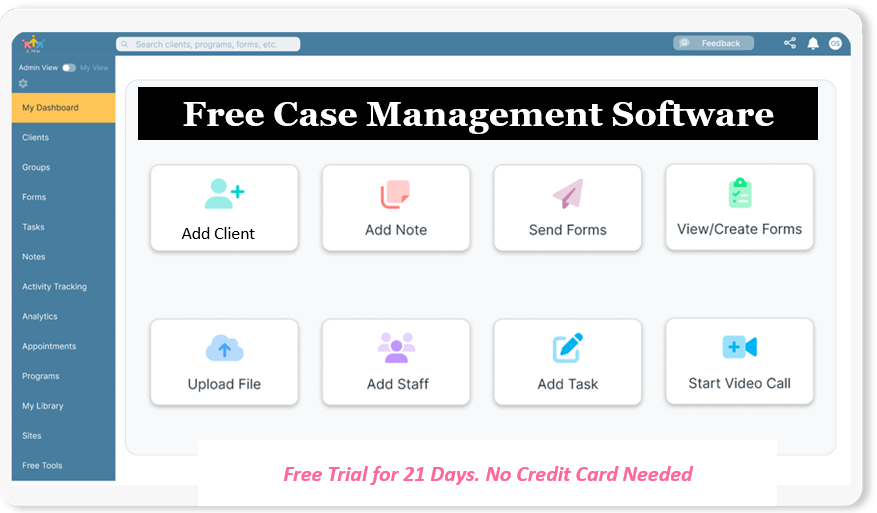
How Do You Navigate the Path From Paraprofessional to Licensed Professional?
Transitioning from a paraprofessional or youth mentor role into a fully credentialed social worker requires strategic planning around education, field experience, and licensing exams.
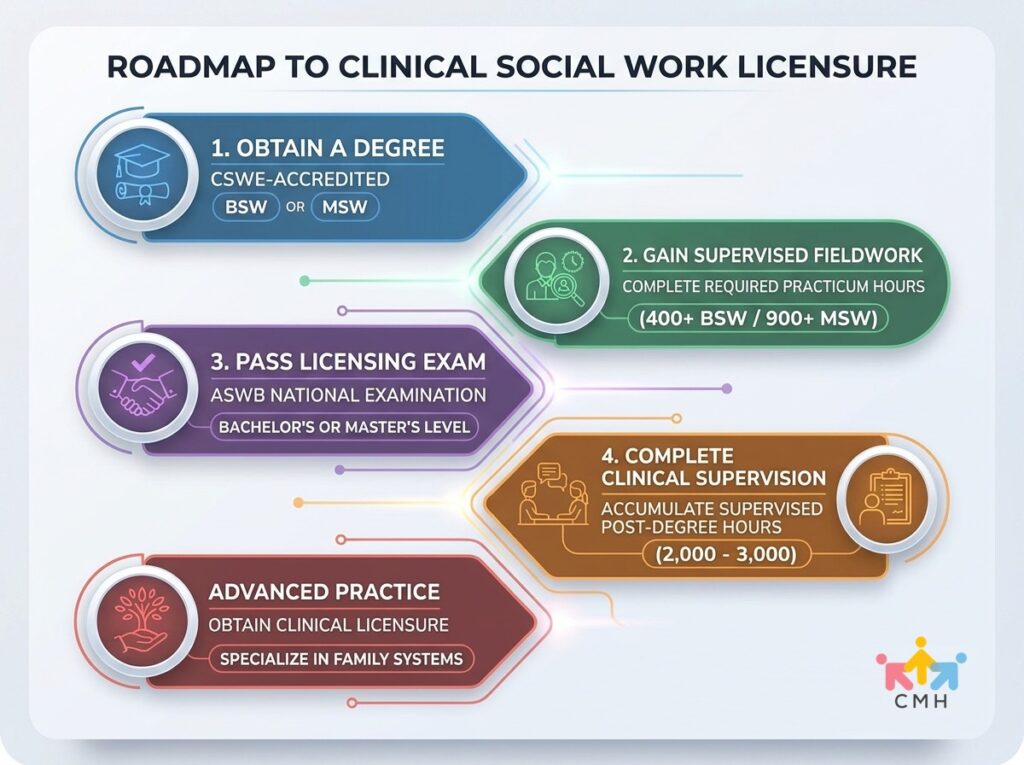
- Earn an Accredited Degree: Ensure your BSW or MSW program is accredited by the Council on Social Work Education (CSWE). Accreditation is a prerequisite for state licensing.
- Complete Required Field Experience: BSW programs require at least 400 hours of supervised field placement, while MSW programs require at least 900 hours.
- Pass the Board Examination: Take the appropriate Association of Social Work Boards (ASWB) exam for your targeted license level.
- Complete Supervised Clinical Hours (For LCSW): Clinical licensure requires 2,000 to 3,000 hours of post-master’s supervised experience in direct clinical work.
What Key Skills Are Needed for Child and Family Social Services?
Success in social work depends on a balance of interpersonal empathy and rigorous administrative organization.
- Active Listening & Assessment: Evaluating family dynamics, identifying trauma responses, and assessing immediate safety needs.
- Crisis De-escalation: Managing high-stress situations calmly and safely during emergency home visits or intake evaluations.
- Cultural Responsiveness: Working respectfully with families from diverse socioeconomic, cultural, and linguistic backgrounds.
- Systemic Documentation: Maintaining accurate, time-stamped case records, legal reports, and progress notes that comply with regulatory standards.
Do You Have a Team? Our best all-in-one client and top case management software simplifies everything from client intake and assessments to programs, projects, goals tracking, planning, scheduling, documentation, reporting dashboard, and progress tracking.All-in-One Case Management Software
Sign Up Today, Free
No credit card needed!
How Can You Smoothly Transition Into Social Work From Another Career?
Career changers bring valuable life experience and soft skills to human services. If you are moving from education, healthcare administration, or public sector work, your skills in communication and project coordination translate directly.
To make a smooth transition:
- Volunteer with Local Agencies: Gain hands-on exposure through youth mentorship programs, family shelters, or crisis hotlines.
- Leverage Non-Profit Roles: Target entry-level positions in community organizations that do not strictly require an MSW at start-up.
- Enroll in an Online or Evening MSW: Many universities offer flexible graduate programs designed for working professionals.


People Also Ask
What is the difference between a child welfare worker and a family social worker?
Child welfare workers specifically focus on child protection, safety investigations, and foster care placements within state or county agencies. Family social workers take a broader systemic approach, offering family therapy, parenting support, and resource connection across non-profit and community settings.
Can I become a youth and family social worker with a psychology degree?
Yes. A psychology degree qualifies you for many entry-level human services roles. To become a licensed social worker, you can apply directly to a Master of Social Work (MSW) program, which accepts applicants with non-social work undergraduate degrees.
How long does it take to become a Licensed Clinical Social Worker (LCSW)?
It typically takes 6 to 8 years: 4 years for a bachelor’s degree, 2 years for an MSW, and 2 to 3 years of post-graduate supervised clinical hours.
What entry-level jobs are available in youth and family social services?
Common entry-level positions include case management aide, youth residential specialist, family support worker, intake coordinator, and community outreach specialist.
What is the median salary for child and family social workers?
According to the U.S. Bureau of Labor Statistics, the median annual wage for child, family, and school social workers is approximately $58,570, with variations based on geographic location, education level, and sector.
What tools do social workers use to manage daily documentation?
Social workers rely on secure, HIPAA-compliant case management systems to maintain client notes, track goals, store files, send secure communications, and schedule appointments.
Streamlining Your Daily Practice with Case Management Hub
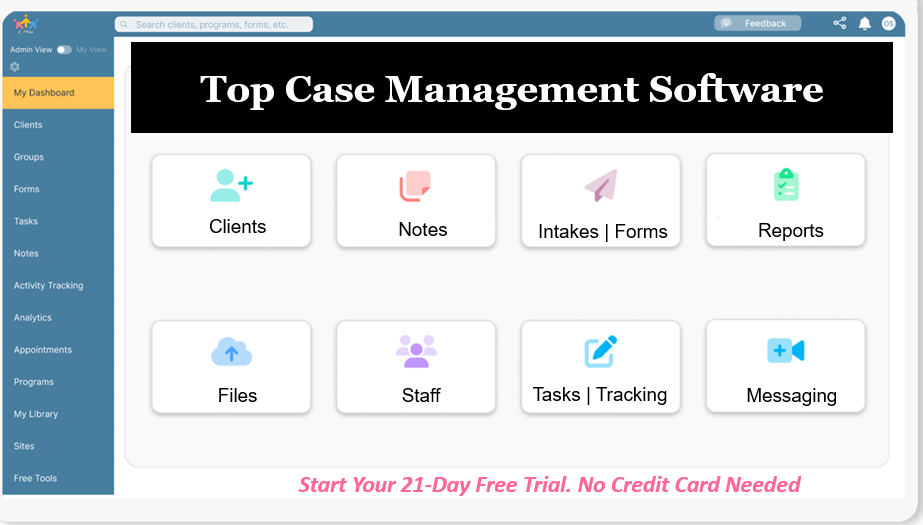
Managing client caseloads, intake forms, and progress notes efficiently allows social workers to spend more time supporting families and less time behind a desk. Case Management Hub offers an intuitive, all-in-one case management software designed specifically for social workers, non-profits, and human service agencies.
From HIPAA-compliant document storage and standardized SOAP/DAP note templates to secure messaging, appointment scheduling, and outcome tracking, the platform centralizes your core administrative workflows in one place.
To create a SOAP note in Case Management Hub:
Step 1:
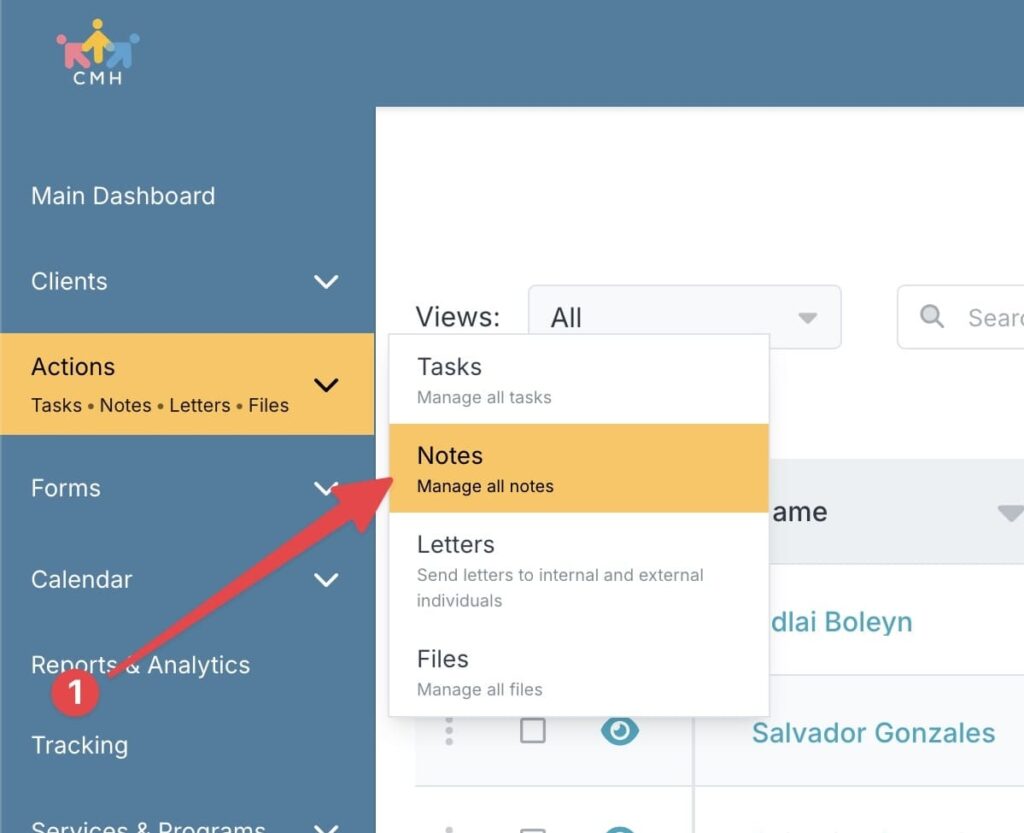
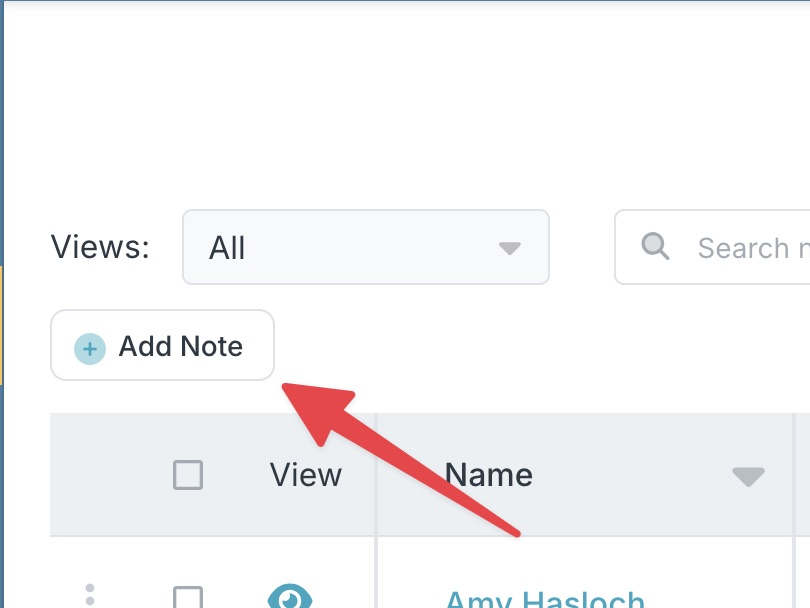
Navigate to the Notes module from the sidebar and click Add Note
Step 2:
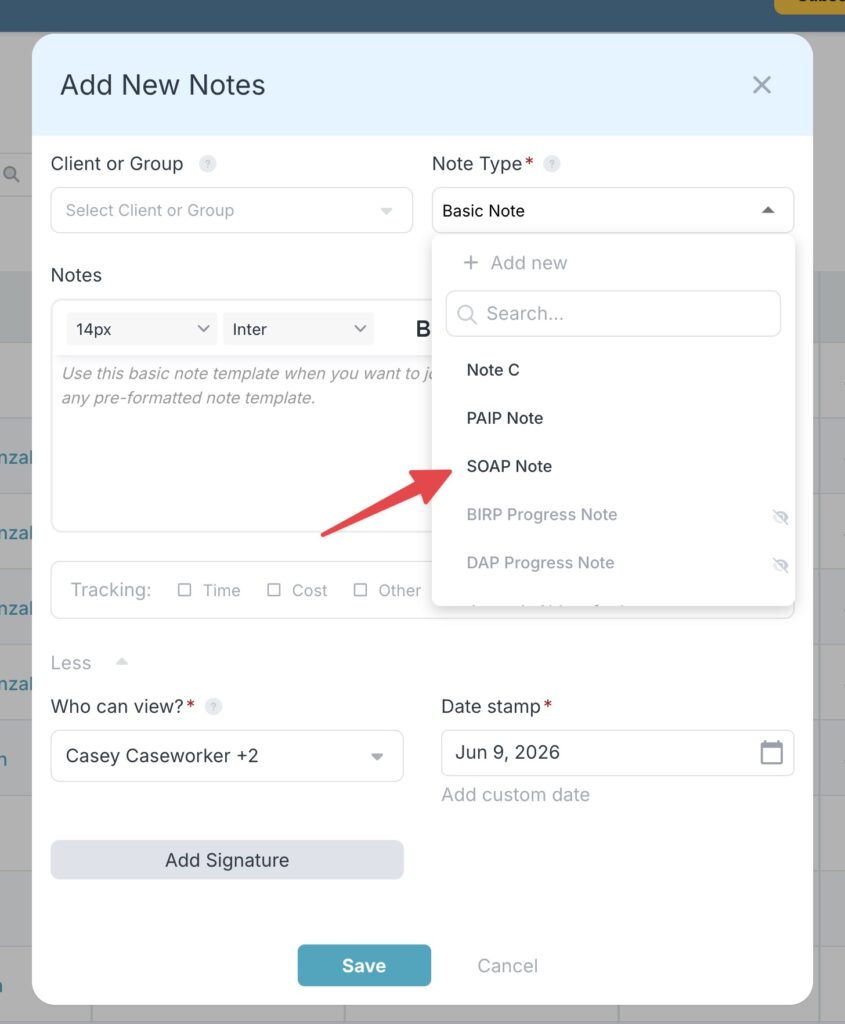
From the note type dropdown select the SOAP note template
Step 3:
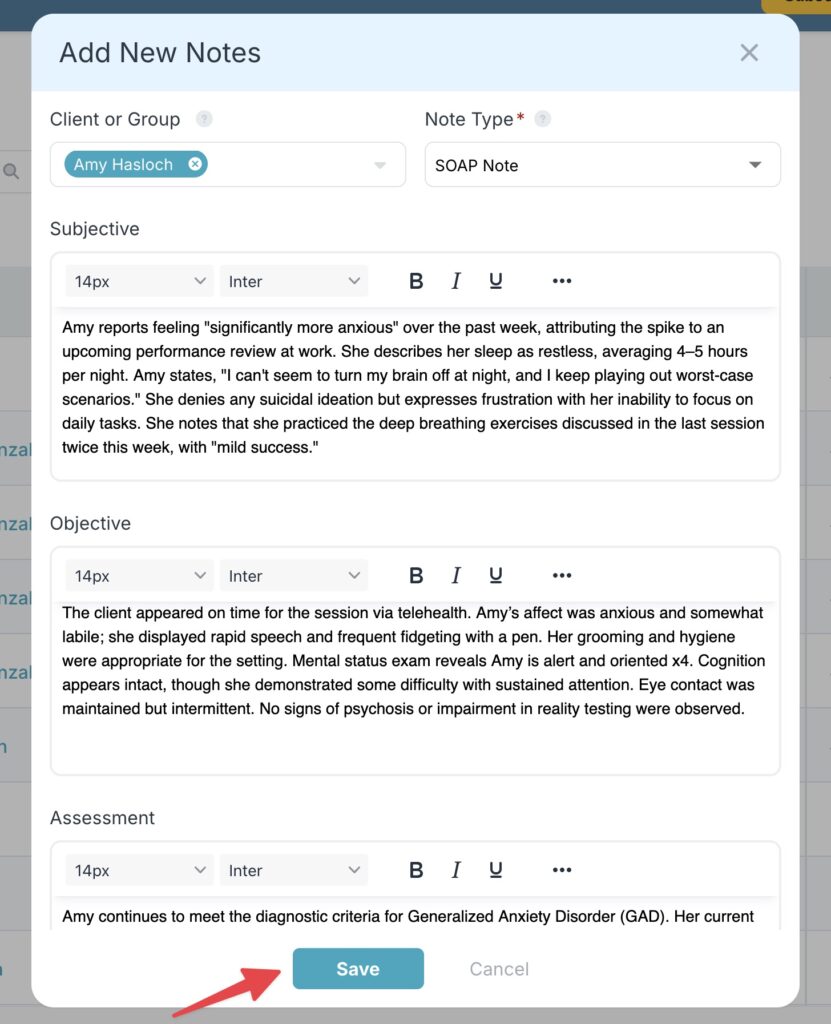
Add your note details to the four sections of the SOAP note, select the client, and then click save.
Step 4:
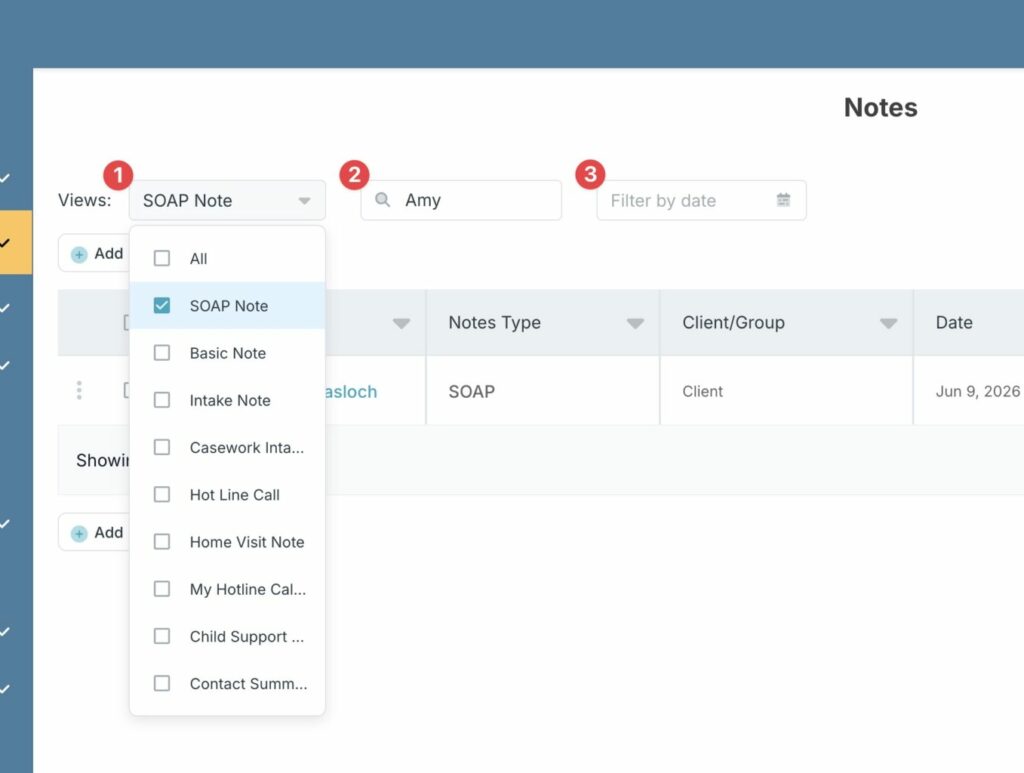
View, search and filter all of your client notes, including the SOAP notes in one place.
Step 5:
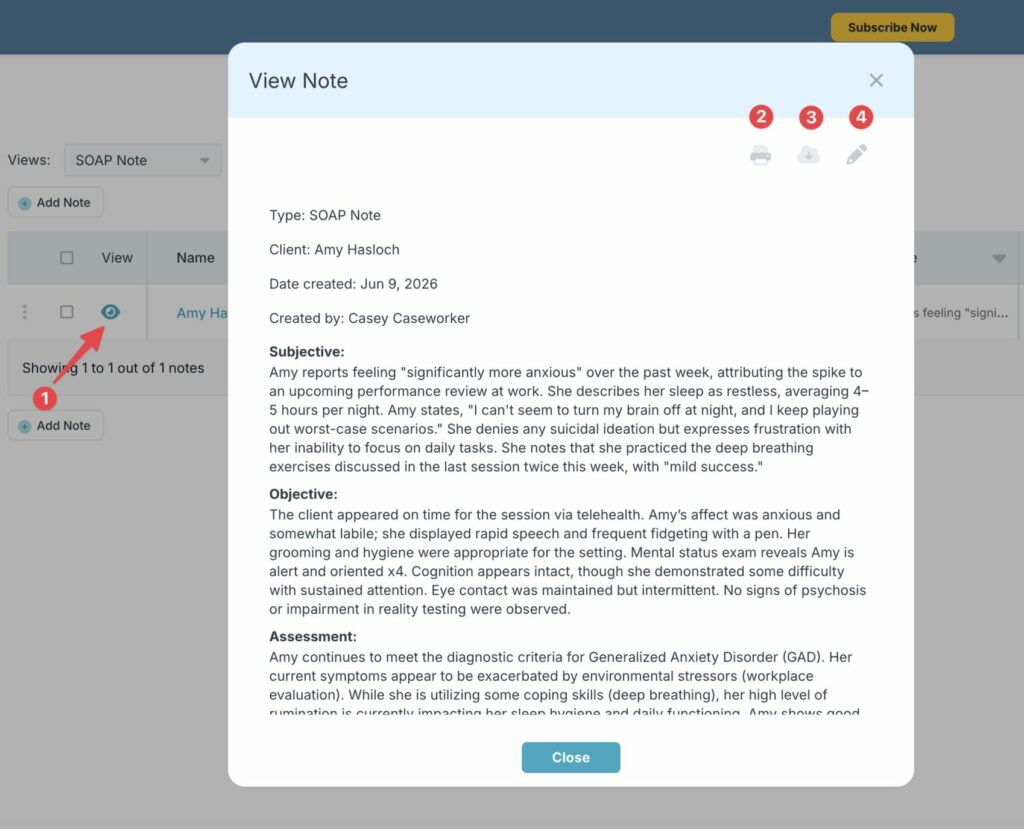
Click the eye icon to view or edit the details of the note
Ready to simplify your case management operations? Sign up for a free 21-day trial of Case Management Hub today – no credit card required!
Frequently Asked Questions
Do I need a license to work in youth and family services?
Not all positions require a license. Entry-level case management and community mentorship roles often require only a bachelor's degree. However, clinical counseling, independent practice, and supervisory roles require state licensure (LMSW or LCSW).
What is the job outlook for youth and family social workers?
Employment outlook remains strong. Steady demand is driven by the need to support child welfare systems, strengthen family stability, and replace retiring professionals across public and private sectors.
What is advanced standing in an MSW program?
Advanced standing is a fast-track MSW option available to students who hold a CSWE-accredited Bachelor of Social Work (BSW). It allows candidates to complete their master's degree in 1 year instead of 2.
How does case management software benefit non-profit social service agencies?
Dedicated software replaces manual paperwork and spreadsheets with secure cloud storage, standardized intake workflows, automated scheduling, and reporting tools that meet funder and audit requirements.
What is the hardest part of being a youth and family social worker?
Common challenges include handling emotionally demanding cases, navigating bureaucracy, and managing administrative workloads. Strong self-care practices and modern digital organizational tools help mitigate burnout.
Can social workers work in school settings with families?
Yes. School social workers connect families with community resources, address student behavioral challenges, and coordinate support services between academic institutions and home environments.
👉 Try it free today - No credit card needed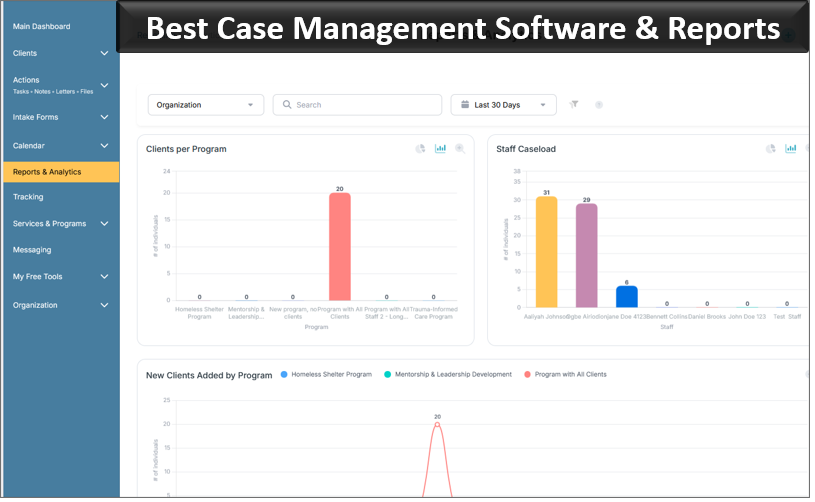
Note: Content on this website (socialworkportal.com) is copyrighted and protected under applicable copyright laws. Unauthorized reproduction, distribution, or use of any content from the website, without explicit written permission, is strictly prohibited. Read: Terms of Use.
Social Work Portal Disclaimer: Social Work Portal is not a social work agency and we do not refer social workers. This web site is provided for educational and informational purposes only and does not constitute providing medical advice or professional social and healthcare services. The information provided should not be used for diagnosing or treating a health problem or disease, and those seeking personal medical advice should consult with ... Read our full disclaimer here: Social Work Portal Disclaimer.