A Step-by-Step Practical Blueprint from Education and Certification to Everyday Clinical Workflow
Case management sits at the operational core of social services and healthcare delivery. Social work case managers bridge systemic gaps for vulnerable individuals, translating clinical goals into tangible community resources, stable housing, medical support, and long-term recovery plans.
Entering this field, however, comes with steep administrative demands. Many professionals enter social services driven by a desire to help people, only to find themselves buried under disorganized paper files, fragmented tracking systems, and cumbersome documentation requirements. Mastering the profession requires two parallel skill sets: clinical competency and efficient administrative operations.
According to data published by the U.S. Bureau of Labor Statistics (BLS), overall employment of social workers is projected to grow by 7 percent from 2023 to 2033, faster than the average for all occupations. This growth translates to roughly 73,000 projected openings each year, fueled by expanding needs in healthcare systems, mental health clinics, and community support agencies.
Securing these roles requires understanding academic requirements, clinical credentials, and modern caseload workflows.
Let’s get started
Watch this video:
or
read the guide below.
What You’ll Learn in This Guide
- How to satisfy standard social work case manager requirements through accredited BSW and MSW pathways.
- What distinguishes a case worker from a case manager in day-to-day operations and career progression.
- Key steps to earn your social work case manager certification C-SWCM and satisfy state licensure mandates.
- Core clinical documentation skills, from conducting biopsychosocial assessments to writing compliant SOAP and DAP notes.
- Proven methods for managing high social work caseloads using structured digital workflows.
- Answers to common practitioner questions about salary expectations, credentials, and ethics compliance.
💡All-in-one Case Management Software.
Everything in one place: clients, notes, forms, appointments, reports, and outcomes.
👉 Try it Free - No credit card needed
What Are the Required Educational Pathways to Enter the Field?
Meeting foundational educational criteria is the first step toward entering professional practice. Most human service agencies require a formal degree accredited by the Council on Social Work Education (CSWE).
Step 1: Complete an Accredited Social Work Degree
- The Bachelor of Social Work (BSW): Completing a BSW prepares candidates for generalist direct-care roles. It is the primary route if you are considering how to become a case manager with a BSW. Programs include structured coursework in human behavior, social welfare policy, and ethics, alongside a minimum of 400 hours of supervised field practicum.
- The Master of Social Work (MSW): An MSW case manager career path opens doors to clinical case coordination in hospitals, psychiatric facilities, and specialized outpatient care. An MSW program includes advanced coursework in clinical diagnostics, program evaluation, and direct intervention, supported by a minimum of 900 field education hours. Candidates with an accredited BSW can often qualify for advanced standing MSW tracks, completing the degree in a single accelerated year.
What Is the Difference Between a Case Worker and a Case Manager?
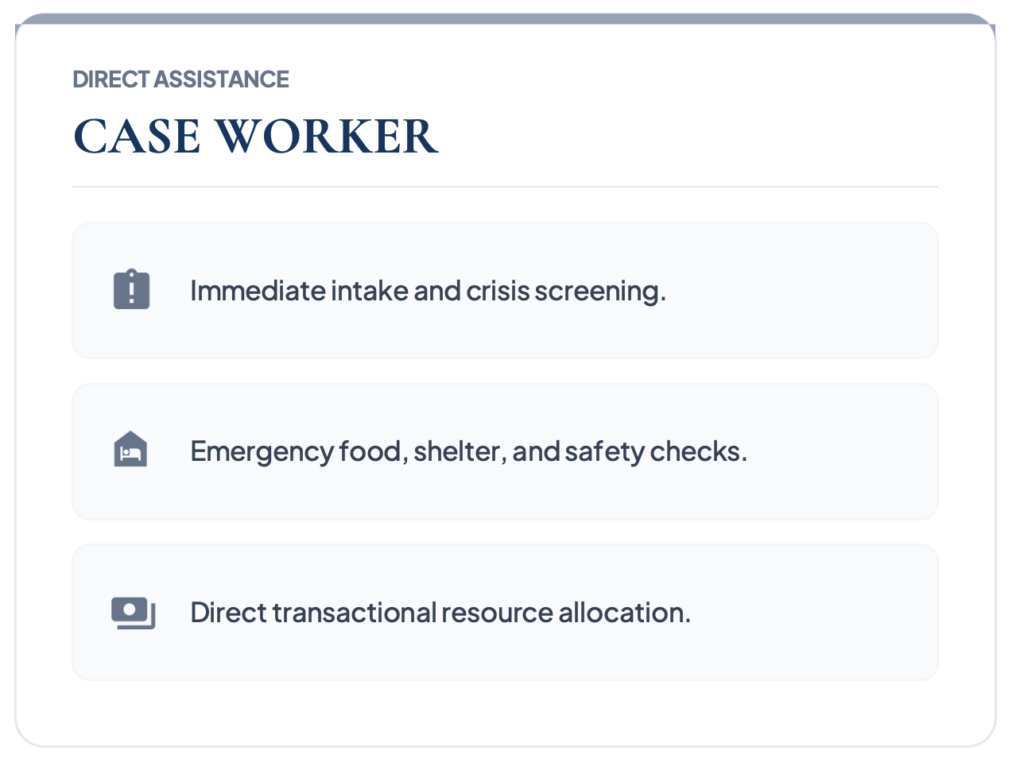
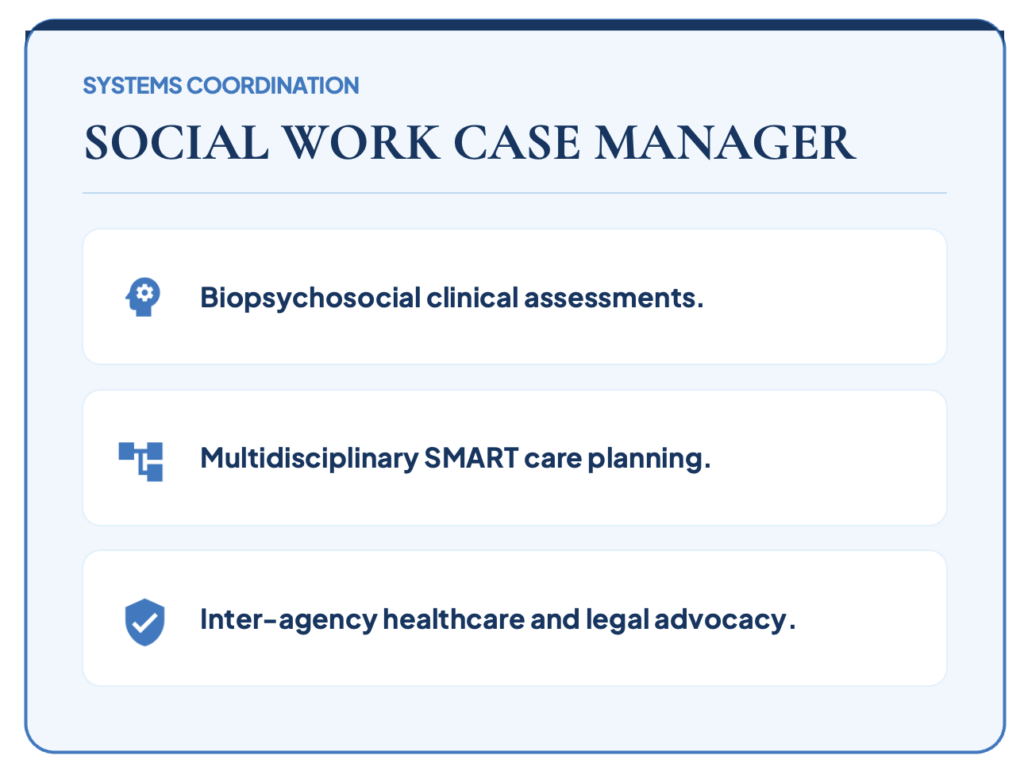
A common source of confusion for entry-level candidates is the difference between case worker and case manager positions. While both roles assist individuals facing acute distress, their operational scope differs substantially.
- Case Workers: Primarily provide direct, frontline service delivery. They conduct immediate intake interviews, provide emergency stabilization, monitor basic compliance (such as child welfare safety checks), and handle transactional resource distribution.
- Case Managers: Operate with broader clinical and administrative authority. Case managers conduct comprehensive biopsychosocial evaluations, formulate multidisciplinary care plans, coordinate between medical teams and legal entities, monitor ongoing service delivery, and advocate at the systems level.
Understanding this distinction helps candidates target the correct credentials during their job search, especially if they are currently transitioning from casework to licensed social work roles with greater clinical oversight.
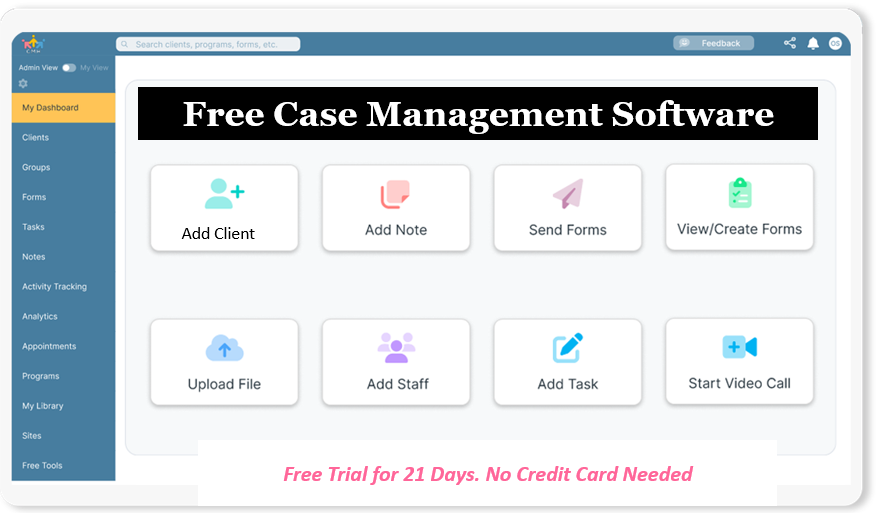
👉 Try it Free - Free Case Management System
How Do You Gain Practical Fieldwork and Obtain State Licensure?
Transitioning from an academic environment into clinical case coordination requires hands-on training under seasoned practitioners.
Step 2: Accumulate Supervised Clinical and Field Experience
State licensing boards require prospective case managers to document supervised direct-practice hours. During your academic program and initial employment:
- Complete your field placement within human services agencies, community health networks, or hospital discharge units.
- Practice real-time client interaction, crisis de-escalation, and interdisciplinary team rounds.
- Familiarize yourself with local resource directories, Medicaid waiver guidelines, and community housing programs.
Step 3: Secure State Licensure
Licensure requirements vary by jurisdiction, but almost all state boards require passing the appropriate Association of Social Work Boards (ASWB) exam:
- BSW Level: Qualifies you for the ASWB Bachelors Exam to obtain the Licensed Social Worker (LSW) or Licensed Baccalaureate Social Worker (LBSW) title.
- MSW Level: Qualifies you for the ASWB Masters Exam or Clinical Exam, leading to the Licensed Master Social Worker (LMSW) or Licensed Clinical Social Worker (LCSW) designation.
How Do You Earn Advanced Case Management Certifications?
While basic state licensure permits legal practice, voluntary board certifications demonstrate specialization, ethical rigor, and advanced clinical leadership.
Step 4: Earn Professional Case Management Credentials
The National Association of Social Workers (NASW) and third-party credentialing bodies offer targeted designations:
- Certified Social Work Case Manager (C-SWCM): Designed for BSW-level social workers with at least three years (or 4,500 hours) of post-degree, paid, supervised case management experience.
- Certified Advanced Social Work Case Manager (C-ASWCM): Tailored for MSW professionals with advanced clinical coordination responsibilities.
- Certified Case Manager (CCM): Administered by the Commission for Case Manager Certification (CCMC), this credential is widely respected in private healthcare, hospital networks, and managed care organizations.
Maintaining these credentials requires strictly observing social work case management ethical guidelines NASW and completing ongoing continuing education units (CEUs).
How Do You Master Clinical Documentation and Care Planning?
Managing client outcomes demands precise documentation. Case managers must master core clinical deliverables from their first week on the job.
Step 5: Master Clinical Assessments, Care Plans, and Case Notes
- Conducting Biopsychosocial Assessments: Reviewing social work biopsychosocial assessment examples teaches you how to systematically capture psychological history, family dynamics, medical conditions, and cultural considerations.
- Designing Care Plans: Developing an individualized care plan requires translating vague client desires into measurable, time-sensitive goals with clear stakeholder responsibilities.
- Writing Daily Progress Notes: Learning how to write SOAP notes in case management (Subjective, Objective, Assessment, Plan) and DAP notes (Data, Assessment, Plan) ensures notes remain audit-ready, billable, and clear for collaborating clinicians.
All-in-One Case Management Software
Sign Up Today, Free
No credit card needed!
Do You Have a Team? | ||
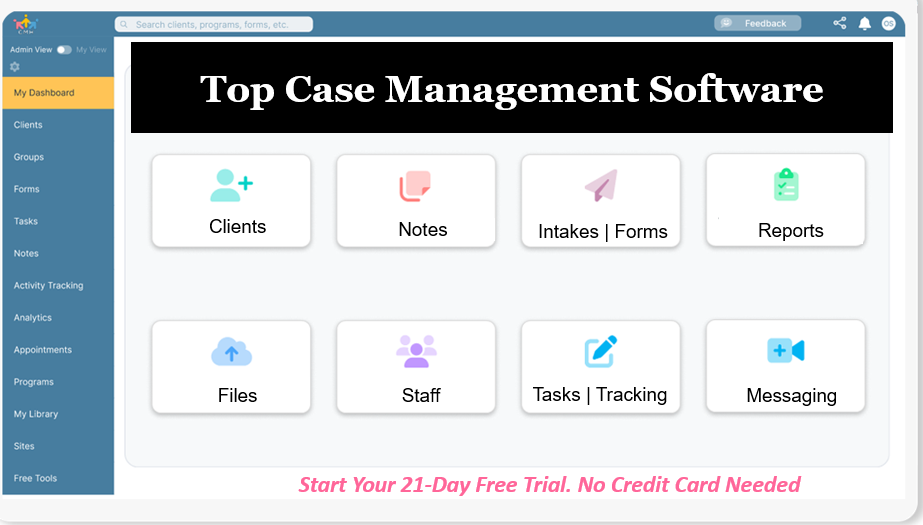
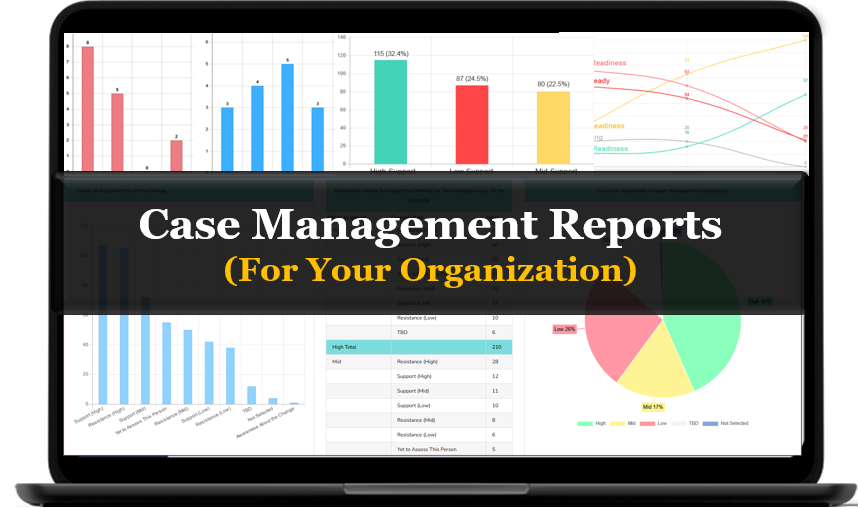
Our best all-in-one client and top case management software simplifies everything from client intake and assessments to programs, projects, goals tracking, planning, scheduling, documentation, reporting dashboard, and progress tracking.
How Digital Tools Streamline Social Work Case Management
A major contributor to burnout is managing high social work caseloads using obsolete administrative tools. Relying on paper charts, manual binders, and generic spreadsheets leads to misplaced client records, missed compliance deadlines, and wasted hours. Modern practitioners increasingly use HIPAA compliant case management software to protect client privacy while automating recurring operational tasks.
Adopting a specialized social work client tracking system resolves administrative drag across several core workflows:
- Paperless Onboarding: Digital intake forms for social workers allow clients or referring agencies to submit consent forms, medical histories, and initial disclosures online, populating client profiles automatically.
- Standardized Clinical Notes: Built-in templates for SOAP and DAP notes documentation software ensure consistent formatting, accurate clinical coding, and rapid audit preparation.
- Outcome Measurement: A dedicated social work client goal and progress tracking app gives providers clear visual dashboards to track milestone completions over time.
- Administrative Time Savings: Automated appointment scheduling for case managers reduces scheduling back-and-forth, while secure messaging software for social services keeps client correspondence fully protected under federal privacy rules.
- Funding and Fiscal Compliance: Built-in social service reporting and billing software allows agencies to generate reimbursement claims, verify grant utilization, and export outcome reports in minutes instead of days.
Workflow Comparison: Manual vs. Modern Digital Case Management
| Operational Workflow | Manual / Spreadsheet-Based Workflow | Automated Cloud Case Management Hub |
| Client Intake & Registration | Paper intake packets scanned manually into local folders. | Secure digital intake forms populate the client record automatically. |
| Progress Notes (SOAP / DAP) | Hand-typed in desktop word processors; variable formatting. | Standardized clinical templates with built-in audit trails. |
| Caseload Progress Tracking | Reviewing fragmented notes to recall pending tasks or goals. | Real-time goal dashboards tracking client milestones. |
| Client Communication | Unencrypted personal or office SMS and unsecured emails. | Integrated, encrypted, HIPAA-compliant client messaging. |
| Reporting & Audit Prep | Days spent pulling paper files and aggregating cell data. | One-click export of structured compliance and funder reports. |

People Also Ask
What degree do you need to be a social work case manager?
You typically need a minimum of a Bachelor of Social Work (BSW) from an accredited program for general community roles. For hospital, psychiatric, or specialized clinical positions, agencies generally require a Master of Social Work (MSW).
How long does it take to become a social work case manager?
It takes approximately four years to complete a BSW program and enter entry-level practice. If you pursue an MSW and formal clinical licensure, plan for an additional one to three years of graduate education and supervised field hours.
Can you be a case manager with a psychology or sociology degree?
Yes, many non-profit and community agencies hire human services, psychology, or sociology graduates as caseworkers or entry-level case managers. However, title protection laws in many states restrict the formal title of “Social Work Case Manager” to professionals holding an accredited social work degree and state license.
What is the primary role of a social work case manager?
The primary role is coordinating care by assessing client needs, formulating customized care plans, navigating bureaucratic systems, and connecting clients to healthcare, housing, and financial resources.
What certifications are best for social work case managers?
The most recognized credentials are the Certified Social Work Case Manager (C-SWCM) from the NASW for BSW holders, the Certified Advanced Social Work Case Manager (C-ASWCM) for MSW holders, and the Certified Case Manager (CCM) from the CCMC.
How much do social work case managers earn?
According to the U.S. Bureau of Labor Statistics, the median annual wage for social workers was approximately $58,380 as of May 2023. Salaries vary significantly based on industry, with healthcare social workers and inpatient case managers earning higher median wages than those in individual family services.
Modernize Your Practice with Case Management Hub
Administrative overload should not stand between you and your clients. Spending hours formatting intake packets, tracking down missing sign-offs, and compiling manual billing reports takes precious time away from direct intervention.
Case Management Hub provides an all-in-one, HIPAA-compliant workspace built specifically for social workers, case managers, and non-profit human service teams. The platform brings your entire administrative workflow under one roof:
- Comprehensive client profile tracking and dynamic intake management.
- Guided SOAP and DAP clinical note templates that reduce documentation time.
- Visual goal and milestone tracking to demonstrate concrete client progress.
- Secure client messaging and automated appointment reminders that reduce missed sessions.
- One-click reporting tools for billing, grant compliance, and state agency audits.
Take control of your caseload and run your practice with complete confidence.
Start your free 21-day trial of Case Management Hub today (no credit card required)
Frequently Asked Questions (FAQs)
How do I handle sudden caseload surges without compromising documentation standards?
Adopt structured, standardized documentation templates like SOAP or DAP notes. Completing notes collaboratively during the last five minutes of a client session or immediately after contact prevents backlogs. Utilizing a cloud case management hub for social workers ensures your records remain current without requiring late-night charting sessions.
Are case notes kept in digital case management platforms truly HIPAA compliant?
Yes, provided you choose software designed specifically for clinical use that signs a Business Associate Agreement (BAA). Compliant platforms enforce end-to-end data encryption at rest and in transit, maintain role-based access permissions, and generate immutable audit logs tracking every record view.
Can an entry-level case manager write and bill for clinical care plans?
Generalist case managers holding a BSW can draft care coordination plans and track service linkage. However, billing third-party payers like Medicaid or commercial insurance for formal clinical interventions or mental health diagnostic assessments typically requires the countersignature or direct supervision of a licensed master or clinical social worker (LMSW/LCSW).
What continuing education requirements apply to certified case managers?
Recertification cycles generally occur every two to three years. Organizations like the NASW or CCMC typically require between 20 and 80 continuing education units (CEUs), including mandatory hours dedicated specifically to professional ethics, cultural competence, and contemporary healthcare regulations.
How can a new case manager establish boundaries with high-need clients?
Set clear operational parameters from day one during the initial intake interview. Clarify your working hours, explain standard response times for non-urgent messages, and provide written emergency crisis contact protocols. Utilizing secure messaging tools with automated out-of-office notices reinforces these boundaries without sacrificing professionalism.
How do case management software platforms assist with grant funding audits?
Grant-funded programs require rigorous documentation of client demographics, service encounters, and objective outcome measures. Digital platforms aggregate this information continuously, enabling supervisors to generate anonymized, audit-ready demographic and progress reports with a few clicks.
👉 Try it free today - No credit card needed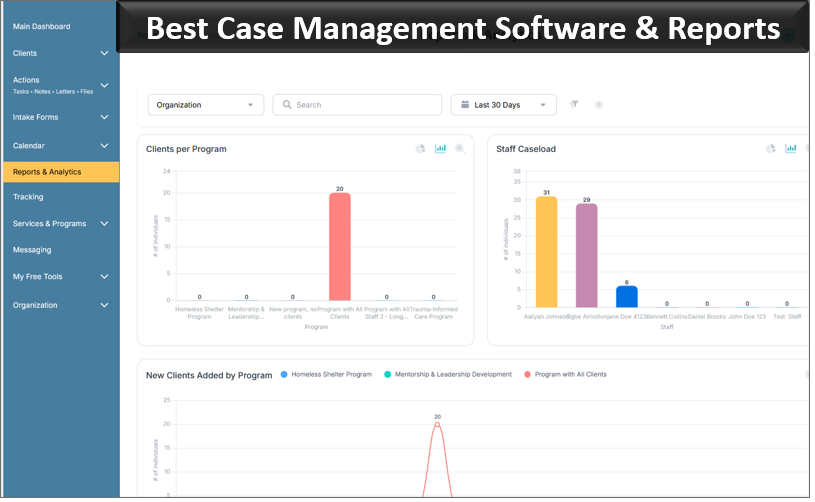
Note: Content on this website (socialworkportal.com) is copyrighted and protected under applicable copyright laws. Unauthorized reproduction, distribution, or use of any content from the website, without explicit written permission, is strictly prohibited. Read: Terms of Use.
Social Work Portal Disclaimer: Social Work Portal is not a social work agency and we do not refer social workers. This web site is provided for educational and informational purposes only and does not constitute providing medical advice or professional social and healthcare services. The information provided should not be used for diagnosing or treating a health problem or disease, and those seeking personal medical advice should consult with ... Read our full disclaimer here: Social Work Portal Disclaimer.