Practical Advice on School Social Worker Requirements, Pay & Career Considerations
If you have ever wondered how to become a school social worker, you are looking at one of the most stable and meaningful paths in the social work field. School social workers sit at the intersection of education, mental health, and family support, working directly with students to remove the barriers that get in the way of learning. It is a career that blends clinical skill with systems-level thinking, and it consistently ranks among the more in-demand specialties within social work.
This guide walks through what the role actually looks like, what you can expect to earn, the education and credentials required, and the honest considerations worth weighing before you commit to this career path.
What you’ll learn in this article:
- The different types of school social workers and how their roles vary
- What school social workers typically earn, based on current federal wage data
- The education, licensure, and credentials required to enter the field
- The top skills that separate strong school social workers from the rest
- A comparison of school social work versus other related roles
- Key considerations to weigh before choosing this career path
Let’s get started
Watch this video:
or
read the guide below.
What Does a School Social Worker Actually Do?
A school social worker’s job description centers on one core mission: helping students overcome the social, emotional, and behavioral barriers that stand between them and academic success. On any given day, that might mean running a small counseling group, coordinating a crisis response, connecting a family with housing resources, or advising teachers on how to support a student going through a difficult home situation.
Unlike a general clinical social worker who might see clients across many settings, school social workers work almost exclusively within a K-12 system, coordinating closely with teachers, administrators, school counselors, and families. This makes school social work a good fit for practitioners who want clinical impact paired with a consistent, structured environment.

👉 Try it Free today - No credit card needed
What Are the Different Types of School Social Workers?
Not all school social work roles look the same, and understanding the variations helps clarify where you might fit best.
- Building-level school social worker. Assigned to one or a small number of schools, handling direct student casework, crisis intervention, and family engagement.
- District-level or itinerant social worker. Travels across multiple schools within a district, often supporting specialized programs like special education services or homeless student liaison work.
- Pupil Personnel Services (PPS) credentialed social worker. Common in states like California, this credential authorizes school-based practice specifically, separate from a general clinical license.
- Special education school social worker. Works closely with IEP teams, focusing on students with disabilities and the social-emotional supports written into their education plans.
- Clinical school social worker (LCSW). Holds a clinical license and may provide more intensive therapeutic intervention within the school setting, depending on state regulations.
Each of these paths requires slightly different credentials, so it is worth researching your state’s specific requirements early in your planning process.

💡All-in-one Case Management Software.
Everything in one place: clients, notes, forms, appointments, reports, and outcomes.
👉 Try it Free - No credit card needed
How Does School Social Work Compare to Related Roles?
A common point of confusion for people considering this path is how school social work differs from school counseling or clinical social work. Here is a side-by-side look.
| Factor | School Social Worker | School Counselor | Clinical Social Worker (LCSW) |
| Primary focus | Social, emotional, and family-systems barriers to learning | Academic planning, college and career guidance, some counseling | Diagnosis and treatment of mental, behavioral, and emotional disorders |
| Typical degree | MSW (Master of Social Work) | Master’s in School Counseling | MSW plus clinical licensure hours |
| Setting | K-12 schools, sometimes district-wide | K-12 schools | Hospitals, private practice, agencies, sometimes schools |
| Works with families directly | Frequently, including home visits in some districts | Less frequently | Frequently, depending on setting |
| Licensure body | State social work board | State education or counseling board | State social work board |

👉 Try it Free - Free Case Management System
What Is the Average Salary for a School Social Worker?
Salary is one of the most searched questions for anyone exploring this path, and it is a reasonable one to ask. According to the U.S. Bureau of Labor Statistics, child, family, and school social workers earned a median annual wage of $53,940 as of May 2023, with the top 10 percent earning about $85,590 (US Bureau of Labor Statistics).
Social workers employed specifically within elementary and secondary schools reported a higher mean annual wage of roughly $70,070, reflecting the fact that many school-based positions follow district salary schedules similar to teacher pay scales, often with additional years-of-service step increases.
Salary varies significantly by state, district, and whether the position runs on a 10-month or 12-month school-year contract. Some of the top paying states for child, family, and school social workers include New York, New Jersey, Maryland, Connecticut, and the District of Columbia. The Bureau of Labor Statistics also projects roughly 6 to 8 percent employment growth for social workers and counselors from 2024 through 2034, a healthy outlook driven in part by rising awareness of student mental health needs and continued investment in special education support.
All-in-One Case Management Software
Sign Up Today, Free
No credit card needed!
Do You Have a Team? | ||
Our best all-in-one client and top case management software simplifies everything from client intake and assessments to programs, projects, goals tracking, planning, scheduling, documentation, reporting dashboard, and progress tracking.
What Skills and Credentials Do You Need to Become a School Social Worker?
Entering school social work requires a specific combination of formal education and practical skill. At minimum, most positions require a Master of Social Work (MSW) from a CSWE-accredited program, though a small number of paraprofessional roles may accept a bachelor’s in social work. Beyond the degree, most states require a school social work certification or in some states a Pupil Personnel Services credential, in addition to or instead of a general clinical license, depending on the state.
On the skills side, the practitioners who thrive in this role tend to share a few traits:
- Crisis intervention and de-escalation, since school social workers are often the first responder to a student in acute distress.
- Systems navigation, meaning comfort coordinating between school staff, outside agencies, and family members.
- Cultural competence, given the diversity of family structures and backgrounds in most school districts.
- Digital media understanding, due to the impact of social media, screens, and AI on today’s children and teens.
- Documentation and case management skills, since school social workers carry active caseloads that require consistent, organized records.
- Boundaries and self-regulation, since the role involves regular exposure to difficult family and student situations.



What Should You Consider Before Choosing This Career Path?
School social work is deeply rewarding, but it is not the right fit for everyone, and it is worth being honest about the trade-offs before committing years of graduate education to the path.
A few factors worth weighing:
- Caseload size. Many districts are understaffed relative to need, meaning caseloads can be high, particularly in under-resourced areas.
- School calendar structure. A 10-month contract means summers off for many practitioners, which is a meaningful lifestyle benefit but also affects annual salary compared to 12-month roles.
- Emotional demands. You will regularly work with students experiencing trauma, poverty, abuse, or family instability, which requires strong personal support systems and self-care practices.
- Bureaucratic pace. School systems move differently than clinical settings, and practitioners sometimes find district-level policy or budget constraints frustrating.
- Long-term growth. Consider whether you eventually want to pursue clinical licensure, move into district leadership, or stay in direct student-facing work, since each path has different requirements down the line.
Switch to an all-in-one case management platform. 👉 Try it Free - No credit card needed🔥Still using spreadsheets for case management?
Supporting School Social Workers with the Right Tools
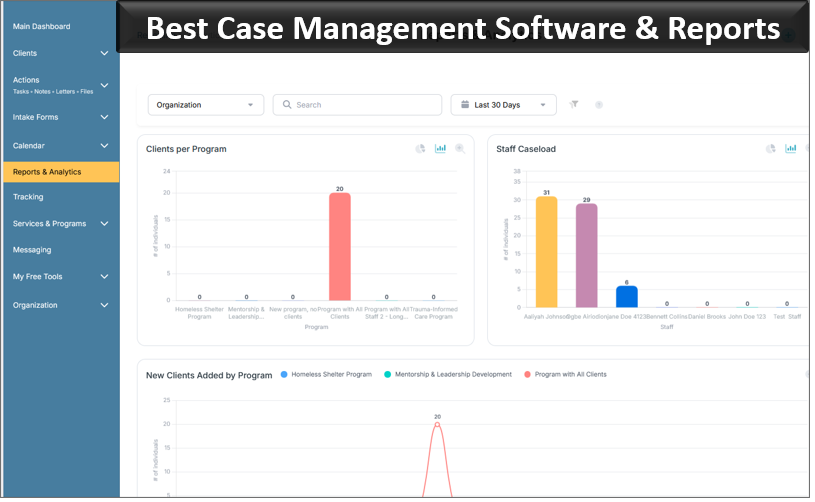
Whatever type of school social work path you pursue, having reliable, organized case management makes a real difference in how sustainable the work feels day to day. Case Management Hub helps school-based practitioners manage caseloads, document interventions, track student goals and progress, and securely coordinate with families and outside providers, all from one platform built specifically for social work and human services teams.
Another important consideration is that the platform is HIPAA compliant, which is important when it comes to data privacy of sensitive student information. Check out the platform for 21-days free (no credit card needed). Just click the link below.

👉 Try this Case Management Software free today
No credit card needed
School Social Worker Career Path FAQs
What degree do you need to become a school social worker?
Most positions require a Master of Social Work (MSW) from a CSWE-accredited program, plus a state-specific school social work certification or Pupil Personnel Services credential.
Is school social work a good career?
For practitioners who want meaningful, direct impact on kids paired with a structured school-year schedule, it is widely considered a rewarding and stable career path within social work.
What is the difference between a school social worker and a school counselor?
School social workers focus primarily on social, emotional, and family-systems barriers to learning, while school counselors typically focus more on academic and college or career planning, though some overlap exists depending on the district.
Do school social workers need a clinical license?
Not always. Many school-based roles only require a school-specific credential rather than full clinical licensure, though some states and positions do require or prefer an LCSW.
How much do school social workers make?
According to BLS.gov data, the median annual wage for child, family, and school social workers was $53,940 as of May 2023, with school-based roles sometimes reporting higher averages depending on district and state.
What skills matter most for school social workers?
Crisis intervention, systems navigation across school and outside agencies, cultural competence (including knowledge of current digital influences), and strong documentation and case management skills are consistently cited as top priorities in this role
👉 Try it free today - No credit card needed
Note: Content on this website (socialworkportal.com) is copyrighted and protected under applicable copyright laws. Unauthorized reproduction, distribution, or use of any content from the website, without explicit written permission, is strictly prohibited. Read: Terms of Use.
Social Work Portal Disclaimer: Social Work Portal is not a social work agency and we do not refer social workers. This web site is provided for educational and informational purposes only and does not constitute providing medical advice or professional social and healthcare services. The information provided should not be used for diagnosing or treating a health problem or disease, and those seeking personal medical advice should consult with ... Read our full disclaimer here: Social Work Portal Disclaimer.