Reclaim Face-to-Face Engagement and Reduce Administrative Fatigue Without Sacrificing Compliance
Child and family social workers carry one of the most vital responsibilities in human services: ensuring the physical safety, emotional stability, and developmental well-being of vulnerable youth. Yet day after day, that foundational mission clashes with an exhausting reality. You arrive at a family home intending to build trust, observe attachment, and evaluate subtle safety cues. Instead, the pressure of impending deadlines, court filings, and regulatory compliance follows you into the room.
When clinical note-taking consumes the hours meant for client connection, the cost is immediate. Caseworkers experience severe administrative exhaustion, while young clients miss out on the genuine, presence-focused attention they need to heal. Achieving balanced practice requires intentional, structured habits in the field alongside purpose-built administrative workflows that lighten your cognitive burden.
Let’s get started
Watch this video:
or
read the guide below.
What You’ll Learn in This Guide
- How the child welfare case documentation burden impacts both child permanency and worker retention
- Creative, trauma-informed child engagement techniques during home visits that double as observational assessments
- Proven social work caseload management best practices to keep records audit-ready without working after hours
- Standardized clinical frameworks like SOAP notes templates for child and family social workers and DAP note generators for child therapy
- How modern mobile platforms eliminate duplicate data entry and manual administrative strain
- Direct answers to the most common frontline compliance and time-management questions
💡All-in-one Case Management Software.
Everything in one place: clients, notes, forms, appointments, reports, and outcomes.
👉 Try it Free - No credit card needed
Why Is Balancing Paperwork and Direct Child Contact Such a Challenge?
Frontline child protection caseworkers and pediatric social workers do not struggle with documentation out of negligence. They struggle because documentation systems were historically engineered for billing compliance and risk liability rather than clinical efficiency. A caseworker today is simultaneously an investigator, a family mediator, a resource coordinator, and a legal scribe.
According to a national workforce study published by the Child Welfare League of America (CWLA), caseworkers spend only 18% of their working hours in direct, face-to-face contact with children and families, while administrative tasks and paperwork routinely consume more than 50% of the working day. When half of your working week is absorbed by forms, manual filing, and duplicate records, deep clinical assessment inevitably gets compressed.
This imbalance fuels high rates of caseworker burnout in child protective services. It also directly impacts youth outcomes. When high caseloads and paperwork fatigue pull clinicians away from meaningful connection, trust fractures, children hold back their authentic worries, and safety assessments lose their depth.
How Does Administrative Overload Directly Impact Quality of Care?
Administrative overload is not merely an inconvenience for staff; it fundamentally alters the quality of relational social work. When caseworkers feel chronically rushed, home visits risk turning into transactional interrogations rather than restorative conversations.
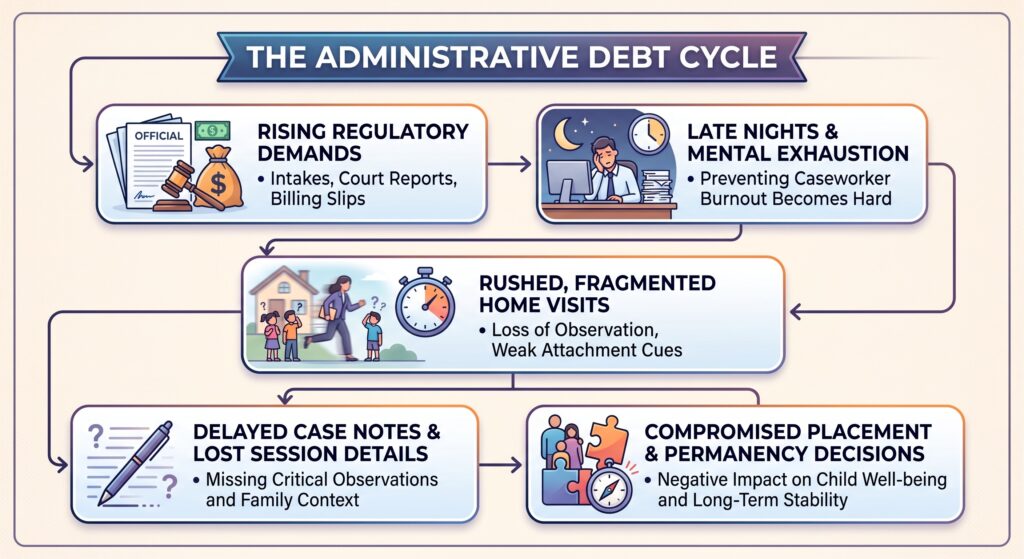
When a professional rushes through a home visit because five unwritten progress notes loom on their calendar, several clinical risks emerge:
- Weakened Attachment and Engagement: Children exposed to trauma are finely tuned to non-verbal cues. If a case planner checks the time repeatedly or writes notes distractedly on a generic clipboard, the child detects that emotional absence immediately.
- Superficial Observational Data: Accurate risk assessments require observing subtle family dynamics, child non-verbal communication, and play behaviors. Rushed visits miss these details.
- Delayed Court and Medical Interventions: When pediatric social work clinical note taking strategies are disjointed, vital therapeutic changes or safety concerns are entered days after the fact, stalling critical team interventions.
👉 Try it Free - Free Case Management System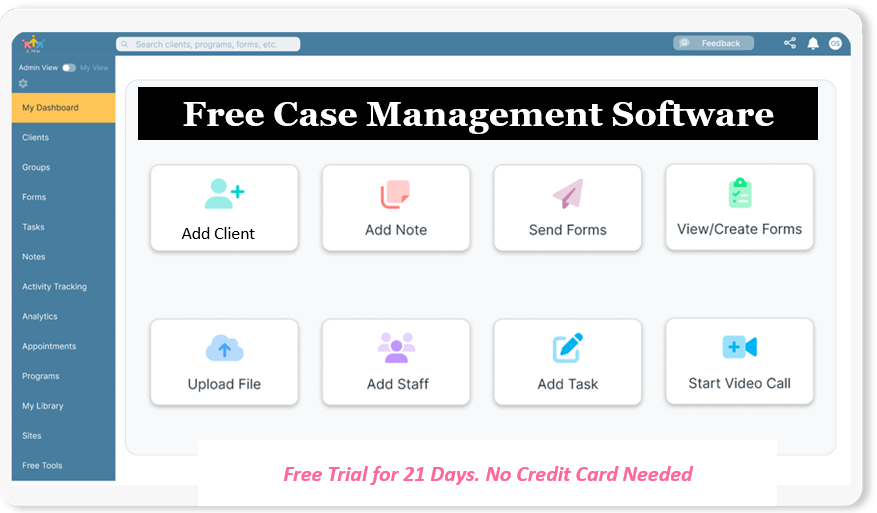
What Child Engagement Techniques Work Best During Home Visits?
Engaging children during home visits requires shifting from formal interrogation to low-pressure, interactive activities. When done skillfully, these child engagement techniques during home visits allow caseworkers to assess safety, cognitive development, and emotional affect while keeping the child feeling secure and heard.
1. Interactive Drawing and The Three Houses Tool
Direct questions like “How do things feel at home?” often trigger defensive or guarded responses from children. Instead, provide drawing materials and ask them to complete the Three Houses exercise:
- The House of Worries: What things make you feel scared or sad?
- The House of Good Things: What makes you feel proud, safe, or happy?
- The House of Hopes: What would you change if you had a magic wand?
This technique facilitates organic expression, clarifies family dynamics, and supplies concrete, quotable evidence for your clinical documentation.
2. Physical Play and Movement Games
Sitting across a table can feel clinical and intimidating. Bring a foam ball, soft catch pads, or Uno cards. Kinetic activities discharge nervous energy and lower physiological defenses, allowing young clients to converse naturally. You can evaluate gross motor function, emotional regulation under minor frustration, and self-soothing behaviors in real time.
3. Storytelling and Emotion Wheels
For younger children and school-aged youth, emotion wheels and character-based stories help externalize difficult feelings. Asking a child to pick a color for their mood or assign feelings to a toy allows them to convey emotional distress without feeling personally scrutinized.
How Can Caseworkers Master Structured Clinical Documentation?
A primary cause of documentation backlogs is starting each entry from a blank slate. Without standardized structures, professionals often over-document irrelevant conversational details while omitting crucial risk-assessment benchmarks. Utilizing structured frameworks, such as a SOAP notes template for child and family social workers or a DAP note generator for child therapy, brings order and speed to daily reporting.
Understanding SOAP vs. DAP in Child Case Management
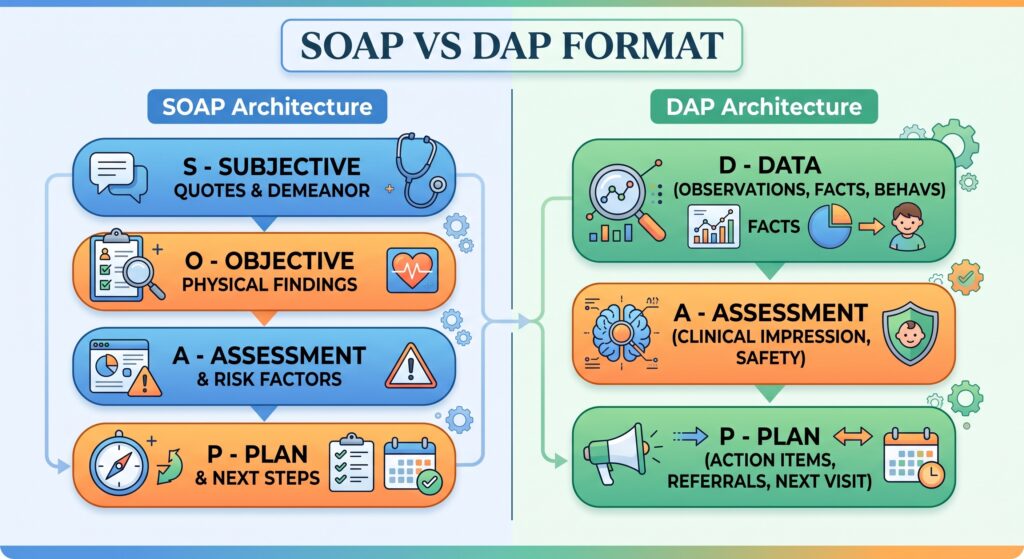
- SOAP Format: Exceptional for medical pediatric social workers and multi-disciplinary teams requiring rigorous separation between client statements (Subjective), observable environmental factors (Objective), clinical synthesis (Assessment), and immediate next steps (Plan).
- DAP Format: Widely preferred by clinical child therapists and youth case managers because it collapses the subjective dialogue and objective findings into a comprehensive Data section, followed by a clinical Assessment and the forward-looking Plan.
By training yourself to organize your observations into these discrete buckets during the visit itself, you eliminate the cognitive block of deciding how to phrase your notes when you return to your desk.
How Digital Tools Streamline Child Welfare Case Management
Manual recordkeeping is one of the greatest contributors to administrative overload. Relying on paper intake packets, physical folders, separate desktop spreadsheets, and desktop-bound legacy software forces caseworkers into endless duplicative entry. You write notes on a legal pad in the field, type them into an office desktop hours later, log billable units on a separate paper slip, and text collateral providers through personal channels.
Modern, purpose-built case management software transforms this fragmented process into a unified, secure flow.
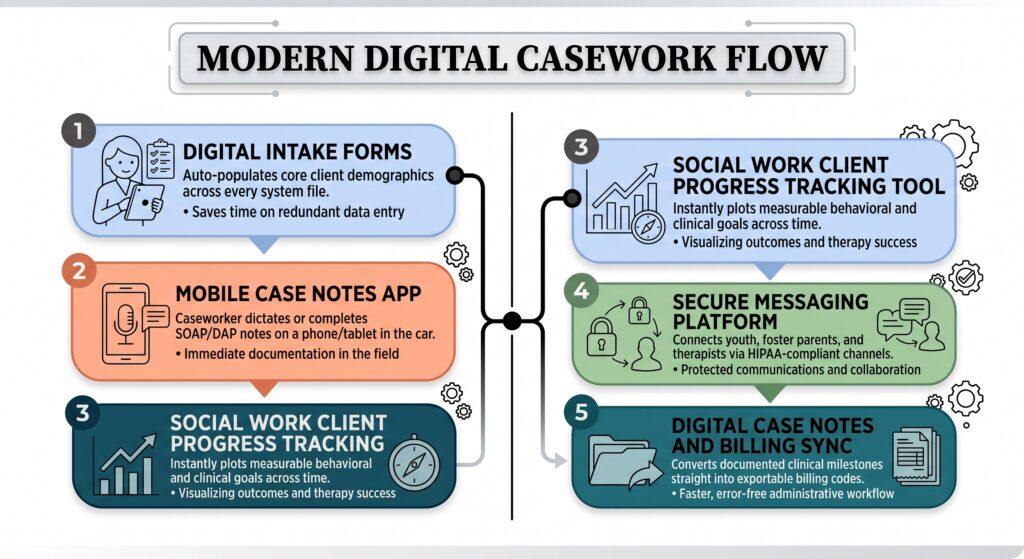
1. Eliminating Duplicate Data Entry with Digital Intake
When intake information is captured digitally, demographic data, medical histories, and emergency contacts automatically populate across all subsequent files. Clinicians never have to write the same child identity number, birth date, or collateral phone number twice.
2. Point-of-Care Mobile Documentation
With an encrypted mobile case notes app for child welfare workers, notes can be jotted or voice-dictated from your vehicle immediately following a home visit while details remain vivid. Capturing objective observations in the moment takes five minutes, whereas reconstructing five sequential visits at 5:00 PM requires hours of stressful recall.
3. Integrated Goal Tracking and Compliance
A dedicated social work client progress tracking tool links clinical notes directly to established case plan goals. Rather than scanning months of written narrative to prepare for a multi-disciplinary team meeting or court hearing, supervisors and caseworkers can generate milestone progress summaries with a single click.
4. Coordinated Collaboration via Secure Messaging
Email and unencrypted text messages create communication silos and severe privacy liabilities. A dedicated, HIPAA-compliant secure messaging platform for youth case managers allows instant coordination between biological parents, foster caregivers, school counselors, and child therapists within the client’s official case record.
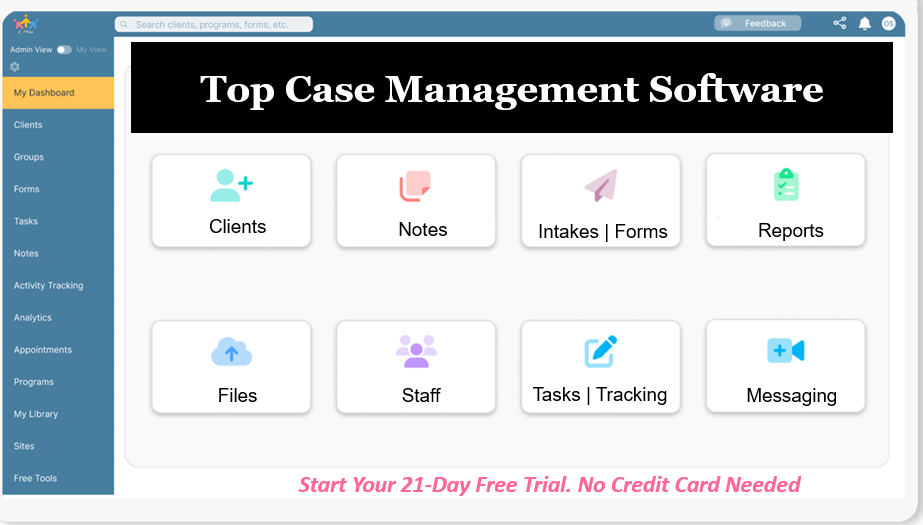
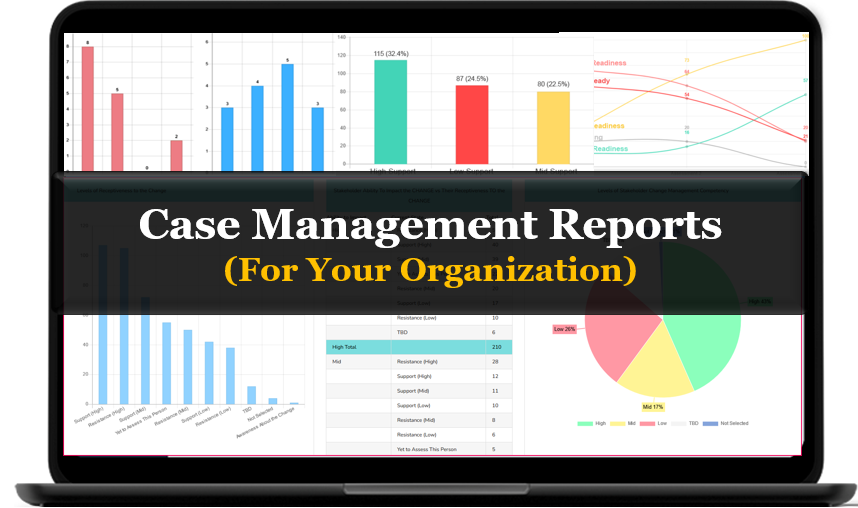
Do You Have a Team? Our best all-in-one client and top case management software simplifies everything from client intake and assessments to programs, projects, goals tracking, planning, scheduling, documentation, reporting dashboard, and progress tracking.All-in-One Case Management Software
Sign Up Today, Free
No credit card needed!
Manual Workflows vs. Automated Workflows: The Operational Difference
Transitioning from manual administrative processes to an integrated digital platform fundamentally reallocates a caseworker’s weekly schedule.
| Operational Area | Manual Casework Workflow | Automated Digital Workflow | Time & Quality Impact |
| Intake & Onboarding | Paper packets re-typed into office database; risk of missing consent forms | Pre-configured digital forms sent to parents/guardians with electronic signatures | Reduces intake processing time by up to 70% |
| Field Documentation | Handwritten notes on legal pads; transcribed hours or days later | Point-of-care mobile documentation using structured SOAP/DAP templates | Saves 6 to 8 hours per week in delayed note transcription |
| Treatment & Case Goals | Progress tracked across disparate paper binders or static spreadsheets | Goal and progress tracking dashboard tied directly to session notes | Immediate visual tracking of client milestones for court and reviews |
| Scheduling & Visits | Manual phone calls, paper planners, and fragmented calendars | Integrated appointment scheduling with automated reminders to families | Drastically cuts appointment no-shows and travel confusion |
| Team Communication | Unsecured texts, delayed voicemails, and scattered email threads | In-app, HIPAA-compliant secure messaging linked directly to the child’s profile | Protects client confidentiality while creating a permanent audit trail |
| Billing & Reporting | Translating paper logs into billing spreadsheets at the end of the month | One-click service billing linked to validated clinical notes | Eliminates claim rejections and unbilled clinical hours |
How Can Agencies Support Sustainable Casework Practices?
Reducing paperwork fatigue is not solely the responsibility of frontline staff; it requires structural support from social work supervisors, agency directors, and human services program administrators. Sustainable practices protect teams from turnover and safeguard vulnerable youth.
- Protect Dedicated Documentation Blocks: Designate protected administrative blocks during the week where caseworkers close their doors or silence notifications to finish complex court summaries without interruption.
- Standardize Supervision on Caseload Complexity: Measure workloads not simply by raw case counts, but by case acuity. A single high-conflict custody or intensive trauma case demands far more administrative time than three stable maintenance cases.
- Adopt Purpose-Built Technology: Mandating modern digital tools relieves the administrative fatigue that pushes talented clinicians out of the profession. When an agency invests in intuitive documentation tools, it sends a clear signal that frontline wellbeing and client time are institutional priorities.

People Also Ask
How much time do child welfare workers spend on paperwork?
Research shows child welfare workers spend over 50% of their workday completing documentation and administrative tasks, leaving less than 20% of their time for face-to-face interaction with children and families.
What is the best note-taking format for child casework?
The SOAP (Subjective, Objective, Assessment, Plan) and DAP (Data, Assessment, Plan) formats are the most effective because they provide clear, standardized categories that speed up writing and guarantee regulatory compliance.
How do you build rapport with a resistant child during home visits?
Build rapport by engaging in non-threatening kinetic activities such as drawing, playing simple card games, or walking outdoors, rather than conducting a direct question-and-answer interview.
Can social workers complete case notes on mobile devices legally?
Yes, social workers can legally complete case notes on mobile devices provided the software uses end-to-end encryption, complies with HIPAA and state privacy regulations, and does not store unencrypted client data locally on personal devices.
How do digital intake forms improve child welfare compliance?
Digital intake forms ensure that all mandatory fields, legal disclosures, and guardian signatures are completed before submission, eliminating lost forms, missing data, and audit infractions.
What causes high caseworker turnover in child protective services?
High turnover is primarily driven by administrative exhaustion, unmanageable caseload sizes, chronic secondary traumatic stress, and outdated documentation systems that force caseworkers to sacrifice their personal time to keep up with paperwork.
Transform Your Clinical Workflow with Case Management Hub
Reclaiming your direct client hours does not mean compromising on documentation standards. Case Management Hub was designed specifically for child and family social workers, case managers, and agency administrators who need to eliminate documentation bottlenecks and focus on what matters most: helping children thrive.
Our unified, HIPAA-compliant platform equips your entire team with:
- Fast Clinical Note Generation: Pre-built SOAP and DAP clinical note templates that allow you to capture observations in minutes.
- Mobile-First Documentation: Complete case notes securely from your phone or tablet immediately following field visits.
- Automated Intake & Electronic Signatures: Send intake packets straight to parents and guardians, saving hours of manual data entry.
- Goal & Milestone Dashboards: Track behavioral changes, permanency milestones, and safety goals with clean visual timelines.
- Secure Collaboration: HIPAA-compliant messaging that connects your agency, foster parents, and allied providers in a single audit-ready feed.
- Integrated Scheduling & Billing: Sync your visits, clinical notes, and billing records to ensure full agency compliance without administrative headaches.
See It in Action: Step-by-Step Documentation Walkthrough
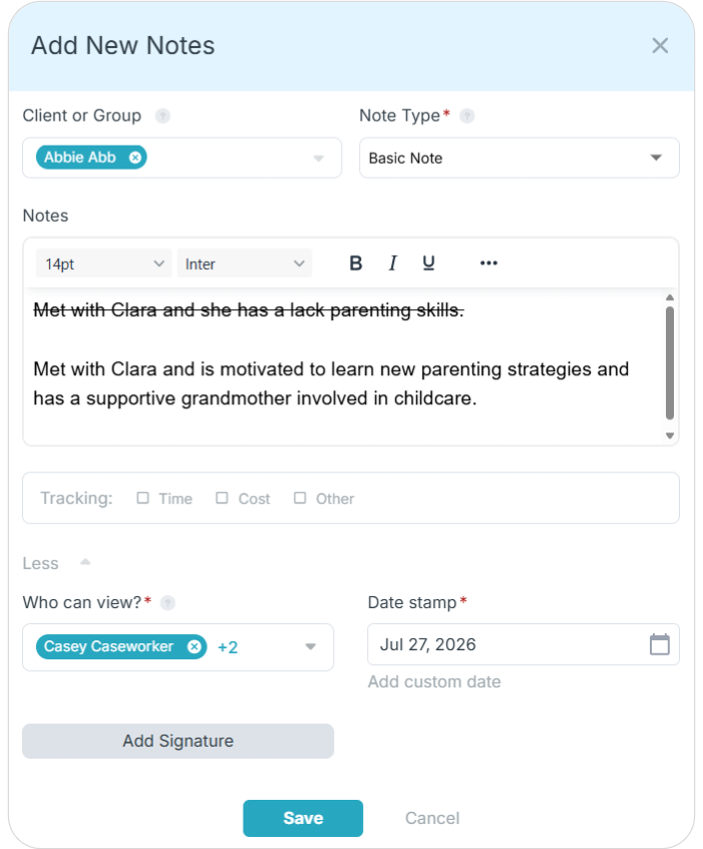
Want to see how simple and rapid clinical documentation looks in practice? Whether you are adding notes from the main dashboard right after a home visit, documenting directly inside a client profile, or logging billable hours and activities with built-in time tracking, our step-by-step video walkthrough covers everything you need to know.
Watch the step-by-step tutorial: How to Add Case Notes in Case Management Hub
Experience how intuitive documentation software can reduce administrative fatigue across your agency.
Start your 21-day free trial of Case Management Hub today
No credit card required. Full feature access. Fully HIPAA compliant.
Frequently Asked Questions (FAQs)
How does point-of-care mobile documentation maintain HIPAA compliance?
Point-of-care documentation remains fully compliant when conducted through dedicated, encrypted platforms like Case Management Hub. The software ensures that client data is encrypted both in transit and at rest using bank-grade security protocols. Information entered on a phone or tablet is transmitted directly to a secure, HIPAA-compliant cloud server and is never saved to the device's personal photo library or local unencrypted memory.
Can structured templates like SOAP or DAP capture the nuanced trauma of a child?
Yes. Structured templates do not limit your clinical storytelling; they organize it. By partitioning your notes into clear sections, you ensure that subjective statements and non-verbal trauma responses are properly contextualized alongside objective facts and clinical assessments. This structured approach makes your notes substantially clearer for court proceedings, supervisory reviews, and subsequent clinicians.
What should I do if a family refuses to sign digital intake forms?
If a family lacks digital literacy or internet access, clinicians can assist them in person by opening the digital intake form on a secure tablet during the visit and having them sign directly on screen. For families who firmly prefer physical paper, their signed paper documents can be scanned directly into the client's digital profile using a mobile document scanner, keeping all records centralized.
How does automated progress tracking assist with court reports and hearings?
Court reports often require summarizing months of family interactions, compliance records, and behavioral observations. A digital client progress tracking tool continuously correlates session notes with overarching case goals. When court preparation begins, the caseworker can export a chronological, goal-specific summary instantly, avoiding hours spent manually combing through months of handwritten binders.
How can agency supervisors support workers struggling with documentation backlogs?
Supervisors should regularly audit workloads for administrative congestion, provide standardized note-taking templates, and encourage collaborative documentation strategies. Most importantly, leadership should replace antiquated, multi-system databases with integrated software solutions that reduce duplicate entries and simplify compliance tracking.
Will switching to a digital case management system disrupt ongoing agency operations?
Modern cloud-based platforms are designed for rapid, intuitive onboarding that minimizes administrative disruption. With pre-built templates and streamlined interfaces, case workers typically master the core documentation workflows within a single training session, achieving noticeable time savings within their first week of use.
👉 Try it free today - No credit card needed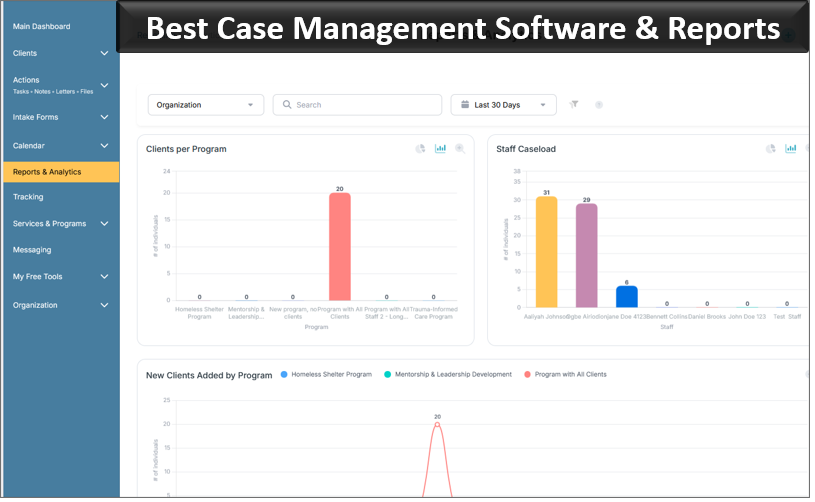
Note: Content on this website (socialworkportal.com) is copyrighted and protected under applicable copyright laws. Unauthorized reproduction, distribution, or use of any content from the website, without explicit written permission, is strictly prohibited. Read: Terms of Use.
Social Work Portal Disclaimer: Social Work Portal is not a social work agency and we do not refer social workers. This web site is provided for educational and informational purposes only and does not constitute providing medical advice or professional social and healthcare services. The information provided should not be used for diagnosing or treating a health problem or disease, and those seeking personal medical advice should consult with ... Read our full disclaimer here: Social Work Portal Disclaimer.