The Smooth Path to Continuity: How to Request Medical Records Without Delays
Requesting medical records feels like it should be as simple as clicking a button, but the process is frequently bogged down by regulatory checkpoints and minor procedural errors. When a medical record transfer stalls, the consequences echo across the healthcare ecosystem.
An anxious caregiver waiting to transition an elderly parent faces prolonged uncertainty, personal injury attorneys see their discovery timelines stretch, and case managers face a cascade of administrative friction. Understanding how to request medical records without delays is a fundamental pillar of modern clinical efficiency, ensuring that vital continuity of care documentation moves quickly to protect patient outcomes.
Let’s get started
Watch this video:
or
read the guide below.
What You Will Learn in This Article
- How to avoid the most common authorization and signature errors that trigger immediate request rejections.
- The critical differences between federal timelines and state-level record laws.
- How to properly navigate specific access rules for parents, legal guardians, and personal representatives.
- Why outdated communication methods like manual faxing prolong delivery windows.
- The exact steps to format a pristine, legally airtight record request on the first attempt.
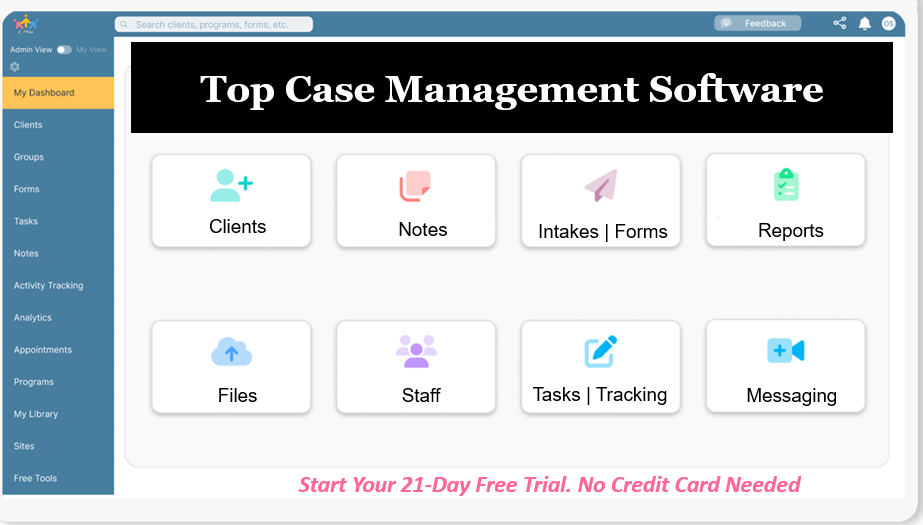
Everything in one place: clients, notes, forms, appointments, reports, and outcomes. 👉 Try it Free - No credit card needed💡All-in-one Case Management Software.
Why Do So Many Document Requests Get Rejected Immediately?
The primary bottleneck in the release of information workflow stems from incomplete or improperly executed paperwork. Healthcare organizations are bound by rigid federal and state privacy frameworks. If a facility processes an unverified or flawed request, it risks severe penalties for exposing protected health information PHI security.
Consequently, records department staff are trained to reject any authorization form that exhibits even a minor discrepancy. The most common culprit is a flawed medical records release form. Basic fields are frequently left blank, or descriptions of the requested information are too vague. An authorization that simply asks for “all records” may be rejected for lack of specificity. Offices require precise date ranges, specific clinic locations, and clearly enumerated types of data, such as progress notes, diagnostic imaging, or laboratory results.
Furthermore, signature mismatches cause immediate rejections. If a patient’s signature on a new request does not visually align with the signature on their initial intake paperwork, or if a digital signature lacks a verifiable digital audit trail, the compliance department will halt the transfer. For personal injury lawsuits, an outdated authorization form that was executed more than ninety days prior to submission is often deemed stale, forcing legal teams to restart the entire procurement loop from scratch.
How Long Can a Healthcare Provider Legally Hold Your Documents?
Many requesters assume that healthcare facilities are legally obligated to hand over files instantly upon demand. Federal law establishes a specific maximum response window, but individual state laws create a highly fragmented regulatory landscape.
Under the Health Insurance Portability and Accountability Act (HIPAA), covered entities are granted a maximum of 30 calendar days to respond to an access request. The law allows for a single 30-day extension if the provider issues a written explanation detailing the cause of the delay. However, federal oversight explicitly treats this 30-day window as an absolute outer ceiling rather than an acceptable baseline performance target.
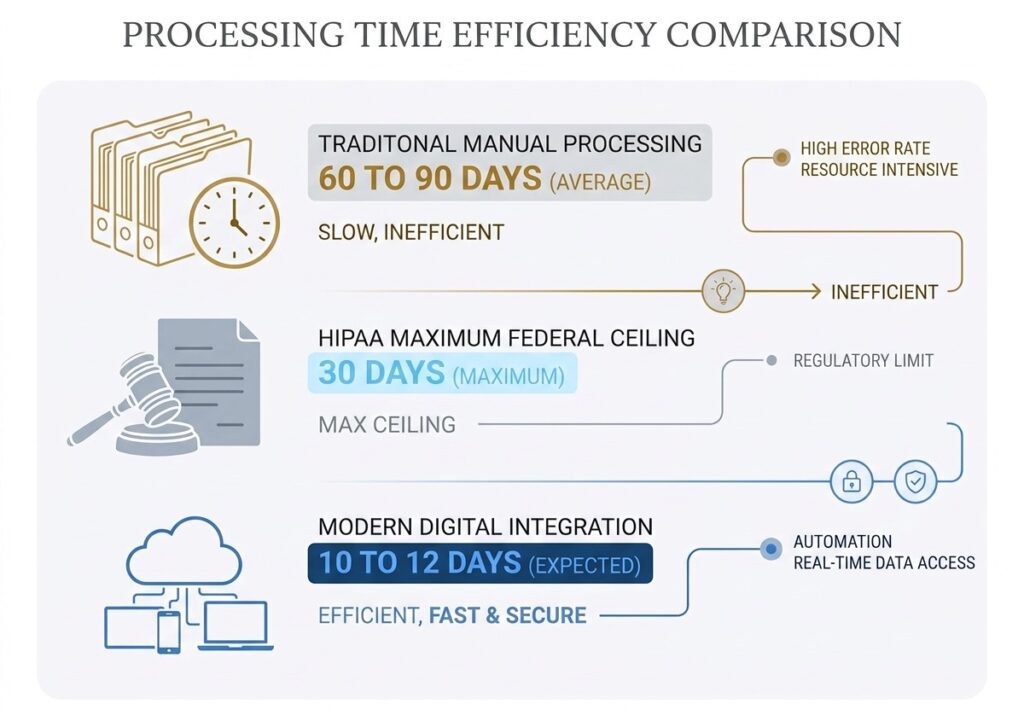
In contrast to the standard federal allowance, traditional manual workflows often consume 60 to 90 days due to back-and-forth paper communications and processing backlogs. According to industry workflow data compiled by Codes Health, only 21% of healthcare facilities successfully process traditional paper records in less than seven days, while 4% consistently exceed the 30-day federal limit, creating significant compliance liabilities.
Fortunately, the regulatory tide is shifting against information blocking. Many states enforce strict statutory timelines that overrule the federal 30-day window. For instance, California law dictates that providers must allow patients to inspect records within 5 business days and deliver physical or electronic copies within 15 days of receiving a valid written request. Requesters must evaluate both state and federal rules, remembering that the law providing the fastest, most expansive patient right of access regulations always takes precedence.
👉 Try it Free - Free Case Management System
Who Possesses the Legal Authority to Sign the Release Form?
Determining who is legally permitted to authorize a HIPAA compliant medical record transfer becomes complicated when the individual signing the paperwork is not the patient. Records departments maintain an exceptionally high standard of scrutiny regarding third-party authorizations, and failing to attach active, unexpired proof of legal representation will result in an immediate denial.
For caregivers managing elderly parents or adults with cognitive impairments, a standard family relationship holds no legal weight in a medical records department. Staff members require a certified copy of a Durable Power of Attorney for Healthcare that explicitly grants the agent the authority to access protected health information. If the patient has passed away, the executor of the estate or the court-appointed personal representative must provide official letters of administration alongside the authorization for disclosure of health information.
Special Rules for Minor Children and Mental Health Data
- Parents of Minor Children: While parents are generally considered the natural personal representatives of their minor children, exceptions emerge when state laws allow minors to consent to their own treatment, such as reproductive healthcare or substance abuse counseling. In those instances, the minor child must sign the release form.
- Clinical Therapists and Mental Health Counselors: Mental health records are subject to an entirely separate layer of regulatory protection. Standard medical release forms do not automatically cover psychotherapy notes. These records are explicitly decoupled from general medical files under HIPAA and require a separate, standalone authorization form that is completely independent of the general release document.
Is Outdated Technology Stalling Your Practice Workflows?
Even when the paperwork is flawless, the technology used to transmit data can create severe bottlenecks. A surprising number of modern clinics still rely on legacy machinery to handle critical continuity of care documentation. Manual faxing remains one of the most significant sources of friction in medical office environments.
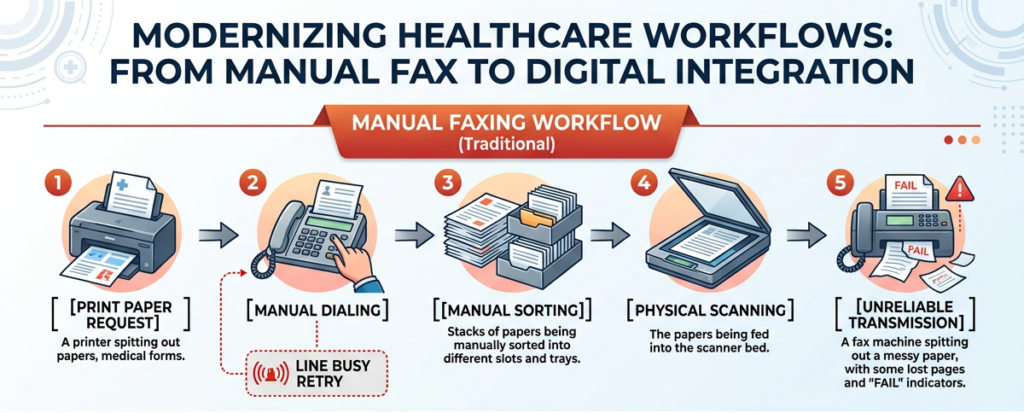
When a records department relies on manual fax lines, documents routinely drop in visual quality. A slightly blurred date of birth or a distorted barcode can render an entire packet unreadable, forcing the receiving office to reject the document. Furthermore, manual sorting introduces human error, leading to files being misfiled or left sitting on central fax trays.
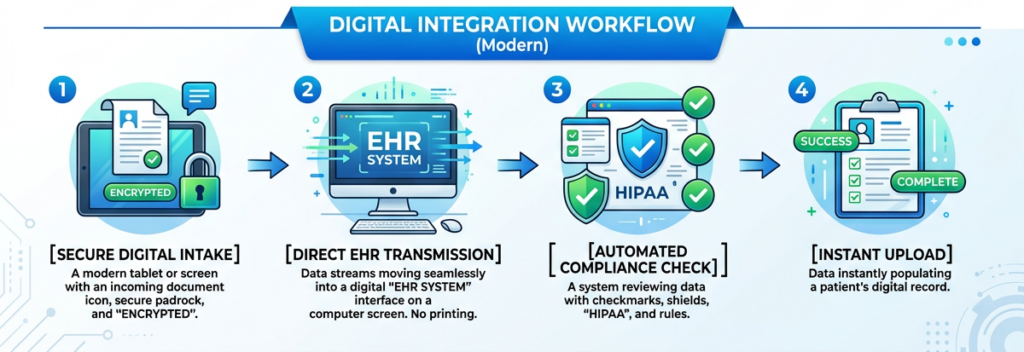
Transitioning to modern digital protocols reduces these delays. Utilizing electronic health records EHR transmission through integrated networks allows systems to communicate securely. Rather than printing, signing, faxing, and re-scanning, modern systems utilize encrypted digital connections that protect data integrity, eliminate transcribing errors, and provide real-time status tracking for administrators and legal representatives alike.
Do You Have a Team? Our best all-in-one client and top case management software simplifies everything from client intake and assessments to programs, projects, goals tracking, planning, scheduling, documentation, reporting dashboard, and progress tracking.All-in-One Case Management Software
Sign Up Today, Free
No credit card needed!
How Can You Build a Perfect, Delay-Proof Record Request?
Accelerating the release of information process requires a structured, proactive approach. By treating the request as a precise legal and clinical submission, you can ensure it clears the compliance queue on its very first pass.
The Ultimate Record Request Checklist
- Verify Identifiers Explicitly: Double-check that the patient’s full legal name, historical aliases, exact date of birth, current phone number, and mailing address match the provider’s internal registry perfectly.
- Define the Scope with Precision: Restrict the request to the exact information required. Use explicit parameters like “Cardiology consultation notes from January 1, 2026, to March 31, 2026” instead of requesting a generic, all-inclusive file.
- Attach Verifiable Legal Credentials: If you are signing as a guardian, attorney, or personal representative, place your official court orders, letters testamentary, or active power of attorney forms directly behind the main release page.
- Specify the Preferred Delivery Format: Clearly state whether you require an electronic PDF delivered via a secure file storage portal, direct electronic health records EHR transmission, or a physical, certified paper copy.
- Pre-Authorize the Fee Structure: To prevent the records department from pausing your request while waiting for a payment, include a written note stating your pre-authorization of standard, reasonable cost-based copying fees up to a specific dollar amount.
By adhering to this rigid checklist, you eliminate the typical friction points that force records clerks to set an authorization form aside. Streamlining medical office workflows on the front end ensures a smooth, predictable path for your data from the source archive directly to your secure digital platform.


People Also Ask
How long does a hospital have to release medical records?
Under federal law, hospitals have a maximum of 30 calendar days to fulfill a medical record request. They can apply for a single 30-day extension if they provide a written explanation for the delay. However, many states have enacted stricter laws that reduce this timeline to 15 days or fewer.
Can a doctor refuse to release medical records due to unpaid bills?
No, a healthcare provider cannot withhold or deny access to your medical records simply because you have an outstanding balance or unpaid medical bills. Doing so is a direct violation of the HIPAA Privacy Rule’s right of access regulations.
What is the difference between a medical record request and a subpoena?
A medical record request is a patient-initiated authorization or a voluntary disclosure form signed by a legal representative. A subpoena is a formal legal order issued by a court or an attorney during a lawsuit that compels a facility to produce records, often carrying strict statutory legal deadlines.
Can an attorney sign a medical records release form for a client?
An attorney cannot sign a standard medical records release form on behalf of a client unless they hold a specific power of attorney or if the client has signed a comprehensive authorization explicitly permitting the attorney to act as their legal representative for record procurement.
What makes a medical records release form legally invalid?
A release form is invalid if it has passed its expiration date, leaves core fields blank, fails to state who is authorized to disclose or receive the data, lacks a verifiable signature, or mixes general medical authorization with separate protected categories like psychotherapy notes.
Can a step-parent legally request a child’s medical records?
A step-parent does not have an automatic legal right to access a step-child’s medical records. To obtain the files, they must present a signed authorization from a biological parent who possesses legal custody, or provide court-ordered documentation establishing legal guardianship.
Elevating Case Management Efficiency
Managing complex medical record transfers is just one small fraction of a dedicated professional’s daily routine. Social workers, counselors, and case managers are constantly balancing client care with administrative obligations. When your daily workflow requires you to coordinate schedules, manage intake documentation, track client progress, and maintain strict data security, running disparate software applications creates systemic drag.
To truly streamline medical office workflows and maximize your impact, you need an infrastructure built specifically for the unique demands of human services. Case Management Hub transitions you from fragmented tools to an integrated solution that allows your organization to eliminate backlogs, minimize compliance risks, and return focus to what matters most: serving your community.
Download the free Case Management Hub Authorization for Release of Health Information Template along with many other free assessment templates by:
Step 1:
Signup for a 21-day free trial (no credit card needed).
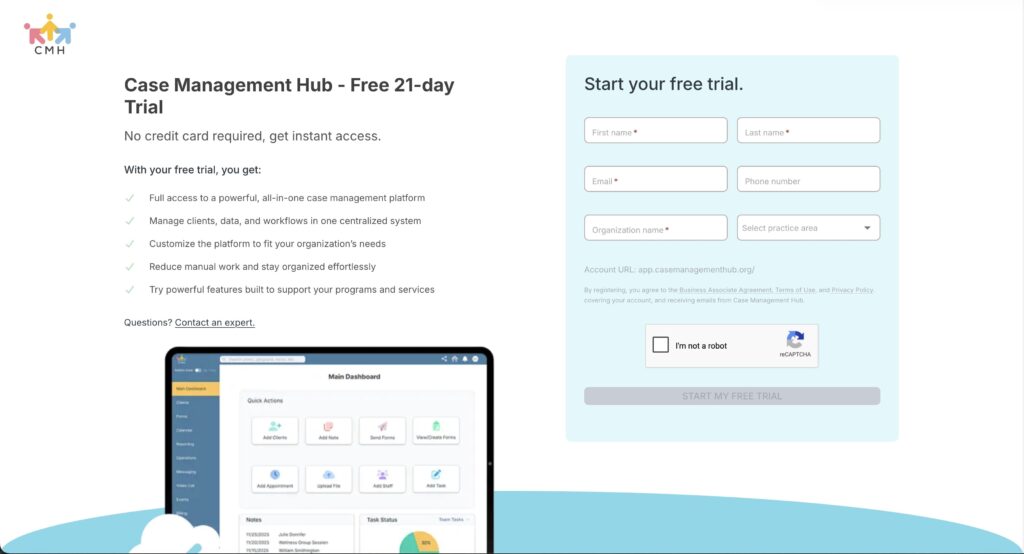
Step 2:
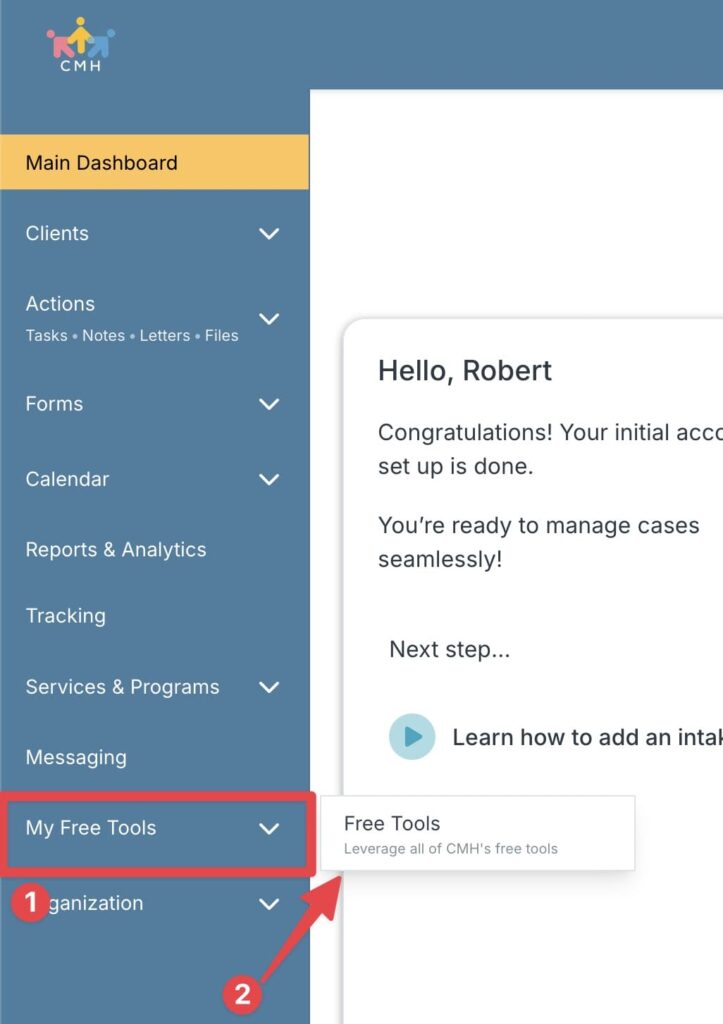
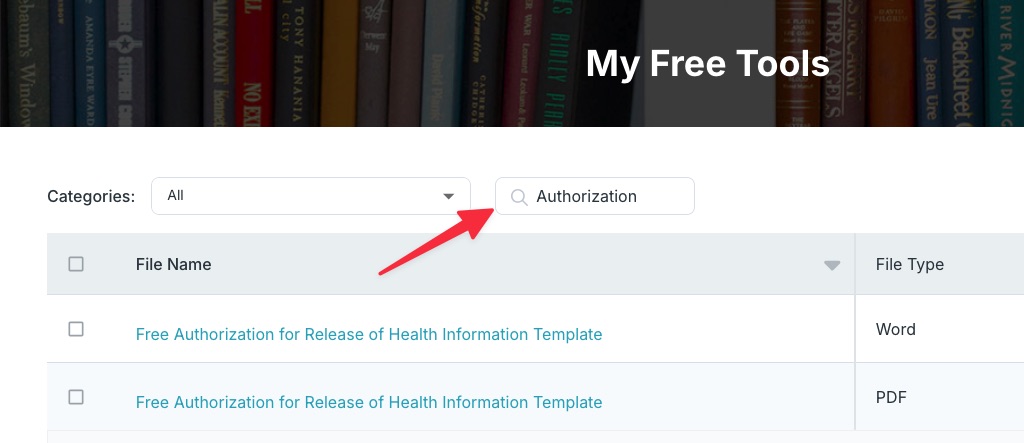
Click on Free Tools from the sidebar and search for Authorization.
Step 3:
Click the title of the file start the download or you can select multiple files to download them all at once.
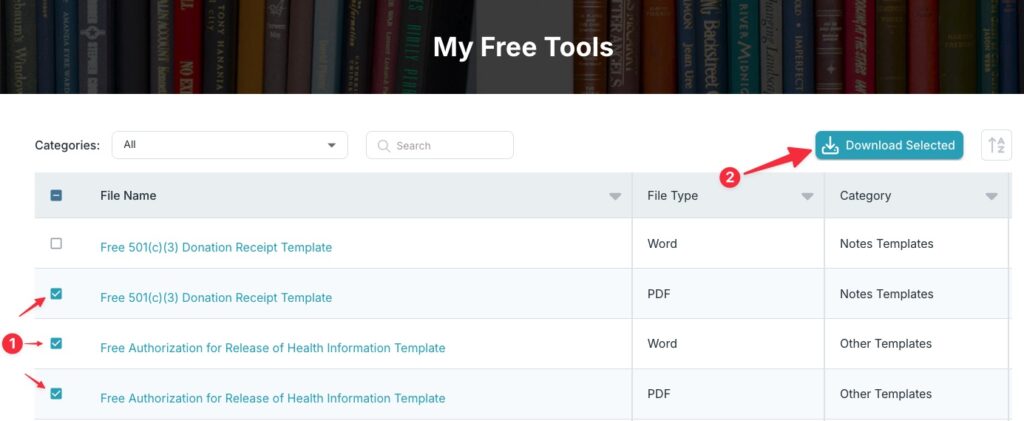
Tip: Many of the free tools come in different file types such as Word, PDF, PowerPoint, and Excel.
Take Control of Your Practice Today
Experience the difference of a unified ecosystem with Case Management Hub, built entirely for your daily workflow. Sign up for a free 21-day trial of our comprehensive case management platform today. No credit card is required, giving you instant, risk-free access to secure document storage, automated intakes, and effortless progress tracking.
Frequently Asked Questions
A valid digital signature must comply with the federal ESIGN Act and state Uniform Electronic Transactions Acts (UETA). It must feature a secure, time-stamped digital audit trail that verifies the identity of the signer, records their explicit intent to sign, and connects directly to the underlying document.
To request records for a deceased individual, you must submit the authorization alongside documentation proving your legal appointment as the executor, administrator, or personal representative of the deceased individual's estate, issued directly by a probate court.
Yes, psychotherapy notes are explicitly separated from general medical histories under federal law. They document private conversations during counseling sessions and require a dedicated, separate authorization form that cannot be combined with any other disclosure requests.
Providers may charge a reasonable, cost-based fee for supplying medical records. This fee is strictly limited to the cost of labor for copying, digital media supplies (like a flash drive), postage if mailed, and the preparation of an explanation or summary if requested by the patient.
If a covered entity fails to respond within the federally mandated 30-day window, you should submit a formal written follow-up highlighting their compliance breach. If they continue to ignore the request, you have the right to file an official complaint with the Department of Health and Human Services Office for Civil Rights (OCR).
An all-in-one platform centralizes client data storage and intake forms. By keeping documents within a singular, secure ecosystem, it removes the need to print, scan, or manually fax information, eliminating transcription errors and protecting PHI security.What constitutes a legal signature on a digital release form?
How do I request records for an individual who is deceased?
Are psychotherapy notes handled differently than general medical records?
Can a provider charge a fee for transferring electronic medical records?
What should I do if a medical office ignores my record request?
How does an all-in-one client management platform reduce data transmission errors?
👉 Try it free today - No credit card needed
Note: Content on this website (socialworkportal.com) is copyrighted and protected under applicable copyright laws. Unauthorized reproduction, distribution, or use of any content from the website, without explicit written permission, is strictly prohibited. Read: Terms of Use.
Social Work Portal Disclaimer: Social Work Portal is not a social work agency and we do not refer social workers. This web site is provided for educational and informational purposes only and does not constitute providing medical advice or professional social and healthcare services. The information provided should not be used for diagnosing or treating a health problem or disease, and those seeking personal medical advice should consult with ... Read our full disclaimer here: Social Work Portal Disclaimer.