A Reporting Blueprint for Macro Advocates and Organizers
At the end of every fiscal quarter, macro social workers face an exhausting paradox. You entered this field to challenge oppressive policy, mobilize disenfranchised neighborhoods, and pass protective legislation. Instead, you spend the final two weeks of every quarter trapped in spreadsheet purgatory. You are manually reconciling ragged sign-in sheets from community forums, tracking down caseworker notebooks, and attempting to translate grassroots collective action into rigid, bureaucratic grant matrices.
This administrative drag is more than a nuisance; it is an organizational vulnerability. Private foundations, municipal funders, and federal grantors operate on strict audit trails. If your team cannot draw a direct, verifiable line from your field hours to measurable community deliverables, your funding renewal is dead on arrival. Worse, scrambling to assemble retrospective data exposes your agency to compliance clawbacks and drains your staff of the energy needed for actual policy campaigns. Automating grant reporting social work systems is the only sustainable way to safeguard funding while keeping advocates focused where they belong: on the frontlines of systemic change.
Let’s get started
Watch this video:
or
read the guide below.
What You’ll Learn in This Guide
- Why traditional casework metrics fail to capture macro advocacy outcomes.
- How to establish automated, bulletproof firewalls between lobbying hours and educational advocacy.
- Practical methods to convert daily community touchpoints into quantifiable legislative evidence.
- A direct operational audit comparing manual tracking grids to automated reporting platforms.
- Step-by-step digital workflows that protect vulnerable constituent privacy while producing audit-proof donor reports.
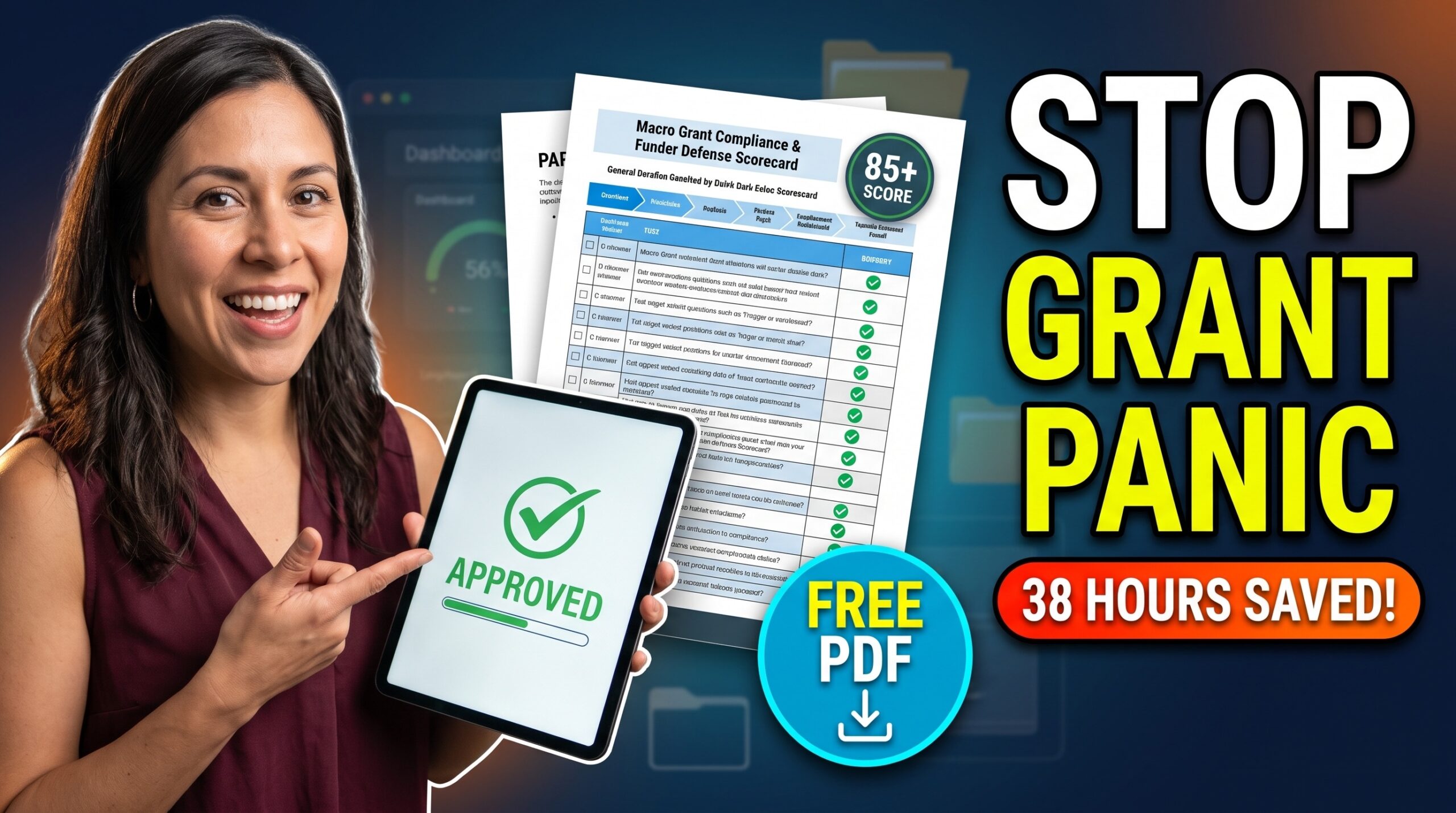
Free Download: Macro Grant Compliance & Funder Defense Scorecard
Download the free Inpatient Discharge Risk Interception Protocol PDF. This practical desk reference is built specifically for hospital social workers and inpatient case managers and includes a rapid 24-hour admission risk matrix, bedside teach-back verification steps, and CMS-defensible clinical phrase templates to justify necessary transition delays in your progress notes.
Download Your Free Resources Here
💡All-in-one Case Management Software.
Everything in one place: clients, notes, forms, appointments, reports, and outcomes.
👉 Try it Free - No credit card needed
Why Is Political Social Work Grant Reporting So Difficult to Track?
Clinical interventions are comparatively straightforward to measure: a client attends twelve cognitive behavioral therapy sessions, scores improve on a standardized assessment, or an individual secures stable housing. Political social work does not move in straight lines. Policy campaigns involve multi-year arcs, hostile legislative committee hearings, and shifting public sentiment. When an institutional funder demands to know what their $75,000 community organizing grant achieved over a six-month period, standard clinical reporting frameworks completely break down.
The underlying friction comes from the unique grant reporting challenges in human services, specifically within macro programs where interactions are fluid and multi-layered. A single resident might register to vote at a street canvass, attend three tenant rights clinics, join an advocacy working group, and eventually speak before city council. When organizers record these touchpoints on clipboards, personal calendars, and desktop spreadsheets, the narrative fractures. Program leaders cannot pull an accurate cohort history without spending days stitching together contradictory records.
According to research published by the National Council of Nonprofits, administrative compliance and complex funder reporting mandates absorb up to thirty percent of average nonprofit staff bandwidth, almost always without dedicated overhead funding from grantmakers. When staff are forced to reconstruct months of community organizing retrospectively, human error skyrockets. Key milestones get omitted, community reach gets drastically undercounted, and skilled advocates burn out under the weight of preventable administrative exhaustion.
How Do Advocates Bridge the Gap Between Casework and Legislative Wins?
Systemic policy reform does not start in legislative chambers; it starts in the intake room. Direct-service social workers witness institutional failure long before it appears on a policy think tank radar. They see Medicaid denials surge, regional eviction rates spike, and local behavioral health beds disappear. Yet agencies consistently lack the standardized macro social work program evaluation methods needed to aggregate those isolated client crises into credible, policy-ready empirical evidence.
The solution requires embedding macro data capture directly into everyday intake protocols. When frontline workers capture social determinants and institutional barriers using structured, mandatory fields, individual case notes automatically convert into systemic intelligence. When advocating before a legislative subcommittee, your team no longer relies on subjective anecdotes. Instead, you produce verified figures proving that four hundred local families were denied emergency shelter over six months due to a specific administrative loophole.
This seamless data loop is central to documenting legislative impact for grant renewals. Institutional donors and foundation boards do not renew grants based on vague intentions; they invest in demonstrated leverage. Showing how frontline case records directly informed a policy white paper, which subsequently drove statutory amendments in a municipal budget, provides unquestionable justification for continued funding.
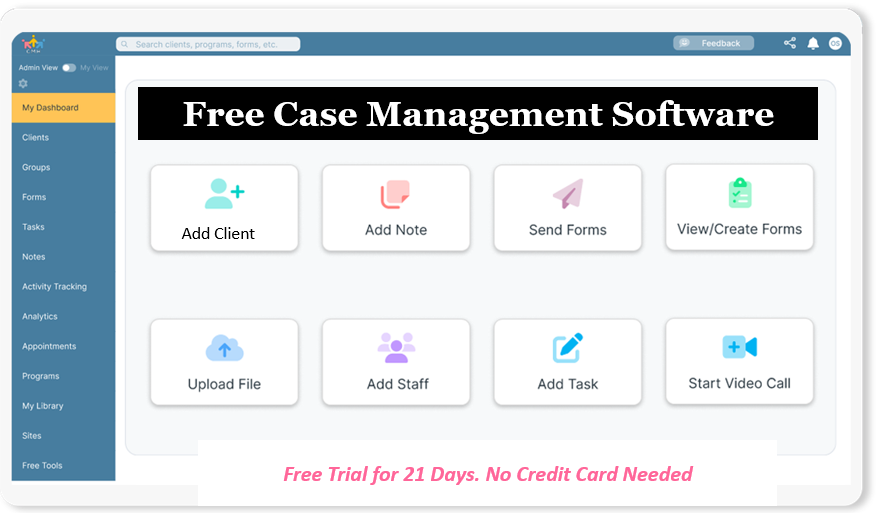
👉 Try it Free - Free Case Management System
How to Report Lobbying vs Advocacy on Grants Without Compromising Compliance?
Nothing induces panic in a nonprofit board faster than the threat of an IRS inquiry. Mastering how to report lobbying vs advocacy on grants is an absolute operational requirement for any organization operating under public or philanthropic support. Federal statutes and IRS guidelines under Section 501(c)(3) strictly regulate the volume of lobbying an organization may conduct, while private foundations almost universally forbid the use of their grant dollars for direct legislative lobbying.
Too many agencies respond with crippling caution, backing away from vital policy debates out of fear. Seasoned political social workers avoid this trap by maintaining rigorous, audit-proof firewalls in their time tracking workflows. Nonpartisan civic engagement, community education, policy research, and public agency testimony qualify as public advocacy. In contrast, urging a lawmaker to pass a specific bill, or urging the public to pressure a committee on a pending vote, falls strictly under lobbying.
To defend your agency during state monitoring visits and build an airtight nonprofit grant audit preparation checklist, your documentation must isolate these activities at the point of entry. When staff log meetings, community rallies, or coalition strategy sessions, the system must force a selection: is this nonpartisan community education or direct legislative lobbying? Storing these records in an immutable, timestamped platform guarantees you can prove to any auditor that restricted grant dollars funded allowable advocacy, while lobbying hours drew strictly from unrestricted pools.
What Key Indicators Demonstrate Real Civic Engagement to Donors?
Grantmakers funding advocacy want to fund genuine grassroots power, not hollow headcounts. Developing sharp policy advocacy skills for macro social change enables practitioners to design community campaigns that generate measurable legislative influence. When measuring civic engagement metrics for funders, successful political social workers track constituent progression along a defined continuum of civic engagement, proving that their outreach produces active community leaders rather than passive event attendees.
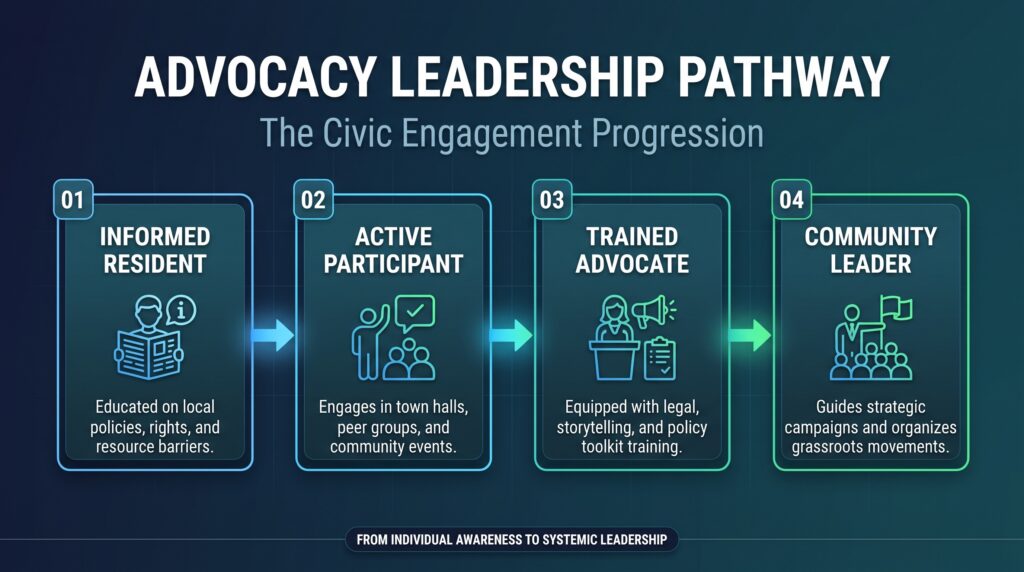
To demonstrate meaningful return on investment, your data infrastructure must capture metrics across three distinct phases of civic growth:
- Reach and Acquisition: The volume of unique constituents engaged through canvassing, community forums, or digital intake, segmented cleanly by municipal ward or legislative district.
- Capacity and Education: Completion rates for multi-week civic academies, legislative analysis seminars, and media spokesperson trainings.
- Direct Mobilization: Documented actions taken by trained constituents, such as submitting formal agency public comments, registering voters, speaking at town halls, or leading delegations on legislative lobby days.
Mastering how to quantify grassroots mobilization for donors depends entirely on showing retention and upward movement along this ladder. Understanding the fundamentals of how to measure nonprofit impact separates high-performing advocacy programs from struggling ones. A grant report stating that your program organized three neighborhood meetings is weak. A report demonstrating that one hundred twenty residents attended an educational series, with forty-two advancing to deliver spoken testimony at a zoning commission hearing, gives funders verifiable proof of community transformation.
How Digital Tools Streamline Political Social Work Grant Reporting
Transitioning away from brittle, chaotic spreadsheets requires a purpose-built operational pipeline. Leveraging a centralized nonprofit case reporting system for foundations automates the tedious aggregation process through five distinct phases:
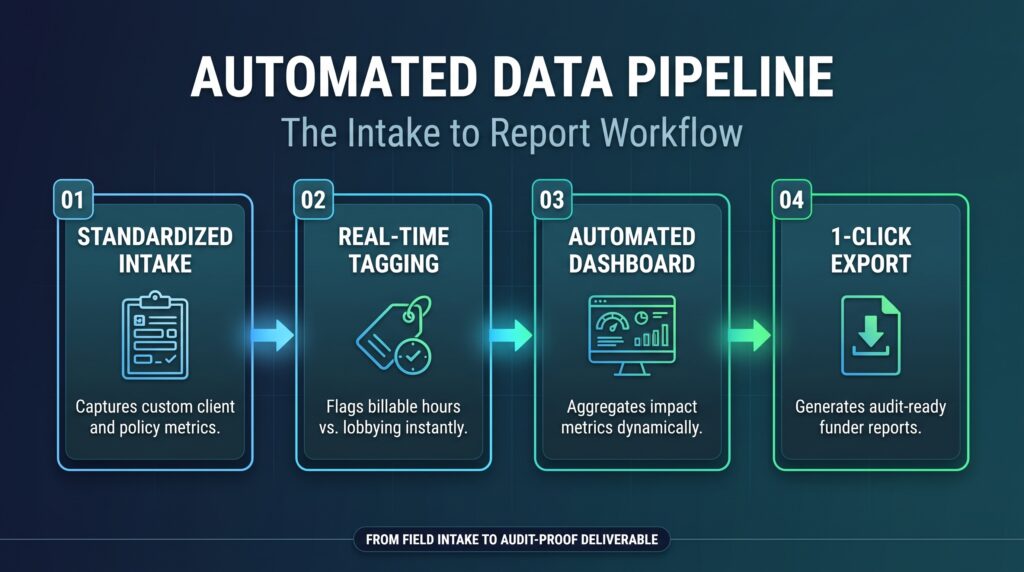
Step 1: Standardizing Structured Intake Fields
Configure digital intake portals that instantly collect macro-relevant indicators alongside contact details. Track legislative districts, language preferences, housing vulnerability status, and priority policy issues from the very first interaction.
Step 2: Enforcing Real-Time Activity and Funding Tags
Eliminate retrospective logging. Field organizers and policy analysts log interactions from their phone or laptop immediately after an action concludes. Each record requires tagging the applicable grant project, the activity type, and the nonpartisan versus lobbying designation.
Step 3: Centralizing Records in Case Management Software for Grant Tracking
Funnel all participant logs, case notes, and campaign rosters into a unified database. When teams learn how to automate case management tasks, administrative drag drops across every department. Deploying dedicated case management software for grant tracking ensures your constituent profiles, volunteer hours, and policy outcomes live in a secure, role-restricted ecosystem instead of scattered personal drives.
Step 4: Monitoring Automated Client Outcome Dashboards for Nonprofits
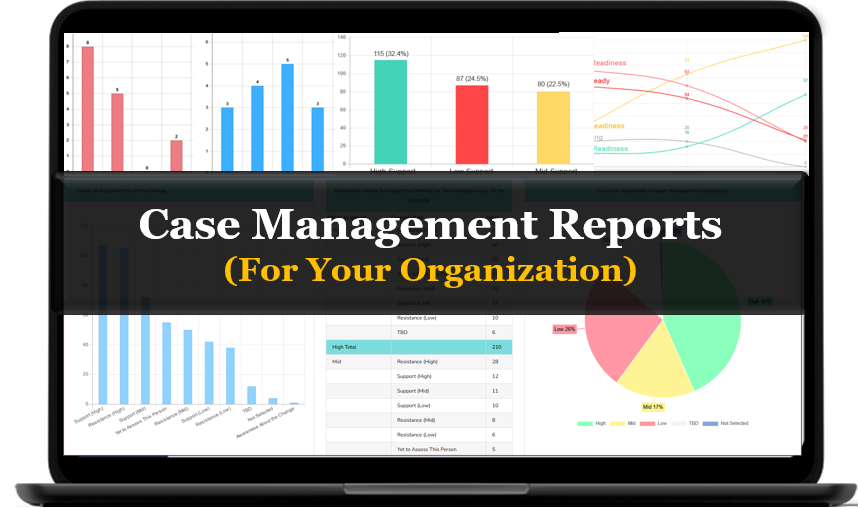
Replace manual quarter-end data cleanup with automated client outcome dashboards for nonprofits. Program managers monitor real-time charts displaying total hours invested, community training milestones completed, and policy meetings conducted against active grant deliverables.
Step 5: Generating Audit-Ready Deliverables in Minutes
When grant reports come due, utilize pre-configured social work grant reporting templates to generate comprehensive funder packets. With one click, export quantitative metric charts paired with anonymized, qualitative case vignettes, formatted to match funder specifications.
All-in-One Case Management Software
Sign Up Today, Free
No credit card needed!
Do You Have a Team? | ||
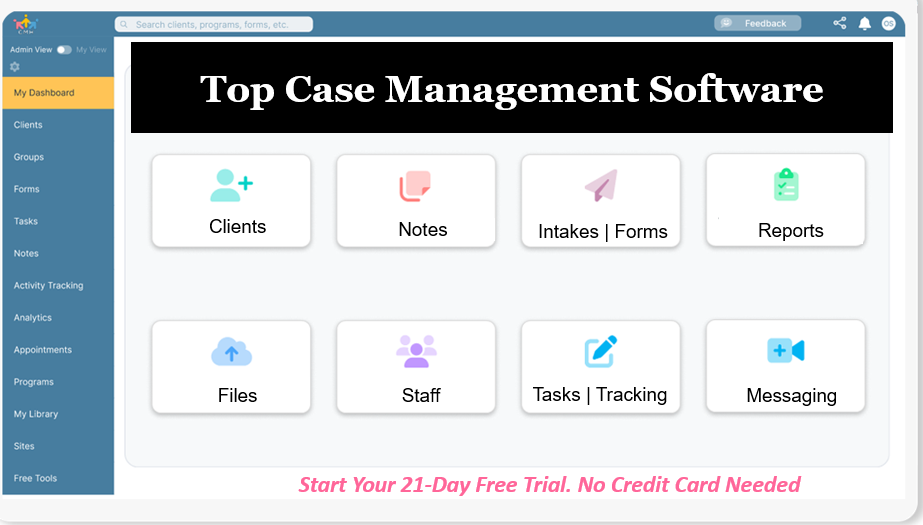
Our best all-in-one client and top case management software simplifies everything from client intake and assessments to programs, projects, goals tracking, planning, scheduling, documentation, reporting dashboard, and progress tracking.
How Do Manual Spreadsheets Compare to Automated Digital Workflows?
Relying on manual tracking is a constant operational liability. The table below illustrates the stark divide between legacy manual habits and automated systems:
| Operational Metric | Manual / Paper-Based Workflow | Automated Digital Workflow |
| Data Capture | Paper sign-in sheets, scattered Excel files, fragmented text threads | Mobile and desktop digital intake portals with mandatory fields |
| Quarterly Reporting Time | 20 to 40 hours per program manager spent merging spreadsheets | Under 2 hours of final data validation and instant report generation |
| Audit Defense & Proof | Broken formulas, unverified entries, high risk of funder clawbacks | Immutable, timestamped audit logs with role-based staff tracking |
| Lobbying vs. Advocacy Split | Estimated weeks later based on fragmented calendar entries | Logged at point of entry with automated expenditure code tagging |
| Constituent Data Privacy | Unencrypted files stored across local drives and shared emails | Encrypted, role-restricted, HIPAA-compliant cloud architecture |
| Funder Reporting Deliverables | Manually typed summary documents with basic bar charts | One-click comprehensive reporting packages with visual analytics |
| Renewal Forecasting | Blind spots; discovering missed contract benchmarks at deadline | Continuous visual pacing against grant milestones all quarter long |
How to Protect Constituent Privacy When Reporting Macro Advocacy Data?
Advocacy often centers on highly marginalized populations, including undocumented families, court-involved youth, domestic violence survivors, and individuals receiving psychiatric care. While the NASW Code of Ethics obligates social workers to challenge social injustice through political action, it places equal weight on maintaining strict client confidentiality.
Satisfying nonprofit grant reporting requirements social work guidelines requires absolute data segregation. Grantmakers frequently request qualitative narratives to illustrate the human side of policy reform, but handing over unredacted case notes or identifying rosters is an ethical failure and a legal liability. Programs must rely on HIPAA compliant case software for grant funded programs that permanently separates private clinical details from macro-level outcome reporting.
By configuring case management tools with custom grant fields, your data administrators can extract completely de-identified cohort analytics. The platform strips away names, street addresses, and identifying dates, outputting only high-level demographic trends, systemic barrier frequencies, and aggregate outcome milestones. Your agency delivers the empirical proof funders demand while safeguarding client safety and institutional trust.

People Also Ask
Can political social workers lobby lawmakers using grant funds?
No, federal grant funds and standard private foundation awards strictly prohibit lobbying expenditures. Social workers may participate in lobbying, but their organizations must use segregated tracking to prove these hours were financed entirely by unrestricted funds.
What is the primary difference between macro advocacy and clinical casework?
Clinical casework focuses on diagnosing, treating, and supporting individual clients through therapy, direct aid, and case coordination. Macro advocacy focuses on reforming institutions, altering local or national laws, and organizing communities to dismantle systemic inequities.
How do nonprofit organizations track lobbying hours accurately?
Organizations require staff to categorize hours at the time of entry using digital tracking software. Time spent researching legislation, educating the public, or organizing forums is categorized as advocacy, while direct outreach to lawmakers regarding specific bills is tagged as lobbying.
Why is constituent data de-identification mandatory in grant reports?
De-identification protects vulnerable individuals from legal, medical, or political retaliation while fulfilling privacy laws and professional ethics. Grantmakers require evidence of broad community impact, not access to identifying client records.
How do standardized intake fields improve reporting accuracy?
Standardized intake fields force staff to capture required grant indicators during the initial interaction, eliminating retrospective guesswork. This consistency ensures clean demographic baselines and eliminates the need for manual data cleaning before submission deadlines.
Can case management platforms track grassroots advocacy campaigns?
Yes, modern case management software allows programs to track policy campaigns by treating community coalitions and advocacy cohorts as structured projects. Organizers can track participant attendance, leadership development, and legislative actions within secure individual profiles.
Streamline Your Advocacy Reporting With Case Management Hub
Running effective policy campaigns while maintaining clinical-grade compliance requires an infrastructure built specifically for the realities of human service advocacy. Case Management Hub removes the administrative friction that drains macro teams, de-risking your funding cycles and allowing you to streamline quarterly grant reports human services initiatives must submit to survive.
Case Management Hub delivers the specialized toolkit your program needs to unify micro operations and macro campaigns:
- Custom Intake and Funder Fields: Build tailored intake forms that systematically capture grant indicators, legislative districts, and policy priorities from day one.
- Centralized Constituent Profiles: Track individual engagement histories, training cohort milestones, and lobby day participation within a unified, encrypted platform.
- Integrated Clinical and Macro Notes (SOAP/DAP): Document individual client interactions and community organizing initiatives simultaneously without crossing data streams. Whether staff need to write a SOAP note following a crisis intervention or log a multi-stakeholder policy briefing, the platform keeps records organized, compliant, and instantly retrievable.
- Automated Outcome Dashboards: Produce executive-ready performance visuals and audit-proof summary metrics with one click, cutting reporting prep from weeks to minutes.
- HIPAA-Compliant Role Permissions: Safeguard sensitive constituent records with enterprise-grade encryption, detailed activity audit logs, and granular staff access controls.
Stop losing valuable advocacy hours to spreadsheet collation. Give your team the operational foundation to turn community action into permanent legislative progress.
Start Your 21-Day Free Trial (No Credit Card Required)
Frequently Asked Questions
How does specialized software protect our agency during a grant audit?
The platform generates an immutable, timestamped record for every client interaction, training session, and outreach event entered into the database. When a state agency or private foundation conducts a desk audit, you can instantly pull filtered, verified logs matching exact dates, assigned staff, and contract deliverables without relying on unverified paper logs.
Will rolling out new software increase the daily workload for field organizers?
No, modern platforms replace redundant administrative steps with streamlined digital entry and reusable templates. Field organizers enter participant details and activity tags once on mobile or desktop, and the platform automatically populates project rosters, demographic trackers, and macro grant summaries simultaneously.
How does the platform maintain HIPAA compliance during advocacy campaigns?
Case Management Hub applies enterprise encryption to all data at rest and in transit, supported by role-based access restrictions. When compiling reports for external funders, administrators deploy automated de-identification filters that extract necessary cohort trends while permanently withholding protected health information.
Can our team manage separate grants with competing fiscal cycles in one system?
Yes, the system allows you to link clients, outreach initiatives, and staff hours to multiple distinct funding streams using granular grant tags. You can run customized reports for a private foundation on a calendar year cycle while concurrently tracking state contracts operating on a July fiscal year.
What is the most effective way to prepare our team for this software transition?
Start by auditing your active grant agreements to identify the non-negotiable performance indicators required by each funder. Next, configure your digital intake forms and activity dropdown menus to capture those specific data points, and train your frontline staff on how to tag their daily hours accurately.
How does automated grant tracking reduce professional burnout?
Automating data compilation removes the high-pressure administrative sprint that overwhelms staff at the end of each fiscal quarter. Capturing structured data continuously during normal daily operations allows directors to generate polished funder reports in minutes, freeing advocates to focus on community impact rather than administrative survival.
👉 Try it free today - No credit card needed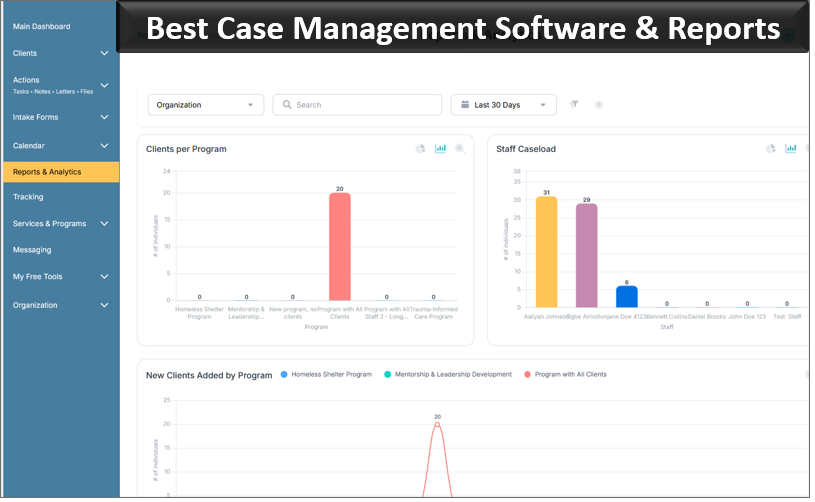
Note: Content on this website (socialworkportal.com) is copyrighted and protected under applicable copyright laws. Unauthorized reproduction, distribution, or use of any content from the website, without explicit written permission, is strictly prohibited. Read: Terms of Use.
Social Work Portal Disclaimer: Social Work Portal is not a social work agency and we do not refer social workers. This web site is provided for educational and informational purposes only and does not constitute providing medical advice or professional social and healthcare services. The information provided should not be used for diagnosing or treating a health problem or disease, and those seeking personal medical advice should consult with ... Read our full disclaimer here: Social Work Portal Disclaimer.