Modernize intakes, secure data, and reclaim billable hours.
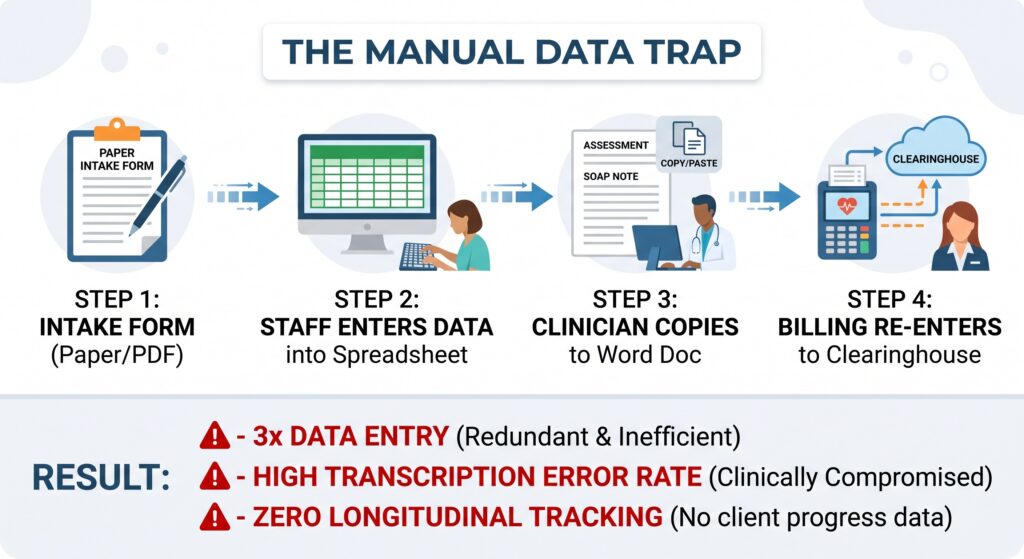
Spreadsheets were built to count numbers, not capture human lives. When behavioral health agencies and private practices rely on shared spreadsheets, disconnected PDFs, or paper forms to track biopsychosocial (BPSS) intakes, the clinical workflow buckles under operational friction.
Clinical social workers, case managers, and clinic directors spend hours manually re-entering demographic information, cross-referencing diagnostic codes, and chasing down missing medical histories. More concerning than lost time is clinical risk. Fragmented documents hide red flags, foster version-control confusion, and increase compliance vulnerabilities under HIPAA and state documentation mandates.
A comprehensive biopsychosocial assessment is the anchor of quality clinical care. It bridges biological predispositions, psychological functioning, social environments, and spiritual beliefs into a unified treatment plan. Attempting to manage that deep clinical inquiry through rigid spreadsheet rows compromises care delivery, leads to staff burnout, and slows intake turnaround times.
Let’s get started
Watch this video:
or
read the guide below.
What You’ll Learn in This Guide
- Why spreadsheet-based assessments create clinical blindness and severe regulatory liability
- The core components of the BPSS framework and how manual entry breaks their diagnostic value
- Practical steps modern platforms use to automate assessment workflows from pre-intake to treatment plans
- A direct comparison between manual assessment tracking and automated clinical platforms
- Answers to common operational, ethical, and billing questions about intake automation
- How your agency can safely transition away from spreadsheets without disrupting active client caseloads
💡All-in-one Case Management Software.
Everything in one place: clients, notes, forms, appointments, reports, and outcomes.
👉 Try it Free - No credit card needed
Why Are Spreadsheets Dangerous for BPSS Assessments?
Spreadsheets fail behavioral health practices because they lack the clinical architecture required for sensitive medical records. While a spreadsheet template can list basic interview questions, it cannot enforce field validation, flag urgent clinical risk indicators, or maintain audit-trailed HIPAA security.
Clinical Blindness and Fragmented Records
When an intake coordinator records medical history in one tab, a therapist notes trauma history in a separate document, and a case manager tracks housing assistance in a master tracker, the complete clinical picture dissolves. Clinicians are forced to synthesize complex client stories from fragmented data points. Critical details, such as subtle adverse medication interactions or worsening housing instability, slip through the cracks.
The Administrative Time Tax
A survey published by the Mental Health Million Project and supported by research from the American Psychological Association (APA) indicates that behavioral health providers spend between 30% and 40% of their working hours on administrative documentation rather than direct patient care. When clinicians must manually type identical client information across screening tools, intake summaries, and state reporting sheets, operational costs soar while billable capacity plummets.
HIPAA Violations and Version Control Failures
Spreadsheets shared across local networks, emailed between clinical supervisors, or saved onto desktop folders routinely violate HIPAA physical, technical, and administrative safeguards. They lack granular user role permissions, meaning anyone with file access can view an entire roster of sensitive psychiatric notes. Furthermore, multiple staff members editing concurrent versions inevitably creates data overwrites, lost clinical updates, and unverified entries that fail insurance payer audits.
👉 Try it Free - Free Case Management System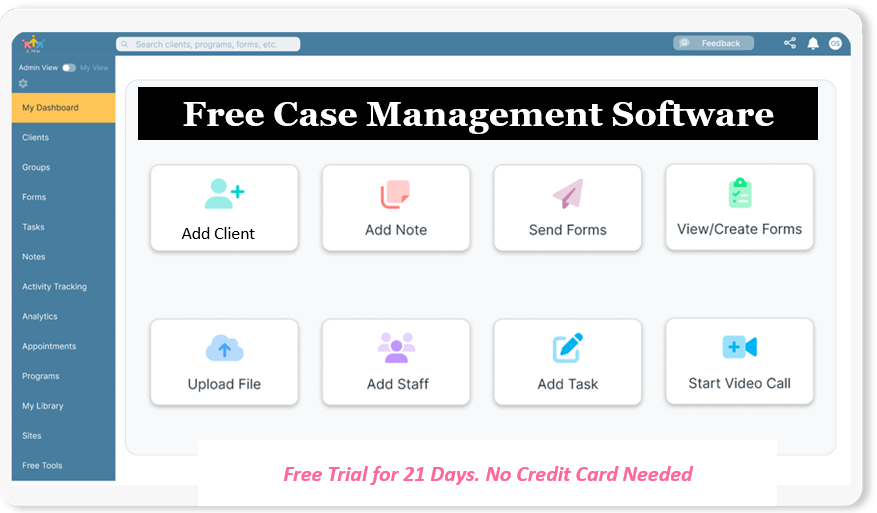
What Belong in a Comprehensive BPSS Assessment?
A robust biopsychosocial spiritual assessment evaluates the whole individual across four intersecting clinical domains. Manual spreadsheets flatten these dynamic dimensions into isolated rows, obscuring how each domain influences the client’s current presentation.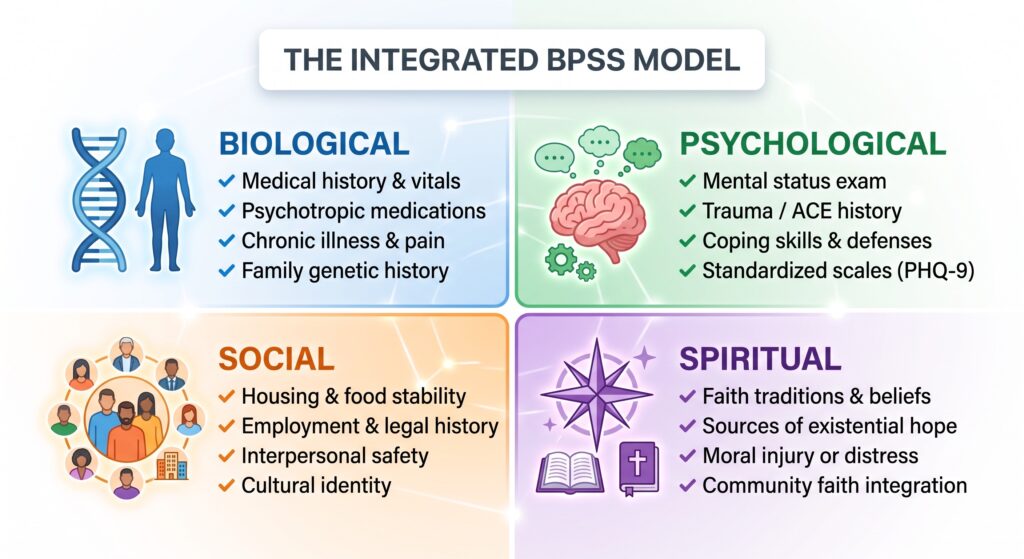
1. The Biological Domain
This section tracks physical health factors that directly shape mental wellness:
- Medical diagnoses, chronic pain, and physical limitations
- Current psychotropic and general medications, including dosages, prescriber details, and adherence
- Family genetic history of psychiatric conditions or substance use
- Sleep hygiene, nutritional intake, and physical mobility
2. The Psychological Domain
Here, the clinician assesses internal cognitive and emotional processes:
- Chief presenting complaint in the client’s own words
- Psychiatric history, prior hospitalizations, outpatient episodes, and treatment responses
- Mental Status Examination (MSE) observations across appearance, thought process, affect, and insight
- Standardized psychological symptom screeners (such as PHQ-9, GAD-7, or PCL-5)
3. The Social Domain
Social determinants of health often dictate treatment viability:
- Living conditions, housing security, and neighborhood safety
- Family systems, relationship health, domestic safety, and social support networks
- Employment status, educational background, and vocational barriers
- Involvement with the justice system, probation, or child welfare agencies
4. The Spiritual Domain
Spiritual and cultural considerations provide essential protective factors:
- Personal faith traditions, cultural affiliations, and religious communities
- Core existential values, worldviews, and individual sources of meaning
- Experiences of spiritual abuse, moral distress, or values conflicts with family of origin
How Digital Tools Streamline BPSS Assessments
Modern behavioral health platforms turn static intake forms into dynamic, automated workflows. By standardizing data collection, centralizing client files, and connecting assessments directly to care plans, digital tools save clinical hours and eliminate transcription errors.
Step 1: Self-Service Digital Client Pre-Intakes
Instead of handing a clipboard to an anxious client in the waiting room or having staff retype paper forms, automated systems send secure, mobile-friendly intake forms via email or text prior to the appointment. Clients complete demographic information, medical history, initial symptom checklists, and releases of information from home.
Step 2: Automated Data Population
When the client completes their digital intake, the information populates directly into their electronic chart. Clinicians start the initial assessment interview with baseline history, medications, and contact information already organized, allowing the session to focus on relational rapport, observation, and clinical nuance.
Step 3: Conditional Logic and Dynamic Prompting
Unlike a static spreadsheet with infinite blank cells, specialized digital assessment templates adapt in real time:
- Selecting “Yes” on a history of self-harm automatically opens an integrated Columbia Suicide Severity Rating Scale (C-SSRS) risk protocol.
- Flagging a substance use history immediately prompts ASAM Criteria placement dimensions.
- Identifying chronic pain prompts functional impact questions and primary care provider release forms.
Step 4: One-Click Clinical Synthesis and Formulation
Once the interview is complete, the software pulls structured assessment inputs directly into draft diagnostic summaries and SOAP or DAP clinical progress notes. Clinicians review, edit, and add their clinical interpretation without having to retype findings from scratch.
Step 5: Direct Conversion into Actionable Goal Tracking
The digital BPSS assessment does not sit in an archive; it immediately feeds the clinical treatment plan. Problems identified in the social or psychological domains can be converted into measurable treatment goals, objective benchmarks, and specific case management interventions with assigned review dates.
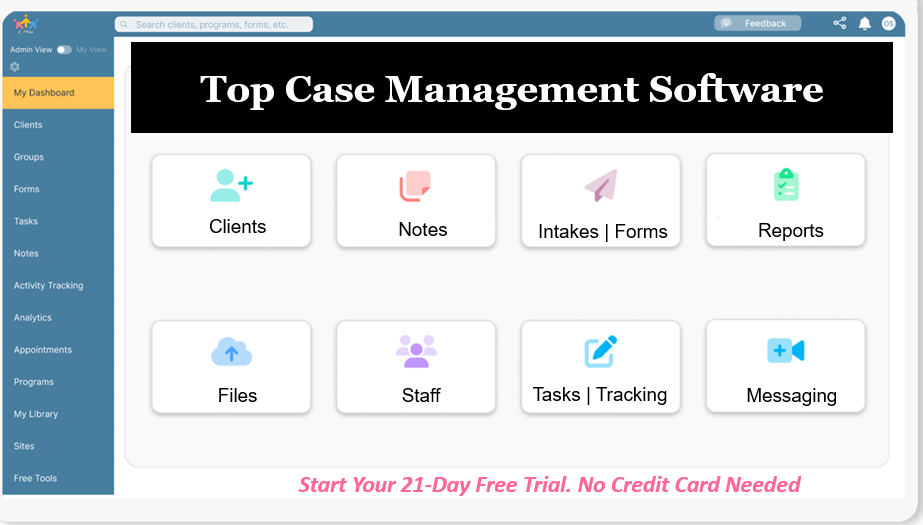
Do You Have a Team? Our best all-in-one client and top case management software simplifies everything from client intake and assessments to programs, projects, goals tracking, planning, scheduling, documentation, reporting dashboard, and progress tracking.All-in-One Case Management Software
Sign Up Today, Free
No credit card needed!
How Do Manual Spreadsheets Compare to Automated Platforms?
Transitioning from manual tracking to an integrated clinical system changes daily administrative capacity across every clinical role:
| Feature / Operational Capability | Manual Spreadsheets & Paper Files | Automated Case Management Platforms |
| Data Security & Access | Generic passwords, easy accidental sharing, no access segmentation | HIPAA-compliant role-based access control with complete audit trails |
| Intake Completion Speed | 60 to 90 minutes of manual data entry and clinical synthesis | 20 to 30 minutes via automated pre-population and dynamic templates |
| Risk Detection & Alerts | Relies entirely on manual chart review; easy to miss subtle flags | Automatic alerts for elevated suicide screeners, gaps in care, or missing forms |
| Data Integrity & Consistency | High risk of overwritten files, broken formulas, and missing values | Standardized validation rules; required fields ensure zero missed questions |
| Treatment Plan Integration | Disconnected; goals must be manually recopied into separate care plans | One-click transition from assessment discoveries to measurable client goals |
| Compliance & Audit Readiness | High risk of missing signatures, outdated versions, and audit fines | Timed signatures, locked clinical versions, and automated compliance logs |

People Also Ask
Can I use Microsoft Excel or Google Sheets for HIPAA-compliant BPSS assessments?
While Google Workspace and Microsoft 365 can be configured with Business Associate Agreements (BAAs), standard spreadsheets lack essential clinical controls. They do not provide role-based field restrictions, tamper-proof electronic signatures, automated audit trails, or native integration with clinical treatment plans, creating significant regulatory and operational risks.
How long does a comprehensive BPSS assessment usually take to complete?
A traditional biopsychosocial assessment typically requires 60 to 90 minutes of client interviewing, followed by an additional 30 to 45 minutes of manual synthesis and note writing. Using automated pre-intake forms and digital assessment templates cuts documentation time by more than half while improving documentation detail.
What is the primary difference between a BPS and a BPSS assessment?
A standard biopsychosocial (BPS) assessment focuses exclusively on biological, psychological, and social variables. A biopsychosocial spiritual (BPSS) assessment explicitly incorporates the spiritual and existential domain, acknowledging that faith traditions, existential beliefs, and moral values serve as critical resources or potential stressors in clinical recovery.
How do automated BPSS tools help maintain medical necessity for insurance billing?
Automated tools enforce structured documentation of DSM-5 diagnostic criteria, functional impairment, and specific treatment recommendations. This structured clinical formulation provides immediate, audit-proof justification for outpatient psychotherapy, psychiatric services, and targeted case management claims.
What happens to historical client data stored in legacy spreadsheets?
Most modern behavioral health platforms support secure CSV and spreadsheet data migrations. Practice administrators can bulk-import client rosters, contact details, and basic case notes directly into the secure platform, retiring old spreadsheets without data loss.
Can custom assessment questions be added to digital BPSS templates?
Yes. Professional behavioral health platforms allow clinical supervisors to configure standard assessment templates to match specific agency needs, including state-mandated intake questions, grant-funded reporting metrics, and specialized clinical screening batteries.
Modernize Your Intake Workflow with Case Management Hub
Moving away from spreadsheets does not have to mean adopting rigid, bloated hospital software that gets in your way.
Case Management Hub provides behavioral health clinics, private practices, and community agencies with a clean, fully integrated, HIPAA-compliant workspace. Designed specifically around the daily realities of social workers, therapists, and case managers, the platform brings every phase of your client lifecycle together:
- Automated Digital Intakes: Send secure, mobile-ready intake packets that automatically build client charts.
- Customizable BPSS Templates: Use evidence-based assessment forms featuring dynamic conditional logic and integrated mental status exams.
- Seamless Clinical Documentation: Generate structured SOAP and DAP notes that reference assessment findings directly.
- Goal and Outcome Tracking: Convert assessment needs into measurable client milestones, tracking progress visually over time.
- Secure Messaging, Scheduling, and Billing: Manage appointments, communicate safely with clients, and submit claims without juggling disparate tools.
Stop risking clinical accuracy and staff sanity on fragile spreadsheets.
Start your 21-day free trial of Case Management Hub today with full platform access. No credit card required.
Frequently Asked Questions
How does automating assessments improve clinical outcomes for clients?
When administrative documentation burden is minimized, clinicians can focus their full attention on observing subtle behavioral cues, building therapeutic rapport, and delivering targeted interventions. Furthermore, automated assessments store clinical data as structured records rather than locked paragraphs. This allows providers to track clinical progress longitudinally, recognize early patterns of symptom regression, and tailor care plans to address specific social determinants of health identified during intake.
Is our agency required to execute a Business Associate Agreement (BAA) when using digital assessment tools?
Yes. Under HIPAA regulations, any third-party software vendor that stores, transmits, or processes Protected Health Information (PHI) is legally categorized as a Business Associate. Your agency must execute a formal BAA with the platform provider prior to entering client information. Dedicated clinical platforms like Case Management Hub provide signed BAAs that guarantee encryption, access auditing, and regulatory compliance out of the box.
How do automated BPSS templates handle crisis identification and mandated reporting?
Modern clinical assessment tools feature real-time risk flagging. When a client or clinician marks positive indicators on suicide screening tools, self-harm sections, or domestic violence screeners, the software immediately presents secondary validation assessments, crisis protocol checklists, and safety planning workflows. This ensures that agency crisis policies are followed consistently and documented completely for risk management.
Will adopting digital intake software create problems for clients with low digital literacy?
Modern platforms are built to be intuitive, accessible on standard smartphones, tablets, and desktop browsers without requiring client app downloads. For clients who face technological barriers, cognitive impairments, or lack internet access, providers can open the identical assessment interface inside the clinic or field setting and complete the questionnaire collaboratively via guided interview mode.
Can our clinic export assessment data for state reporting and grant audits?
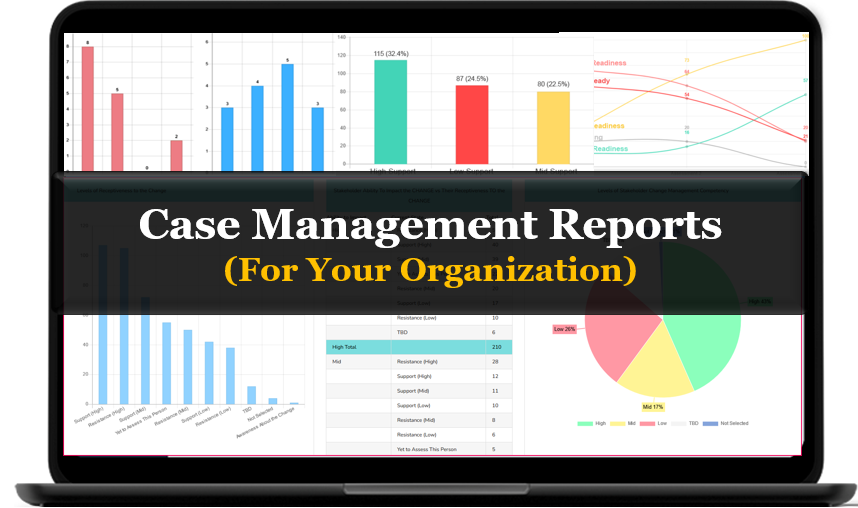
Yes. Unlike flat spreadsheets that require painstaking manual tallying, automated platforms allow administrators to aggregate structured data points across their entire client population. You can generate immediate reports on client demographics, diagnostic distributions, screening outcomes, and service delivery metrics, fulfilling Medicaid, county, and federal grant compliance requirements with minimal effort.
How difficult is it to migrate our current spreadsheet workflow into software?
Migrating from spreadsheets to a specialized platform is straightforward. Client rosters, demographic fields, and basic caseload assignments can typically be mapped and imported via standard data templates in an afternoon. Staff training usually requires minimal orientation, as digital forms follow the familiar chronological flow of standard clinical interviews.
👉 Try it free today - No credit card needed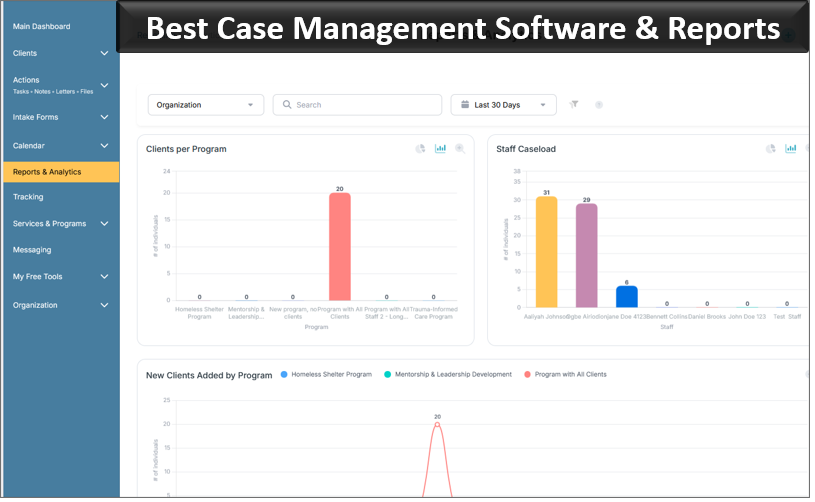
Note: Content on this website (socialworkportal.com) is copyrighted and protected under applicable copyright laws. Unauthorized reproduction, distribution, or use of any content from the website, without explicit written permission, is strictly prohibited. Read: Terms of Use.
Social Work Portal Disclaimer: Social Work Portal is not a social work agency and we do not refer social workers. This web site is provided for educational and informational purposes only and does not constitute providing medical advice or professional social and healthcare services. The information provided should not be used for diagnosing or treating a health problem or disease, and those seeking personal medical advice should consult with ... Read our full disclaimer here: Social Work Portal Disclaimer.