A Practical Supervision Blueprint for Global Social Work Leaders
Deploying domestic clinical models into international settings creates immediate ethical friction. When clinical supervisors, global social work educators, and ethics committees rely on unexamined Western diagnostic assumptions, even well-intentioned cross-border programs risk reinforcing colonial power dynamics and misinterpreting client needs. Auditing your practice is not a theoretical exercise. It is a frontline clinical safeguard that protects vulnerable populations from cultural misdiagnosis and inequitable service delivery.
For busy international MSW field instructors and DEI leads, running these reviews manually across scattered spreadsheets and paper files usually stalls under heavy caseloads. Below is a repeatable four-step methodology to identify implicit bias, standardize cross-cultural evaluations, and track equity outcomes across global teams.
Let’s get started
Watch this video:
or
read the guide below.
What You’ll Learn in This Guide
- How to uncover hidden Western bias inside standard intake questionnaires and diagnostic criteria
- A four-step clinical audit workflow tailored for cross-border supervision and MSW field placements
- Concrete before-and-after examples for rewriting subjective SOAP and DAP case notes
- How to evaluate power dynamics between expat clinicians, local staff, and international clients
- Practical ways to replace fragmented spreadsheets with automated equity and outcome reporting
Free Printable Guide: Field Desk Card: Cross-Cultural Bias & Intake Scripting
Auditing international case notes and intake forms for Western bias should not stall your weekly supervision sessions. Download our free Field Desk Card: Cross-Cultural Bias & Intake Scripting to access ready-to-use intake rewrites, objective SOAP note phrasing, and live case consultation prompts in seconds.
Download Your Free Resources Here
💡All-in-one Case Management Software.
Everything in one place: clients, notes, forms, appointments, reports, and outcomes.
👉 Try it Free - No credit card needed
Why Does Implicit Bias Persist in International Social Work?
Implicit bias in international social work rarely stems from overt prejudice. Instead, it is built into the standardized tools, academic rubrics, and diagnostic frameworks imported from Western institutions. According to the World Health Organization, more than 80 percent of people living with mental health conditions reside in low- and middle-income countries, yet the vast majority of psychometric screening tools were validated on Western, educated, industrialized populations.
Per ethical guidelines from the National Association of Social Workers, practitioners must exercise active cultural humility and ongoing self-reflection to recognize how systemic privilege shapes clinical judgment. When teams enter global human services without recalibrating their baseline assumptions, three operational blind spots routinely compromise care:
- Pathologizing Cultural Norms: Standardized intake packets designed for North American clinics often misclassify collective family decision-making, somatic expressions of grief, or spiritual coping rituals as clinical dysfunction or family enmeshment.
- Unchecked Power Asymmetries: International field placements frequently pair credentialed external supervisors with local practitioners or displaced clients. Without a formal power dynamics assessment in cross-border social work, local expertise gets sidelined in favor of top-down clinical directives.
- Subjective Documentation Drift: Under high-stress field conditions, clinicians revert to shorthand labels in progress notes. Terms like “non-compliant,” “resistant,” or “unmotivated” frequently mask structural barriers such as transportation gaps, linguistic mismatches, or well-founded distrust of foreign institutions.
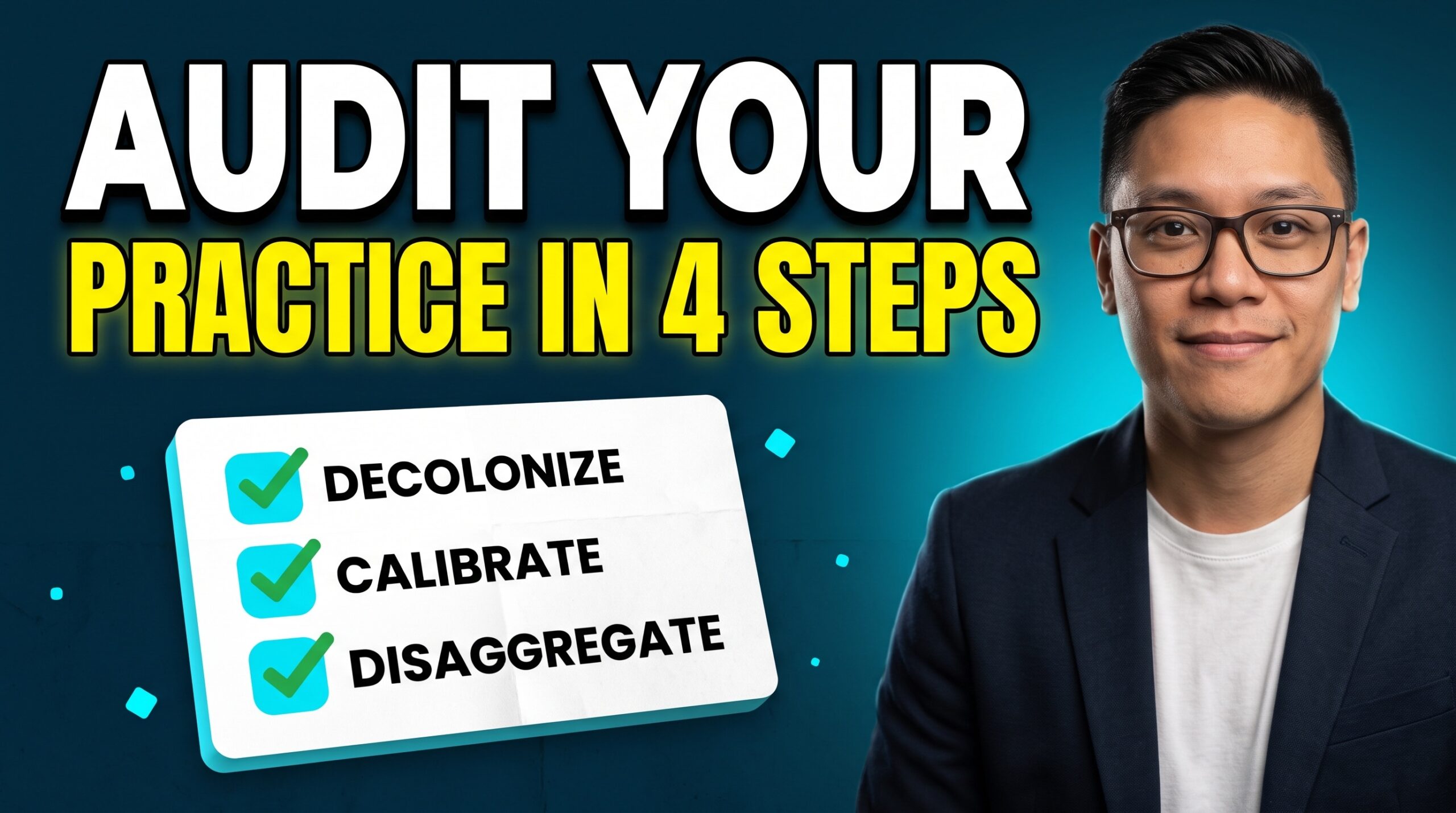
How Do You Audit Clinical Practice for Cultural Bias in 4 Steps?
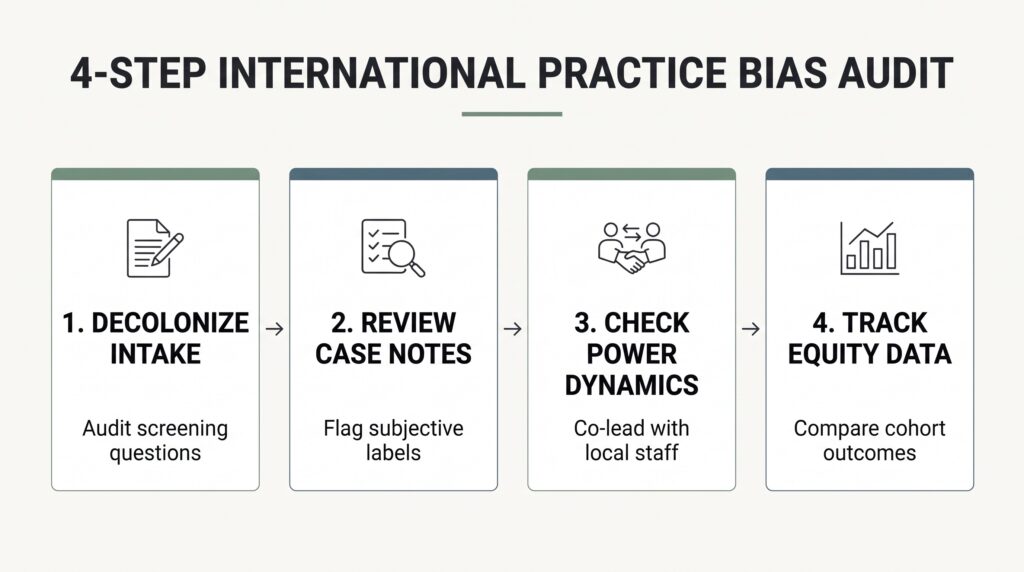
To move from abstract DEI commitments to measurable clinical accountability, clinical supervisors and ethics committees need a structured review cycle. Implementing a cultural humility supervision framework for social workers works best when broken into four operational phases.
Step 1: Decolonize Intake and Assessment Instruments
Begin your audit at the front door of service delivery. Pull every intake packet, psychosocial screener, and risk assessment currently used by your field team. Review each item alongside local community advisors and national staff to flag Western-centric phrasing, untranslatable idioms, or invasive demographic queries that lack local relevance.
Updating these instruments is central to decolonizing social work assessment and intake methods. For example, instead of asking, “Do you have a reliable personal support network outside your household?” (which assumes an individualistic nuclear family structure), revise the prompt to ask, “Which elders, neighbors, faith leaders, or community groups do you turn to when facing hardship?” Replace rigid, deficit-focused checklists with structured fields that capture local protective factors and client-defined priorities.
Step 2: Review Clinical Documentation for Subjective Language
Next, pull a random 15 to 20 percent sample of active client files across your programs for a blind documentation review. Evaluate progress notes, case summaries, and referral records using a standardized MSW field instructor rubric for cultural competency.
Train supervisors and students to replace unsubstantiated clinical labels with observable, context-rich behavioral facts. Consider how a single progress note shifts during a bias audit:
- Biased Entry: “Client appeared defensive and non-compliant during intake. Refused to discuss trauma history and failed to commit to weekly individual counseling goals.”
- Audited Objective Entry: “Client provided brief responses through a third-party interpreter and expressed concern about confidentiality within a small camp community. Client prioritized securing food vouchers and group peer support over individual talk therapy.”
Standardizing digital SOAP and DAP note templates for bias review helps supervisors reinforce objective documentation habits before subjective labels follow a client across referral agencies.
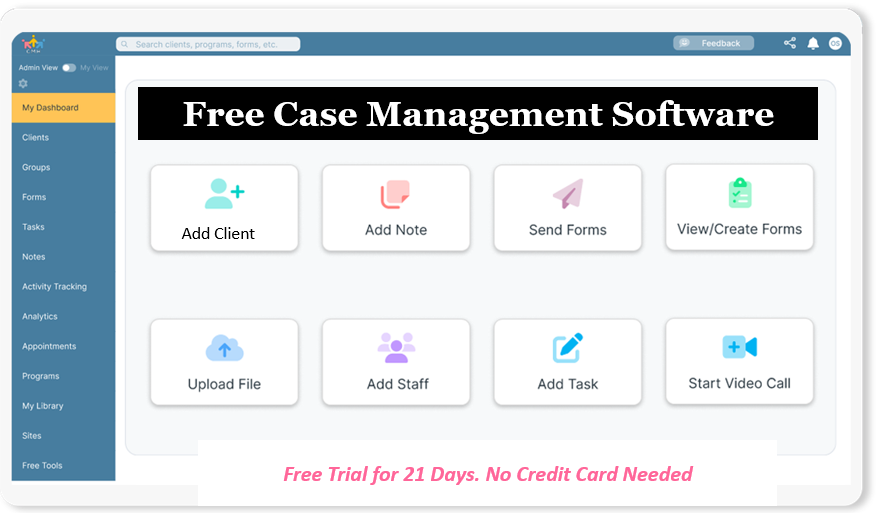
👉 Try it Free - Free Case Management System
Step 3: Evaluate Supervisory and Client Power Dynamics
An ethical audit guide for global human services must examine who holds decision-making authority during case planning. During individual and group supervision, use a cross-cultural bias checklist for clinical supervisors to audit how treatment goals are established.
Require clinicians and MSW interns to answer three diagnostic questions during weekly case consultations:
- Did the client and local community partner co-author the intervention goals, or were those goals prescribed by an external clinician?
- Are local social workers given equal clinical authority in case conferences, or are they treated strictly as translators and logistical coordinators?
- How were linguistic nuances and non-verbal cues verified with a cultural broker before finalizing a clinical determination?
Step 4: Disaggregate Outcome and Referral Data
Bias becomes visible at scale when you analyze service patterns across client demographics. Audit your program’s intake-to-discharge funnel by disaggregating data across nationality, primary language, gender, ethnicity, and displacement status.
Compare drop-out rates, service wait times, and goal completion percentages across these cohorts. If a specific linguistic or ethnic subgroup experiences significantly higher early discharge rates or receives fewer outgoing specialist referrals, your team has uncovered a structural disparity that requires immediate workflow intervention. Establishing clear DEI evaluation metrics for social work field placements ensures these disparities are caught quarterly rather than years later.
All-in-One Case Management Software
Sign Up Today, Free
No credit card needed!
Do You Have a Team? | ||
Our best all-in-one client and top case management software simplifies everything from client intake and assessments to programs, projects, goals tracking, planning, scheduling, documentation, reporting dashboard, and progress tracking.
How Digital Tools Streamline International Practice Bias Audits
Attempting to run a four-step equity audit using paper folders, static PDFs, or disconnected spreadsheets creates severe administrative bottlenecks. When demographic fields are typed as free-form text across different regional offices, supervisors cannot reliably aggregate data to spot disparities, and reviewing hundreds of handwritten notes for biased language consumes weeks of supervisory capacity.
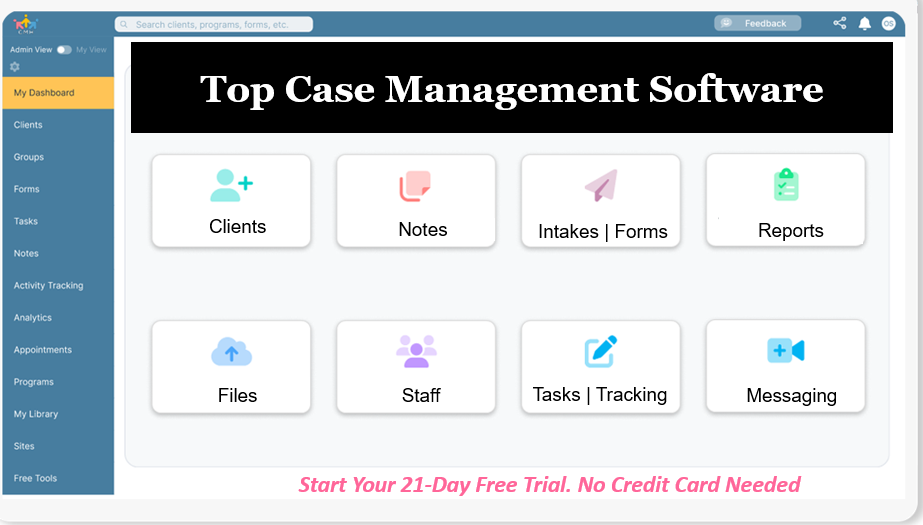
Modern case management software for international NGOs eliminates this friction by embedding equity tracking directly into daily clinical workflows. Within a unified platform like Case Management Hub, supervisors and DEI leads can operationalize every phase of the audit:
- Standardized, Culturally Responsive Forms: Using a drag-and-drop digital form builder, administrators can build customizable intake forms for culturally responsive care that remove biased questions and enforce consistent single-select or multi-select demographic options. Data entered on these forms syncs two-way with the client profile, preventing manual transcription errors.
- Structured Note Templates and Granular Permissions: Supervisors can deploy uniform SOAP notes and custom clinical note templates across distributed field teams while configuring role-based viewing permissions. Clinical instructors can filter master note tables by staff member, program, or date range to conduct rapid monthly bias reviews without hunting through physical binders.
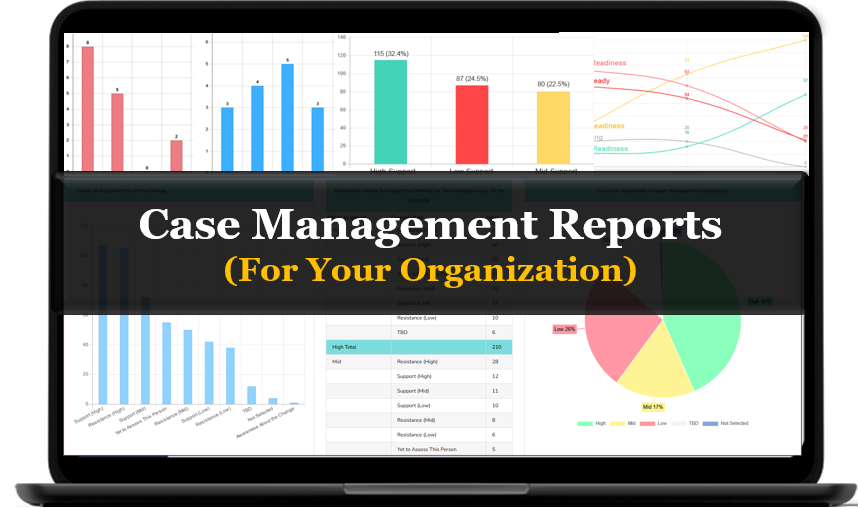
- Automated Disaggregated Equity Reporting: Instead of manually cleaning spreadsheets, ethics committees can use built-in demographics, form, and goal progress analytics, or build custom bar and line reports, to compare service delivery and goal achievement across client cohorts in seconds.
- Complete Oversight via Audit Logs: System-wide audit logs record every profile update, form edit, and record view with user timestamps and IP addresses, supporting strict HIPAA compliance and institutional accountability across international sites.
 Workflow Comparison: Auditing Clinical Bias Across Global Teams
| Audit Dimension | Manual / Paper-Based Workflow | Automated Digital Workflow |
| Intake Form Updates | Printing revised paper forms; legacy biased versions remain in circulation across field sites. | Updating a single digital form template instantly deploys culturally responsive intake forms to all staff. |
| SOAP / DAP Note Audits | Supervisors manually pull physical folders or search unindexed Word documents for subjective language. | Supervisors filter centralized digital SOAP and custom notes by clinician, program, or date range in seconds. |
| Demographic Disaggregation | Exporting messy spreadsheets with inconsistent text entries; hours spent cleaning data to spot trends. | Standardized single-select fields feed real-time demographic and goal progress charts automatically. |
| Supervision & HIPAA Security | Emailing sensitive case review spreadsheets across borders, creating privacy and compliance risks. | Role-based permissions, secure client portals, and automated audit logs protect cross-border records. |

People Also Ask
How often should clinical supervisors audit international social work cases for bias?
Clinical supervisors should conduct comprehensive intake and outcome audits quarterly, paired with monthly spot-checks of 15 to 20 percent of active case files. High-frequency reviews catch subjective documentation drift early and keep cultural humility integrated into routine supervision.
What are the signs of Western bias in clinical intake forms?
Common indicators include diagnostic questions that ignore somatic or spiritual expressions of distress, rigid nuclear-family assumptions, and deficit-focused checklists that overlook community resilience. Forms that lack options for local languages or culturally specific support systems also introduce immediate assessment bias.
How do you evaluate cultural humility in MSW field placements?
Field instructors evaluate cultural humility by assessing a student’s ability to identify personal biases, adapt interventions to local norms, and share decision-making power with clients and local staff. Using a structured supervisory rubric during case reviews turns this competency into observable, measurable behaviors.
Why is disaggregated data essential for DEI compliance in human services?
Aggregate program metrics often hide severe disparities by averaging outcomes across all participants. Disaggregating goal completion, wait times, and retention rates by language, nationality, or ethnicity reveals whether specific marginalized groups are underserved or dropping out prematurely.
Can case management software help standardize cross-cultural client assessments?
Yes, customizable digital case management platforms allow organizations to standardize assessment fields, build tailored rating scales, and mandate consistent demographic tracking across multiple sites. This structure ensures every clinician gathers culturally vetted information while enabling real-time outcome comparisons.
How do clinical teams balance global data reporting with HIPAA compliance?
Organizations maintain compliance by centralizing client records in a HIPAA-compliant platform equipped with granular role-based access controls and de-identified reporting options. Restricting record visibility by program assignment ensures staff and external evaluators only view data necessary for their specific clinical or audit role.
Operationalize Your Equity Audits With Case Management Hub
Conducting a rigorous bias audit should not bury your clinical supervisors or MSW field instructors in administrative busywork. When your intake forms, progress notes, and outcome metrics live inside fragmented spreadsheets, identifying systemic blind spots becomes nearly impossible.
Case Management Hub gives global social work programs, nonprofits, and academic field teams a single, HIPAA-compliant workspace to standardize culturally responsive care. With a drag-and-drop digital form builder, customizable SOAP and clinical note templates, role-based staff permissions, and automated demographic and goal progress reporting, your team can spot service disparities early and document supervisory accountability cleanly.
Start Your 21-Day Free Trial (No Credit Card Required)
Frequently Asked Questions
How can we customize intake forms in Case Management Hub to remove culturally biased questions?
Administrators can use the drag-and-drop digital form builder to create custom intake and assessment templates from scratch or modify existing forms. You can replace rigid text boxes with culturally tailored single-select or multi-select fields, add custom demographic categories, and link those fields directly to the client profile so your reporting stays clean and consistent across every field location.
How do supervisors review student or clinician SOAP notes without disrupting daily workflows?
All progress notes, including standard SOAP templates and custom clinical note types, are stored centrally in a filterable master table and inside each client's profile. Clinical supervisors and MSW field instructors can filter notes by specific staff members, programs, or date ranges to conduct blind bias reviews and document supervisory feedback without asking clinicians to submit separate files.
Can we restrict access so regional field staff only see clients in their assigned program?
Yes. Case Management Hub features granular role-based permissions (Account Owner, Admin, Employee, Support, plus up to two custom roles) alongside program-level visibility controls. You can configure settings so staff members only access records for clients specifically assigned to them or their regional program, protecting client confidentiality across international borders.
How does the platform help ethics committees track outcome disparities across client demographics?
The Reports and Analytics module includes dedicated pages for Organization, Demographics, Forms, and Goal Progress, plus over 40 pre-built report templates and a custom report builder. Ethics committees can generate bar charts, pie charts, and date-based line graphs comparing program outcomes, service wait times, and goal completion rates across custom demographic fields, then export those visuals to PDF or Excel.
Is Case Management Hub secure enough for cross-border clinical supervision and HIPAA compliance?
Yes. Case Management Hub is a HIPAA-compliant platform engineered to safeguard sensitive client records. Beyond encrypted cloud access from any internet-connected device, administrators can monitor system activity through a detailed Audit Log that tracks user logins, record views, edits, and deletions with exact timestamps and IP addresses.
How long does it take to migrate existing client data and set up audit workflows?
Most teams set up their workspace and begin managing cases the same day. You can use downloadable spreadsheet templates to import existing client profiles, historical form submissions, and past SOAP notes while mapping them to unique client IDs to prevent duplicate records.
👉 Try it free today - No credit card needed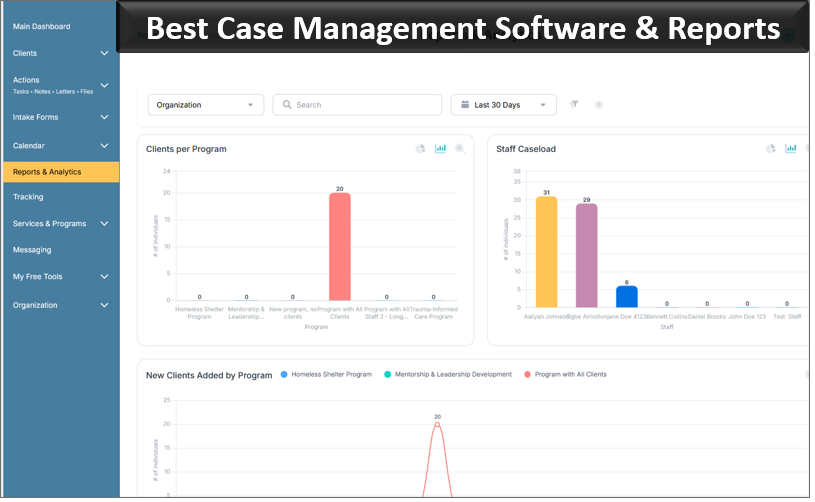
Note: Content on this website (socialworkportal.com) is copyrighted and protected under applicable copyright laws. Unauthorized reproduction, distribution, or use of any content from the website, without explicit written permission, is strictly prohibited. Read: Terms of Use.
Social Work Portal Disclaimer: Social Work Portal is not a social work agency and we do not refer social workers. This web site is provided for educational and informational purposes only and does not constitute providing medical advice or professional social and healthcare services. The information provided should not be used for diagnosing or treating a health problem or disease, and those seeking personal medical advice should consult with ... Read our full disclaimer here: Social Work Portal Disclaimer.