Person Centered Care Planning and Risk Mitigation in Modern Healthcare Environments
Traditional risk management in healthcare often relies on a paternalistic model. Practitioners frequently focus on eliminating all possible hazards to protect the individual and the organization. However, this approach can inadvertently strip individuals of their autonomy, dignity, and quality of life.
Modern clinical practice requires a shift toward person centered risk assessment in case management to balance duty of care with self-determination. By shifting focus from what is safe for an individual to what is important to them, organizations can achieve a more ethical, compliant, and effective model of care.
Let’s get started
Watch this video:
or
read the guide below.
What We Will Cover
- The foundational shift to person centered risk assessment in case management
- Navigating the regulatory landscape of HCBS compliance and person centered planning
- Concrete strategies for implementing positive risk taking in case management
- Core steps in collaborative risk assessment in case management
- Recommended risk assessment tools for home and community based services
- How to construct individualized safety support plans in case management
- Best practices in case management documentation for risk mitigation
Everything in one place: clients, notes, forms, appointments, reports, and outcomes. 👉 Try it Free - No credit card needed💡All-in-one Case Management Software.
Transitioning to Person Centered Risk Assessment in Case Management
For decades, evaluating clinical risk in healthcare case management meant identifying deficits, predicting negative outcomes, and implementing restrictions to prevent those outcomes. This deficit-focused paradigm often leads to overly restrictive environments that compromise the psychological well-being of the individual. Under a person-centered model, risk is not something to be avoided at all costs. Instead, it is an inherent part of daily life that must be understood, managed, and embraced to promote growth and independence.
According to a comprehensive study by the World Health Organization (WHO) on integrated care frameworks, healthcare models that prioritize individual preferences and self-determination yield higher patient satisfaction and improved functional outcomes. Integrating person centered values in clinical risk models allows coordinators to view risk through the lens of the individual, examining not just the likelihood of harm but also the potential benefits of taking a calculated risk.
This evolution requires comprehensive case manager training for person centered risk assessment. Staff must learn to move away from rigid checklists. They need to develop communication skills that uncover what a person values, what their goals are, and what level of risk they are willing to tolerate to achieve those goals.
👉 Try it Free - Free Case Management System
Crucial Differences in Assessment Philosophy
| Traditional Deficit-Based Risk Assessment | Person-Centered Risk Assessment |
| Focuses almost exclusively on physical safety and liability prevention. | Focuses on quality of life, personal growth, and individual preference. |
| Guided by professional opinions and standardized checklist scores. | Guided by collaborative dialogue between the client, family, and clinician. |
| Seeks to eliminate risk, often leading to restrictive care plans. | Seeks to manage risk, utilizing positive risk taking to support autonomy. |
| Presumes the clinician knows what is best for the individual. | Respects the dignity of risk and honors the individual’s right to fail. |
Embracing Dignity of Risk in Case Management Practices
At the heart of any person-centered approach is the concept of dignity of risk. Originally coined in the context of supporting individuals with intellectual disabilities, this principle asserts that life carries inherent dangers, and denying individuals the right to take reasonable risks is a profound disservice to their personal growth. Navigating risk is essential for self-esteem, learning, and community integration.
Research published in the Journal of Intellectual Disabilities underscores that overprotective care practices frequently lead to social isolation, dependency, and a decline in cognitive and physical capabilities. When case managers prioritize safety above all else, they may restrict a client from cooking, walking independently, or managing their own finances. This approach can lead to depression and rapid functional decline.
Balancing self-determination and safety in healthcare requires a structured framework. Case managers must act as facilitators who help clients understand the consequences of their choices rather than acting as gatekeepers who forbid those choices. This shift from protection to empowerment aligns with the ethical guidance from the Commission for Case Manager Certification (CCMC), which emphasizes autonomy as a primary ethical standard.
Strategies for Implementing Positive Risk Taking in Case Management
Positive risk taking is the deliberate practice of enabling individuals to take calculated risks to achieve personal growth and independence. This is not about neglecting safety or ignoring danger. Rather, it is a structured, collaborative process where the positive outcomes of an action are weighed against the potential negative consequences.
To successfully implement this practice, organizations must establish a culture that supports calculated risk-taking. This involves training clinicians to conduct proactive risk-benefit analyses and ensuring that organizational policies protect staff who participate in these balanced decisions in good faith.
The National Quality Forum (NQF) outlines that when care teams actively support positive risk-taking, clients experience greater self-determination, which is directly linked to better chronic disease management and reduced anxiety. By focusing on what the individual can do, rather than what they cannot, case managers can design creative, supportive environments that minimize danger without eliminating opportunity.
Risk-Benefit Matrix for Positive Risk Taking
| Category of Risk | Potential Benefit to Client | Potential Hazard to Client | Mitigation Strategy |
| Independent community travel | Access to social activities, jobs, and increased self-worth. | Getting lost, physical injury, or vulnerability to exploitation. | Graduated routing, travel training, and digital tracking tools. |
| Self-management of medication | Direct control over daily schedule, enhanced sense of autonomy. | Missed doses, accidental double-dosing, or adverse reactions. | Automated dispensers, medication apps, and weekly clinical reviews. |
| Preparing hot meals in home | Ability to eat preferred foods, maintaining culinary skills. | Burns, kitchen fires, or cuts from utensils. | Ergonomic kitchen tools, automatic shut-off stoves, and occupational therapy. |
Navigating HCBS Compliance and Person Centered Planning
For organizations operating under Medicaid waivers, incorporating these strategies is not just an ethical choice, it is a regulatory requirement. The Centers for Medicare & Medicaid Services (CMS) Home and Community-Based Services (HCBS) Settings Rule mandates that service planning must be driven by the individual. The rule states that any modification of an individual’s rights or choices must be supported by a specific, documented assessed need and must be accompanied by less restrictive interventions that were tried but found to be unsuccessful.
Adhering to HCBS compliance and person centered planning requires rigorous documentation. If a client chooses to live or engage in an activity that poses a risk, the care plan must show that the person was fully informed of the risk, alternative safety options were explored, and the final decision was reached collaboratively.
Furthermore, state and federal auditors look closely at how organizations balance safety and freedom. Organizations that fail to show a clear process of collaborative risk assessment in case management risk compliance citations, loss of waiver funding, or legal liability if an incident occurs and no structured assessment was documented.
Do You Have a Team? Our best all-in-one client and top case management software simplifies everything from client intake and assessments to programs, projects, goals tracking, planning, scheduling, documentation, reporting dashboard, and progress tracking.All-in-One Case Management Software
Sign Up Today, Free
No credit card needed!
Core Steps in Collaborative Risk Assessment in Case Management
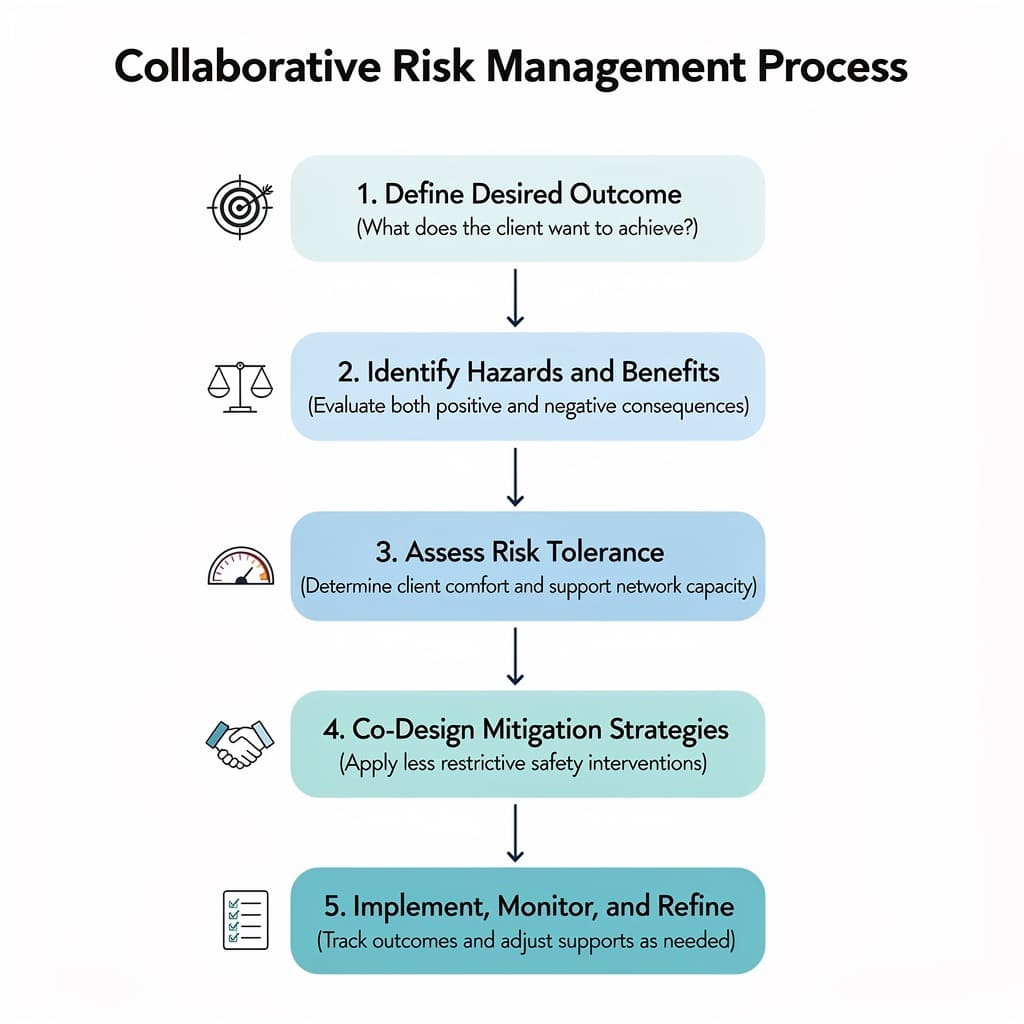
A truly collaborative risk assessment in case management involves the client, their family, their support network, and the clinical team working as partners. This process should demystify clinical risk, making it an open discussion rather than a hidden clinical determination.
First, the assessor must establish a therapeutic alliance, helping the client feel safe enough to share their true desires and past experiences. Second, the team must identify the potential hazard, but they must also define the positive outcomes the client hopes to achieve through the activity. Third, the team works together on measuring risk tolerance in person centered care. This means determining how much risk the client is willing to assume and how much risk the support network can manage.
According to research on clinical risk models published in the Journal of Care Services Management, collaborative risk-taking discussions significantly reduce the friction between clients and their primary caregivers, leading to safer and more sustainable living arrangements.
The Five-Step Collaborative Risk Framework
Recommended Risk Assessment Tools for Home and Community Based Services
To standardize these conversations without losing the individualized touch, clinical teams use specific risk assessment tools for home and community based services. These tools are designed to evaluate the physical environment, cognitive status, and social supports while remaining centered on the person’s preferences.
Excellent examples of these frameworks include the Assessment of Capacity for Everyday Decision-making (ACED), the Person-Centered Risk Assessment tool used by various state developmental disability agencies, and the clinical protocols developed by the National Center on Advancing Person-Centered Practices and Systems. These tools differ from traditional fall-risk or skin-integrity scales because they prompt the assessor to document the client’s strengths and resources alongside their vulnerabilities.
By using standardized, person-centered protocols, organizations can ensure they gather robust data while focusing on improving patient outcomes through person centered assessment.
Comparison of Key Risk Assessment Frameworks
| Tool Name | Core Target Areas | Person-Centered Integration | Primary Clinical Setting |
| NCAPPS Risk Tool | Client preference, system barriers, and community safety. | High; places client choice at the center of every safety mitigation. | HCBS, developmental disabilities, and brain injury programs. |
| ACED Framework | Cognitive capacity to understand risk and consequences. | High; assesses decision-making capacity for specific, daily actions. | Geriatric care, memory care, and rehabilitation. |
| InterRAI HC Suite | Comprehensive physical, cognitive, and environmental risks. | Moderate; tracks physical deficits but allows for preference documentation. | Home care agencies and long-term care management. |
Constructing Individualized Safety Support Plans in Case Management
Once the collaborative assessment is complete, the findings must be translated into an actionable document. This is known as an individualized safety support plan, and it serves as the roadmap for the care team, the client, and their family.
An individualized safety support plan does not contain a list of things the client is forbidden from doing. Instead, it outlines the specific, agreed-upon supports that will be put in place to help the client engage in their chosen activities safely. For example, if a client with cognitive decline wishes to walk in their neighborhood independently, the plan might state that they agree to carry a GPS tracking device and wear an identification bracelet, rather than stating that they are restricted to the building.
The Agency for Healthcare Research and Quality (AHRQ) highlights that individualized care planning is highly effective in reducing hospital readmissions with person centered care. When clients feel that their choices are respected, they are far more likely to adhere to the safety boundaries established in the plan, resulting in fewer crises and fewer emergency department visits.
Best Practices in Case Management Documentation for Risk Mitigation
In professional healthcare, what is not documented did not happen. When practicing positive risk-taking and supporting client autonomy, meticulous record-keeping is your chief safeguard. Case management documentation for risk mitigation must be clear, objective, and illustrative of the clinical reasoning behind every decision.
A common pitfall is writing vague progress notes or failing to document the alternative, less restrictive options that were explored. When auditing care files, regulatory bodies and legal teams look for evidence that the clinician acted with due diligence. This means the file must clearly show that the client was fully educated on the potential consequences of their decisions and that the agency did not neglect the individual but rather supported them through a structured clinical process.
To bulletproof your records, your documentation should include the following elements:
- The specific activity or choice that involves risk.
- The client’s stated goals and why this choice is important to them.
- The specific hazards associated with the choice, documented as discussed with the client.
- The less restrictive interventions that were considered, tried, or rejected.
- The agreed-upon safety supports and who is responsible for implementing them.
- The plan for ongoing monitoring, including when and how the risk plan will be reviewed.
By maintaining this level of detail, agencies can confidently navigate the balance between mitigating risk in professional case management and honoring the choices of the individuals they serve.

People Also Ask
Are person-centered risk assessments legally defensible for case management organizations?
Yes, person-centered risk assessments are legally defensible, provided they are thoroughly documented and follow an established clinical protocol. Courts and regulatory bodies look for evidence of due diligence, informed consent, and balanced decision-making. If documentation shows that the case manager educated the client on potential hazards, explored less restrictive mitigation strategies, and reached a collaborative agreement with the client and their support network, the organization is well-protected against claims of negligence.
How does positive risk taking affect the safety of vulnerable adults?
Positive risk taking improves overall safety outcomes for vulnerable adults by reducing the clandestine behaviors that often occur when restrictive rules are imposed. When vulnerable adults are forced into overly restrictive routines, they may attempt to bypass those rules without support, leading to serious accidents. By openly discussing risks and establishing collaborative, less restrictive supports, the client can engage in desired activities with a safety net in place.
What is the role of the family in collaborative risk assessments?
The family plays a crucial role as partners in the collaborative risk assessment process. They provide valuable history, context, and insight into the client’s past behaviors and preferences. However, while family input is incredibly valuable, the case manager’s primary ethical obligation is to the client. If a conflict arises between the family’s desire for safety and the client’s desire for autonomy, the case manager must facilitate a negotiation that respects the client’s legal rights while addressing the family’s concerns.
Switch to an all-in-one case management platform. 👉 Try it Free - No credit card needed🔥Still using spreadsheets for case management?
How Case Management Hub Can Help
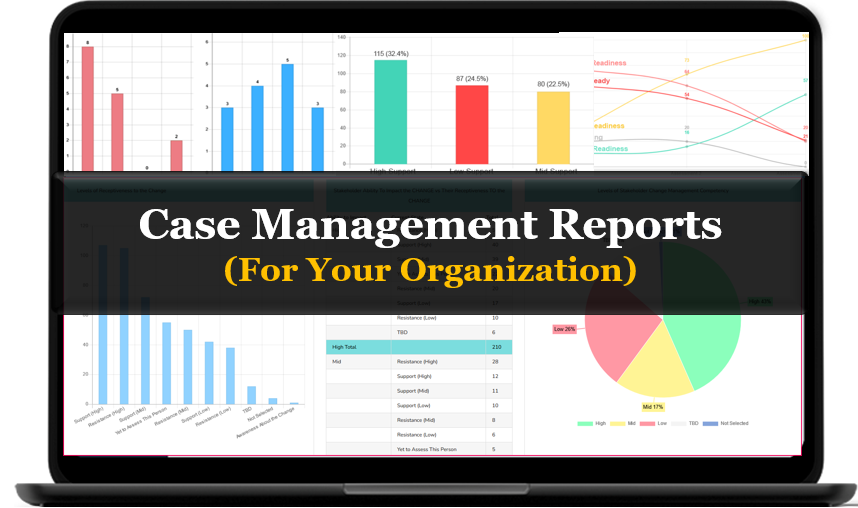
Implementing a truly person-centered approach to risk assessment requires clinical tools, structured documentation, and seamless communication across your care team. Case Management Hub provides a comprehensive, cloud-based platform designed specifically to support modern healthcare organizations and HCBS providers. Our platform features integrated clinical screening and severity templates, such as the GAD-7, PHQ-9, and PHQ-2, alongside secure document storage to make case management documentation for risk mitigation straightforward and audit-ready.
See how easy it is to add a new client and send them one of our form templates.
Step 1
Navigate to the Clients module from the sidebar.
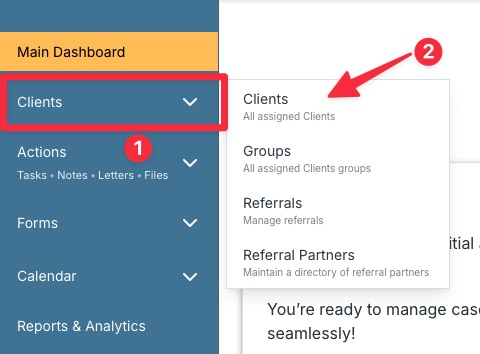
Tip: If you have chosen a different audience type when creating your account, that type will be shown here instead of “Client”.
Step 2
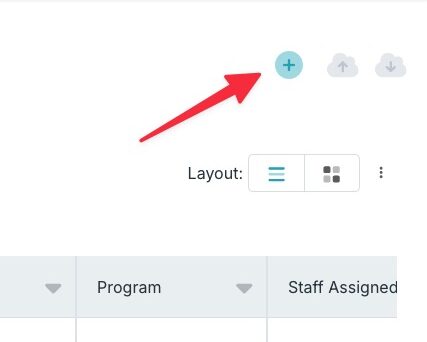
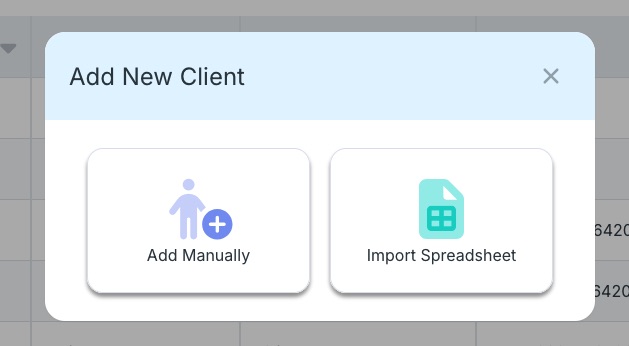
Click the plus button and choose whether you’d like to add one client manually, or add several clients through the import spreadsheet.
Step 3
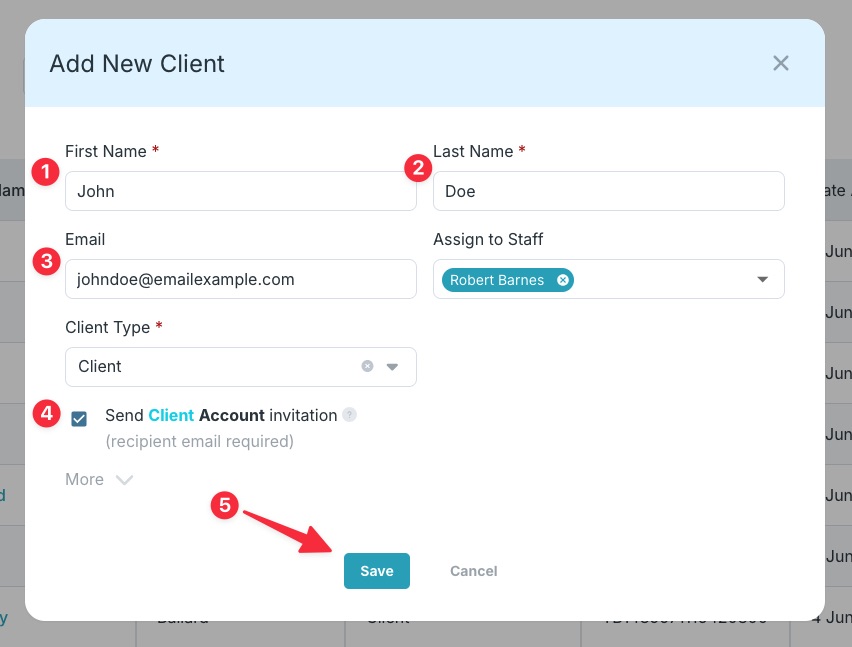
Enter the client’s first and last name and email address, then place a checkmark in Send Client Account invitation. Next, click Save.
Tip: There are several other settings on this popup such which staff will this client be assigned to and the client type. Under More you can add a phone number, customize the Client ID, assign a program or an incoming referral source.
Step 4
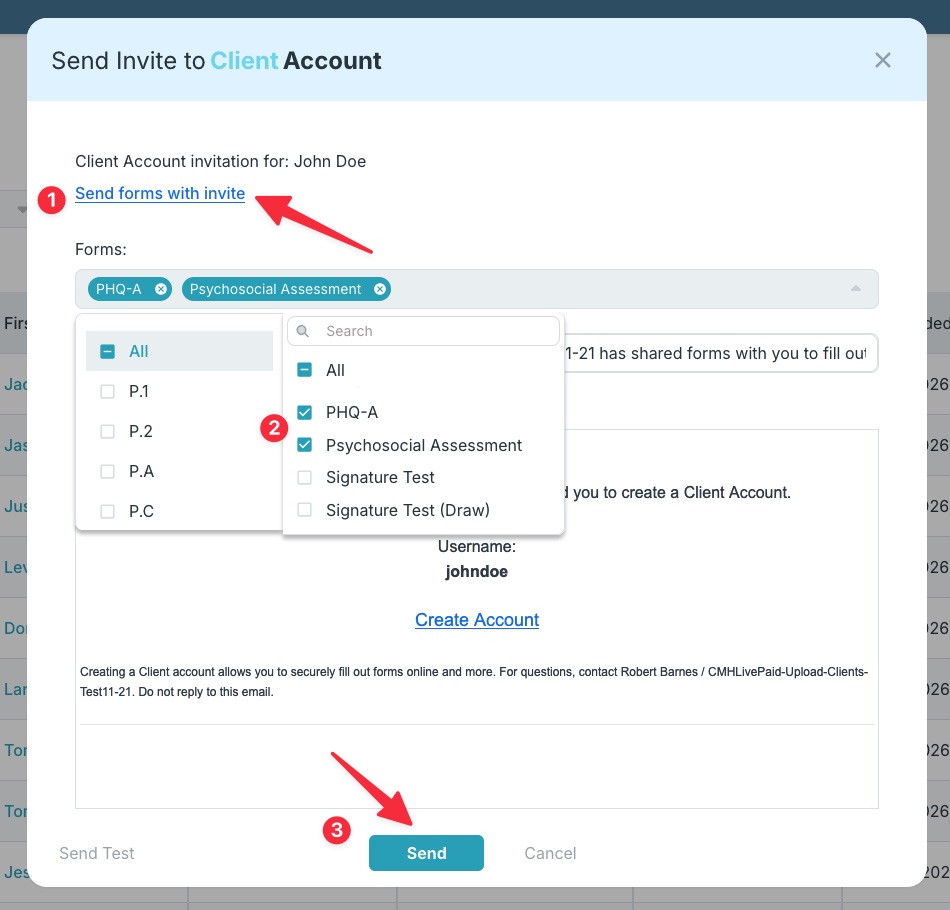
Click Send forms with invite, then select the forms you want to send to the client. Once done, click Send.
Step 5
Head to the Forms module to track forms status (Pending, Completed).
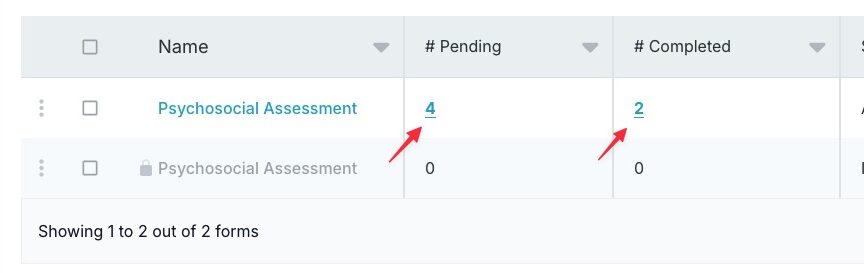
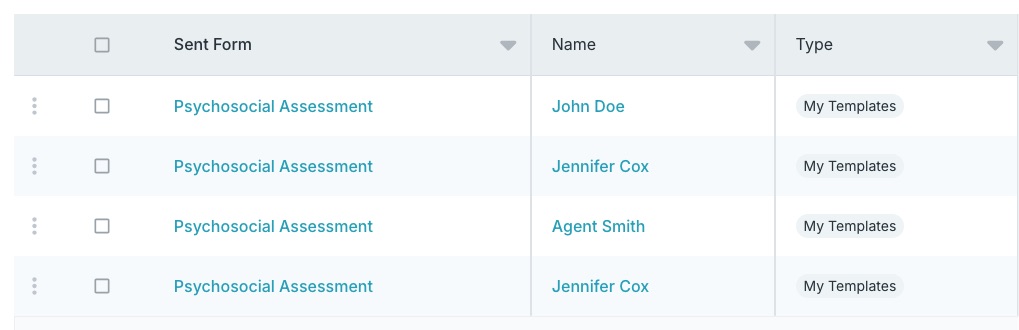
Tip: Click the count number in the Pending or Completed columns to see a full list of those specific clients.
Discover how Case Management Hub can transform your clinical workflows, improve patient outcomes, and protect your organization from liability. Start a free 21-day trial today! (no credit card needed).
Frequently asked risk assessment questions
A person-centered risk assessment should be updated at least annually, or immediately whenever there is a significant change in the client's physical health, cognitive status, living environment, or personal goals. Regular reviews ensure that the safety support plan remains accurate and does not unnecessarily restrict the individual as their abilities or preferences evolve.
If a client insists on an activity that poses an immediate, life-threatening danger, the case manager must assess the client's decision-making capacity regarding that specific choice. If the client has the legal and cognitive capacity to make the decision, the case manager should provide comprehensive education about the extreme risks, explore safer alternatives, and document the refusal of safer options. If the client lacks capacity, the case manager must work with the client's legally authorized representative to establish a safety plan that minimizes restrictions while preventing severe harm.
Yes, advanced case management software can streamline person-centered risk tracking. A modern care management platform allows teams to build custom risk-benefit templates, store signed informed consent documents, set alerts for regular risk plan reviews, and share real-time safety updates across the entire multidisciplinary team, ensuring compliance and coordinated care delivery.
Traditional clinical risk scales, such as fall risk or skin integrity assessments, focus strictly on identifying and scoring physical deficits to prevent injury. In contrast, a person-centered risk-benefit assessment evaluates both the hazards and the positive psychological or social outcomes of an activity, shifting the goal from total risk avoidance to supportive, balanced living.
While clinical screening tools like the GAD-7 are not risk-benefit templates, they provide critical data regarding the client's mental health. A case manager uses the GAD-7 to assess how generalized anxiety might be influencing a client's risk tolerance, decision-making, or avoidance of daily activities, allowing the care team to address underlying anxiety as part of the overall safety plan.
Case managers are generally protected from personal liability if they follow professional standards of care. This requires conducting a collaborative assessment, exploring less restrictive alternatives, educating the client on risks, and thoroughly documenting the clinical reasoning behind the safety plan. Negligence occurs when a risk is ignored, whereas positive risk-taking is a structured, defensive clinical methodology.How often should a person-centered risk assessment be updated?
What should a case manager do if a client insists on a high-risk activity that poses immediate danger?
Can case management software help track person-centered risk assessments?
What is the difference between a traditional clinical risk scale and a person-centered risk-benefit assessment?
How does a clinical screening tool like the GAD-7 fit into a person-centered risk assessment?
Are case managers personally liable if a client experiences an injury while following a person-centered risk plan?
👉 Try it free today - No credit card needed
Note: Content on this website (socialworkportal.com) is copyrighted and protected under applicable copyright laws. Unauthorized reproduction, distribution, or use of any content from the website, without explicit written permission, is strictly prohibited. Read: Terms of Use.
Social Work Portal Disclaimer: Social Work Portal is not a social work agency and we do not refer social workers. This web site is provided for educational and informational purposes only and does not constitute providing medical advice or professional social and healthcare services. The information provided should not be used for diagnosing or treating a health problem or disease, and those seeking personal medical advice should consult with ... Read our full disclaimer here: Social Work Portal Disclaimer.