Balance Deep Clinical Empathy and Caseload Mastery to Get Hired
Stepping into a hiring room as a prospective care professional can feel like a delicate balancing act. You are trying to prove your technical competence while simultaneously demonstrating that you possess the deep, heart-centered empathy required to serve vulnerable populations. Many job seekers face the same challenge: how do you translate years of compassionate care into highly structured responses that hiring managers actually want to hear?
Whether you are a recent social work graduate, a career changer transitioning to social work, or a seasoned licensed clinical professional, preparing for a case manager interview requires more than memorizing generic responses. It demands a strategy that blends your human warmth with structured, efficient caseload methodology.
By understanding exactly what interviewers look for, you can frame your professional experience in a way that highlights both your clinical expertise and your operational efficiency.
Let’s get started
Watch this video:
or
read the guide below.
What You Will Learn in This Article
- Primary Questions: The exact case manager interview questions and answers you must prepare for.
- Structuring Answers: How to prepare for a case manager interview using the STAR method.
- Clinical Empathy: Actionable ways to show clinical empathy in interviews without losing your professional boundaries.
- Operational Mastery: How to showcase your competence in case management documentation best practices.
- Modern Tools: How demonstrating your experience with an all-in-one case management platform can set you apart from other candidates.
- Common Pitfalls: Structural mistakes to avoid when addressing complex scenario-based queries.
💡All-in-one Case Management Software.
Everything in one place: clients, notes, forms, appointments, reports, and outcomes.
👉 Try it Free - No credit card needed
How to Prepare for Case Manager Interview Questions?
To succeed in your upcoming interview, you must treat case management as both an art and a science. Employers are not just evaluating your warm heart; they are assessing your organizational resilience. According to the U.S. Bureau of Labor Statistics, employment in community and social service occupations is projected to grow faster than the average for all occupations, driven by a growing need for healthcare and rehabilitation services. However, high turnover rates due to administrative burnout mean that employers are actively hunting for candidates who already understand how to manage case manager caseloads efficiently.
This means your prep work must show that you can handle both the emotional weight and the heavy administrative demands of the position. When preparing your social work case manager interview prep strategy, focus on structuring your answers around real-world application.
Compare how you talk about your past workloads using these two distinct approaches:
| The Generalist Approach (What to Avoid) | The Strategic Case Manager Approach (What to Do) |
| Focuses purely on emotional care and “helping people.” | Focuses on systemic solutions, care coordination, and outcomes. |
| Vague descriptions of daily duties (“I talked to clients and updated files”). | Concrete metrics (“I coordinated care for complex cases with a caseload of 25 clients”). |
| Ignores the digital workflow or administrative tools. | Demonstrates familiarity with secure client data storage for social workers. |
| Struggles to define clear client progress. | Explains the method of client goal setting and progress tracking. |
To make your case manager behavioral interview questions pop, adopt the STAR framework (Situation, Task, Action, and Result). Ensure every scenario you describe highlights your ability to perform efficient client intake and scheduling while maintaining a high standard of clinical care.
👉 Try it Free - Free Case Management System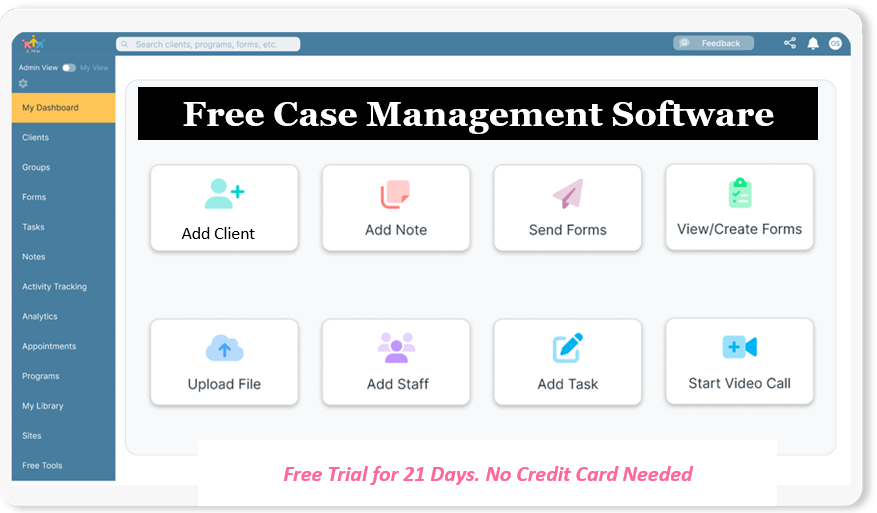
Why Do Employers Ask Case Management Scenario-Based Questions?
Hiring managers use case management scenario-based questions to observe how you behave under pressure. They want to see how you react when a client relapses, when a crisis occurs, or when you are confronted with conflicting family dynamics. These questions are designed to test your split-second clinical decision-making.
When a panel asks you how you handle a client who refuses to cooperate with their care plan, they are evaluating whether you can maintain authentic social work interview answers while respecting client self-determination, which is a core tenet of the National Association of Social Workers (NASW) Code of Ethics.
Your response should prove that you understand the mechanics of coordinating care for complex cases. Walk the interviewer through your step-by-step process of assessment, intervention, and collaborative care. Explain how you bring together multidisciplinary teams and utilize secure messaging to keep everyone aligned. By doing so, you show that you do not just work in a silo; you actively champion systemic, organized, and collaborative care.
How to Show Clinical Empathy in Interviews?
Showing empathy is one of the most vital entry-level case worker interview tips, yet it is incredibly easy to get wrong. Many candidates mistake raw, emotional sympathy for professional clinical empathy. In an interview, displaying clinical empathy means demonstrating that you can understand and mirror a client’s emotional state while keeping your professional boundaries perfectly intact.
To communicate this effectively to an interviewer, focus your narrative on active listening and non-judgmental communication.
Instead of saying:
“I felt so terrible for my client’s situation that I spent my weekend trying to find them a bed.”
Frame your response around professional empowerment and resources:
“I validated my client’s feelings of frustration during our session, which built the trust necessary to complete an immediate referral. This allowed us to execute a safe housing transition by Monday morning.”
This distinction proves to employers that you possess the emotional intelligence required for the role without risking immediate burnout. It shows you understand the true scope of a case manager role and responsibilities: acting as an empowering guide rather than a personal savior.
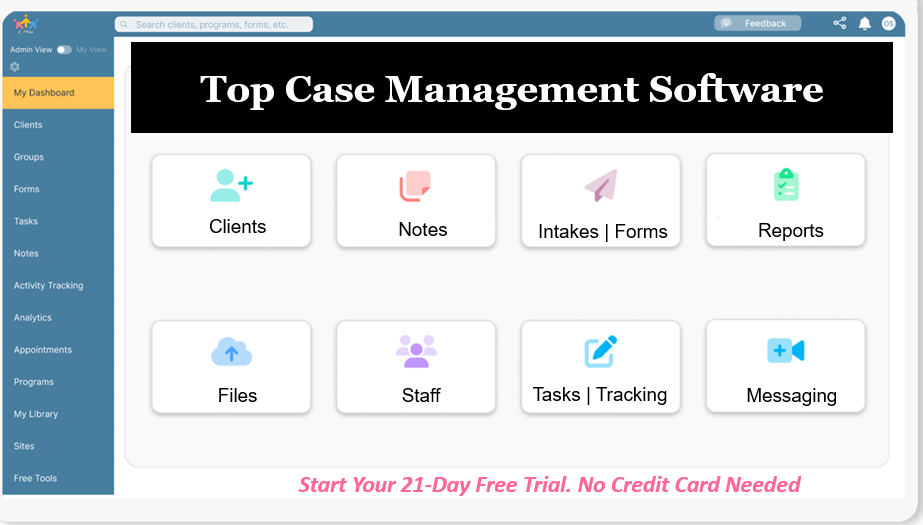
Do You Have a Team? Our best all-in-one client and top case management software simplifies everything from client intake and assessments to programs, projects, goals tracking, planning, scheduling, documentation, reporting dashboard, and progress tracking.All-in-One Case Management Software
Sign Up Today, Free
No credit card needed!
How to Demonstrate Caseload and Documentation Mastery?
In human services, if it is not documented, it did not happen. A major part of managing case manager caseloads efficiently lies in your ability to handle administrative tasks quickly and accurately. Employers dread hiring case workers who fall weeks behind on their notes, as this directly affects agency funding, legal compliance, and client care.
During your conversation, touch upon your familiarity with case management documentation best practices. Discuss your commitment to secure client data storage for social workers, demonstrating your deep respect for HIPAA compliance and client privacy.
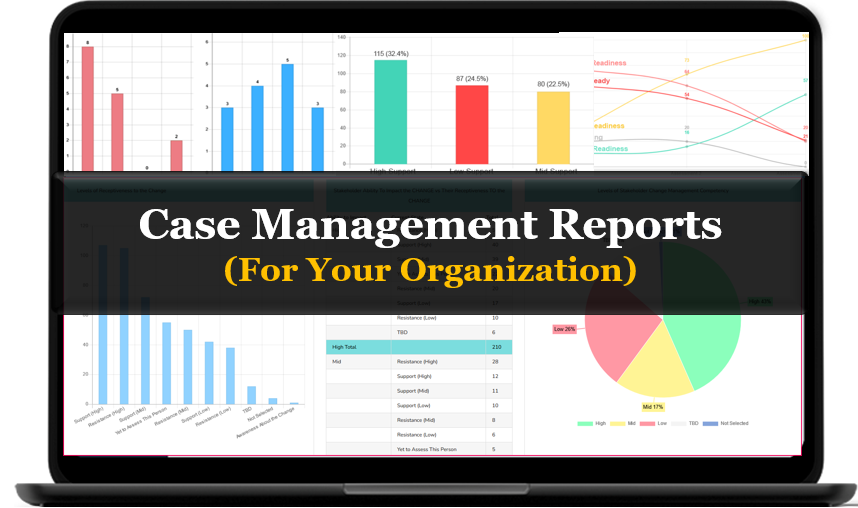
Share how you utilize modern tools to keep up with your administrative responsibilities. For example, you can explain how a digital dashboard helps you organize client goals and progress tracking, or how automated reporting in human services allows you to provide clear metrics to your supervisors. Proving that you are comfortable with tech-driven workflows demonstrates that you will be an efficient, organized, and highly reliable addition to their team.

People Also Ask
What are the most common case manager interview questions and answers?
The most common questions focus on managing difficult clients, prioritizing high workloads, and resolving ethical dilemmas. A strong answer always starts with a real-life example, explains the precise steps you took to address the problem, and highlights a positive, measurable outcome for the client.
How do you handle a heavy caseload as a case manager?
You handle a heavy caseload through strict prioritization, time blocking, and the strategic utilization of case management technology. Successful case managers categorize their tasks by urgency and rely on secure systems to handle scheduling, intake, and automated progress notes.
What is the STAR method for case manager interviews?
The STAR method is a structured technique to answer behavioral interview questions by describing a specific Situation, the Task you needed to accomplish, the Action you took, and the Results of those actions. This format keeps your interview responses concise, logical, and highly professional.
How do you show clinical empathy in interviews?
You show clinical empathy by highlighting your active listening skills, cultural competence, and commitment to client self-determination. Focus your examples on how you build trust with clients through validation while maintaining healthy, professional boundaries that prevent burnout.
Why is documentation so important for a case manager?
Documentation is vital because it serves as the official, legal record of a client’s care journey. Proper documentation ensures continuity of care among multidisciplinary teams, protects the agency against legal liabilities, and is required to secure ongoing program funding.
What tools do modern case managers use to track client progress?
Modern case managers use integrated software platforms to track client outcomes, schedule appointments, record case notes, and communicate securely. Utilizing these specialized digital tools saves hours of manual paperwork each week, allowing professionals to dedicate more time to face-to-face client care.
Ready to Streamline Your New Case Management Workflows?
If you are currently preparing for an interview or adjusting to a promotion, mastering the administrative side of the job is half the battle. One of the best ways to stand out in an interview, or excel in your new role, is to demonstrate familiarity with an all-in-one case management platform.
Case Management Hub is built specifically to make life easier for human service professionals. It simplifies everything from client intake and scheduling to writing daily notes and maintaining secure client data storage for social workers.
See how easy it is to create a note using one of our built in note templates:
Step 1:
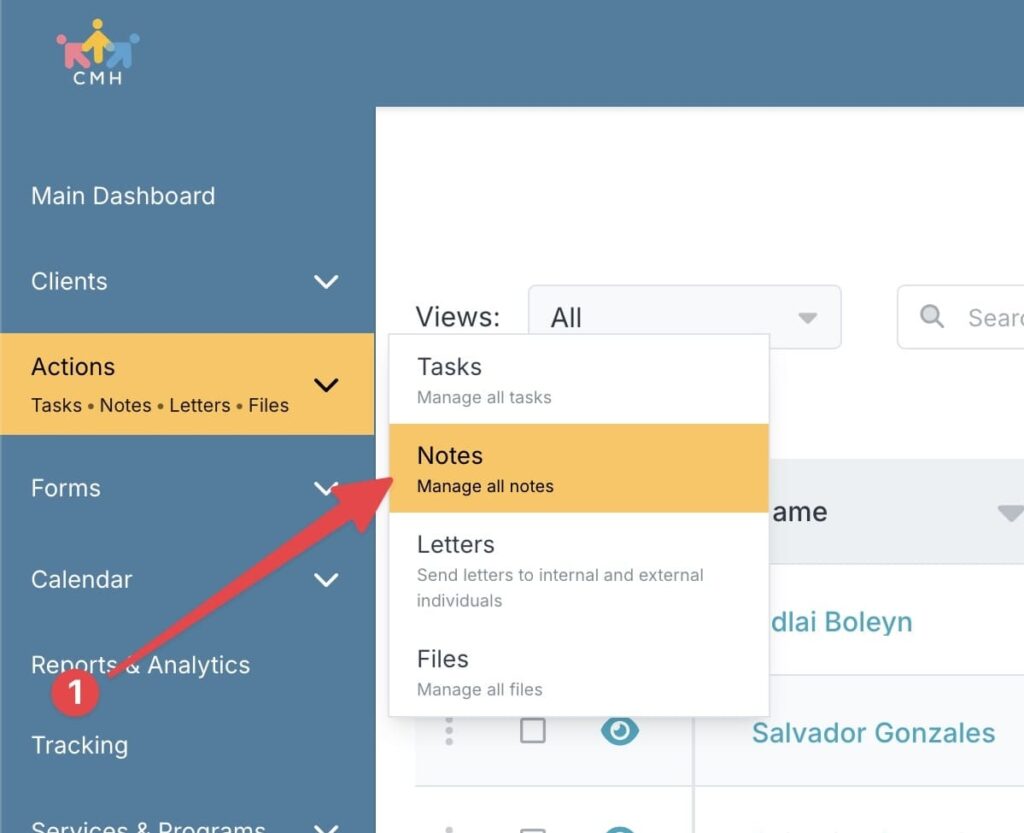
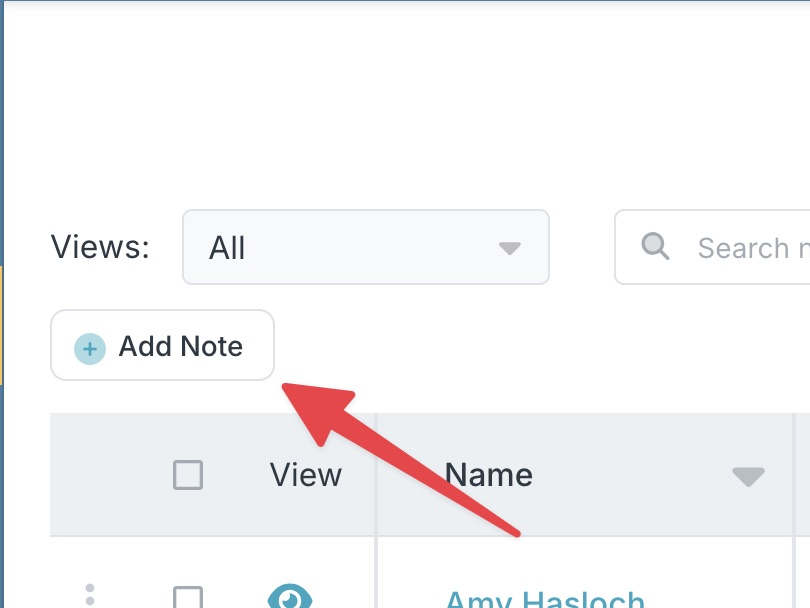
Navigate to the Notes module from the sidebar and click Add Note
Step 2:
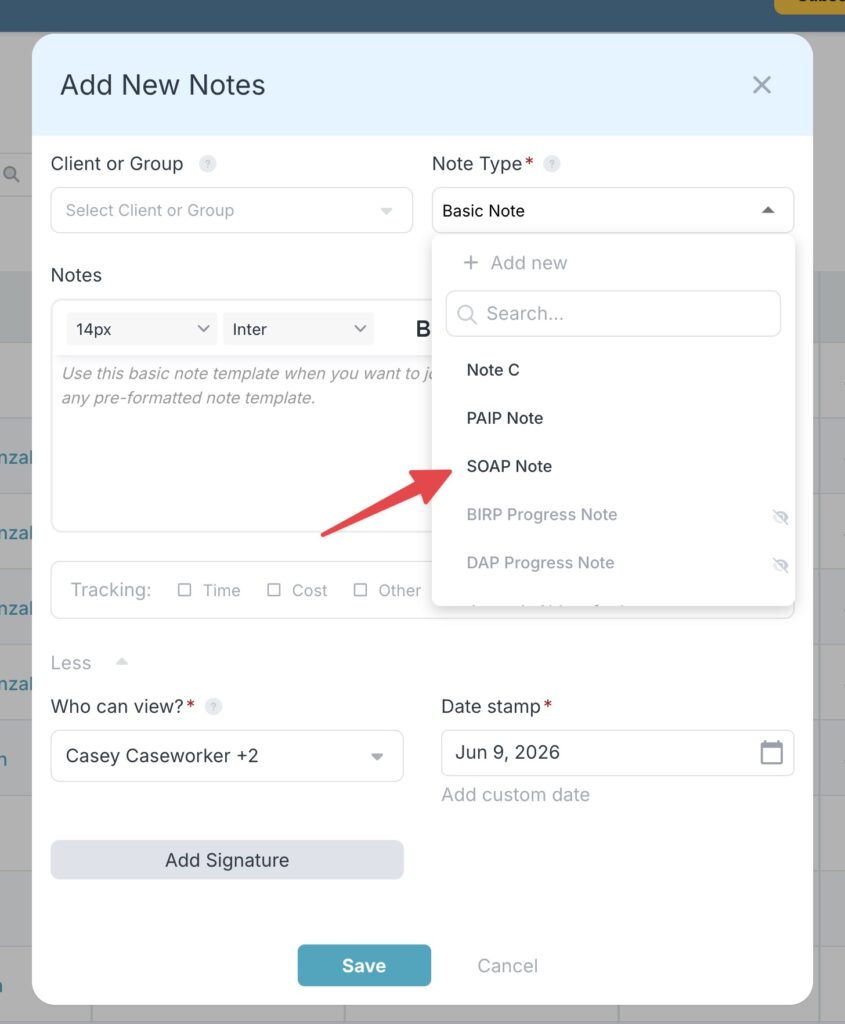
From the note type dropdown select the SOAP note template
Step 3:
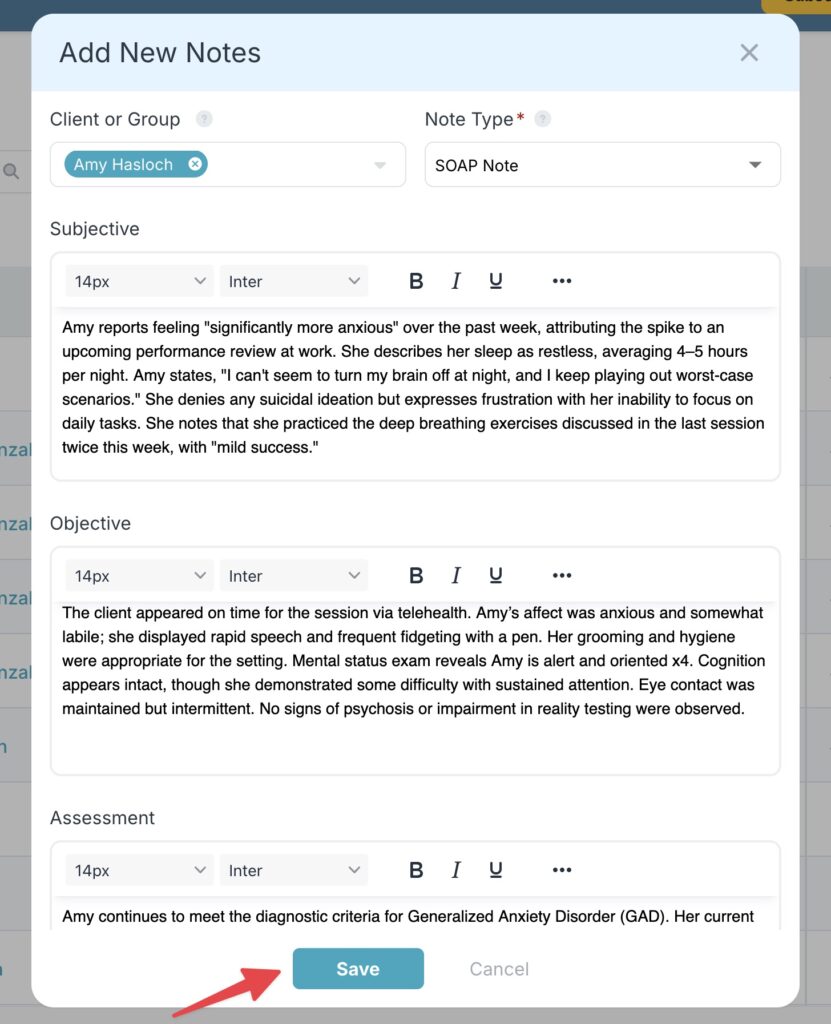
Add your note details to the four sections of the SOAP note, select the client, and then click save.
Step 4:
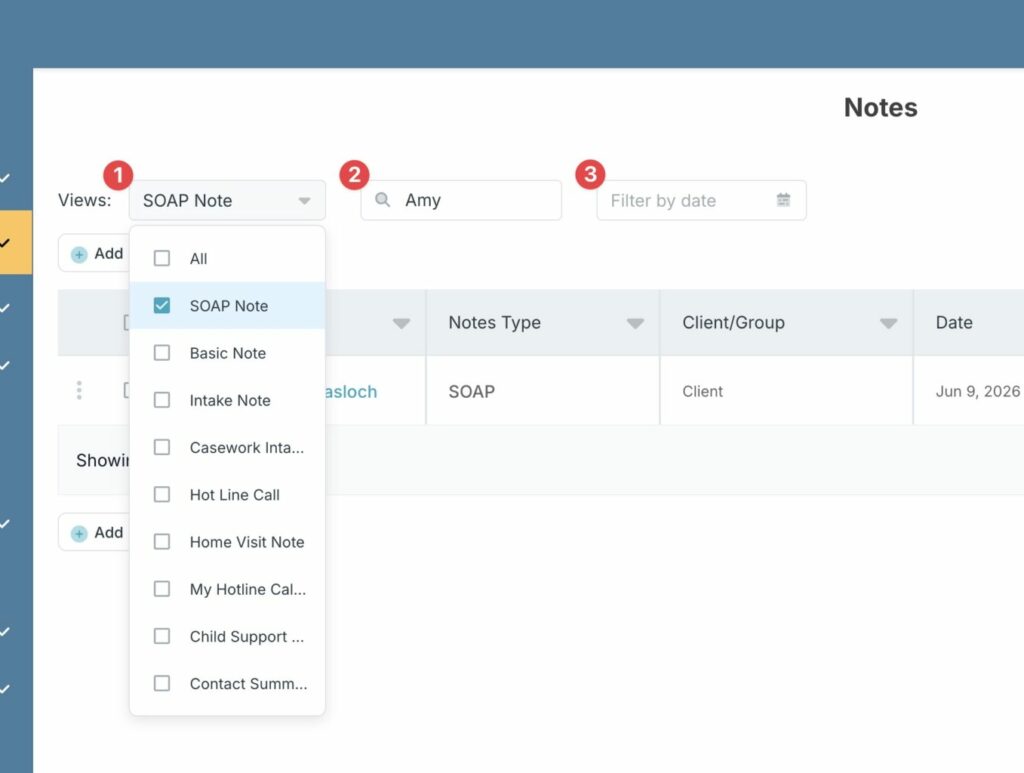
View, search and filter all of your client notes, including the SOAP notes in one place.
Step 5:
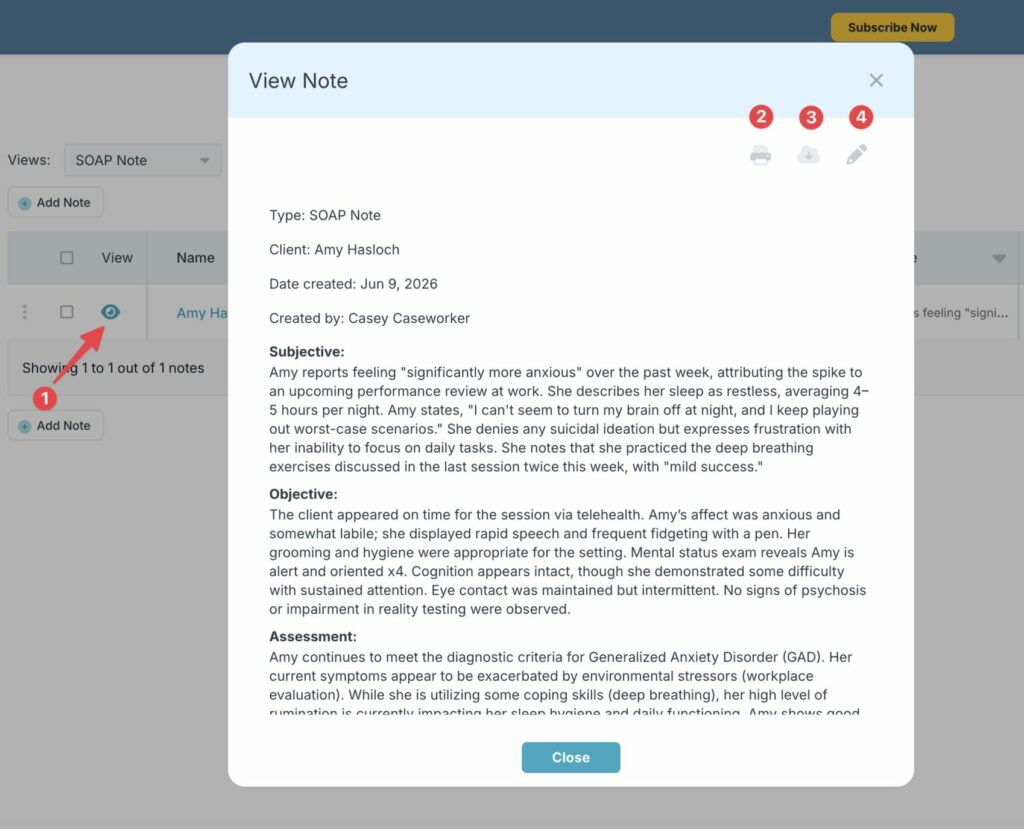
Click the eye icon to view or edit the details of the note
To experience how simple your administrative tasks can be, we invite you to sign up for a free 21-day trial of our software today. There is no credit card required to start, giving you the perfect opportunity to explore tools like automated reporting, progress tracking, and secure messaging at your own pace.
Frequently Asked Questions
What should I wear to a social work case manager interview?
You should wear professional, business-professional attire, such as a tailored suit or a structured blazer. Even though daily case management wear can be business casual, dressing up for the interview signals your respect for the organization and your professional seriousness.
How do I explain a gap in my social work employment history?
Be honest and focus on the skills or perspective you gained during your time away. If you took time off for caregiving, travel, or continuing education, explain how those life experiences actually enhanced your capacity for empathy and crisis management in your social work practice.
What is the difference between a case worker and a case manager?
While the terms are often used interchangeably, a case worker typically focuses on direct service delivery, immediate crisis intervention, and eligibility. A case manager often handles complex, long-term care coordination, clinical assessments, and systemic navigation for clients.
How do I demonstrate cultural competence during my interview?
Share specific examples of working with diverse populations. Discuss how you actively identify your own biases, research systemic barriers affecting specific groups, and adapt your communication style to honor the cultural backgrounds of the families you serve.
How can I prepare for a video or virtual case manager interview?
Test your camera, microphone, and internet connection ahead of time. Ensure your background is quiet, professional, and free of clutter. Maintain virtual eye contact by looking directly at your camera lens rather than your screen when speaking.
What are good questions to ask the interviewer at the end?
Ask questions that show you are already thinking about the day-to-day work. Great examples include: What does a typical caseload look like for this role?, What case management system do you use for documentation?, or How does your team support staff wellness and prevent burnout?
👉 Try it free today - No credit card needed
Note: Content on this website (socialworkportal.com) is copyrighted and protected under applicable copyright laws. Unauthorized reproduction, distribution, or use of any content from the website, without explicit written permission, is strictly prohibited. Read: Terms of Use.
Social Work Portal Disclaimer: Social Work Portal is not a social work agency and we do not refer social workers. This web site is provided for educational and informational purposes only and does not constitute providing medical advice or professional social and healthcare services. The information provided should not be used for diagnosing or treating a health problem or disease, and those seeking personal medical advice should consult with ... Read our full disclaimer here: Social Work Portal Disclaimer.