Strategies & Best Practices for Social Work with Children and Families
Behind every child welfare referral is a family with its own story, and the social worker who meets them often has only a few hours to begin understanding it. Child social services and social work with families sit at the center of that moment.
According to the CDC, approximately three in four U.S. high school students reported experiencing at least one adverse childhood experience, such as abuse, violence, or household challenges.
These experiences can affect health and well-being well into adulthood, highlighting the importance of prevention, early intervention, and effective family support. Source: CDC
This guide explores the roles of child and family social workers, the services they provide, common challenges they address, and practical approaches for supporting children and caregivers. You’ll also learn which frameworks shape the work, and why strong documentation keeps cases moving. If you are a student, a new caseworker, or a seasoned clinician, you will come away with a clear picture of how the pieces fit together.
Let’s get started
Watch this video:
or
read the guide below.
What Is Child Social Services?
Child social services is the network of public and private programs that protect children and support the families raising them. It includes child protective services (CPS), foster care and kinship care, adoption services, family preservation programs, and community-based prevention. The shared goal is that every child grows up safe, stable, and connected to people who care for them.
People often use “child welfare” and “child protective services” interchangeably, but they are not the same thing. Child welfare is the broader system. CPS is the part of it that receives reports of abuse or neglect and investigates them. Many families in the wider system never face an investigation at all. They receive voluntary support instead, such as parenting education, housing referrals, or mental health care from child social workers and other professionals.
💡All-in-one Case Management Software.
Everything in one place: clients, notes, forms, appointments, reports, and outcomes.
👉 Try it Free - No credit card needed
What Does Social Work with Families Involve?
Social work with families treats the whole family, not only the child, as the client. A child’s safety and development depend on the adults and relationships around them, so practitioners look at caregivers, siblings, extended relatives, and the surrounding community together.
Family-centered practice means parents are treated as partners who hold real expertise about their own children. Social workers help families name their goals, build on what is already working, and connect with the resources they need.
This work happens in many settings, including child welfare agencies, schools, hospitals, community mental health centers, courts, nonprofits, and in-home service programs. The setting changes the daily tasks, but the approach stays consistent: understand the whole family, respect its strengths, and keep the child’s best interests at the center.
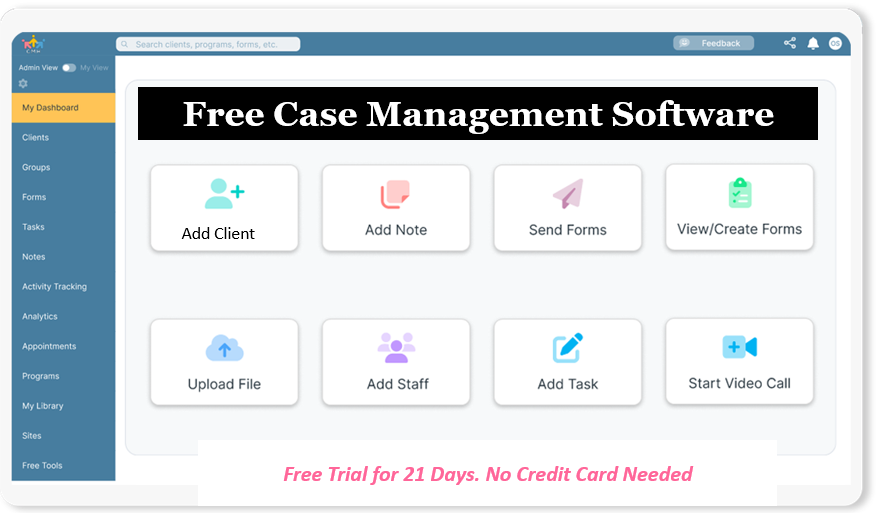
👉 Try it Free - Free Case Management System
What Does a Child and Family Social Worker Do Day to Day?
Responsibilities vary by role, though several tasks come up again and again:
- Receiving and screening reports of concern
- Conducting home visits and interviewing children and caregivers
- Completing risk and safety assessments
- Developing service plans with families
- Coordinating with schools, health providers, courts, and community agencies
- Preparing court reports and testifying when required
- Monitoring progress and updating plans
- Documenting every contact accurately and on time
Much of the job is relationship work. A parent who feels judged will rarely open up, and a child who does not trust you will not tell you what is happening at home. Practitioners learn to be warm, direct, and consistent while still carrying the authority their role requires. Balancing care with accountability is one of the hardest parts of the profession, and one of the most rewarding when it goes well.
All-in-One Case Management Software
Sign Up Today, Free
No credit card needed!
Do You Have a Team? | ||
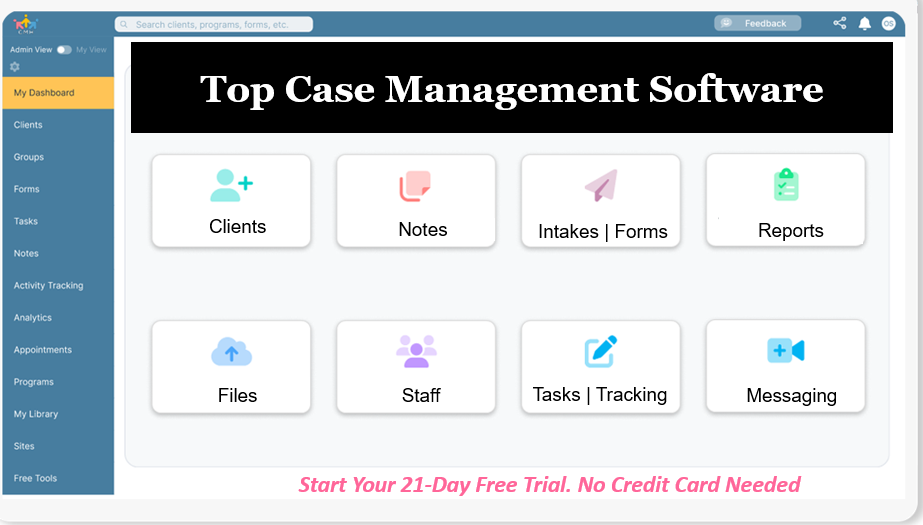
Our best all-in-one client and top case management software simplifies everything from client intake and assessments to programs, projects, goals tracking, planning, scheduling, documentation, reporting dashboard, and progress tracking.
How Do Social Workers Assess a Family?
Assessment is an ongoing process rather than a single form. Early on, the worker focuses on immediate safety. Is the child safe today? Are there present dangers such as violence, unsafe living conditions, or a caregiver who cannot provide care? From there, the child or adolescent assessment widens to cover risk, which looks at how likely future harm is, along with family strengths, needs, and protective factors.
Common tools include:
- Child social and health history intakes, which gather background on a child’s development, health, school experience, and family and living situation. This creates a baseline that the rest of the assessment builds on.
- The Child and Adolescent Needs and Strengths (CANS), a widely used tool for youth ages 5 to 17 that looks at a young person’s needs and strengths across life domains. It helps teams plan services and track progress over time.
- The Screen for Child Anxiety Related Disorders (SCARED), a screening tool that helps identify anxiety symptoms in children and adolescents so workers know when a referral for further evaluation is appropriate.
- Structured safety and risk assessment instruments required by the agency
A thorough assessment also accounts for culture, language, disability, and income. Cultural humility matters here. Workers must be careful not to mistake circumstances like inadequate housing or lack of transportation for unwillingness to parent. Telling the difference between neglect and poverty is a core skill in this field.

Which Theories and Frameworks Guide This Work?
Several frameworks give practitioners a shared language and a way to organize what they observe:
- Family systems theory views the family as an interconnected unit, so a change in one member affects everyone. Structural family therapy, developed by Salvador Minuchin, builds on this idea by examining boundaries and roles within the family.
- Ecological systems theory from Urie Bronfenbrenner explains how a child’s development is shaped by layers of influence, from the immediate family to the neighborhood to broader policy.
- Attachment theory describes how early bonds with caregivers shape emotional development, which informs decisions about placement and visitation.
- The strengths-based approach starts with what a family does well and uses those assets to build solutions.
- Trauma-informed care recognizes how adverse childhood experiences (ACEs) affect behavior and relationships, and shapes how workers respond to children and parents alike.
- Signs of Safety is a collaborative model that focuses on danger, safety, and next steps in plain language families can understand.
- Motivational interviewing helps workers support a family’s own motivation for change rather than pushing it from outside.
Law shapes practice as well. In the United States, the Adoption and Safe Families Act (ASFA) sets timelines for permanency and the Indian Child Welfare Act (ICWA) protects the connection between Native children and their tribes and families.
🔥Still using spreadsheets for case management?
Switch to an all-in-one case management platform.
👉 Try it Free - No credit card needed
What Are the Stages of a Child Welfare Case?
Procedures differ by state, but most cases follow a similar path:
- Intake and screening. A report is received and reviewed to decide whether it meets the criteria for a response.
- Investigation or assessment. The worker visits the home, speaks with the child and caregivers, and gathers information from collateral sources such as teachers and doctors.
- Case planning. If services are needed, the worker and family create a plan with specific goals, supports, and timelines.
- Service delivery. The family takes part in services like parenting programs, counseling, substance use treatment, or concrete assistance, with the worker coordinating and checking in regularly.
- Review and permanency planning. Progress is reviewed on a set schedule. When a child has been placed outside the home, the team works toward family reunification, kinship care, adoption, or another permanent arrangement.
- Case closure. The case closes when the child is safe and the family has the supports to continue on its own.
Removal from the home is considered when a child cannot be kept safe, and it is guided by the best interests of the child and by the least restrictive option that protects them.
👉 Try this Case Management Software free today
No credit card needed
What Skills and Qualifications Does This Work Require?
Most child and family social work roles call for a bachelor’s or master’s degree in social work (BSW or MSW), and clinical or supervisory positions often require state licensure. Strong candidates also bring skills that no degree fully teaches: active listening, clear writing, sound judgment under pressure, and the ability to stay steady in emotionally heavy situations.
Self-care and good supervision are part of the job description. High caseloads and exposure to trauma take a toll, and the strongest agencies build in regular reflective supervision and peer support.
💡All-in-one Case Management Software.
Everything in one place: clients, notes, forms, appointments, reports, and outcomes.
👉 Try it Free - No credit card needed
How Can Casework Software Support Child & Family Social Work?
Case files in this field are dense. A single family may involve multiple children, several providers, court dates, service plan goals, and a long trail of case notes. When records live in scattered documents, details slip through, and time that belongs with families goes to paperwork instead.
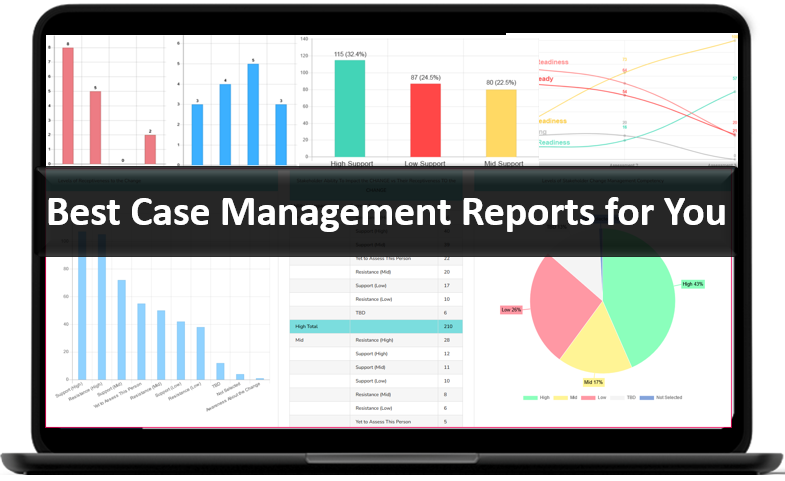
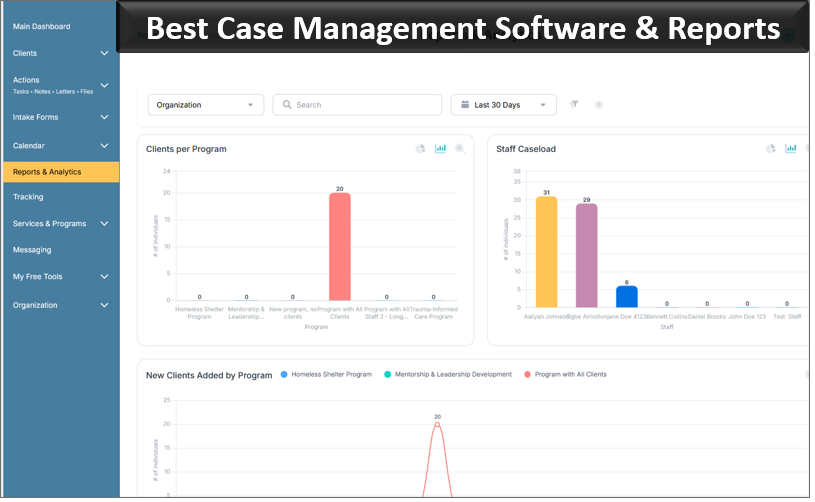
Purpose-built case management software helps by keeping intake information, assessments, service plans, case notes, and deadlines in one secure place. Because this work involves sensitive health and family information, HIPAA compliance is essential. Case Management Hub was built for social workers and behavioral health teams, with tools for client intake, build in child & family assessments, documentation, and caseload management. You can explore the platform and try it yourself. Start a free trial now (no credit card needed!)
👉 Try it Free today - No credit card needed
What Else Do People Ask About Social Work with Children Families?
What is the main goal of social work with families?
The main goal is to keep children safe and help families build the stability and skills they need to thrive. Whenever it is safe, that means supporting children to stay with their own families.
Do child social workers always remove children from their homes?
No. Removal is a last resort when a child cannot be kept safe at home. Most families receive support services that allow children to remain in their homes.
What is the difference between a child protective services social worker and a family social worker?
CPS workers focus on investigating reports of abuse and neglect and ensuring immediate safety. Family social workers more broadly provide ongoing support, counseling, and service coordination, often in prevention, school, healthcare, or community settings.
What is a family service plan?
A family service plan is a written agreement between the worker and the family that lists goals, the services that will help reach them, who is responsible for each step, and the timeline for review.
How can social workers build trust with families?
Trust grows through honesty, consistency, and respect. Explaining the worker’s role clearly, listening without judgment, following through on commitments, and recognizing family strengths all help families engage in the process.
👉 Try it free today - No credit card needed
Note: Content on this website (socialworkportal.com) is copyrighted and protected under applicable copyright laws. Unauthorized reproduction, distribution, or use of any content from the website, without explicit written permission, is strictly prohibited. Read: Terms of Use.
Social Work Portal Disclaimer: Social Work Portal is not a social work agency and we do not refer social workers. This web site is provided for educational and informational purposes only and does not constitute providing medical advice or professional social and healthcare services. The information provided should not be used for diagnosing or treating a health problem or disease, and those seeking personal medical advice should consult with ... Read our full disclaimer here: Social Work Portal Disclaimer.